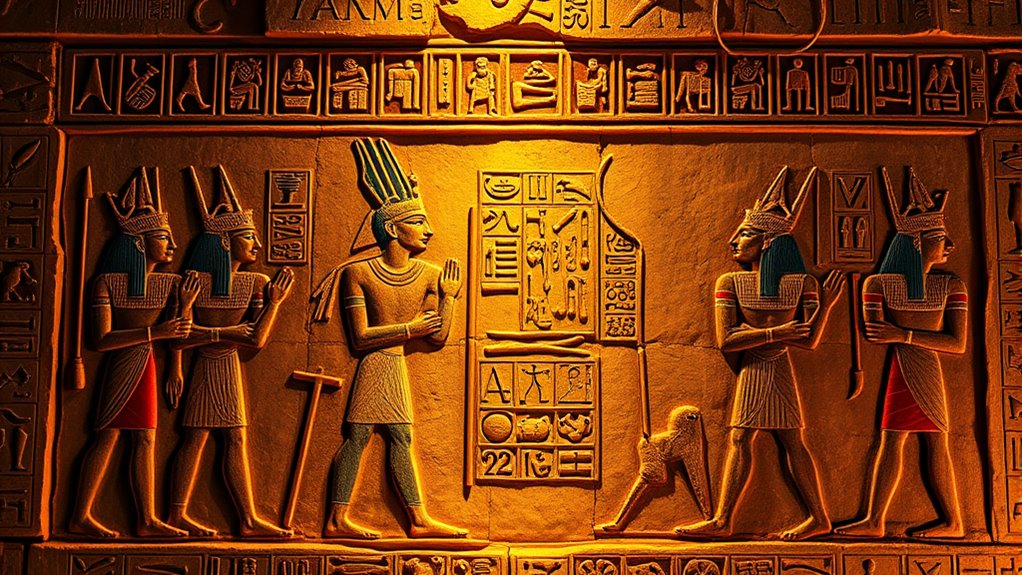
Ancient Egyptian art is full of symbolism that reflects their deep religious beliefs and view of the afterlife. You’ll see gods with specific attributes, scenes of daily life, and funerary offerings that symbolize spiritual concepts, divine protection, and eternal life. The images and symbols work together to guide the soul and honor the gods, creating a powerful visual language of faith. If you explore further, you’ll discover how these artworks serve sacred purposes and reveal Egypt’s spiritual worldview.
Key Takeaways
- Egyptian art uses hieroglyphs and images to depict myths, gods, and the afterlife, serving as a visual language of spirituality.
- Funerary offerings in art symbolize sustenance and protection for the deceased, reflecting beliefs in eternal life.
- Art incorporates symbols representing divine qualities and spiritual concepts to honor gods and facilitate the deceased’s journey.
- Sacred artworks are crafted with purpose, often imbued with symbolism that reinforces religious beliefs and divine protection.
- Overall, Egyptian art functions as a sacred means to connect mortals with the divine and ensure the soul’s safe passage to the afterlife.
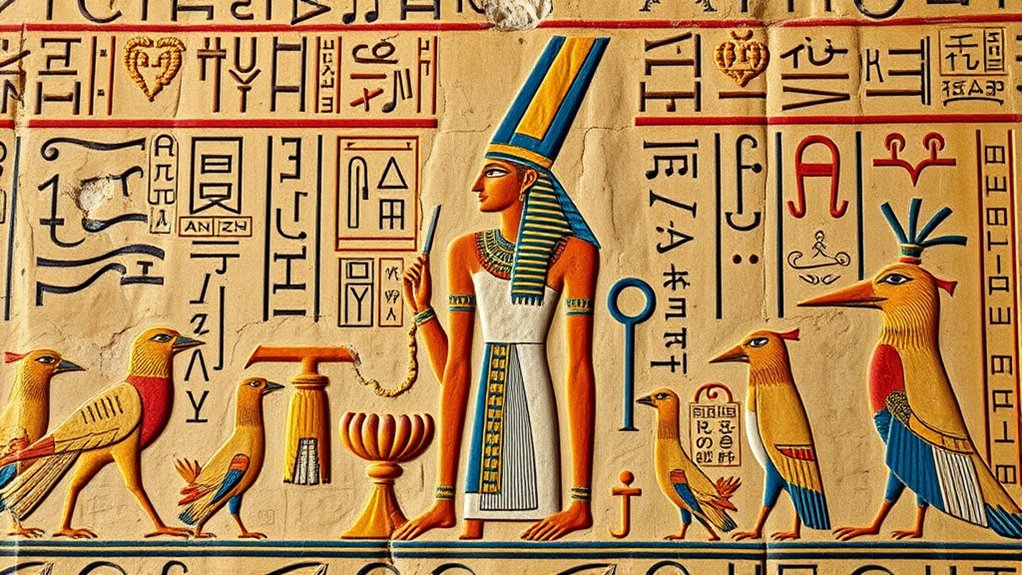
Have you ever wondered how ancient Egyptians created art that has fascinated people for thousands of years? Their art was more than just decoration; it was a means of communication, belief, and preservation. Central to their artistic expression was hieroglyphic storytelling, which combined images and symbols to convey complex narratives and spiritual concepts. These hieroglyphs weren’t just decorative; they served as a language that encoded stories of gods, kings, and the afterlife. When you look at ancient Egyptian wall paintings or papyrus scrolls, you’re seeing a visual language designed to guarantee the soul’s journey through the afterlife. Hieroglyphic storytelling often depicted scenes from myth, daily life, or the deceased’s journey, making it a crucial tool for religious and funerary practices. This storytelling was essential in guiding the soul and providing hope for eternal life.
Funerary offerings played a significant role in Egyptian art, serving both practical and spiritual purposes. When you examine tomb paintings or sculptures, you’ll notice images of food, drink, and objects meant to sustain the deceased in the afterlife. These offerings weren’t merely symbolic; they were believed to be actual provisions that would accompany the soul on its journey. Artists meticulously depicted these items with symbolic details—bread, beer, jewelry, and tools—each carrying spiritual significance. The placement of funerary offerings within tombs reinforced the idea that the deceased’s needs would be met in the afterlife, ensuring their well-being and happiness beyond death. These offerings also reflected the importance of maintaining social status and wealth even after passing away, as they demonstrated the deceased’s ability to enjoy a comfortable existence.
The religious nature of Egyptian art is evident in the way it intertwines with their beliefs about gods and the afterlife. Every piece, from statues to wall scenes, was crafted with purpose, often imbued with symbolism that represented divine qualities or spiritual truths. Gods were frequently depicted with specific attributes, and their images served as protectors or guides for the dead. Art was not merely aesthetic but a sacred act, designed to honor gods, secure divine favor, and ensure the deceased’s safe passage. Whether through hieroglyphic storytelling or detailed funerary offerings, every element of Egyptian art worked together to reinforce their spiritual worldview. When you study their art, you’re witnessing a profound expression of faith, a visual language that bridged the mortal and divine, and a demonstration to their enduring belief in life after death.
Frequently Asked Questions
How Did Ancient Egyptian Art Influence Later Cultures?
Ancient Egyptian art influenced later cultures through its use of religious symbolism and innovative artistic techniques. You can see this impact in how later civilizations adopted symbolic motifs and methods of depicting figures with clarity and purpose. By studying Egyptian art’s emphasis on spiritual themes and detailed craftsmanship, you recognize how these elements shaped Renaissance and modern art, inspiring artists to incorporate symbolic meanings and refined techniques in their work.
What Materials Were Most Commonly Used in Egyptian Religious Artifacts?
You’ll be amazed by how ancient Egyptian artisans used materials like ceramic vessels and gold jewelry to craft their sacred artifacts. These materials were so prized they seemed to shimmer brighter than the sun itself. Gold was especially favored for its divine connection, while ceramic vessels served as containers for offerings and rituals. Together, they reflected the Egyptians’ devotion and artistry, making their religious objects both beautiful and powerful.
How Did Egyptian Art Evolve Over Different Dynasties?
You’ll notice that Egyptian art evolved through dynastic shifts, showcasing both change and stability. During different periods, styles became more naturalistic or more formal, reflecting shifts in religious beliefs and political power. Despite these changes, there’s remarkable artistic continuity, as core themes and motifs remain consistent. This balance allows you to see how Egyptian artists adapted their techniques while preserving the essence of their cultural and religious traditions over centuries.
What Role Did Art Play in Egyptian Funerary Practices?
You see that art played a vital role in Egyptian funerary practices by helping guarantee a safe passage to the afterlife. Funerary rituals involved creating tomb paintings, sculptures, and jewelry filled with spiritual symbolism to protect and guide the deceased. These artworks serve as a bridge between the mortal world and the spiritual domain, reflecting their beliefs in immortality and the importance of honoring the dead.
Were There Regional Variations in Egyptian Religious Symbolism?
You’ll find that regional styles and religious motifs varied across Egypt, with about 50 distinct local art traditions. These differences reflect localized beliefs and cultural influences, shaping unique interpretations of symbols like the ankh or scarab. For example, southern regions emphasized divine kingship, while northern areas focused on fertility symbols. These variations show how Egypt’s diverse regions expressed their spirituality through distinct artistic and symbolic styles.
Conclusion
As you explore ancient Egyptian art, you realize its symbols and religious themes hold secrets centuries old. But what deeper meanings lie beneath these images? Could they reveal hidden truths about gods, the afterlife, or the very soul of Egypt itself? The more you uncover, the more you’re drawn into a world where art isn’t just decoration—it’s a gateway to mysteries waiting to be discovered. And perhaps, some secrets are best left untouched…for now.