During the Cold War, art was a powerful tool for propaganda and avant-garde experimentation. You’ll see how governments used murals, posters, and exhibitions to promote their political messages and showcase national strength. At the same time, many artists pushed boundaries with experimental styles, subtly challenging official narratives or expressing personal freedom. This dynamic created a visual dialogue of control and rebellion. Keep exploring to uncover more about how these artistic strategies shaped Cold War perceptions.
Key Takeaways
- Art during the Cold War served as a tool for propaganda, promoting national ideologies through murals, posters, and exhibitions.
- Governments sponsored cultural diplomacy, using art to foster goodwill and showcase ideological virtues internationally.
- Visual language was strategically designed to convey political messages and reinforce national identity and strength.
- Avant-garde movements challenged official narratives with experimental techniques, embedding subtle acts of resistance and dissent.
- Artistic innovation created a tension between ideological propaganda and experimental expression, reflecting Cold War ideological and cultural conflicts.
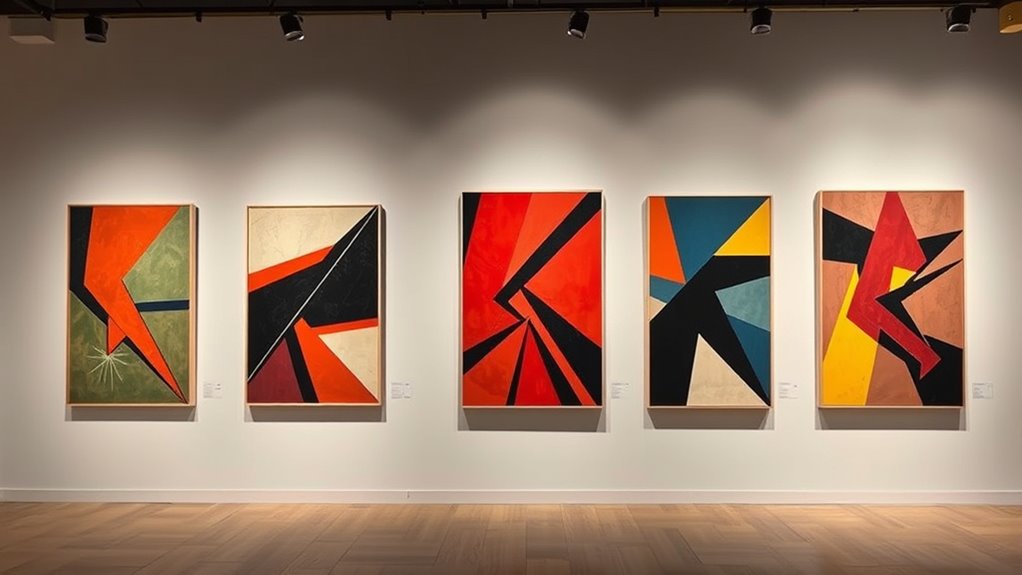
During the Cold War, art became a powerful tool for expressing political ideologies and shaping public perception. You might not realize it, but artworks from this era served as more than just aesthetic objects—they were instruments of cultural diplomacy and ideological expression. Countries on both sides of the divide understood the importance of showcasing their values through art, using exhibitions, murals, and public projects to project strength and appeal to international audiences. When you look at a Soviet socialist realist painting or an American abstract expressionist piece from that time, you’re witnessing an active attempt to communicate political messages visually. These artworks weren’t created in a vacuum; they were carefully curated tools to promote specific narratives, emphasizing either collective strength and unity or individual freedom and innovation.
Cultural diplomacy played a central role in this visual battle. Governments sponsored art programs and exhibitions abroad to foster goodwill and influence foreign publics. Through these initiatives, they hoped to demonstrate the virtues of their political systems, whether it was the disciplined grandeur of Soviet art or the innovative spirit of American modernism. You can see how this effort to use art as a diplomatic tool aimed to build bridges and sway opinions, making art a form of soft power. The visual language of these programs was deliberate—each piece chosen or commissioned carried an underlying message, reinforcing the ideological stance of its sponsor. This strategic use of art extended beyond galleries; murals, posters, and sculptures became accessible symbols of national pride and ideological commitment. Additionally, the rise of avant-garde movements challenged official narratives and introduced new artistic techniques that often carried political undertones.
At the same time, artists pushed boundaries through avant-garde movements that challenged official narratives. While some creators adhered to government-approved styles, others used abstract, surreal, or provocative techniques to critique or distance themselves from political orthodoxy. You might see artists clandestinely embedding hidden symbols or adopting experimental forms to express dissent or explore personal freedom. These avant-garde works often served as subtle acts of resistance, embodying the tension between conformity and innovation during a time when ideological expression could be dangerous. By doing so, they contributed to a complex visual dialogue, revealing the underlying struggles of the Cold War era—struggles between control and creativity, conformity and rebellion. When you examine art from this period, you’re witnessing a dynamic interplay of political messaging and artistic innovation, both shaped by the overarching tension of the Cold War.
Cold War propaganda art books
As an affiliate, we earn on qualifying purchases.
As an affiliate, we earn on qualifying purchases.
Frequently Asked Questions
How Did Cold War Politics Influence Abstract Art Movements?
Cold war politics shaped abstract art movements by pushing you to use political symbolism and ideological expression. You might create works that subtly reflect your country’s values or challenge opposing ideologies, often in response to propaganda. This environment encourages you to explore innovative techniques while embedding deeper meanings, making your art a powerful tool for both ideological expression and subtle resistance against political tensions during the Cold War.
Were There Specific Propaganda Techniques Used in Cold War Art?
Yes, Cold War art used propaganda techniques like visual symbolism to convey clear messages. You’ll notice artists intentionally simplify imagery and use bold colors to evoke strong emotions and political ideas. These techniques help guarantee your message is easily understood, reinforcing ideological messages or promoting national pride. By focusing on message clarity through visual symbolism, artists effectively influence public perception and foster a sense of unity or patriotism during tense geopolitical times.
Did Avant-Garde Artists Face Censorship During the Cold War?
Imagine you’re an avant-garde artist during the Cold War, and yes, you did face censorship. State censorship and artistic repression targeted bold, experimental works that challenged political ideologies. Authorities feared avant-garde art‘s potential to inspire dissent or undermine propaganda efforts, so they often suppressed or scrutinized such creations. You had to navigate this tense environment carefully, balancing your creative freedom with the risk of repression and censorship.
How Did Eastern and Western Art Scenes Differ During This Period?
During the Cold War, eastern and western art scenes differ markedly. You’d notice that eastern artists often faced strict regional styles and strict artistic censorship, limiting their expression and promoting state-approved messages. In contrast, western artists enjoyed more freedom to explore avant-garde styles and experimental ideas, reflecting individualism and political critique. This divide shaped the artistic landscape, with eastern art serving as propaganda and western art pushing boundaries and challenging conventions.
What Role Did International Exhibitions Play in Cold War Cultural Diplomacy?
International exhibitions played a vital role in Cold War cultural diplomacy by fostering cultural exchange and showcasing each side’s artistic achievements. You see, they served as platforms for nations to demonstrate their ideological values through art, promoting mutual understanding or rivalry. These events allowed countries to project soft power, build alliances, and influence public perception, making diplomatic showcasing a strategic tool in the broader contest for global influence during the Cold War.
avant-garde art supplies
As an affiliate, we earn on qualifying purchases.
As an affiliate, we earn on qualifying purchases.
Conclusion
As you reflect on this era, remember that art became both a weapon and a shield, shaping perceptions like a mirror held up to society’s soul. The Cold War’s art scene was a battlefield of ideas, where propaganda and avant-garde clashed and coalesced. It’s a reminder that in the silent language of brushstrokes and sculptures, power and hope quietly fought for their place—proving that even in cold times, art’s fire burns fiercely.
political poster art prints
As an affiliate, we earn on qualifying purchases.
As an affiliate, we earn on qualifying purchases.
cultural diplomacy art exhibitions
As an affiliate, we earn on qualifying purchases.
As an affiliate, we earn on qualifying purchases.