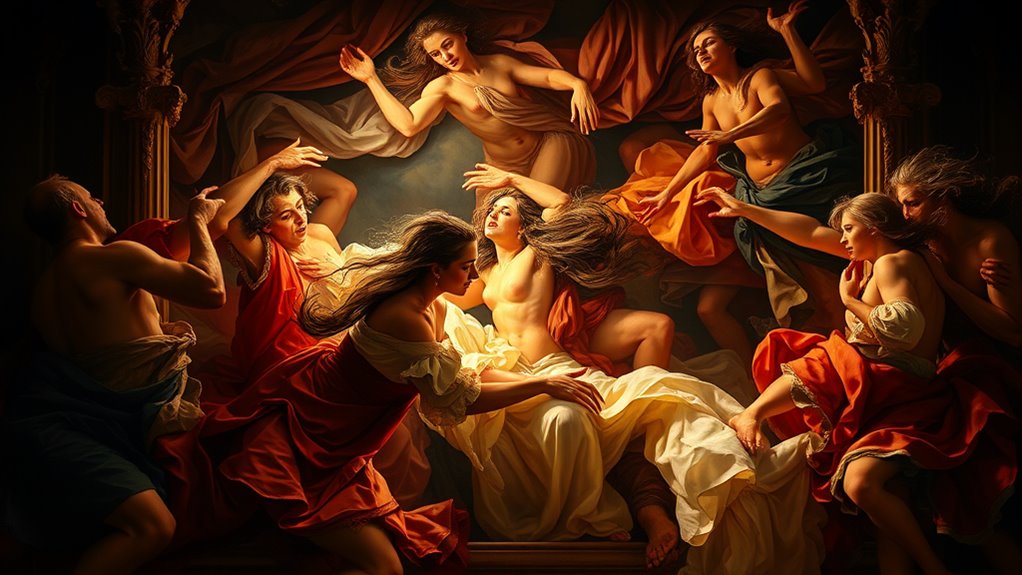

Baroque art grabs your attention with its bold drama, lively movement, and striking contrasts of light and dark. You’ll notice dynamic compositions filled with twisting forms, swirling drapery, and vivid gestures that convey intense emotions. Artists used sharp chiaroscuro to add depth and focus, making scenes feel alive and immediate. The powerful expressions and energetic arrangements draw you deep into the story. Keep exploring to uncover the secrets behind this emotionally charged and masterfully crafted style.
Key Takeaways
- Baroque art emphasizes bold contrasts and dramatic lighting (chiaroscuro) to evoke emotion and depth.
- It features dynamic, swirling compositions that convey intense movement and energy.
- Exaggerated gestures and facial expressions heighten emotional impact and storytelling.
- Use of diagonals and flowing forms creates a sense of immediacy and action.
- Overall, Baroque art aims to immerse viewers in powerful, emotionally charged scenes.
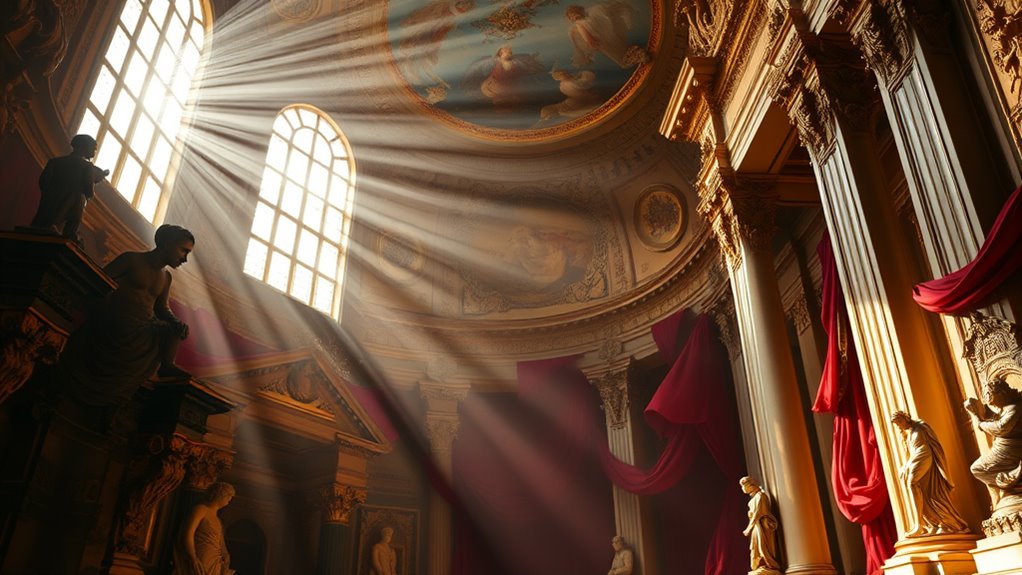
Baroque art is a dynamic and dramatic style that emerged in the early 17th century, characterized by bold contrasts, intense emotions, and elaborate details. When you look at a Baroque painting or sculpture, you’re immediately drawn into a world of vivid storytelling, where every element works together to evoke a powerful response. The key to understanding this style lies in its mastery of dramatic storytelling through a dynamic composition that guides your eye across the scene. Artists of the period deliberately created compositions that are lively and full of movement, making you feel as if you’re witnessing a moment frozen in time. Whether it’s a biblical scene or a mythological event, the arrangement of figures, gestures, and objects compels you to engage actively with the artwork, almost as if you’re part of the story. The use of dynamic composition in Baroque art isn’t accidental; it’s a conscious effort to heighten emotional impact. You’ll notice diagonals and swirling forms that break away from the static, balanced arrangements of earlier periods. This creates a sense of energy and immediacy, pulling you into the scene and focusing your attention on the central action or emotion. Light plays a pivotal role too, as artists skillfully use chiaroscuro—sharp contrasts between light and dark—to add depth and volume. This contrast not only enhances realism but also emphasizes the narrative’s emotional core, making the viewer feel the tension, joy, or despair encapsulated in the image. Additionally, the mastery of dramatic contrast is essential in creating a sense of depth and emotional intensity in Baroque works. Moreover, the dramatic storytelling in Baroque art is often amplified by intense facial expressions and exaggerated gestures. You might see a figure’s face contorted with grief or joy, or a hand stretched out pleading for help. These details are more than just aesthetic; they serve to communicate complex human emotions clearly and powerfully. The overall effect is immersive, making you feel as if you’re witnessing a pivotal moment unfold before your eyes. The movement captured in these works—whether through flowing drapery, twisting bodies, or spiraling compositions—helps convey the sense of ongoing action and emotional upheaval. In essence, Baroque art invites you to experience stories in their full emotional intensity. Its dramatic storytelling combined with dynamic composition engages your senses and challenges you to interpret the underlying message. This style’s mastery lies in its ability to make you feel the moment, to see the movement, and to be moved by the light, shadows, and details that bring each scene to life.
Frequently Asked Questions
How Did Baroque Art Influence Modern Artistic Styles?
Baroque art influences modern artistic styles by inspiring innovations in modern art and shaping contemporary visual storytelling. You see its impact in the dramatic use of light and shadow, dynamic compositions, and emotional intensity, which artists adopt to evoke strong responses. These elements help create engaging, expressive works that connect with audiences on a deeper level, making Baroque principles foundational in developing new techniques and storytelling methods in today’s art world.
What Are the Key Differences Between Baroque and Renaissance Art?
Imagine stepping into a vibrant theater—Baroque art is a dramatic performance full of movement and emotion, unlike the calm, harmonious scenes of Renaissance art. You’ll notice Baroque’s dynamic contrasts, intense realism versus Renaissance’s idealism, and dramatic lighting that heightens emotion. Renaissance emphasizes balanced compositions and perfect proportions, while Baroque pushes boundaries with movement and emotional intensity, making each piece feel alive and full of energy.
Which Baroque Artists Had the Most Significant Impact Historically?
You should recognize that Caravaggio, Peter Paul Rubens, and Gian Lorenzo Bernini are some of the most famous artists with the most significant impact in Baroque art. Their influential masterpieces, like Caravaggio’s dramatic chiaroscuro, Rubens’ dynamic compositions, and Bernini’s breathtaking sculptures, revolutionized artistic expression. Their works continue to inspire and shape the history of art, emphasizing emotion, movement, and theatricality in ways that resonate through centuries.
How Did Baroque Art Reflect the Political and Religious Contexts of Its Time?
You see that Baroque art reflects its political and religious contexts through Counter Reformation imagery, emphasizing emotional appeal and divine authority to inspire faith. Artists often used dramatic scenes to reinforce Catholic doctrines and sway public opinion. Additionally, artworks served as political propaganda, showcasing power and divine right of rulers. This vivid, emotional style aimed to influence viewers deeply, aligning with the era’s religious and political ambitions.
What Techniques Did Baroque Artists Use to Create Dramatic Lighting Effects?
You notice that baroque artists use chiaroscuro contrast and tenebrism illumination to create dramatic lighting effects. They emphasize strong light sources that highlight certain figures or areas, casting deep shadows and enhancing emotional intensity. By manipulating light and dark, they guide your eye through the composition, making scenes feel more dynamic and theatrical. This technique immerses you in the scene’s drama and heightens your emotional response.
Conclusion
As you immerse yourself in Baroque art, you’ll realize it’s not just a style—it’s an unstoppable force that captures every flicker of light and every surge of emotion with breathtaking intensity. Its drama and movement shake the very foundations of your perception, pulling you into a vortex of spectacle and passion. Once you experience its grandeur, you’ll never see art the same way again; it’s an overwhelming explosion of life that leaves you utterly transformed.