
To navigate art fairs effectively as a collector, familiarize yourself with the gallery layouts and display strategies first. Pay attention to how booths group artworks by themes or artists, making it easier to spot your interests. Engage gallery representatives to learn about artists and collections, and revisit booths to see new works. Planning your route based on layout and artist info helps you explore confidently. Keep exploring—there’s more to discover about optimizing your fair experience.
Key Takeaways
- Study the gallery layouts beforehand to plan your route and prioritize booths of interest.
- Observe display arrangements to understand artist groupings, themes, and relationships among artworks.
- Revisit booths to see new or changed works, maximizing exploration during the fair.
- Engage with gallery representatives to learn about artists, collections, and the stories behind the works.
- Take notes and photos to remember key pieces, aiding future decision-making and collection planning.

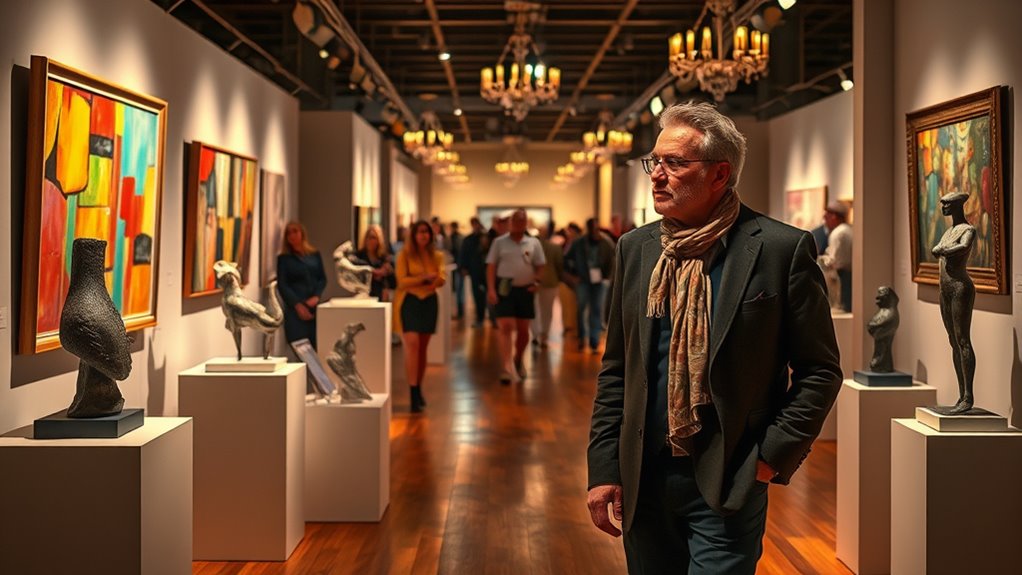
Attending art fairs can be both exciting and overwhelming, especially if you’re new to the scene. With so many galleries, artworks, and artists on display, it’s easy to feel lost before you even step inside. To make the most of your experience, start by understanding how galleries typically organize their booths. Gallery layouts are designed to guide visitors through a curated journey, highlighting specific themes or collections. As you walk through the fair, pay attention to how booths are arranged—some will be structured to create a flow, encouraging you to explore from one section to another, while others may cluster related artworks together. Recognizing these layouts helps you navigate efficiently and guarantees you don’t miss key pieces or artist representations that catch your eye.
When you approach a gallery booth, take a moment to observe the display. Most galleries aim to showcase their artist representations in a way that emphasizes the individual or collective’s style. This means artworks are often grouped to tell a coherent story or to highlight a particular period or technique. Understanding this setup allows you to better appreciate the context of each piece and see how they relate to the artist’s overall body of work. If you find yourself drawn to a certain style, look for the gallery’s branding or artist information—many booths will include labels or digital screens providing details about the artist and their background. This way, you can learn more about the creator and decide if their work aligns with your collection goals.
As you move through the fair, keep in mind that galleries often rotate their displays or introduce new works throughout the event. This dynamic setup means that what you see at one moment might change later, so revisiting booths can be worthwhile. Make note of your favorite galleries and artists early on, but stay open to discovering new talents. When engaging with gallery representatives, ask about their artist representations—how they select and promote their artists, and what stories or themes they’re emphasizing. These conversations can deepen your understanding of the artworks and inform your purchasing decisions. Additionally, understanding the gallery layout can help you plan your route more effectively. Remember, art fairs aren’t just about buying; they’re also about connecting with the stories behind the art and the people who create it. Approaching the event with curiosity and an understanding of gallery layouts and artist representations will help you navigate confidently, making your experience both enjoyable and enriching.
Top picks for "navigat fair collector"
Open Amazon search results for this keyword.
As an affiliate, we earn on qualifying purchases.
Frequently Asked Questions
How Do I Authenticate Artworks at the Fair?
To authenticate artworks at the fair, start with provenance verification to guarantee the piece’s history is legitimate. Don’t hesitate to consult with experts who can examine the artwork’s signature, materials, and condition. Ask for certificates of authenticity and compare them with trusted databases. Trust your instincts and do thorough research, combining provenance checks and expert advice to confidently verify the authenticity before making a purchase.
What Budget Should I Set for Purchasing Art?
You should set a realistic budget based on your interest level and the type of art you want to build a collection. Consider art fair etiquette by respecting price ranges and negotiating respectfully. Start small if you’re new, and gradually increase your spending as you learn more. This approach helps you enjoy the fair without overspending and guarantees you make thoughtful, meaningful acquisitions that fit your collection goals.
How Can I Negotiate Prices Effectively?
You stumble upon an artist’s booth just as they mention a price, and it feels like fate. To negotiate effectively, use strategic bargaining techniques, like referencing comparable works or asking for a discount based on volume. Understand pricing strategies and stay respectful; often, a genuine conversation opens doors. Your timing and approach can turn a good deal into a great one, making the art feel even more personal.
Should I Attend Artist Talks or Panels?
You should attend artist talks or panels because they offer valuable insights into the artwork and the artist’s process. Use studio visits and artist Q&A sessions to deepen your understanding and build connections. Engaging in these events helps you ask questions directly, strengthening your relationship with the artist. Plus, you gain a better sense of the piece’s significance, making your collection more meaningful and informed.
How Do I Decide Which Booths to Visit First?
Did you know that 60% of collectors prioritize booths showcasing artist representation they admire? To decide which booths to visit first, start by examining the booth layout map. Focus on areas highlighting your favorite artists or emerging talents. This approach helps you efficiently explore key pieces, connect with representational galleries, and maximize your experience, ensuring you don’t miss the most compelling or aligned works at the fair.
Conclusion
As you navigate art fairs, remember that each booth offers a new story, yet behind every piece lies a personal journey. While the crowds can be overwhelming, they also symbolize a shared passion for art. Embrace the chaos, but stay focused on what resonates with you. Balancing the excitement with discernment guarantees your experience is enriching, not exhausting. Ultimately, it’s in the contrasts—the noise and quiet, the familiar and new—that you find your most meaningful treasures.