
Philanthropy boosts the art world by funding collections, exhibitions, and conservation efforts that benefit communities. Your donations can be recognized publicly through plaques, naming opportunities, or events, fostering pride and ongoing support. The process involves discussions with institutions, appraisals, and aligning your giving with their needs. Supporting art helps preserve culture and promotes public access. To discover how your contribution can make a meaningful impact, keep exploring the rewards and steps involved.
Key Takeaways
- Philanthropy enhances the cultural landscape by funding art preservation, exhibitions, and community engagement initiatives.
- Donor recognition fosters pride and encourages ongoing support through public acknowledgment and naming opportunities.
- Donations can include artworks or funds, supporting acquisitions, conservation, and educational programs.
- The donation process involves dialogue, appraisal, provenance verification, and aligning contributions with institutional goals.
- Art donations benefit communities by sustaining programs, expanding access, and celebrating cultural heritage.
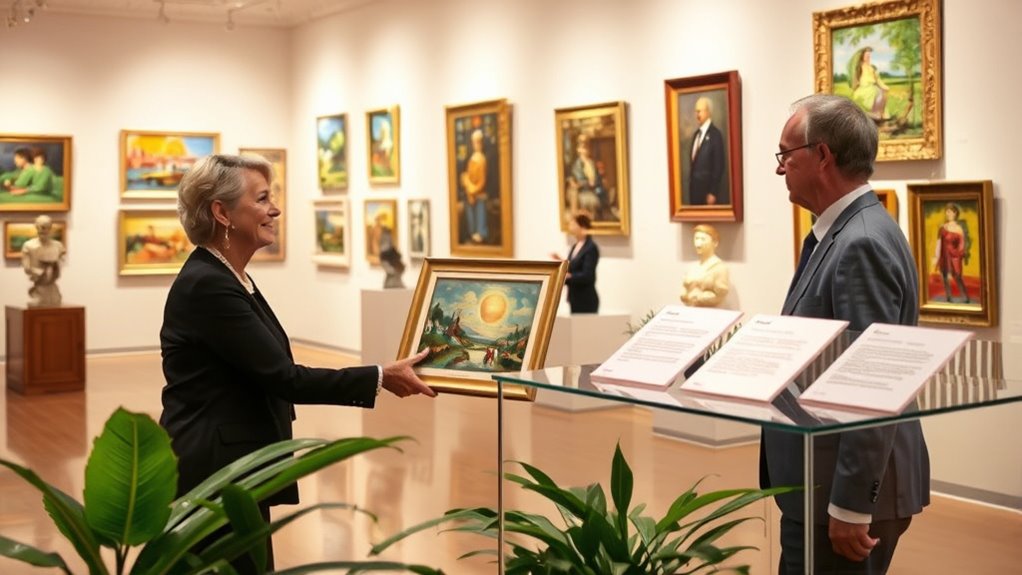
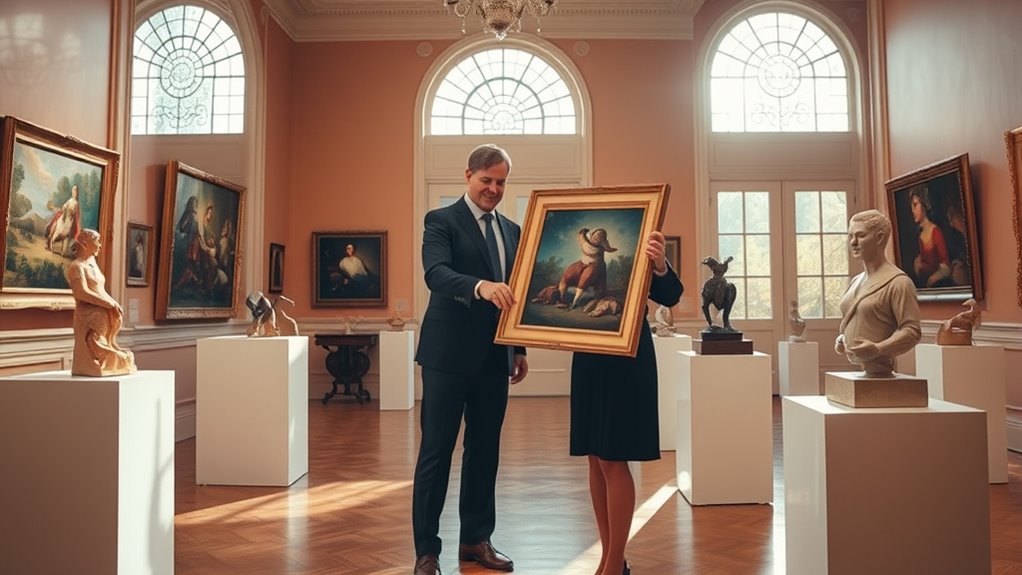
Have you ever wondered how philanthropy shapes the art world? It’s a powerful force that influences not just the collection of artworks but also the cultural landscape as a whole. When donors contribute to art institutions, their support often extends beyond financial backing. It helps foster cultural impact by enabling museums, galleries, and cultural organizations to acquire, preserve, and showcase diverse artworks. This, in turn, enriches the community’s cultural fabric and makes art more accessible to the public. Donor recognition plays an essential role here. When donors see their contributions acknowledged—whether through plaques, naming opportunities, or public acknowledgment—they feel a sense of ownership and pride. This recognition not only encourages ongoing support but also elevates their status within the cultural community, encouraging others to follow suit. It’s a mutually beneficial cycle: donors gain visibility and social capital, while the arts benefit from sustained financial backing. Additionally, innovative funding methods like art donation programs have expanded opportunities for supporters to contribute meaningfully. The process of donating art or funds typically begins with a dialogue between the donor and the institution. You might start by identifying a cause or a specific piece of art that resonates with you. Institutions usually have dedicated development teams to guide you through the process, ensuring your donation aligns with their needs and strategic goals. If you’re donating artwork, appraisal and provenance verification are essential steps to ensure proper valuation and authenticity. For monetary contributions, you’ll work with the institution’s development office to decide how your donation will be used—whether for acquiring new pieces, supporting exhibitions, or funding educational programs. Many donors opt for recognition opportunities, such as naming a wing or sponsoring an exhibition, which amplifies their visibility and legacy within the cultural space. Your donation’s cultural impact doesn’t end with the act itself; it continues through the programs and initiatives it supports. It might fund a new exhibit that educates thousands or help conserve a rare collection for future generations. In return, the institution often celebrates your generosity publicly, recognizing your role in shaping the cultural landscape. This acknowledgment not only cements your legacy but also encourages others to contribute, creating a ripple effect that amplifies the arts’ reach and influence. Ultimately, philanthropy in the arts is about more than just giving money—it’s about investing in the cultural vitality of communities, ensuring that art remains a significant part of our shared human experience.
Frequently Asked Questions
How Do I Determine the Value of My Art Donation?
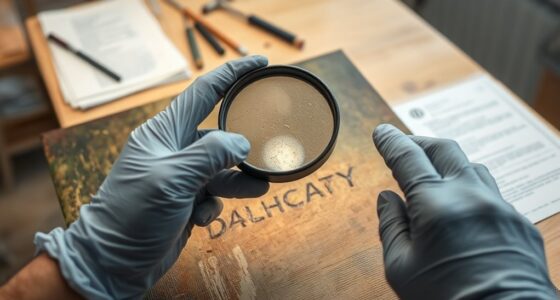
To determine the value of your art donation, you should start with a professional appraisal using accepted appraisal methods like comparables and expert opinions. Keep in mind, valuation challenges can arise due to factors like rarity or condition. Get a qualified appraiser to guarantee accurate valuation, especially for tax deduction purposes. Their expertise helps navigate these challenges, giving you confidence in the donation’s fair market value.
Are There Tax Benefits for Donating Art to Museums?
Donating art to museums can be like planting seeds for future growth—you might enjoy significant tax benefits. You’ll need to follow donation procedures carefully, including proper art valuation, to maximize your deduction. When you donate, you may be eligible for a charitable tax deduction based on the appraised value, which can reduce your tax bill. Always consult a tax professional to guarantee you meet all requirements and optimize your benefits.
What Types of Art Are Eligible for Donation?
You can donate a wide range of art, including paintings, sculptures, and historical artifacts, as long as they hold cultural significance and have been preserved properly. Museums prefer pieces with art preservation in mind, ensuring they maintain their value and importance. Donating such art supports cultural preservation and helps share artistic heritage with the public, making your contribution meaningful and impactful for future generations.
How Does the Donation Process Work for Private Collectors?
Imagine you’re a private collector donating a valuable painting. You start by consulting an appraiser for art valuation, ensuring the piece qualifies for donation. Next, you follow donation procedures, which include submitting paperwork to the charity or museum. They typically handle the transfer of ownership, and you’ll receive a tax deduction receipt. This process allows your art to benefit the public while providing you with potential tax advantages.
Can Art Donations Be Made Anonymously?
Yes, you can make art donations anonymously, allowing you to enjoy donation privacy. To do this, you typically work with a museum or charity that accepts anonymous giving, and they can conceal your identity in public records or acknowledgments. Keep in mind, however, that some institutions may require your information for tax purposes or legal reasons. Always discuss your preferences upfront to ensure your donation remains confidential.
Conclusion
By donating art, you inspire future generations, preserve cultural heritage, and foster community growth. Your generosity becomes a legacy that endures, a beacon that lights the way for others to follow. Through your acts of giving, you create a ripple effect—uplifting, empowering, transforming. When you share your art, you not only enrich lives but also build a lasting impact. Embrace the power of philanthropy, and watch your contributions blossom into a timeless tapestry of hope and renewal.