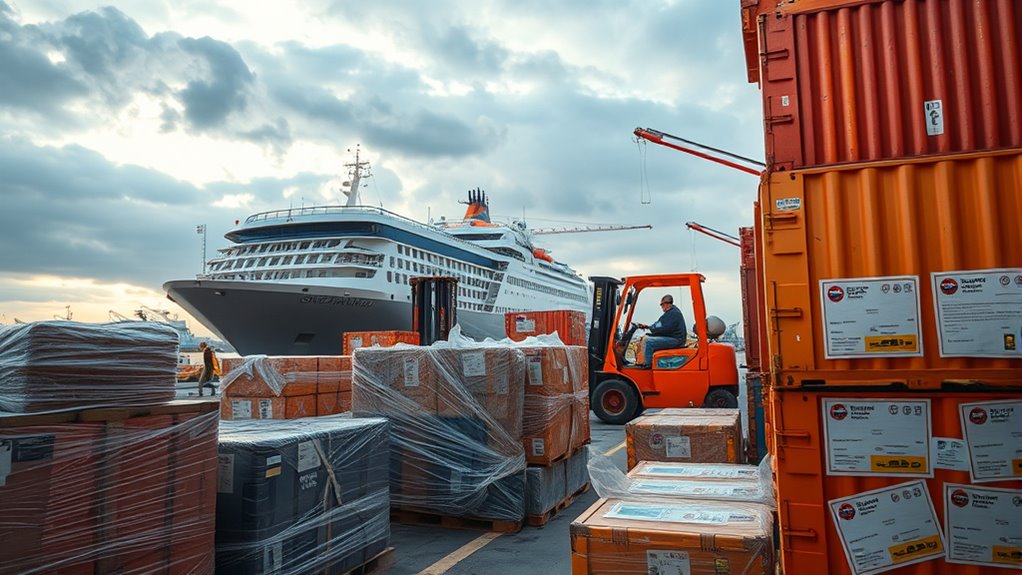

When shipping artwork internationally, you need to follow customs rules, provide accurate documentation, and package carefully to avoid delays and extra costs. Make sure to include invoices, certificates, and permits, and declare the true value of your piece. Use sturdy, protective packaging and label it clearly for handling. Understanding each country’s regulations can prevent surprises, while proper insurance covers potential damages. Keep these essentials in mind—to learn more tips for smooth international art shipping, continue exploring this guide.
Key Takeaways
- Proper customs clearance requires accurate documentation, including invoices, certificates, and permits, to avoid delays and extra fees.
- Declaring the artwork’s correct value and detailed descriptions helps streamline customs procedures and prevent confiscation.
- High-quality, durable packaging with clear “Fragile” labels protects art during transit and meets carrier standards.
- Understanding and complying with destination country customs regulations minimizes restrictions and additional costs.
- Adequate insurance coverage and proactive planning ensure the artwork’s safety, reduce risks, and manage costs effectively during international shipping.
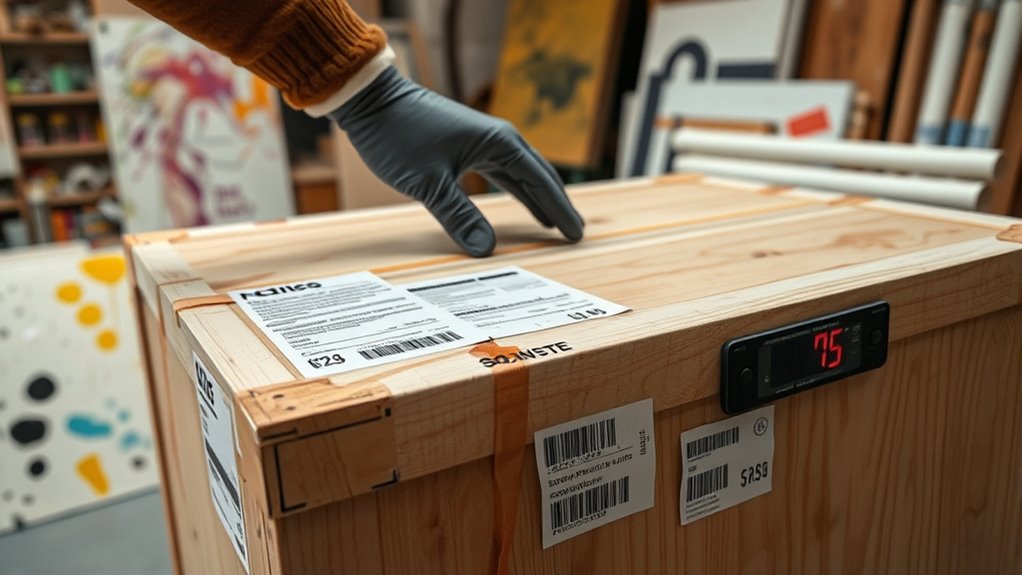
Shipping artwork internationally can seem intimidating, but with the right planning, it becomes manageable. One of the most critical steps is understanding customs clearance. When your artwork crosses borders, it must pass through customs, where officials verify that all paperwork is in order and that duties or taxes are paid if applicable. To streamline this process, you need to guarantee that you have all the necessary documentation ready, such as invoices, certificates of authenticity, and any required permits. Properly declared value and detailed descriptions of your artwork help prevent delays or misunderstandings that could result in additional fees or confiscation. Familiarize yourself with the customs regulations of the destination country before shipping so you can anticipate any specific requirements or restrictions.
Understanding customs clearance and having proper documentation simplifies international artwork shipping.
Another essential aspect is adhering to packaging standards. Your artwork’s safety during transit depends heavily on how well it’s packed. Use high-quality, durable materials that can withstand handling and environmental factors during shipping. For paintings, consider wrapping them in acid-free paper before placing them in sturdy, padded boxes or crates. For sculptures or fragile pieces, custom crates with foam padding or shock absorbers are often necessary. Label your package clearly as “Fragile” and include handling instructions to alert carriers to treat it with care. Good packaging not only protects your artwork from physical damage but also helps you meet the packaging standards set by shipping carriers, which can influence insurance coverage and liability. Additionally, understanding unique and wicked planters can inspire creative ways to prepare or display your artwork during transit.
It’s also wise to contemplate insurance options that cover potential damages or loss during transit. When insuring artwork, guarantee the coverage aligns with the declared value on customs forms to avoid disputes later. Communicating with your chosen courier about their specific packaging and customs procedures can streamline the entire process. Many professional art shippers offer comprehensive services that include customs documentation and packaging, reducing your workload and minimizing risks.
Ultimately, shipping artwork internationally requires attention to detail and proactive planning. By understanding customs clearance procedures and following strict packaging standards, you can protect your piece and ensure it arrives safely at its destination. Taking these steps reduces delays, prevents additional costs, and gives you peace of mind that your artwork is in good hands throughout its journey. Remember, a well-prepared shipment not only respects international regulations but also preserves the integrity and value of your art piece.
Frequently Asked Questions
What Are the Best Insurance Options for International Art Shipments?
You should explore art insurance providers that offer all-encompassing coverage options tailored for international shipments. Look for policies that protect against theft, damage, and loss during transit. Trusted providers like AXA Art, Hiscox, and Chubb offer specialized art insurance with flexible coverage. Compare their policies to find the best fit for your artwork, ensuring you have adequate protection and peace of mind throughout the shipping process.
How Do Customs Duties Vary Between Countries?
Customs duties differ widely between countries, based on factors like customs valuation, which assesses the artwork’s worth for duty calculation. Some nations impose higher tariffs, especially if the artwork exceeds import quotas or is classified under specific categories. To avoid surprises, you should research each country’s regulations beforehand, as duties can markedly impact your costs. Understanding these variations helps you plan your shipment more effectively and avoid delays or unexpected expenses.
What Packaging Materials Are Recommended for Delicate Artwork?
For delicate artwork, you should use fragile packaging materials like bubble wrap, foam boards, and sturdy cardboard boxes. Opt for eco-friendly materials whenever possible, such as recycled paper padding or biodegradable bubble wrap, to protect the environment. Make sure to wrap the artwork securely, with plenty of cushioning on all sides, and clearly mark it as fragile. Proper packaging guarantees your artwork arrives safely and minimizes damage during transit.
How Long Does International Art Shipping Typically Take?
International art shipping usually takes anywhere from one to four weeks, depending on the destination and shipping method you choose. You should account for shipping timelines and customs processing, which can add extra days or even weeks, especially if paperwork or taxes are involved. To guarantee timely delivery, work with a reliable carrier, prepare accurate documentation, and consider expedited options if you need faster transit.
Are There Specific Legal Restrictions for Shipping Art to Certain Countries?
Yes, you need to be aware of import/export restrictions and shipping embargoes when sending art to certain countries. Some nations have strict regulations to protect cultural heritage, requiring permits or licenses. Shipping embargoes can block shipments altogether. Always check the destination country’s customs rules and international trade agreements before shipping. Failing to comply can cause delays, fines, or the confiscation of your artwork, so doing thorough research is essential.
Conclusion
Remember, a picture is worth a thousand words, but shipping it abroad requires understanding the rules and costs involved. By planning carefully, researching regulations, and choosing the right shipping options, you can guarantee your artwork arrives safely and intact. Don’t put all your eggs in one basket—prepare thoroughly to avoid surprises. Ultimately, as the saying goes, “It’s better to be safe than sorry,” so take the time to get it right and enjoy sharing your art worldwide.