To build an art collectors base, start by developing relationships with dedicated collectors and understanding their preferences. Monitor market trends to identify emerging opportunities and keep your collection relevant. Know your target demographics and tailor your curation and marketing strategies accordingly. Engage with collectors through personalized events, gallery visits, and social media, fostering trust and loyalty. Keep cultivating your network actively, and you’ll discover more effective ways to grow your collector community.
Key Takeaways
- Develop targeted marketing strategies based on collector demographics and preferences.
- Attend and host exclusive events, exhibitions, and private viewings to foster relationships.
- Engage with collectors through personalized communication and consistent updates on new acquisitions.
- Monitor art market trends to identify emerging opportunities and tailor your offerings accordingly.
- Collaborate with industry professionals and leverage social media to expand your network and visibility.
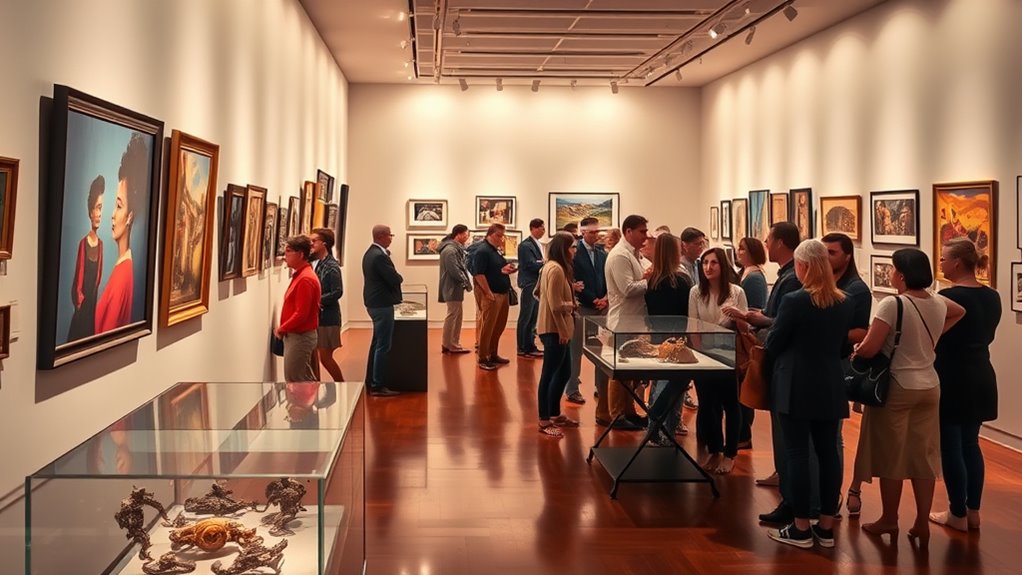
Creating a strong art collectors base is essential for establishing a sustainable and influential presence in the art world. To do this effectively, you need to stay ahead of art market trends and understand collector demographics. Art market trends reveal shifts in buyer preferences, pricing dynamics, and emerging art hubs, helping you identify where to focus your efforts. For example, if contemporary art is gaining popularity among younger collectors, positioning yourself within that niche can give you a competitive edge. Monitoring these trends allows you to anticipate demand and tailor your offerings accordingly, making your collection more appealing and relevant. Additionally, leveraging data on art market trends can help you identify the most promising opportunities for growth and investment.
Understanding collector demographics is equally indispensable. Different age groups, cultural backgrounds, and investment behaviors shape what collectors seek. Younger collectors might prioritize innovative, experimental works, while seasoned investors often look for established artists with proven track records. By recognizing these distinctions, you can curate your collection to appeal to specific groups, increasing your chances of building meaningful relationships. Knowing whether your target demographic favors certain genres or price points helps you craft marketing strategies that resonate.
Building relationships with collectors requires personalized engagement rooted in their preferences. Attend art fairs, exhibitions, and gallery openings where your target demographic is active. Use social media platforms to connect directly with potential collectors, sharing insights into your collection and your artistic vision. As you develop these relationships, stay informed about their collecting habits and evolving interests. This ongoing dialogue builds trust and positions you as a knowledgeable and reliable source for their acquisitions.
Networking plays a pivotal role in expanding your collector base. Collaborate with curators, art advisors, and other collectors who understand the nuances of collector demographics. Organize private viewings or exclusive events to provide a tailored experience that appeals to specific segments. Such events not only showcase your collection but also foster a community of engaged collectors who see you as a valuable partner. Cultivating this network requires consistent effort and genuine interest in their collecting journeys.
Ultimately, staying attuned to art market trends and collector demographics enables you to adapt your strategies and offerings. By understanding what motivates different collectors and where the market is headed, you can position yourself as a trusted source of exceptional art. Building this base takes patience and persistence, but with targeted engagement and market awareness, you’ll establish a resilient and influential presence that sustains and elevates your standing in the art world.
Frequently Asked Questions
How Do I Identify Emerging Art Collectors?
You can identify emerging art collectors by paying attention to those engaging in artist collaborations and staying informed about art investment trends. Look for individuals attending gallery openings, art fairs, and online art platforms, especially those investing early in new artists. They often showcase a keen interest in innovative projects and emerging artists, indicating their potential as upcoming collectors. Networking and following their purchasing patterns help you spot promising new collectors early on.
What Marketing Strategies Attract High-Net-Worth Individuals?
You might find that attending art fairs and engaging in private gallery outreach work best for attracting high-net-worth individuals. Coincidentally, these strategies often lead to unexpected connections, opening doors to potential collectors. Focus on personalized experiences, exclusive previews, and tailored invitations. Networking at art fairs allows you to showcase your work directly, while private gallery outreach helps build trust and rapport. Both methods can dramatically elevate your profile among affluent art enthusiasts.
How Can I Retain Long-Term Art Collectors?
To retain long-term art collectors, focus on ongoing collector engagement by providing personalized experiences and exclusive access to new works. Keep them informed with accurate art valuation updates, demonstrating your expertise and commitment. Build trust through transparent communication and show appreciation with special events or previews. Staying attentive to their interests and offering tailored services guarantees they feel valued, encouraging continued loyalty and strengthening your relationship over time.
What Legal Considerations Are Involved in Selling Art?
Selling art is like steering through a maze—there are legal twists at every turn. You must guarantee art authentication is legit to avoid counterfeit issues. Copyright compliance is essential; respect artists’ rights and avoid infringement. Draft clear contracts outlining sale terms, and understand tax obligations. Staying informed about local laws and licensing helps you protect yourself and your buyers, making sure your transactions stay smooth and legally sound.
How Do I Price Art for Different Collector Segments?
You should start by researching art valuation to understand what similar works sell for in various collector segments. Use targeted pricing strategies, such as premium pricing for high-end collectors and more accessible prices for emerging ones. Consider factors like artist reputation, artwork rarity, and market demand. Adjust your prices accordingly, and stay flexible to attract different collector segments, ensuring your art remains appealing across the market spectrum.
Conclusion
As you nurture your art collectors base, remember you’re planting seeds in fertile soil. Each connection is a delicate branch growing stronger, holding the weight of shared passion. With patience, your network blossoms into a vibrant garden of trust and appreciation, where every piece becomes a symbol of your journey together. Keep tending these roots, and watch your community flourish—an enduring forest of creativity that stands tall through time.