If Photoshop feels slow on your laptop, your hardware might be creating bottlenecks, like limited RAM, an underpowered GPU, or slow storage. Background apps and improper settings can also drag down performance. Upgrading components like RAM or switching to an SSD often helps, but adjusting software configurations and managing background processes matter too. To fix these issues and boost speed, you’ll find key tips that can make your workflow smoother and more efficient.
Key Takeaways
- Insufficient RAM or outdated hardware can cause lag and slow responsiveness in Photoshop.
- Hard drive type and storage capacity impact load times and data access speeds.
- Excess background processes or software conflicts consume resources, reducing Photoshop performance.
- GPU limitations or outdated drivers can hinder rendering and responsiveness during editing.
- Improper Photoshop or system settings, such as cache size or power mode, can slow down workflow efficiency.

Timetec 8GB DDR3L / DDR3 1600MHz (DDR3L-1600) PC3L-12800 / PC3-12800(PC3L-12800S) Non-ECC Unbuffered 1.35V/1.5V CL11 2Rx8 Dual Rank 204 Pin SODIMM Laptop Notebook PC Computer Memory RAM Module Upgrade
[Specs] DDR3L / DDR3 1600MHz PC3L-12800 / PC3-12800 204-Pin Unbuffered Non ECC 1.35V CL11 Dual Rank 2Rx8 based…
As an affiliate, we earn on qualifying purchases.
As an affiliate, we earn on qualifying purchases.
Identify Bottlenecks That Slow Down Photoshop on Your Laptop
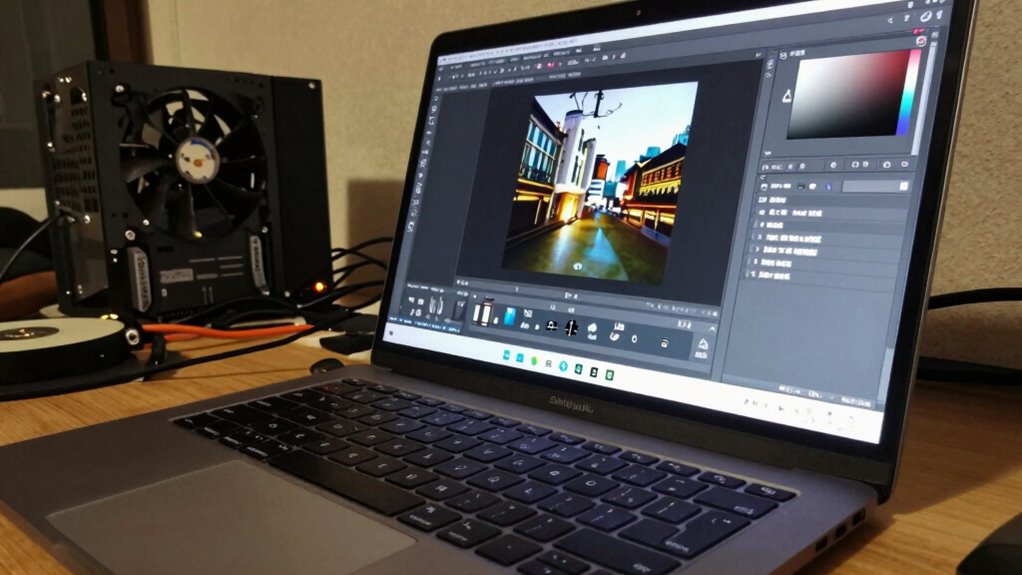
To improve Photoshop’s performance on your laptop, it’s essential to identify the specific bottlenecks slowing it down. One common issue is inefficient color management, which can cause delays when working with large files or complex color profiles. Check if your color settings are optimized for your workflow, as mismatched profiles can slow processing. Another factor is font rendering; poorly optimized fonts or too many fonts loaded simultaneously can impact performance, especially when opening or switching documents. Pay attention to how Photoshop handles fonts and consider removing unnecessary fonts. Also, monitor your color management settings to make sure they’re appropriate for your projects. By pinpointing these areas, you can streamline your workflow and reduce lag, making Photoshop run more smoothly on your laptop. Additionally, embracing digital concepts can lead to innovative solutions that enhance your overall experience. Understanding passive voice can also help you clarify your writing and improve communication in your projects.
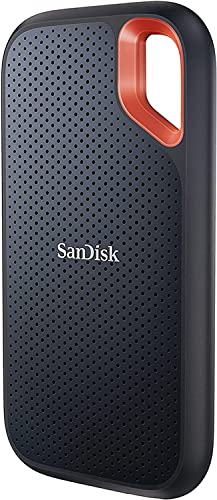
SANDISK 2TB Extreme Portable SSD (Old Model) – Up to 1050MB/s, USB-C, USB 3.2 Gen 2, IP65 Water and Dust Resistance, Updated Firmware – External Solid State Drive – SDSSDE61-2T00-G25
Get NVMe solid state performance with up to 1050MB/s read and 1000MB/s write speeds in a portable, high-capacity…
As an affiliate, we earn on qualifying purchases.
As an affiliate, we earn on qualifying purchases.
Check Your Laptop’s Hardware Capabilities for Photoshop

Check Your Laptop’s Hardware Capabilities for Photoshop
Your laptop’s hardware plays a significant role in how smoothly Photoshop runs. Make sure your display calibration is accurate to prevent color discrepancies that can slow your workflow. Check that your input device, like a graphic tablet or mouse, responds promptly without lag. Your hardware’s capabilities directly impact performance, especially when working with large files or complex edits. Additionally, proper gear can enhance your productivity and prevent unnecessary slowdowns. Incorporating techniques from art layout can also streamline your workflow and improve efficiency. AI technologies, such as predictive analytics, can also help optimize performance by anticipating resource needs. For a better overall experience, consider investing in high-quality peripherals that can significantly enhance your creative process. Remember that cookie usage can also impact browsing experience when using online tools. Use the table below to assess your system:
| Hardware Component | Recommended Specification |
|---|---|
| CPU | Multi-core processor (e.g., Intel i5/i7 or AMD Ryzen) |
| RAM | Minimum 8GB, 16GB or more for heavy editing |
| GPU | Dedicated graphics card with at least 4GB VRAM |
| Display | Calibrated display with good color accuracy |
| Input Device | Responsive, low-latency input device |
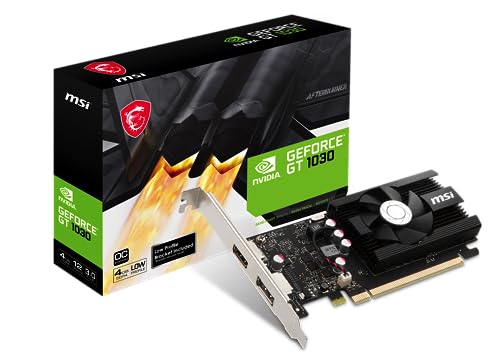
msi Gaming GeForce GT 1030 4GB DDR4 64-bit HDCP Support DirectX 12 DP/HDMI Single Fan OC Graphics Card (GT 1030 4GD4 LP OC)
Chipset: NVIDIA GeForce GT 1030
As an affiliate, we earn on qualifying purchases.
As an affiliate, we earn on qualifying purchases.
How RAM and Memory Usage Affect Photoshop Performance?
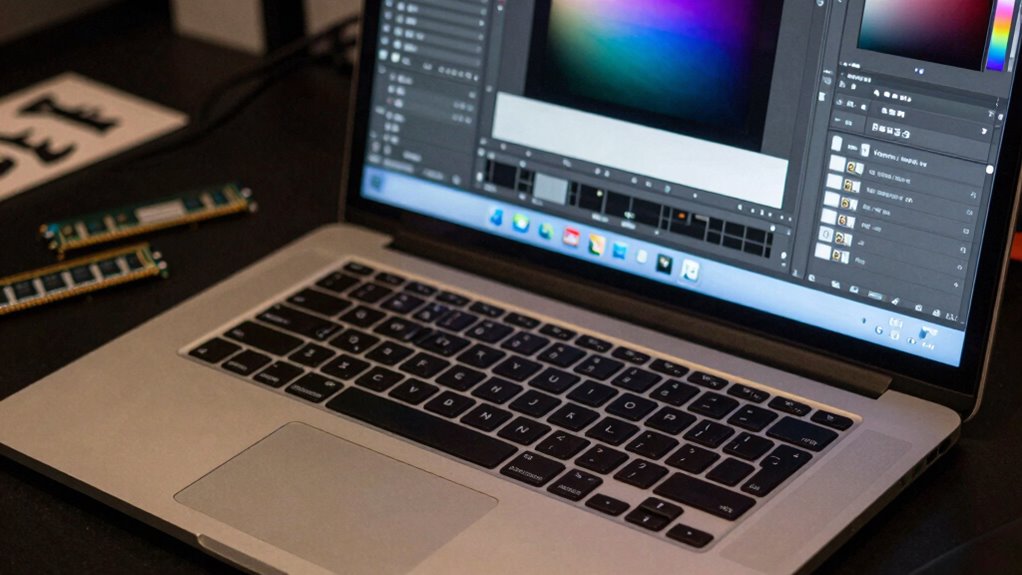
When working in Photoshop, sufficient RAM is essential because it determines how much of your project can be held in memory at once. If you don’t have enough RAM, Photoshop relies heavily on virtual memory, which slows down performance as data gets swapped between RAM and your storage drive. Proper cache management also plays a role; when cache is full, Photoshop takes longer to access recent edits. Limited memory causes delays, lag, and sluggish response times, especially with large files or multiple layers. Upgrading RAM helps Photoshop operate more smoothly, reducing reliance on virtual memory. Additionally, optimizing cache settings can improve responsiveness, ensuring your workspace remains fast and efficient during intensive editing tasks. Furthermore, choosing the right synthetic lubricants can enhance overall system performance, minimizing bottlenecks and ensuring smoother operation. To further improve your sleep environment, consider investing in high-quality bedding, as it can significantly enhance your overall comfort and productivity while working. Regularly maintaining your cycling gear can also prevent unexpected slowdowns in performance, ensuring everything runs efficiently.

KAIGERR Laptop with Intel 12-Core i5 Processor (Up to 4.5GHZ), High Performance Laptop Computer with widows 11, Intel Iris Xe Graphics,16GB RAM 512GB SSD,WiFi 6, Webcam,15.6 inch IPS Display
High-Performance i5 Processing – Featuring the 12th Gen Intel i5-12600H Processor (12 Cores / 16 Threads, up to…
As an affiliate, we earn on qualifying purchases.
As an affiliate, we earn on qualifying purchases.
The Impact of Graphics Card and GPU Acceleration in Photoshop

Sure, here’s the revised content with the requested changes:
—
Graphics cards and GPU acceleration greatly influence Photoshop’s performance, especially during demanding tasks like rendering, 3D editing, or working with large files. A powerful GPU handles GPU rendering efficiently, speeding up processes that rely on visual computations. It also offloads tasks from your CPU, reducing overall lag. Your graphics memory (VRAM) is vital; more VRAM allows you to work with larger files without slowing down. If your graphics card lacks sufficient VRAM or GPU power, Photoshop struggles with rendering previews, applying filters, or handling complex 3D projects. Investing in a GPU with ample graphics memory and optimized GPU acceleration settings can notably boost your workflow, making Photoshop feel faster and more responsive during intensive tasks. Additionally, consider the best home security systems for safeguarding your workspace, as a secure environment can enhance your focus and productivity. Furthermore, utilizing enterprise USB backups can ensure that your large files are safely stored, preventing data loss during intensive editing sessions. The integration of cultural festivals and local art can also provide inspiration, enriching your creative process while working in Photoshop. Moreover, ensuring proper solar system design can help create a reliable power supply for your devices, minimizing interruptions during your creative workflow.
—
Let me know if you need any further adjustments!
Choose the Best Storage Type for Photoshop Files

Choosing the right storage type can greatly improve your Photoshop workflow. SSDs offer faster speeds and quicker data transfer rates compared to HDDs, which can reduce lag when working on large files. Consider your storage capacity needs to guarantee you have enough space without sacrificing performance.
SSD vs HDD Speed
If you want faster performance in Photoshop, upgrading to an SSD can make a significant difference compared to a traditional HDD. SSDs offer superior efficiency, reducing load times and speeding up file access, which is vital when working with large Photoshop files. HDDs, while more reliable over long periods, tend to be slower due to mechanical parts, leading to lag and delays. Choosing an SSD improves your workflow by providing quicker read/write speeds, minimizing lag during editing sessions. Consider these benefits:
- Faster file loading and saving
- Quicker access to scratch disks
- Reduced lag when switching between files
- Enhanced responsiveness during editing
- Improved overall productivity
In short, SSD efficiency outweighs HDD reliability for Photoshop performance, making it the smarter choice for creative professionals. Additionally, proper maintenance practices can further enhance the performance of your SSD, ensuring it runs efficiently over time. Investing in an SSD can also provide mind-body healing benefits by reducing frustration during your creative process.
Storage Capacity Needs
When considering storage options for Photoshop, the amount of space you need depends largely on the size and number of projects you work on. To keep your workflow smooth, choose a storage solution that offers ample capacity for your files. Proper file organization helps you easily locate and manage projects, preventing clutter that slows you down. Additionally, consider storage with reliable performance to support color management, which demands consistent access to high-resolution files without delays. Larger projects, especially those with multiple layers and high color depth, require more space to avoid frequent backups or archiving. Investing in sufficient storage guarantees you won’t run out of room or compromise file integrity, ultimately maintaining a faster, more efficient Photoshop experience.
Data Transfer Rates
Fast data transfer rates are essential for maintaining a smooth workflow in Photoshop, especially when working with large files or complex projects. Slow data transfer can cause lag and frustration, making it harder to stay productive. To optimize performance, choose storage with high bandwidth to minimize bottlenecks. Keep in mind that bandwidth limitations can considerably impact data transfer speeds, especially with traditional HDDs. Upgrading to faster storage options can make a noticeable difference. Consider these storage types:
- NVMe SSDs for maximum speed
- SATA SSDs for affordability and decent performance
- External SSDs for portable workspaces
- RAM disks for ultra-fast temporary storage
- Traditional HDDs for basic storage needs
Understanding data transfer rates is crucial in selecting the right storage solution. Prioritize high transfer rates to keep Photoshop running smoothly. Additionally, utilizing top car protection can help enhance your overall workflow by minimizing distractions caused by equipment damage.
Spot Software and Background Processes That Hamper Speed
Spot Software and Background Processes That Hamper Speed
Background processes and spot software often quietly drain your laptop’s resources, causing Photoshop to slow down considerably. These background applications run silently, consuming CPU, RAM, and disk space without your immediate awareness. Software conflicts between different programs can also hinder performance, especially when multiple applications compete for the same resources. For instance, antivirus scans or cloud sync tools running in the background may interrupt Photoshop’s workflow. To improve speed, check your task manager or activity monitor for unnecessary background applications and close them. Additionally, performance cookies can help track the efficiency of your system, allowing you to identify resource hogs. It’s essential to understand how digital safety can impact the performance of your software and overall system efficiency. The presence of cultural artifacts in your workspace can also inspire creativity and boost productivity. Moreover, using a vacuum with high suction power can help maintain a clean workspace, which may indirectly improve your focus. Disable or uninstall any spot software that isn’t essential during your editing sessions. By reducing these hidden processes, you free up valuable resources, allowing Photoshop to operate more smoothly and respond faster to your commands. Additionally, consider how color accuracy can impact the overall performance of graphics-intensive applications like Photoshop.
Optimize Your Laptop Settings for Faster Photoshop Work
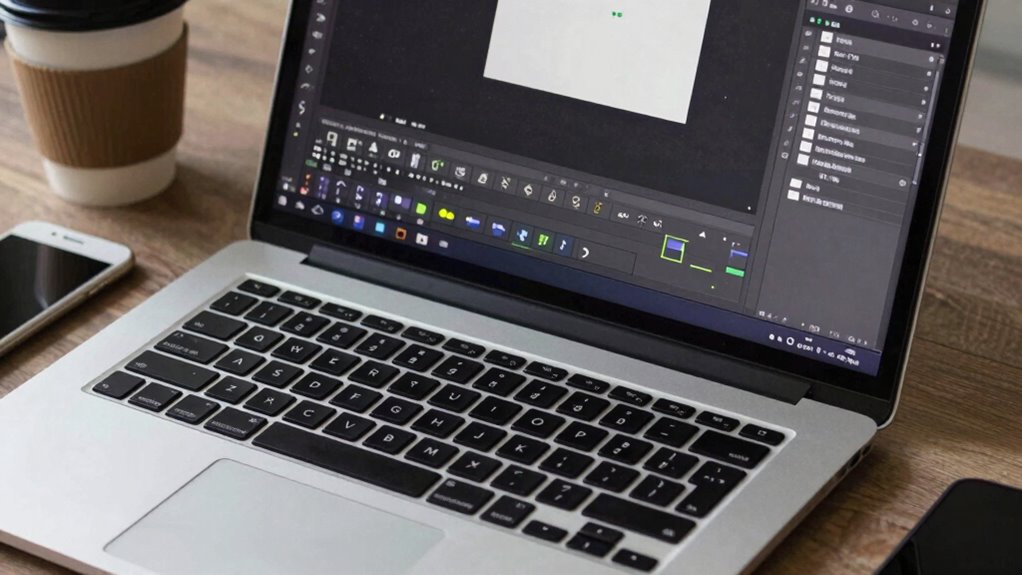
To speed up Photoshop on your laptop, start by adjusting your power settings to prioritize performance. Make sure your graphics drivers are up to date, as outdated drivers can slow down processing. Finally, optimize Photoshop preferences to allocate more memory and improve responsiveness. Additionally, consider how your laptop’s performance can be influenced by regulatory considerations that may affect hardware capabilities during intensive tasks. Implementing energy-saving tips can also help manage your laptop’s overall performance during demanding applications.
Adjust Power Settings
Adjusting your laptop’s power settings is a simple yet effective way to boost Photoshop’s performance. When set to high-performance mode, your system prioritizes power consumption over battery life, giving Photoshop more resources to run smoothly. This prevents your laptop from throttling CPU and GPU speeds, reducing lag and delays. To optimize, switch to a high-performance power plan, disable power-saving features, and turn off background processes that drain resources. Keep in mind, increased power consumption can drain your battery faster, so use this setting when plugged in. Regularly modifying these settings ensures your laptop delivers maximum performance without unnecessary restrictions. Achieving the right balance helps your Photoshop work stay fast and responsive, especially during demanding tasks.
Update Graphics Drivers
Updating your graphics drivers is essential for ensuring Photoshop runs smoothly and efficiently. Driver updates improve graphics performance by fixing bugs, enhancing compatibility, and optimizing how your GPU handles complex tasks. Outdated drivers can cause lag, crashes, or sluggish response times, especially when working with large files or advanced features. To update, visit your GPU manufacturer’s website—NVIDIA, AMD, or Intel—and download the latest driver version. Follow the installation instructions carefully. Regularly updating drivers guarantees your graphics performance remains at its best, reducing bottlenecks that slow down your workflow. Keep in mind that updated drivers can also patch security vulnerabilities, keeping your system safer. Staying current with your driver updates is a simple yet effective step to boost Photoshop’s speed on your laptop.
Optimize Photoshop Preferences
Optimizing Photoshop preferences can substantially improve its speed and responsiveness on your laptop. Adjusting settings helps reduce lag and ensures smoother workflow. Start by calibrating your display for accurate color representation, which minimizes unnecessary corrections later. Fine-tune brush settings to match your typical work style, reducing lag during painting or retouching. Disable unnecessary plugins and background processes to free up resources. Allocate more RAM and cache levels within Photoshop preferences for faster processing. Also, set your color calibration profile correctly to prevent delays caused by color mismatches. Finally, tweak document history states to limit the number of undo steps, decreasing memory usage. These simple adjustments make a notable difference in Photoshop’s speed, keeping your laptop running smoothly.
When to Upgrade Hardware for Better Photoshop Performance

Knowing when to upgrade your hardware can considerably boost Photoshop’s performance, especially if you notice persistent lag or slow rendering times. If your laptop struggles despite optimizing settings, it’s time to contemplate hardware upgrades. Overheating caused by inadequate laptop cooling can throttle performance, so upgrading cooling solutions or cleaning vents might help. If you frequently work with external displays, make sure your GPU can handle multiple screens smoothly; upgrading your graphics card may be necessary. Additionally, if your laptop’s RAM or SSD is outdated, upgrading these components can dramatically improve speed and responsiveness. Recognizing these signs early lets you invest in the right hardware enhancements, assuring smoother workflows and faster rendering times in Photoshop.
Frequently Asked Questions
Can Outdated Drivers Affect Photoshop’s Performance on My Laptop?
Outdated drivers can definitely affect Photoshop’s performance on your laptop. Your graphics card relies on driver updates to optimize compatibility and speed. When drivers are outdated, Photoshop might run slower, lag, or crash unexpectedly. To keep things smooth, regularly check for the latest driver updates from your graphics card manufacturer. Updating drivers guarantees your graphics card works efficiently with Photoshop, improving performance and reducing bottlenecks.
How Does Screen Resolution Impact Photoshop’s Speed?
Higher screen resolutions can slow down Photoshop because they demand more GPU and CPU power for rendering and display. Display scaling settings can also impact performance, as improper scaling may cause additional processing overhead. Additionally, poor color calibration might make you work harder to see details accurately, indirectly affecting your workflow speed. To optimize performance, consider lowering resolution or adjusting display settings, and guarantee your drivers support your display configuration.
Do Laptop Cooling Issues Slow Down Photoshop Processing?
Yes, laptop overheating can slow down Photoshop processing. When your laptop’s cooling system isn’t working well, it causes overheating, which triggers thermal throttling. This reduces your CPU and GPU speeds to prevent damage, directly impacting Photoshop’s performance. To fix this, ensure your cooling system is clean and functioning properly. Using a cooling pad can also help keep temperatures down, maintaining peak performance during intensive tasks.
Is External Monitor Use Beneficial or Detrimental to Performance?
They say, “A picture is worth a thousand words,” but an external monitor can be a double-edged sword. External monitor benefits include increased screen real estate and better color accuracy, boosting your Photoshop workflow. However, external monitor drawbacks like potential lag or reduced performance if your laptop’s graphics can’t handle it can slow you down. Weigh these factors to decide if the extra screen space helps or hinders your creative process.
Can Background Antivirus Scans Cause Photoshop to Lag?
Yes, background antivirus scans can cause Photoshop to lag. These processes consume system resources like CPU and RAM, which slows down your editing. Similarly, system updates running in the background can also impact performance, leading to lag or crashes. To improve Photoshop’s speed, you should pause or schedule background processes and updates during your editing sessions, freeing up resources for smoother performance.
Conclusion
Remember, your laptop is the engine behind your creativity. By identifying bottlenecks, upgrading hardware, and fine-tuning settings, you can turn sluggish Photoshop sessions into smooth sailing. Don’t let slow performance be the anchor that drags down your productivity—take control now! After all, isn’t it time your tools worked as hard as you do? With these tips, you’re well on your way to unlocking your full artistic potential.