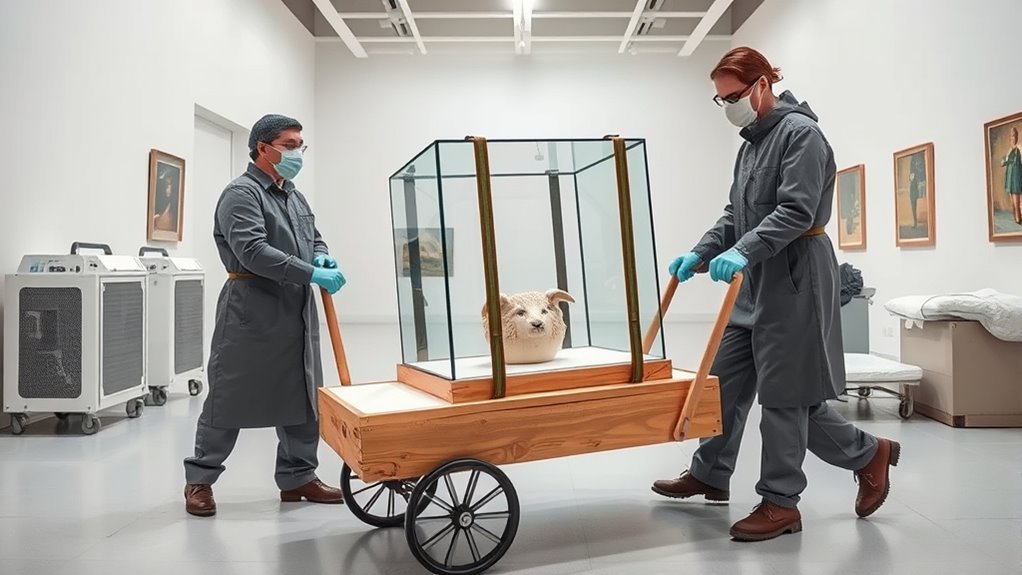

To handle and transport artworks safely, use sturdy packing materials like bubble wrap, acid-free tissue, and secure boxes. Carefully cushion each piece and label fragile items clearly. Plan the safest route, avoiding rough roads and sharp turns, and work with professional carriers experienced in art transit. Monitor conditions during transit and check for damage upon arrival. Proper packaging and planning minimize risks—knowing more will help you master every step of the process.
Key Takeaways
- Use sturdy boxes, bubble wrap, and foam padding to securely protect each artwork during packing.
- Plan the safest, most direct route, avoiding rough roads and heavy traffic to minimize transit risks.
- Label boxes clearly as fragile and mark the correct orientation to ensure proper handling.
- Handle artworks with care during loading and unloading, using proper lifting techniques and immobilizing items inside containers.
- Monitor transit conditions continuously and inspect artworks immediately upon arrival for any damage.

Handling and transporting artworks require careful planning and attention to detail to prevent damage. When you’re preparing to move a piece, your first priority is selecting the right packing materials. You need sturdy boxes, bubble wrap, foam padding, and acid-free tissue paper to guarantee the artwork stays secure. Wrap each piece carefully, cushioning all sides to absorb shocks and prevent scratches. Use foam corners or edge protectors for frames and delicate edges, and secure everything with packing tape that doesn’t leave residue. These packing materials aren’t just about cushioning; they also help stabilize the artwork during transit, reducing the risk of movement that could cause cracks or breaks. Additionally, understanding the cost considerations involved in transportation can help you budget effectively and choose appropriate service providers.
Proper packing materials safeguard artworks during transport, preventing damage and ensuring stability throughout the journey.
Equally important is route planning. Before you start moving the artwork, map out the safest, most direct route to your destination. Consider traffic patterns, road conditions, and potential obstacles that could cause delays or sudden jolts. Avoid rough roads and areas with frequent stops or sharp turns, which can jostle your artwork. Planning your route in advance allows you to choose the smoothest path, minimizing vibrations and sudden impacts. If possible, coordinate with professional carriers who specialize in art transportation—they often have experience with ideal routes and handling techniques. During transit, monitor weather conditions as well, since rain, snow, or extreme heat can affect the packaging integrity and stability of your artwork.
When packing, always keep a detailed inventory of each piece, noting its condition and any special handling instructions. Label boxes clearly as fragile, and mark the top side to ensure proper orientation during loading and unloading. Secure the packed artwork in a sturdy, appropriately sized crate or container designed for art transportation. You might also consider using shock-absorbing pallets or custom crates if the artwork is particularly valuable or fragile.
On the day of transport, double-check that all packing materials are in place and that the artwork is immobilized inside its container. During loading, handle everything with care, and avoid rushing. When the artwork is in transit, continuously monitor the vehicle’s route and conditions, adjusting if necessary to avoid rough roads or delays. Once at the destination, unload gently, following the same careful procedures, and inspect the artwork immediately for any signs of damage. By paying close attention to packing materials and route planning, you considerably reduce the risks associated with moving valuable artworks and ensure they arrive safely at their new location.

30 Pack Large Foam Pouches 22×26 in, Cushion Foam Wrap Pouches
- Large Pack of Foam Pouches: 30 pieces, 22×26 inches each
- High-Quality EPE Foam Material: Elastic, durable, and protective
- Ideal for Fragile Items: Protects dishes, frames, artwork, and more
As an affiliate, we earn on qualifying purchases.
As an affiliate, we earn on qualifying purchases.
Frequently Asked Questions
What Are Common Mistakes to Avoid During Artwork Handling?
You should avoid packing errors like using incorrect materials or not securing artwork properly, which can cause damage during transit. Improper labeling is another common mistake; always clearly mark fragile items and handle instructions to prevent mishandling. Additionally, don’t rush the process—take your time to verify each piece is protected and correctly identified. Being meticulous helps prevent accidents and ensures your artwork arrives safely at its destination.
How Do Climate Conditions Affect Artwork Safety During Transport?
Climate conditions considerably cause complications during transport. You must monitor humidity control to prevent mold or warping, and maintain temperature stability to avoid cracking or deterioration. Fluctuating conditions can damage delicate surfaces and fragile structures. By consistently controlling these climate elements, you safeguard your artwork from moisture misfortunes and thermal trauma, ensuring safe, sound transport. Proper preparation and proactive climate care keep your masterpieces protected from potential perils en route.
What Insurance Options Are Recommended for Transported Artworks?
You should consider all-encompassing insurance coverage tailored for artworks, ensuring protection against theft, damage, and loss during transportation. Obtain accurate valuation appraisals to determine the correct coverage amount, avoiding underinsurance. Choose specialized art insurance providers who understand the nuances of transit risks. Review policy details carefully, including exclusions and claim procedures. Proper insurance coverage gives you peace of mind, knowing your valuable artworks are safeguarded throughout the handling and transport process.
How Can Technology Improve Artwork Security During Transit?
You can dramatically boost artwork security during transit by leveraging cutting-edge technology. Digital tracking devices act like an eagle-eyed guardian, constantly monitoring your art’s every move in real-time. Pair this with secure packaging that’s virtually impenetrable, ensuring your masterpiece stays protected from theft or damage. Together, these tools create an unstoppable fortress, giving you peace of mind knowing your artwork is under the most advanced security measures available.
What Training Is Essential for Personnel Handling Artworks?
You need to guarantee personnel handling artworks are trained in handling protocols and safety procedures. This includes proper lifting techniques, secure packing methods, and understanding environmental controls. Training should cover risk assessments, emergency response, and the use of specialized equipment. By doing so, you reduce the risk of damage or accidents, ensuring artworks stay safe throughout handling and transportation. Regular refreshers and updates on best practices are also essential for ongoing safety.

(Pack of 2) Studio 24×36 Inch Unfinished Art Board, Vertical Cradled Canvas Board with Artwork Shipping Crate, 2 Inch Thick Frame
- Pack Size: 2 large wood panels
- Dimensions: 24×36 inches, 2-inch thickness
- Durable Storage: Reusable shipping and storage case
As an affiliate, we earn on qualifying purchases.
As an affiliate, we earn on qualifying purchases.
Conclusion
By paying close attention to handling and transportation, you guarantee your artworks remain treasured and pristine, like delicate whispers of history. With careful planning and gentle touch, you protect their story for future generations to cherish. Remember, every careful step you take is a silent promise to preserve beauty and meaning. Embrace these practices, and you’ll keep their essence alive, whispering their magic softly into the tomorrow you help shape.

Boxlium Fragile Item Shipping Box with Protection Foam – Cardboard Mailing Box for Glassware, Cosmetics, Medals & Delicate Goods, Secure Heavy-Duty Packaging Container
- Product Dimensions: 17"L x 12"W x 4"H
- Bottom Foam Size: 15"L x 10.2"W x 1.2"H
- Top Foam Size: 7.9"L x 7.9"W x 1.6"H
As an affiliate, we earn on qualifying purchases.
As an affiliate, we earn on qualifying purchases.

3/16" SH Small Bubble Cushioning Wrap Padding Roll 700'x 12" Wide Perf 12" 700FT
- Number of Rolls: 2 rolls included
- Total Length: 700 feet total
- Roll Length: 350 feet per roll
As an affiliate, we earn on qualifying purchases.
As an affiliate, we earn on qualifying purchases.