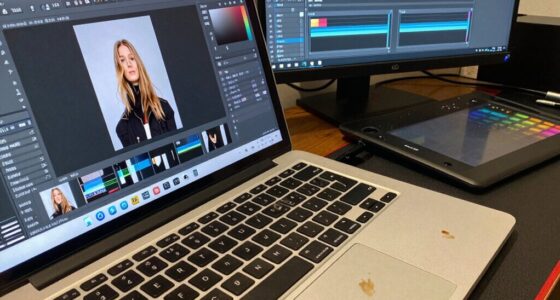
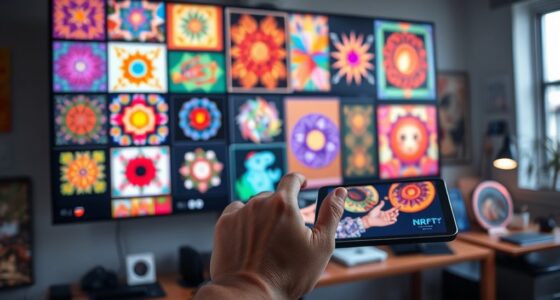
AI is revolutionizing concept art and storyboarding by helping you generate detailed visuals faster, allowing for quicker experimentation and exploration of different styles. It acts as a creative partner, suggesting variations and inspiring new ideas that push your work further. This technology makes it easier for both beginners and pros to refine their concepts efficiently. If you’re curious about how to harness AI’s full potential in your projects, there’s more to discover ahead.
Key Takeaways
- AI accelerates the creation of detailed concept art and storyboards, enabling faster visual development.
- It fosters creative collaboration by generating variations and inspiring new ideas during the design process.
- AI tools streamline storyboarding, allowing quick testing of scenes, compositions, and moods for effective storytelling.
- They democratize access to concept art, empowering beginners and diverse creators to participate in visual development.
- AI augments human creativity by providing powerful, efficient tools that enhance originality and visual refinement.

Artificial Intelligence is transforming how artists and storytellers create concept art and storyboards, making these processes faster and more innovative. With AI generated imagery, you can generate detailed visuals in a fraction of the time it would traditionally take, allowing you to experiment with ideas more freely. Instead of spending hours sketching different scenes or characters, you input your concepts, and AI tools produce a range of visuals that match your vision. This not only accelerates your workflow but also opens up new avenues for creativity, as you can explore styles and compositions that might have taken weeks to develop manually.
One of the most exciting aspects of AI’s influence is its role in creative collaboration. You can work alongside AI as a co-creator, bouncing ideas back and forth to refine your concepts. This partnership enables you to push boundaries and discover unique visual solutions you might not have considered on your own. For instance, if you’re designing a futuristic city or a fantastical creature, AI can suggest variations, color schemes, or perspectives that enrich your initial ideas. This collaborative process becomes a dynamic dialogue, where your input guides the AI’s output, and the AI inspires new directions for your work.
AI’s ability to generate imagery also means you can easily produce multiple versions of a scene or character without starting from scratch each time. This rapid iteration is invaluable in storyboarding, where visual storytelling needs to be clear and compelling. You can quickly test different compositions or moods, then choose the best options to move forward with. Additionally, AI tools often come equipped with features that help you adjust details, refine styles, or incorporate specific visual elements, giving you greater control over the final product.
Moreover, AI enhances accessibility for artists and storytellers at all skill levels. Beginners can leverage AI generated imagery to learn and experiment without needing extensive training in traditional art techniques. Experienced professionals, on the other hand, can integrate AI into their existing workflows to boost productivity and creativity. This democratization of tools encourages more diverse voices in concept art and storyboarding, fostering richer storytelling and more innovative visuals.
In essence, AI’s impact on concept art and storyboarding isn’t about replacing human creativity but augmenting it. It provides you with powerful tools for faster production, richer experimentation, and deeper collaboration. As you embrace AI, you’ll find yourself creating more dynamic, polished visuals that bring your ideas to life with unprecedented speed and originality. Embracing predictive modeling can further enhance your ability to anticipate and refine visual concepts based on audience preferences and trends.

Write with AI: Conquer Writer’s Block, Unleash Your Creativity, and Write Your Book Using Artificial Intelligence
As an affiliate, we earn on qualifying purchases.
As an affiliate, we earn on qualifying purchases.
Frequently Asked Questions
How Does AI Influence Traditional Art Techniques?
AI influences traditional art techniques by enhancing your creativity and enabling new forms of artistic collaboration. It offers tools that streamline your workflow, allowing you to experiment more freely and explore innovative ideas. With AI, you can combine your skills with machine-generated suggestions, pushing the boundaries of conventional methods. This synergy fosters a dynamic artistic process, making your work more diverse and expressive while opening up fresh possibilities for artistic growth.
Can AI Replace Human Concept Artists Entirely?
Can AI replace human concept artists entirely? It’s unlikely you’ll see that happen soon. While AI can generate impressive visuals, issues like AI ethics and creative collaboration remain. Human insight, emotion, and intuition drive innovation, which AI can’t fully replicate. Instead, AI becomes a tool that enhances your creativity, pushing boundaries you might not reach alone. So, rather than replace, AI will empower you to create even more compelling concepts.
What Ethical Concerns Arise From Ai-Generated Storyboards?
You should consider that AI-generated storyboards raise ethical concerns around intellectual property and creative authenticity. Using AI might infringe on artists’ original ideas or styles, risking plagiarism. It also challenges the authenticity of creative work, as AI lacks personal expression. You need to guarantee proper credit is given and maintain transparency about AI’s role, respecting both intellectual property rights and the value of human creativity in storytelling.
How Accessible Is AI Technology for Small Studios?
AI technology is becoming more accessible like a rising tide, but small studios still face cost barriers that slow adoption. You might find affordable options or open-source tools that ease the process, yet premium solutions can be pricey. While AI adoption is growing, it’s essential to weigh the investment against potential benefits, ensuring you don’t get left behind in this rapidly evolving landscape.
What Skills Are Needed for Artists to Work With AI Tools?
To work effectively with AI tools, you need to develop skills in collaborative workflows and skill adaptation. You should understand how to integrate AI-generated ideas with your creative process, communicate clearly with tech teams, and learn new software quickly. Staying flexible and open to change helps you leverage AI’s potential. By continuously updating your skills, you can enhance your artistry and stay competitive in an evolving industry.
![MixPad Free Multitrack Recording Studio and Music Mixing Software [Download]](https://m.media-amazon.com/images/I/71ltIxIuz1L._SL500_.jpg)
MixPad Free Multitrack Recording Studio and Music Mixing Software [Download]
- Multitrack Recording and Mixing: Create mixes with audio, music, and voice tracks
- Track Customization: Add effects and editing tools to tracks
- Music Creation Tools: Includes Beat Maker and MIDI Creator
As an affiliate, we earn on qualifying purchases.
As an affiliate, we earn on qualifying purchases.
Conclusion
As you explore AI’s influence, you’ll notice it accelerates creativity and streamlines workflows. Did you know that 65% of artists report using AI tools to generate initial ideas faster? This shift means you can focus more on refining concepts rather than starting from scratch. Embracing AI doesn’t replace your skills; it amplifies them, enabling you to bring your visions to life more efficiently and innovatively than ever before.

Canva for Side Hustlers and Digital Creators: The Visual Guide to Canva's AI Tools, Digital Product Creation, and Monetizing Your Creativity
As an affiliate, we earn on qualifying purchases.
As an affiliate, we earn on qualifying purchases.

The AI-Assisted Engineering Playbook: Guardrails, Code Review, Metrics, and Phased Rollout for Engineering Managers and Tech Leads — Illustrated Workbook Edition
As an affiliate, we earn on qualifying purchases.
As an affiliate, we earn on qualifying purchases.