To make your art look its best with track lighting, aim the fixtures carefully to highlight textures and colors without creating glare. Use narrower beam angles for detailed pieces and wider angles for larger artworks. Adjust the height and angle to avoid reflections and spill light, making sure light is focused and even. If you keep these tips in mind, you’ll create a stunning, well-lit display that truly shows off your art. Keep going to learn more about perfecting your setup.
Key Takeaways
- Aim track lights carefully to highlight artwork without causing glare or reflections.
- Use narrow beam angles (10-20°) for detailed, focused lighting; wider angles (30-60°) for softer coverage.
- Adjust fixture height and angle to control spill light and prevent harsh spots or shadows.
- Incorporate diffusers or shields to soften glare and direct light precisely where needed.
- Regularly review and fine-tune lighting to ensure even, glare-free illumination that enhances art details.

AUQUEE 8 Light Track Lighting Fixtures Ceiling, Matte Black Kichen Track Lighting Fixtures, Rotatable Light Heads, Adjustable Modern LED Track Lights for Kitchen/Hallway, No GU10 Bulb
Black 8 Light track lighting fixures ceiling with Long Size: The 55.3'' length allows this kitchen track lighting…
As an affiliate, we earn on qualifying purchases.
As an affiliate, we earn on qualifying purchases.
How Does Track Lighting Enhance Your Art Display?
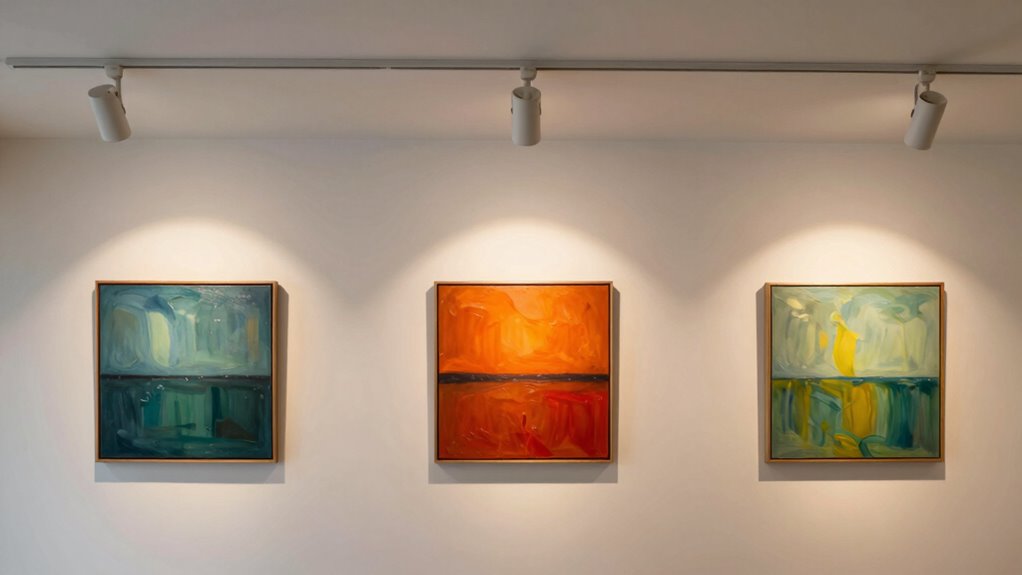
Have you ever wondered how to make your artwork truly stand out? Track lighting enhances your display by controlling how light interacts with your art. The right light color can bring out the true vibrancy of colors in your piece, whether you prefer warm or cool tones. Adjusting the color temperature allows you to set the mood, highlighting details or creating a specific atmosphere. Track lighting’s flexibility means you can direct light precisely where it’s needed, emphasizing textures, shadows, and colors. By choosing fixtures with adjustable light color and temperature, you guarantee your artwork is illuminated beautifully and accurately. This control helps viewers appreciate the depth and richness of your art, making your display more engaging and visually compelling. Additionally, exploring new content formats can provide fresh insights on how to enhance art displays using lighting techniques. Understanding how artistic expression affects viewer perception can further inform your lighting choices. Moreover, maintaining good indoor air quality can also enhance the overall experience of appreciating art in your space, especially when paired with global flavors that stimulate the senses. Incorporating mind-body healing** techniques, such as mindfulness, can also enrich the viewer’s connection to the artwork displayed.

Full Glass PAR16 LED Spotlight Bulbs Dimmable 5W(50W Equivalent),Short Neck HR16/PAR16 Flood Light,Warm White 3000K,Narrow Beam Angle Track Light,Ceiling Recessed Lighting,E26/E27,Waterproof,4-Pack
[DIRECT HALOGEN REPLACEMENT — PLUG & PLAY UPGRADE] Same short-neck profile as traditional HR16/PAR16 halogen reflector bulbs —…
As an affiliate, we earn on qualifying purchases.
As an affiliate, we earn on qualifying purchases.
Choosing the Best Track Lighting Fixtures for Art
Choosing the Best Track Lighting Fixtures for Art
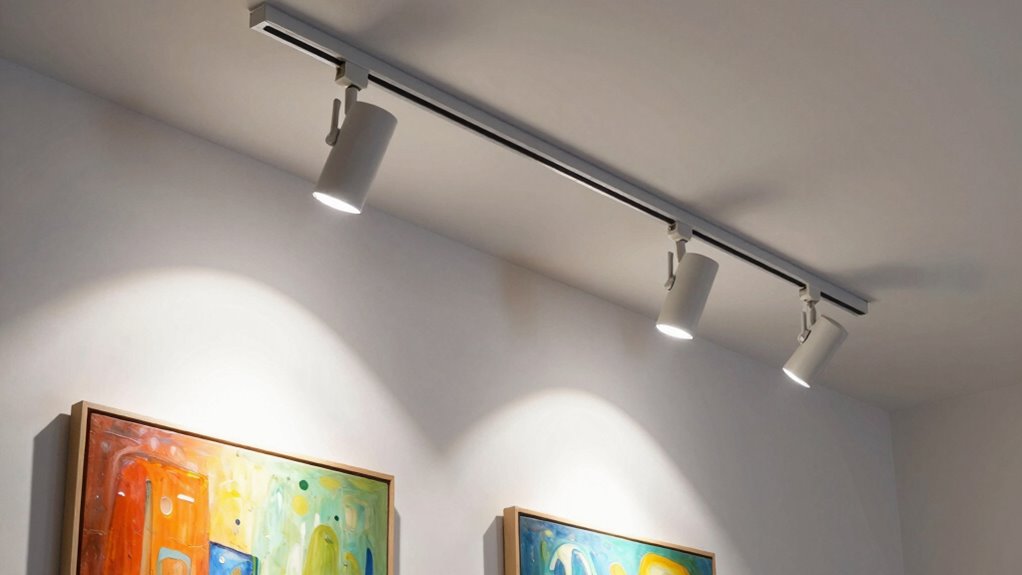
Selecting the right track lighting fixtures is vital to effectively showcase your artwork, as the fixtures directly influence how light interacts with your pieces. You should consider the color temperature of the fixtures—warm light creates a cozy, inviting atmosphere, while cooler tones highlight details and textures. Fixture compatibility is also important; make sure the fixtures you choose fit your track system and support the wattage needed for your art. Look for adjustable fixtures that allow you to control beam spread and direction without hassle. Choosing fixtures with high-quality bulbs ensures consistent, flicker-free illumination. Additionally, incorporating music therapy can enhance the overall atmosphere of your space, promoting relaxation and focus while you enjoy your art. By paying attention to color temperature and fixture compatibility, you’ll create a perfect environment that highlights your art’s colors, details, and overall impact. Moreover, using fixtures that support high color accuracy can significantly improve how your artwork is perceived under artificial light. Remember that implementing employee ownership programs can also foster a sense of pride and engagement in your space, enhancing your overall enjoyment of the art displayed. Properly maintaining your fixtures ensures longevity and optimal performance, making it essential to follow eco-friendly disposal tips when replacing outdated or damaged lighting solutions.

THMOOTHER 10-Pack 3.3FT 1Meter V Shape LED Strip Aluminum Channel Diffuser System, Extruded Alu Track Milky Cover with Corner Connector and Mounting Kit,Easy Cut and Installed Curved Lens Profile
Mounting Clips: Includes 3 mounting clips for 1 channel and 2 corner connectors for 10 channels
As an affiliate, we earn on qualifying purchases.
As an affiliate, we earn on qualifying purchases.
How to Aim Track Lights for Stunning Art Illumination
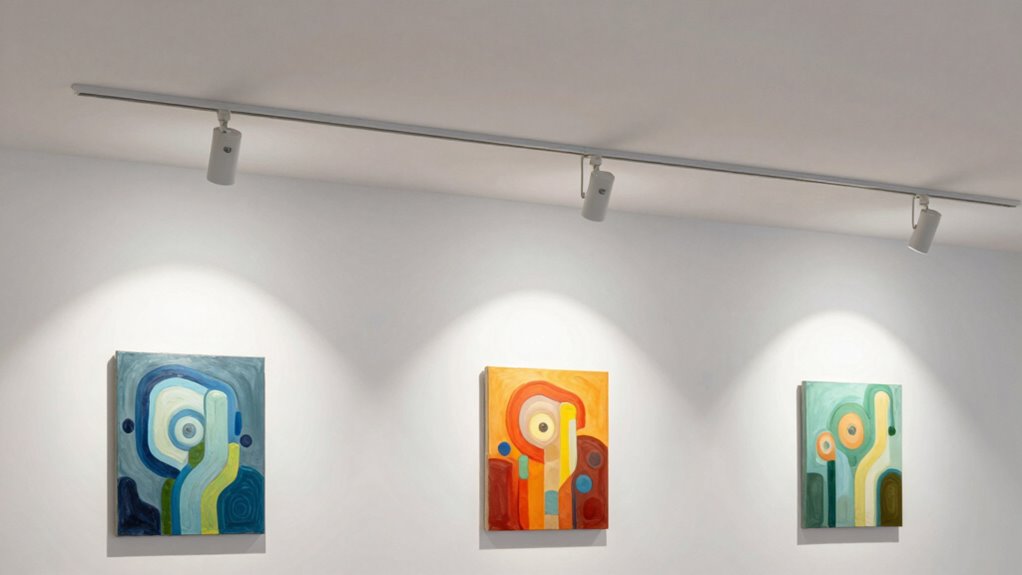
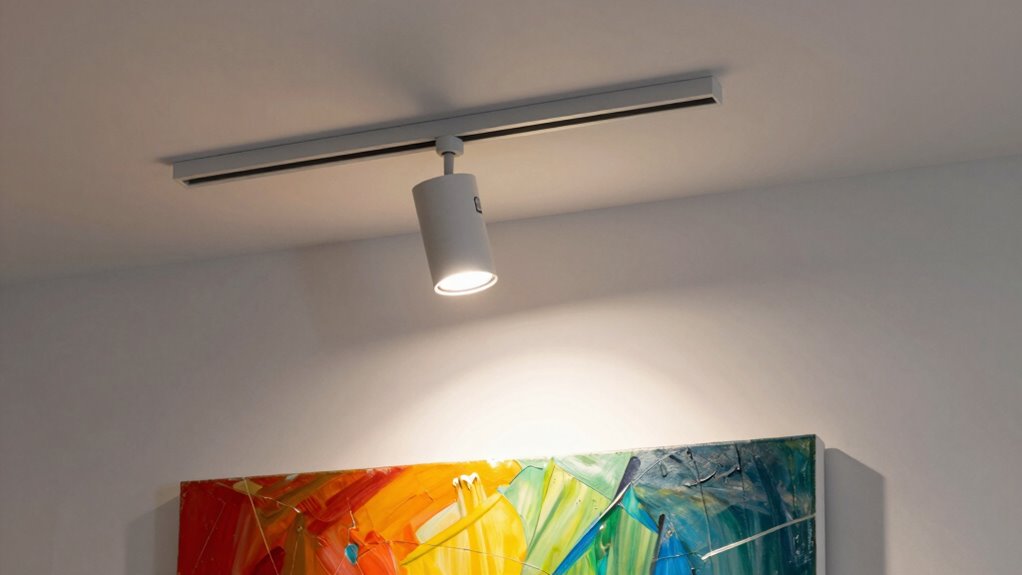
Once you’ve chosen the right fixtures, the next step is to aim them properly to showcase your artwork at its best. Focus on aligning the light to highlight key details without creating harsh shadows or glare. Adjust the angle so the light hits the art directly, rather than from the side, to guarantee even illumination. Pay attention to the color temperature; a warm white (around 2700K to 3000K) often enhances the art’s natural tones. Also, consider the power consumption of your fixtures—using energy-efficient LED track lights can help you achieve ideal brightness while saving energy. Regularly check the aim and adjust as needed to maintain consistent lighting that enhances your artwork’s colors and details without causing glare or hotspots.

VANoopee 12 Pack 5-Color LED Track Lighting Heads H Type Track Light Heads Dimmable, 2000K 3000K 4000K 5000K 6000K Adjustable, Flicker Free CRI90+ 24° 10W 800lm, Black
🌈 5 Color Temperature Options➤Customize your lighting experience with our innovative 5CCT H track light heads. Easily adjust…
As an affiliate, we earn on qualifying purchases.
As an affiliate, we earn on qualifying purchases.
What Beam Angle Is Ideal for Art Lighting?
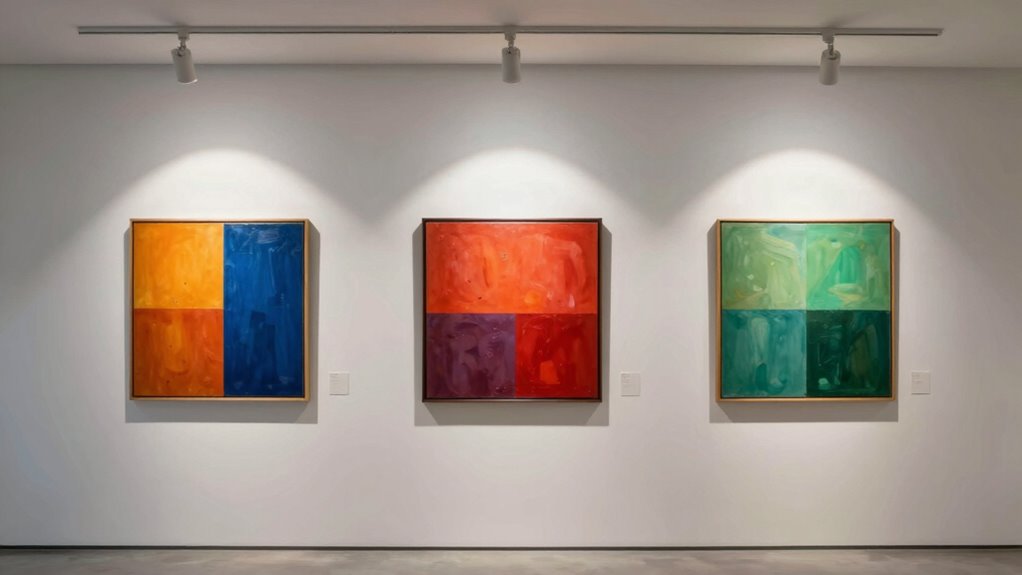
Choosing the right beam angle affects how well your artwork is illuminated, balancing focus and coverage. A narrower angle provides more concentrated light, highlighting details, while a wider spread offers better overall coverage. Consider your artwork’s size and display space to find the most suitable beam spread for your setup. Additionally, understanding long-term adaptability can help you choose lighting that enhances your art over time. Incorporating aromatherapy benefits can also create a more inviting atmosphere that complements the visual experience of your artwork.
Optimal Beam Spread
Have you ever wondered what beam angle works best for illuminating artwork? The most suitable beam spread depends on how you want the light to interact with the piece. A narrower beam angle, around 10-20 degrees, provides focused light with minimal light diffusion, highlighting details and textures. This is ideal for highlighting specific features or creating dramatic effects. Conversely, a wider beam angle, 30-60 degrees, offers softer, more diffuse illumination, which reduces glare and evenly lights larger areas. When choosing, consider the color temperature of your track lights, as warmer tones create a cozy atmosphere, while cooler tones enhance clarity. The right beam spread balances light diffusion and focus, ensuring your art is showcased beautifully without harsh shadows or glare. Additionally, consider template compatibility when selecting fixtures to ensure they enhance your overall home office design. Furthermore, incorporating techniques from recovery routines can help maintain your space’s functionality and aesthetics.
Focus and Flexibility
When it comes to balancing focus and flexibility in art lighting, the ideal beam angle depends on how much control you want over the illumination. A narrow beam angle, around 15-30 degrees, provides concentrated light, highlighting specific artwork and emphasizing details. This offers precise focus but less flexibility to adjust the lighting spread. A wider beam angle, 45 degrees or more, spreads light more evenly, making it easier to illuminate multiple pieces or change displays without repositioning fixtures. Consider the color temperature to match the artwork’s tones and desired ambiance. Additionally, choosing energy-efficient LEDs with adjustable beam angles allows you to optimize focus while conserving power. Ultimately, your choice should align with your need for control, ambient needs, and the flexibility to adapt as your collection evolves.
How to Reduce Glare and Spill Light When Lighting Art

To minimize glare and spill light, start by using narrow beam angles to focus illumination directly on your artwork. Adjust the position of your lights until you find a perfect angle that reduces unwanted reflections, and consider adding diffusers or shields to block excess light. These steps help create a clean, glare-free display that highlights your art beautifully. Additionally, seasonal recommendations for lighting can further enhance the visual appeal of your artwork throughout the year. Incorporating Victorian aesthetics into your lighting design can also complement the overall presentation of your art. Consider the importance of market analysis to select the best lighting techniques that align with your artistic vision. To ensure comfort and safety while setting up your lighting, remember to use safe installation practices to avoid accidents. Understanding environmental considerations can also guide you in choosing lighting that is both effective and sustainable.
Use Narrow Beam Angles
Using narrow beam angles in your track lighting helps direct light precisely onto artwork, reducing glare and spill light that can distract from the piece. This is especially important in art galleries and museum lighting, where focus and clarity matter. Narrow beams concentrate light, minimizing unwanted spill and glare, creating a clean, professional look. To choose the right beam angle, consider the size of the artwork and the distance from the light source. A smaller angle, such as 10-15 degrees, works well for highlighting details without overwhelming the piece. Properly used, narrow beam angles enhance the viewing experience and preserve the artwork’s integrity. Additionally, effective home soundproofing can help create a distraction-free environment to fully appreciate the art on display.
Using the right lighting techniques can significantly improve the overall presentation of your artwork, making it essential to implement best shopping practices when selecting fixtures.
| Artwork Size | Recommended Beam Angle |
|---|---|
| Small or detailed pieces | 10-15 degrees |
| Larger or broad works | 20-30 degrees |
| Close to artwork | Narrower angles |
| Farther from artwork | Slightly wider angles |
| Museum lighting goals | Precise, focused beams |
Adjust Light Positioning
Sure! Here’s your revised article subheading content:
—
Ever wonder how to minimize glare and spill light when illuminating artwork? Adjusting your track lighting’s position can make a big difference. First, change the mounting height: lowering the fixtures reduces spill light, while raising them focuses the light more precisely. Second, consider the color temperature; warmer tones (around 2700K–3000K) create softer, less harsh reflections on art surfaces. Third, aim the lights carefully—direct illumination at the artwork’s center avoids unwanted glare on glass or glossy surfaces. Keep the fixtures angled to prevent light from spilling onto surrounding walls or other objects. By fine-tuning the mounting height, choosing the right color temperature, and carefully aiming your lights, you can enhance your artwork’s visibility while minimizing glare and spill light. Additionally, effective lighting can support metabolic health by creating an environment that promotes overall well-being and focus. The interplay of light and art can also reflect cultural heritage, enriching the viewer’s experience.
—
Please let me know if you need any further modifications!
Incorporate Diffusers or Shields
Incorporating diffusers or shields into your track lighting setup helps control glare and spill light, making your artwork more visually appealing. Diffuser options include frosted or textured lenses that soften the light and reduce harsh reflections. Shields, such as barn doors or cone-shaped covers, direct light precisely onto your artwork and block unwanted spill. Shield types vary from adjustable metal flaps to plastic barriers, allowing you to customize light spread. By choosing the right diffuser options or shield types, you guarantee glare that can distract viewers and prevent light from spilling onto surrounding surfaces. This ensures your art remains the focal point, with even, controlled illumination that highlights details without causing discomfort. Additionally, maintaining adequate sleep can enhance your overall focus and appreciation of the art being illuminated. Incorporating accountability and goal-setting into your lighting setup can also lead to better decision-making about your art display, ensuring it receives the attention it deserves.
Adjusting Track Lighting for Different Art Sizes and Styles
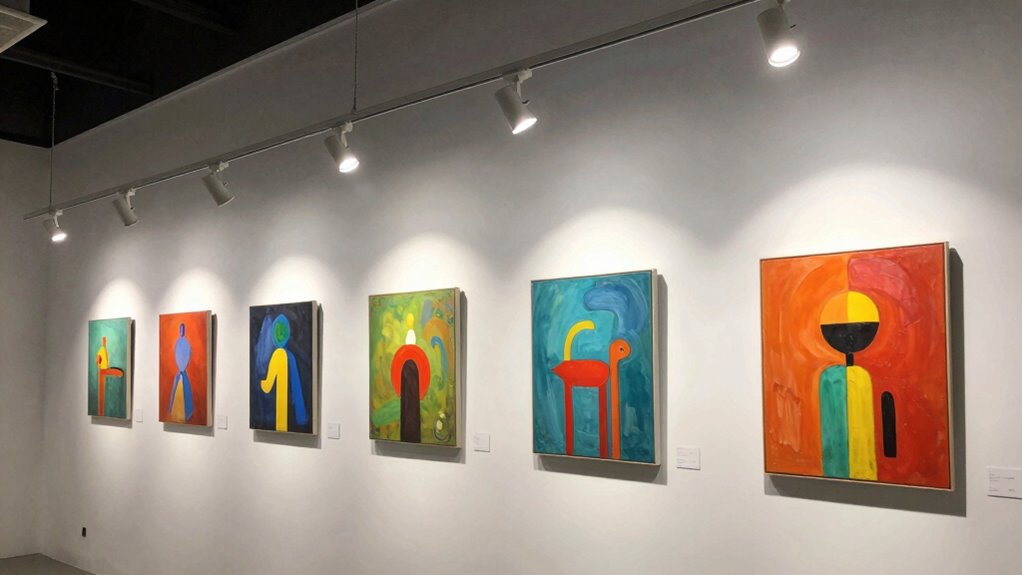
When adjusting track lighting for different art sizes and styles, it’s essential to take into account how the artwork’s dimensions and details influence lighting placement. Larger pieces may need more focused lighting to highlight textures, while smaller works benefit from softer, more even illumination. Consider how the gallery aesthetics are affected by your choices, ensuring the lighting complements the art without overwhelming it. Adjust the lighting color to enhance different styles—warm tones for classic pieces or cooler hues for contemporary art. Keep these points in mind:
- Position lights to avoid glare on delicate details
- Use narrower beam angles for small or detailed artwork
- Widen beam angles for larger, bold pieces
These adjustments help create a cohesive, visually appealing display tailored to each artwork’s unique style and size.
Common Mistakes to Avoid in Art Track Lighting
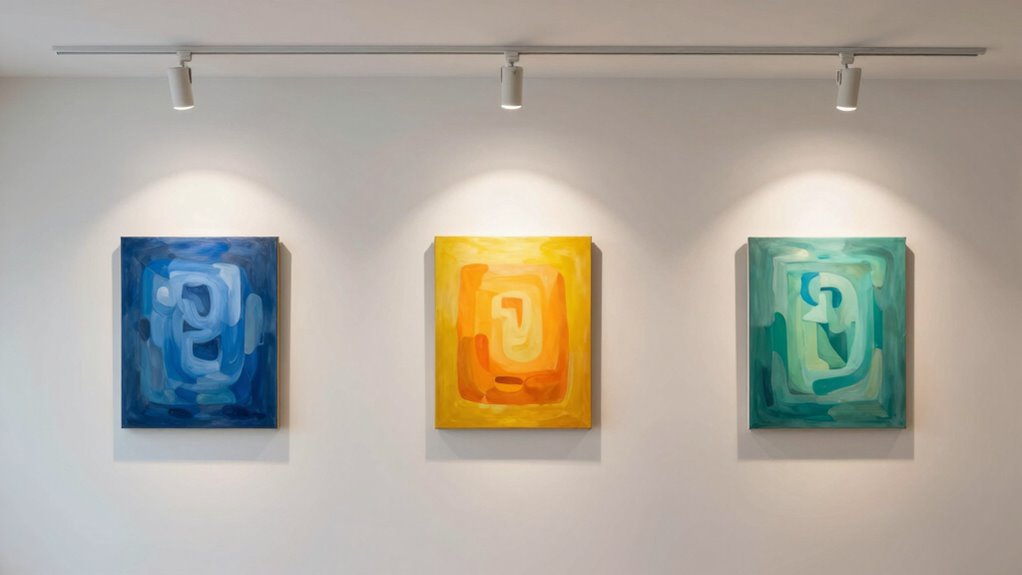
Even with careful adjustments for different artworks, it’s easy to fall into common pitfalls that undermine your lighting setup. One mistake is ignoring color contrast, which can make artwork appear dull or out of sync with its surroundings. You might also select the wrong lighting temperature, causing colors to look unnatural or washed out. Using too warm or too cool lights can distort your artwork’s true hues, affecting how viewers perceive it. Another mistake is neglecting even light distribution, leading to glare or uneven highlights. Always consider how your lighting choices influence the artwork’s appearance, ensuring the color contrast enhances details and the lighting temperature preserves authentic colors. Avoid these pitfalls to create a balanced, visually appealing display.
Designing a Flexible, Future-Proof Art Lighting System

Designing a flexible, future-proof art lighting system requires selecting adaptable fixtures and controls that can easily accommodate changing artwork collections and technological advancements. Focus on adjustable light color and color temperature options to match different pieces and moods. This guarantees your lighting remains versatile as your collection evolves. To enhance flexibility, consider fixtures with:
Choose adjustable, smart-compatible fixtures with swappable lenses and dimming for versatile, future-proof art lighting.
- Swappable lenses or beam angles for different art sizes
- Dimmable controls to adjust intensity without changing fixtures
- Compatibility with smart controls for easy updates and automation
Maintaining and Fine-Tuning Your Track Lighting Over Time

Regular maintenance and fine-tuning are essential to keep your track lighting performing at its best and ensuring your artwork remains beautifully illuminated. Over time, fixtures may shift or bulbs weaken, requiring simple lighting maintenance and fixture adjustment. Regular checks help you spot issues like flickering or uneven lighting. Adjust your fixtures to optimize the aim and beam angle, reducing glare and highlighting your art effectively. Keep spare bulbs handy for quick replacements. Use the table below to track your maintenance routine and fixture adjustments:
| Task | Frequency |
|---|---|
| Check for flickering | Monthly |
| Clean fixtures | Every 3-6 months |
| Adjust aim for best focus | As needed |
| Replace bulbs | When dim or flickering |
| Inspect wiring | Annually |
Frequently Asked Questions
Can Track Lighting Be Used for Outdoor Art Installations?
Yes, you can use track lighting for outdoor art installations if it has outdoor durability and weather resistance. Look for fixtures specifically designed for outdoor use, with sealed connections and rust-resistant materials. Properly installed, these lights will withstand rain, wind, and temperature changes, highlighting your art effectively. Just make certain the track system is suitable for outdoor environments and protects your investment from the elements.
How Does Color Temperature Affect Art Appearance Under Track Lighting?
Color temperature considerably impacts how your art appears under track lighting. Warmer temperatures (around 2700K-3000K) give a cozy, inviting glow, enhancing warmth and richness, but may reduce color accuracy for cooler tones. Cooler temperatures (around 4000K-5000K) provide a bright, crisp light that reveals true colors and details, making artwork look more vibrant and accurate. Choosing the right temperature depends on whether you want warmth or precise color rendering.
Are LED Track Lights Suitable for Preserving Delicate Artworks?
Did you know LED lights emit 85% less heat than traditional options? This makes LED track lights ideal for preserving delicate artworks. They’re highly compatible with art displays because you can easily control the light direction, minimizing damage. Plus, their adjustable beams help highlight details without causing glare. So, if you want to protect your art while showcasing it beautifully, LED track lights are a smart choice.
What’s the Best Way to Hide Track Lighting Fixtures From View?
To hide your track lighting fixtures, you should focus on fixture concealment by using mounting options like ceiling trims or paint to match your wall or ceiling. You can also opt for adjustable track mounts that allow the fixtures to blend seamlessly with the ceiling or wall, making them less visible. Installing fixtures flush against the ceiling or wall reduces their profile, keeping the focus on your artwork instead of the lighting setup.
How Often Should Track Lighting Be Adjusted as Art and Room Decor Change?
As your art display evolves, you should adjust your track lighting every few months to keep pieces well-lit and vibrant. Regular lighting maintenance guarantees your artwork stays highlighted just right, especially with art display updates. When you notice shadows or uneven lighting, it’s a good cue to reposition fixtures. Staying proactive helps preserve the visual impact, making sure your space always showcases your art beautifully and accurately.
Conclusion
With the right track lighting, your art can shine like a beacon in a dark room, capturing every detail and color beautifully. By choosing the proper fixtures, aiming carefully, and adjusting the beam angles, you create a gallery-quality display at home. Avoid common pitfalls like glare or spill light, and keep your system flexible for future changes. Think of your lighting setup as a well-tuned instrument, ready to showcase your art in the best possible way.