The best textile and fiber art books depend on whether you want visual inspiration, practical instruction, or a deeper understanding of cloth and craft. I’d put Textiles: The Art of Mankind first for its broad art-and-history perspective, while The Art of Manipulating Fabric stands out for hands-on technique and Textiles x Art for contemporary practice. The main tradeoff is breadth versus depth: survey books offer context, while specialist titles give more room to a particular material or method. Project-focused books can help you make work, but may leave less space for art history or visual research. Read on for the full breakdown and a guide to matching a book to your practice.

Get art and craft supplies delivered free with Prime
- Fast, free delivery on millions of items
- Prime Video, Amazon Music and more included
- Member-only deals all year
Key Takeaways
- Textiles: The Art of Mankind leads as the broadest starting point, while narrower books offer more instruction in a single technique.
- The Art of Manipulating Fabric is a stronger choice for learning surface and form methods than a visual survey with limited step-by-step guidance.
- The two little-loom books serve different needs: one emphasizes beginner techniques and projects, while Inventive Weaving on a Little Loom pushes further into the loom’s creative range.
- Textilepedia: The Complete Fabric Guide is best approached as a material reference, not a substitute for a project-led making manual.
- The lineup spans contemporary sculpture, domestic storytelling, heritage craft, color, and mixed media, so choosing by intended use matters more than seeking one book to cover everything.
| Textiles: The Art of Mankind |  | Best for a Broad Historical Survey | Format: Not provided | Subject: Textiles and textile art | Scope: Not specified in the supplied product data | VIEW LATEST PRICE | See Our Full Breakdown |
| Textiles x Art: How Textiles Are Shaping Contemporary Art |  | Best for Contemporary Art Context | Format: Not provided | Subject: Textiles in contemporary art | Approach: Historical context, critical analysis, and visual examples | VIEW LATEST PRICE | See Our Full Breakdown |
| The Art of Manipulating Fabric |  | Best for Fabric-Surface Experimentation | Format: Not provided | Subject: Fabric manipulation | Specific techniques: Not provided | VIEW LATEST PRICE | See Our Full Breakdown |
| Mixed Media Textile Art in Three Dimensions |  | Best for Textile Sculpture | Format: Not provided | Subject: Three-dimensional textile art | Approach: Mixed-media techniques | VIEW LATEST PRICE | See Our Full Breakdown |
| Fiber Craft Heritage: Easy-to-Learn Textile Techniques from the Stone Age to Today, with 52 Try-It Projects |  | Best for Beginners and Hands-On Learning | Format: Not provided | Subject: Fiber craft and textile techniques | Historical span: Stone Age to today | VIEW LATEST PRICE | See Our Full Breakdown |
| Color and Fiber |  | Best for Color-Focused Study | Title: Color and Fiber | ASIN: 0887400655 | Subject indicated by title: Color and fiber | VIEW LATEST PRICE | See Our Full Breakdown |
| Inventive Weaving on a Little Loom: Discover the Full Potential of the Rigid-Heddle Loom for Beginners and Beyond | 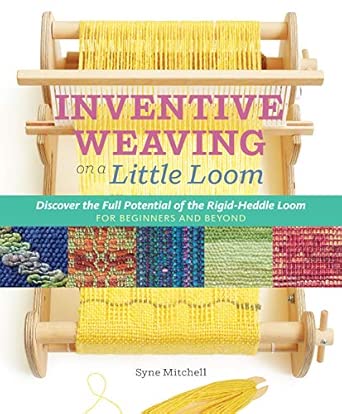 | Best for Rigid-Heddle Beginners | Title: Inventive Weaving on a Little Loom: Discover the Full Potential of the Rigid-Heddle Loom for Beginners and Beyond | ASIN: 1603429727 | Subject: Rigid-heddle loom weaving | VIEW LATEST PRICE | See Our Full Breakdown |
| Nalbinding: Heritage Techniques for the Contemporary Textile Crafter |  | Best for Heritage-Technique Exploration | Title: Nalbinding: Heritage Techniques for the Contemporary Textile Crafter | ASIN: 178994306X | Subject: Nalbinding | VIEW LATEST PRICE | See Our Full Breakdown |
| Dimensional Cloth: Sculpture by Contemporary Textile Artists |  | Best for Textile Sculpture Inspiration | Title: Dimensional Cloth: Sculpture by Contemporary Textile Artists | ASIN: 0764355368 | Format: Hardcover | VIEW LATEST PRICE | See Our Full Breakdown |
| Stitch, Fibre, Metal & Mixed Media: Inspiration, Projects & Techniques for Textile Artists |  | Best for Mixed-Media Experimentation | Title: Stitch, Fibre, Metal & Mixed Media: Inspiration, Projects & Techniques for Textile Artists | ASIN: 1782217886 | Topic: Textile art | VIEW LATEST PRICE | See Our Full Breakdown |
| Cloth Stories: Capturing Domestic Life in Textile Art |  | Best for Narrative and Inspiration | Title: Cloth Stories: Capturing Domestic Life in Textile Art | ASIN: 1849948186 | Subject: Domestic life explored through textile art | VIEW LATEST PRICE | See Our Full Breakdown |
| Weaving on a Little Loom: Techniques, Patterns, and Projects for Beginners |  | Best for Beginning Weavers | Title: Weaving on a Little Loom: Techniques, Patterns, and Projects for Beginners | ASIN: 1616897120 | Subject: Weaving on a little loom | VIEW LATEST PRICE | See Our Full Breakdown |
| Textile Artist: Layered Cloth: The Art of Fabric Manipulation |  | Best for Fabric Manipulation | Title: Textile Artist: Layered Cloth: The Art of Fabric Manipulation | ASIN: 1782213341 | Subject: Layered cloth and fabric manipulation | VIEW LATEST PRICE | See Our Full Breakdown |
| Textilepedia: The Complete Fabric Guide |  | Best Fabric Reference | Title: Textilepedia: The Complete Fabric Guide | ASIN: 9887711098 | Subject: Fabrics | VIEW LATEST PRICE | See Our Full Breakdown |
| The Art of Textile & Fiber Crafts: A Practical Guide to Making by Hand |  | Best Broad Hands-On Guide | Title: The Art of Textile & Fiber Crafts: A Practical Guide to Making by Hand | ASIN: B0GZ5R5GHL | Format: Book | VIEW LATEST PRICE | See Our Full Breakdown |
| textile and fiber art book | ASIN | Format | Subject | Title |
|---|---|---|---|---|
| Textiles: The Art of Mankind | 0500516456 | Not provided | Textiles and textile art | — |
| Textiles x Art: How Textiles A | 1760765511 | Not provided | Textiles in contemporary art | — |
| The Art of Manipulating Fabric | 0801984963 | Not provided | Fabric manipulation | — |
| Mixed Media Textile Art in Thr | 1849946922 | Not provided | Three-dimensional textile art | — |
| Fiber Craft Heritage: Easy-to- | 0764369628 | Not provided | Fiber craft and textile techniques | — |
| Color and Fiber | 0887400655 | Not provided | — | Color and Fiber |
| Inventive Weaving on a Little | 1603429727 | — | Rigid-heddle loom weaving | Inventive Weaving on a Little Loom: Discover the Full Potential of the Rigid-Heddle Loom for Beginners and Beyond |
| Nalbinding: Heritage Technique | 178994306X | Not provided | Nalbinding | Nalbinding: Heritage Techniques for the Contemporary Textile Crafter |
| Dimensional Cloth: Sculpture b | 0764355368 | Hardcover | — | Dimensional Cloth: Sculpture by Contemporary Textile Artists |
| Stitch | 1782217886 | — | — | Stitch, Fibre, Metal & Mixed Media: Inspiration, Projects & Techniques for Textile Artists |
| Cloth Stories: Capturing Domes | 1849948186 | Book | Domestic life explored through textile art | Cloth Stories: Capturing Domestic Life in Textile Art |
| Weaving on a Little Loom: Tech | 1616897120 | Book | Weaving on a little loom | Weaving on a Little Loom: Techniques, Patterns, and Projects for Beginners |
| Textile Artist: Layered Cloth: | 1782213341 | Book | Layered cloth and fabric manipulation | Textile Artist: Layered Cloth: The Art of Fabric Manipulation |
| Textilepedia: The Complete Fab | 9887711098 | Book | Fabrics | Textilepedia: The Complete Fabric Guide |
| The Art of Textile & Fiber Cra | B0GZ5R5GHL | Book | — | The Art of Textile & Fiber Crafts: A Practical Guide to Making by Hand |
More Details on Our Top Picks
Textiles: The Art of Mankind
Textiles: The Art of Mankind is the broadest art-and-history choice in this group, suited to readers who want to see textile traditions as part of human culture rather than begin with a single making technique. Its scope makes it a useful visual reference alongside the more practice-focused Fiber Craft Heritage, which includes hands-on projects. This book’s strength is breadth, not step-by-step instruction: it can help artists and students build context for their work, but it is a weaker fit for someone seeking patterns, materials lists, or guided exercises. Compared with the contemporary-art focus of Textiles x Art, it offers a wider historical frame, though the available product information does not establish its specific coverage or format. Choose it for reference and inspiration, not as a how-to manual.
Pros:- Broad subject framing can connect textile art with wider human culture
- Suitable as a visual reference for study and creative research
- Offers a wider historical perspective than the contemporary-art emphasis of Textiles x Art
Cons:- No project or technique details are supplied, so its usefulness as a practical guide is unclear
- Broad coverage may provide less depth on any single fiber-art process
- The available product information does not specify format, scope, or illustration details
Best for: Textile-art students, educators, and visually oriented readers seeking a wide-ranging cultural and historical reference.
Not ideal for: Beginners who want explicit project instructions, materials lists, or a focused guide to one textile technique.
- Format:Not provided
- Subject:Textiles and textile art
- Scope:Not specified in the supplied product data
- Instructional projects:Not specified
- Techniques covered:Not specified
- Illustrations:Not specified
- ASIN:0500516456
Our verdict“Choose this as a broad textile-art reference, but pick Fiber Craft Heritage if you want projects to make.”
Textiles x Art: How Textiles Are Shaping Contemporary Art
Textiles x Art is the clearest pick here for readers interested in how fiber and fabric operate within contemporary art, rather than as craft techniques alone. Its blend of historical context, critical analysis, and visual examples gives artists and students material for thinking about why textile methods matter in current practice. That makes it more analytical than Fiber Craft Heritage, whose 52 try-it projects suit readers who want to make as they learn. The tradeoff is its narrower subject focus: readers seeking an all-purpose survey or a sequence of practical exercises may find it less useful. Compared with Textiles: The Art of Mankind, this title puts contemporary artistic practice at the center rather than aiming for a broad view of textiles. Choose it for ideas and context, not a project workbook.
Pros:- Connects textile methods with contemporary artistic practice
- Combines historical context with critical analysis
- Uses vivid visual examples to support its discussion
- Described as accessible to both scholars and practitioners
Cons:- Its contemporary-art focus may feel narrow to general craft readers
- No hands-on project program is specified
- The supplied details do not identify particular techniques or artists covered
Best for: Contemporary textile artists, art students, and readers studying fiber-based work in current visual art.
Not ideal for: Hobbyists looking for beginner projects or readers who want a broad, general introduction to textile history and making.
- Format:Not provided
- Subject:Textiles in contemporary art
- Approach:Historical context, critical analysis, and visual examples
- Audience:Scholars and practitioners
- Project count:Not specified
- Illustrations:Richly illustrated with images
- ASIN:1760765511
Our verdict“Pick this for critical and visual context on textiles in contemporary art, not for step-by-step making instruction.”
The Art of Manipulating Fabric
The Art of Manipulating Fabric earns a place for readers drawn to changing cloth through hands-on manipulation, but the supplied information is limited to its title. I would treat it as a potentially technique-led choice, not assume a particular set of methods, projects, or skill level without further details. That makes it a different kind of purchase from Textiles x Art, which is described as a contextual study of contemporary practice, and from Fiber Craft Heritage, whose 52 projects are explicitly identified. The likely appeal is focused exploration of fabric as a material to shape; the tradeoff is uncertainty about how clearly the book teaches and what techniques it covers. Readers who need a dependable project sequence should favor the better-documented Fiber Craft Heritage instead.
Pros:- Its focused title points to fabric manipulation rather than a general textile survey
- May suit artists seeking a material-centered reference
- Provides a distinct subject focus compared with the art-history emphasis of Textiles x Art
Cons:- The supplied product data gives no description of contents or teaching approach
- No project count, skill level, or specific techniques are confirmed
- Buyers cannot judge its breadth or practical usefulness from the available details
Best for: Textile artists specifically interested in fabric manipulation who are comfortable checking the contents before buying.
Not ideal for: New makers who need confirmed project instructions, a stated skill level, or clearly listed techniques.
- Format:Not provided
- Subject:Fabric manipulation
- Specific techniques:Not provided
- Project count:Not provided
- Skill level:Not provided
- Instructional approach:Not provided
- ASIN:0801984963
Our verdict“Consider this for focused fabric-manipulation interest only if you can verify its contents and instructional detail.”
Mixed Media Textile Art in Three Dimensions
Mixed Media Textile Art in Three Dimensions is the most directly sculptural choice in this set: its stated focus is making three-dimensional textile art with mixed-media techniques. That gives it a more specific creative direction than the broad cultural scope of Textiles: The Art of Mankind and a more object-oriented emphasis than Textiles x Art, which examines textiles in contemporary art. The focus may help makers interested in dimensional work choose a direction, but the supplied description does not say whether the book provides step-by-step projects, material guidance, or examples for different skill levels. That uncertainty matters for beginners who need a structured route into sculpture. It is best treated as a targeted source of inspiration or technique exploration, rather than a confirmed complete course in three-dimensional textile making.
Pros:- Has a distinct three-dimensional textile-art focus
- Combines textile work with mixed-media approaches
- Offers a more sculptural direction than broad textile-history references
Cons:- The supplied description does not confirm project instructions or teaching depth
- Specific materials and techniques are not listed
- Readers seeking a broad survey of textile traditions may find the focus too narrow
Best for: Textile artists and mixed-media makers who want to explore sculptural, dimensional outcomes with fabric and fiber.
Not ideal for: Beginners who need confirmed step-by-step lessons, project counts, or a clearly stated list of materials and techniques.
- Format:Not provided
- Subject:Three-dimensional textile art
- Approach:Mixed-media techniques
- Specific materials:Not provided
- Project count:Not provided
- Skill level:Not provided
- ASIN:1849946922
Our verdict“Choose this if your main goal is dimensional mixed-media textile work and you do not require a confirmed project syllabus.”
Fiber Craft Heritage: Easy-to-Learn Textile Techniques from the Stone Age to Today, with 52 Try-It Projects
Fiber Craft Heritage is the strongest practical starting point in this group because it pairs a historical sweep—from the Stone Age to today—with 52 try-it projects. The project count gives curious beginners a direct way to test techniques instead of relying on visual examples alone, while the historical framing connects making with the traditions behind it. Compared with Textiles x Art, this is the more active, craft-oriented choice; that other title is better suited to critical discussion of contemporary art. The tradeoff is breadth: a book spanning a long history and many activities may offer less sustained depth on one specialized technique than The Art of Manipulating Fabric suggests by its focused title. Pick it for accessible exploration, not an exhaustive specialist manual.
Pros:- Covers textile techniques from the Stone Age to the present
- Includes 52 hands-on try-it projects
- Pairs practical activity with historical context
- More directly suited to learning by making than Textiles x Art
Cons:- Its broad historical and project-based scope may limit depth on individual techniques
- The supplied details do not specify project materials or skill levels
- Readers seeking art criticism may prefer Textiles x Art
Best for: Beginners, families, and educators who want approachable textile activities alongside a broad historical introduction.
Not ideal for: Experienced makers seeking advanced instruction in one specific technique or scholars seeking detailed contemporary-art criticism.
- Format:Not provided
- Subject:Fiber craft and textile techniques
- Historical span:Stone Age to today
- Try-it projects:52
- Approach:Historical introduction with hands-on projects
- Skill level:Described as easy to learn
- ASIN:0764369628
Our verdict“Choose this for an approachable mix of textile history and hands-on activities rather than specialist depth.”
Color and Fiber
Color and Fiber earns a place for readers whose textile practice begins with color and material rather than a single craft technique. Its title points to a focused subject, making it a different kind of pick from Inventive Weaving on a Little Loom, which centers on loom skills and projects. The tradeoff is that the available product information provides no description or specifications, so I can’t verify its teaching approach, project content, or how much practical instruction it offers. That makes it a less certain choice for someone seeking a step-by-step starter manual. I’d treat it as a subject-specific addition for a textile-art reader curious about the relationship between color and fiber, rather than a substitute for a technique guide or a broad survey such as Dimensional Cloth.
Pros:- The title signals a focused emphasis on color and fiber.
- Offers a subject focus distinct from loom-specific instruction.
- May suit readers seeking a concise addition to a textile-art library.
Cons:- No description is available to confirm its scope or instructional content.
- No supplied specifications clarify format, length, or intended skill level.
Best for: Textile artists and students specifically seeking a book about color and fiber as connected subjects.
Not ideal for: Beginners who need confirmed step-by-step projects, or buyers who want a clearly documented technique guide.
- Title:Color and Fiber
- ASIN:0887400655
- Subject indicated by title:Color and fiber
- Format:Not provided
- Publication details:Not provided
- Description:Not provided
Our verdict“Choose this for a targeted color-and-fiber topic, but pick Inventive Weaving on a Little Loom if you need clearly described practical instruction.”
Inventive Weaving on a Little Loom: Discover the Full Potential of the Rigid-Heddle Loom for Beginners and Beyond
Inventive Weaving on a Little Loom is the clearest practical pick here for someone ready to learn weaving on a compact rigid-heddle loom. Its beginner-friendly instructions and project ideas give readers a route from basic skills toward making finished work, while the small-loom focus can suit a limited workspace. Compared with Weaving on a Little Loom: Techniques, Patterns, and Projects for Beginners, this title is presented as reaching beginners and beyond, though the supplied details don’t establish how deeply it develops advanced skills. Its main limitation is also its strength: it stays with rigid-heddle weaving, so it won’t serve readers exploring broader loom types or textile sculpture like Dimensional Cloth. I’d choose it for accessible, hands-on weaving rather than a general fiber-art survey.
Pros:- Beginner-friendly instructions introduce rigid-heddle weaving.
- Compact loom focus suits makers with limited studio space.
- Project ideas connect basic learning to finished pieces.
Cons:- Instruction is limited to rigid-heddle looms.
- Advanced techniques may not receive extensive treatment.
Best for: New weavers with a rigid-heddle loom who want guided fundamentals and manageable projects for a small workspace.
Not ideal for: Experienced weavers seeking extensive advanced methods, or textile artists wanting a survey of fiber techniques beyond rigid-heddle weaving.
- Title:Inventive Weaving on a Little Loom: Discover the Full Potential of the Rigid-Heddle Loom for Beginners and Beyond
- ASIN:1603429727
- Subject:Rigid-heddle loom weaving
- Intended level:Beginners and beyond
- Instruction:Fundamentals and techniques
- Projects:Project ideas included
- Loom focus:Compact rigid-heddle loom
Our verdict“Choose this for an approachable start with a rigid-heddle loom; choose a broader textile-art book if you want techniques beyond weaving.”
Nalbinding: Heritage Techniques for the Contemporary Textile Crafter
Nalbinding: Heritage Techniques for the Contemporary Textile Crafter stands apart by centering a specific heritage textile technique rather than a broad range of materials or finished-art examples. That makes it a distinctive option alongside Inventive Weaving on a Little Loom: one focuses on nalbinding, while the other teaches rigid-heddle weaving. The title suggests a connection between historical practice and present-day craft, which may appeal to makers looking beyond familiar knitting or weaving methods. However, the supplied information gives no detail about diagrams, projects, tools, or the amount of historical context. I can’t confirm whether it is structured as a hands-on beginner guide or a more contextual reference. Readers wanting a known set of step-by-step loom projects may be better served by Inventive Weaving; this is the more specialized choice for exploring nalbinding.
Pros:- Focuses on the distinct heritage technique of nalbinding.
- Connects historical textile practice with contemporary crafting in its stated premise.
- Offers a specialized alternative to loom-centered books.
Cons:- Available information does not confirm the level of practical instruction.
- No project, tool, or technique details are supplied.
- Its narrow subject may not suit readers seeking a broad fiber-art reference.
Best for: Textile crafters interested in learning about nalbinding and bringing a heritage technique into contemporary making.
Not ideal for: Buyers who need confirmed beginner instructions, project details, or a broad survey of textile and fiber-art methods.
- Title:Nalbinding: Heritage Techniques for the Contemporary Textile Crafter
- ASIN:178994306X
- Subject:Nalbinding
- Technique type:Heritage textile technique
- Intended audience:Contemporary textile crafters
- Format:Not provided
Our verdict“Pick this if nalbinding itself is your focus; choose Inventive Weaving on a Little Loom for more clearly described loom instruction and projects.”
Dimensional Cloth: Sculpture by Contemporary Textile Artists
Dimensional Cloth is the visual-art choice in this group, focusing on contemporary artists who use cloth to create three-dimensional work. Its images and analysis make it a stronger fit for studying sculptural approaches than Color and Fiber, whose supplied details identify only a color-and-fiber subject. This is not positioned as a step-by-step making manual: readers can look to it for examples and ideas, but the description notes limited coverage of specific techniques. That distinction matters if you want to reproduce a process rather than examine finished work. The hardcover format also suits a book intended for visual reference, though the niche focus may feel narrow for a general craft library. I’d choose it for inspiration and art-focused study, not as a replacement for project-led instruction.
Pros:- Explores cloth as a sculptural medium through contemporary artists’ work.
- Detailed imagery supports visual study of three-dimensional forms.
- Analysis adds context beyond a collection of images.
- Hardcover format suits an art-reference role.
Cons:- Specific making techniques receive limited attention.
- The sculpture focus may be too specialized for general textile crafters.
Best for: Textile artists, art students, and designers seeking visual examples of cloth used as three-dimensional sculpture.
Not ideal for: Crafters looking for detailed construction instructions, beginner projects, or a broad introduction to textile techniques.
- Title:Dimensional Cloth: Sculpture by Contemporary Textile Artists
- ASIN:0764355368
- Format:Hardcover
- Subjects:Textile art; sculpture
- Focus:Contemporary textile artists
- Visual content:Detailed images of three-dimensional fabric creations
- Approach:Showcase and analysis
Our verdict“Choose this for visual and conceptual study of textile sculpture; choose a project-based guide if you need instructions for making.”
Stitch, Fibre, Metal & Mixed Media: Inspiration, Projects & Techniques for Textile Artists
Stitch, Fibre, Metal & Mixed Media is the most materials-driven practical choice here, bringing stitching and fiber together with metal and mixed-media approaches. That breadth gives it a different role from Dimensional Cloth, which centers on viewing and analyzing sculptural work rather than offering projects and techniques. The stated mix of inspiration, projects, and instruction should appeal to textile artists ready to experiment beyond cloth alone. The same range may be less useful to someone seeking a tightly focused starter guide: this is aimed specifically at textile artists, and the supplied description does not identify skill level or explain how the projects are structured. Compared with Nalbinding, it offers a broader material palette but less emphasis on one heritage technique. I’d pick it for cross-material exploration, not for a narrow craft curriculum.
Pros:- Combines stitch and fiber with metal and mixed-media materials.
- Includes practical projects as well as inspiration.
- Offers a broader material palette than a single-technique guide.
Cons:- Its specialist textile-artist audience may make it less suitable as a general craft introduction.
- The supplied description does not specify skill level or project structure.
Best for: Textile artists who want project prompts and techniques for combining stitch and fiber with metal and other mixed-media materials.
Not ideal for: Beginners seeking a clearly leveled course, or readers who want a focused manual on one technique such as nalbinding.
- Title:Stitch, Fibre, Metal & Mixed Media: Inspiration, Projects & Techniques for Textile Artists
- ASIN:1782217886
- Topic:Textile art
- Materials and formats:Stitch, fibre, metal, mixed media
- Content:Inspiration, projects, and techniques
- Intended audience:Textile artists
Our verdict“Choose this if you want textile projects that cross into metal and mixed media; choose Nalbinding for a focused heritage technique.”
Cloth Stories: Capturing Domestic Life in Textile Art
Cloth Stories is the most story-led choice here: its fabric-based artworks connect domestic life with personal and cultural narratives, making it a stronger fit for readers seeking ideas and interpretation than step-by-step instruction. Compared with Textiles x Art: How Textiles Are Shaping Contemporary Art, which frames textiles through contemporary art more broadly, this title narrows its focus to home, memory, and lived experience. That focus can help artists think about what their own materials and subjects communicate, not just how a piece is made. The tradeoff is practical: the supplied details describe a collection of artworks, not a technique manual, so readers looking for guided projects may get more from Weaving on a Little Loom. Its appeal also depends on interest in domestic themes rather than a wide survey of fiber processes.
Pros:- Centers personal and cultural storytelling through textile art
- Illustrated artwork offers visual prompts for developing themes
- Focused treatment of domestic life gives the collection a clear point of view
Cons:- The supplied description does not indicate step-by-step techniques or projects
- Its domestic-life focus may feel narrow to readers seeking a general textile-art survey
Best for: Textile artists and art readers looking for visual prompts around home, memory, and personal or cultural storytelling.
Not ideal for: Beginners seeking structured exercises, equipment guidance, or a broad survey of textile techniques.
- Title:Cloth Stories: Capturing Domestic Life in Textile Art
- ASIN:1849948186
- Subject:Domestic life explored through textile art
- Content:Fabric-based artworks and personal and cultural narratives
- Presentation:Illustrated
- Format:Book
Our verdict“Choose this for narrative-led textile inspiration, but pick a technique guide if you want projects to follow.”
Weaving on a Little Loom: Techniques, Patterns, and Projects for Beginners
Weaving on a Little Loom is the clearest choice for someone who wants to start making rather than study textile art as a subject. Its stated emphasis on techniques, patterns, and beginner projects gives it a practical route into loom weaving, unlike Cloth Stories, which is centered on looking at artworks and their narratives. That makes this book easier to match to a first weaving goal: learn a process, try a pattern, and produce a project. The title points to a small-loom focus, which may suit readers with limited workspace, though the supplied details do not specify loom types, materials, or project difficulty. Readers who already weave or want a broad fiber-craft survey may find the scope too introductory; The Art of Textile & Fiber Crafts signals a wider range of hand skills.
Pros:- Explicitly aimed at beginners
- Combines techniques with patterns and projects
- A focused loom-weaving subject makes it easier to choose than broad textile surveys
Cons:- Its beginner focus may offer limited challenge for experienced weavers
- The supplied product details do not identify loom types, materials, or project specifics
Best for: New weavers who want technique explanations, patterns, and starter projects centered on a little loom.
Not ideal for: Experienced weavers seeking advanced loom structures, or readers who want instruction across several fiber crafts.
- Title:Weaving on a Little Loom: Techniques, Patterns, and Projects for Beginners
- ASIN:1616897120
- Subject:Weaving on a little loom
- Skill level:Beginners
- Content:Techniques, patterns, and projects
- Format:Book
Our verdict“Pick this as a practical starting point for small-loom weaving; choose a broader craft guide for skills beyond weaving.”
Textile Artist: Layered Cloth: The Art of Fabric Manipulation
Textile Artist: Layered Cloth stands apart by concentrating on fabric manipulation and layered cloth, a narrower, process-oriented subject than the broad fabric reference promised by Textilepedia: The Complete Fabric Guide. That specialization suits makers who want to explore how cloth can be shaped and layered as an artistic material, rather than simply identify or compare fabrics. It also gives this pick a different purpose from Weaving on a Little Loom: the latter is organized around loom weaving for beginners, while this title’s stated focus is manipulating fabric. The available information does not detail specific methods, projects, or skill level, so buyers should not assume a complete course or a particular technique sequence. It is less suitable for someone seeking general textile instruction across weaving, yarn, and needlework.
Pros:- Focused subject matter for exploring layered cloth
- Fabric manipulation offers a distinct direction from loom-based weaving
- Artist-oriented framing suits makers developing material-led work
Cons:- Supplied details do not identify specific techniques or projects
- Narrow focus is less useful as an all-purpose textile reference
Best for: Textile artists interested in shaping and layering fabric as a material for expressive work.
Not ideal for: Readers seeking a beginner course with named projects, or a broad reference covering many textile processes.
- Title:Textile Artist: Layered Cloth: The Art of Fabric Manipulation
- ASIN:1782213341
- Subject:Layered cloth and fabric manipulation
- Art focus:Textile art
- Format:Book
- Specific techniques:Not specified in supplied product information
Our verdict“Choose this for a focused look at manipulated and layered fabric, not as a general-purpose craft manual.”
Textilepedia: The Complete Fabric Guide
Textilepedia: The Complete Fabric Guide is the reference-oriented pick in this group. Its stated subject is fabrics, so it serves a different purpose from Textile Artist: Layered Cloth, which focuses on manipulating material, and from Weaving on a Little Loom, which teaches a specific making practice. This distinction matters for buyers deciding whether they need information about fabric itself or instruction in creating with it. The title promises a broad guide, but the supplied description provides no details about its entries, organization, examples, or whether it includes practical identification advice. I would choose it for a fabric-focused reference need, not assume it teaches hands-on techniques. Readers seeking a reliably specified scope may prefer books with clearer descriptions of their projects and methods.
Pros:- Dedicated to fabrics as a subject
- Reference framing contrasts with project-led craft books
- Potentially useful alongside making guides as a fabric-focused resource
Cons:- No details are supplied about the fabrics or topics covered
- The description does not confirm diagrams, identification guidance, or hands-on projects
Best for: Textile students, makers, and curious readers who want a fabric-centered reference rather than project-led instruction.
Not ideal for: Crafters looking for step-by-step projects or buyers who need confirmed details about coverage and fabric-identification methods.
- Title:Textilepedia: The Complete Fabric Guide
- ASIN:9887711098
- Subject:Fabrics
- Book type:Fabric guide
- Coverage details:Not provided
- Format:Book
Our verdict“Select this for a fabric-reference focus, but favor a clearly documented technique book when instruction is the priority.”
The Art of Textile & Fiber Crafts: A Practical Guide to Making by Hand
The Art of Textile & Fiber Crafts is the broadest hands-on option in this set, spanning cloth, thread, yarn, needlework, construction, and repair. That range makes it more versatile than Weaving on a Little Loom, which centers on one beginner practice, and more practical than Cloth Stories, whose emphasis is artwork and narrative. Its attention to construction and repair also suggests value beyond starting new projects: readers can apply textile skills to making and maintaining objects by hand. The tradeoff is that a wide subject list may mean less depth in any single technique; the supplied information does not provide chapter details or project examples. Buyers who want a specialized guide to fabric manipulation may get a tighter focus from Layered Cloth.
Pros:- Covers cloth, thread, yarn, and needlework
- Includes construction and repair as well as making
- Focuses on practical skills for working with textiles by hand
Cons:- No chapter list or project examples are supplied to clarify the depth of coverage
- Its wide remit may be less suited to readers seeking advanced instruction in one technique
Best for: Handcraft learners who want one guide spanning several textile materials and practical skills, including construction and repair.
Not ideal for: Readers seeking detailed instruction in one specialty, such as small-loom weaving or fabric manipulation, because the supplied details do not show depth by topic.
- Title:The Art of Textile & Fiber Crafts: A Practical Guide to Making by Hand
- ASIN:B0GZ5R5GHL
- Format:Book
- Subject areas:Textile and fiber crafts
- Materials and methods:Cloth, thread, yarn, and needlework
- Practical skills:Construction and repair
- Approach:Hands-on making by hand
Our verdict“Choose this for a broad, hands-on introduction to textile making and repair; choose a specialist title for deeper technique study.”
How We Picked
I compared the books by the kind of help they offer a textile or fiber artist: art-historical context, visual research, clear technique instruction, project usefulness, and material knowledge. I also looked at how focused each title is, since a specialist guide can serve a maker better than a broad survey when the goal is to build a particular skill. The strongest picks combine a clear purpose with useful depth, rather than relying on an appealing subject alone.
The ranking favors versatility and value across different reader needs, while distinct specialist books remain useful recommendations for their intended audiences. A wide-ranging art book ranks well for readers still defining their interests; practical guides rise for readers ready to make. I also accounted for tradeoffs such as limited technique coverage, a narrow craft focus, or a stronger emphasis on inspiration than instruction. The ranking is not a claim that one format suits every maker.
| textile and fiber art book | Format |
|---|---|
| Textiles: The Art of Mankind | Not provided |
| Textiles x Art: How Textiles A | Not provided |
| The Art of Manipulating Fabric | Not provided |
| Mixed Media Textile Art in Thr | Not provided |
| Fiber Craft Heritage: Easy-to- | Not provided |
| Color and Fiber | Not provided |
| Inventive Weaving on a Little | — |
| Nalbinding: Heritage Technique | Not provided |
| Dimensional Cloth: Sculpture b | Hardcover |
| Stitch | — |
| Cloth Stories: Capturing Domes | Book |
| Weaving on a Little Loom: Tech | Book |
| Textile Artist: Layered Cloth: | Book |
| Textilepedia: The Complete Fab | Book |
| The Art of Textile & Fiber Cra | Book |
Factors to Consider When Choosing Best Textile And Fiber Art Books
Before choosing, decide what you want the book to do after you bring it home: teach a process, help you research, or provide a lasting visual reference. These books cover different jobs, and the right match can save you from buying a beautiful survey when you need a workbook—or a technical manual when you want ideas.
Choose Between Inspiration and Instruction
Start by asking whether you want to look at textile art or make it. A survey or contemporary-art collection can develop visual vocabulary and offer context, but it may not break techniques into repeatable steps. A project or technique manual is more useful when you want to practice, though it can offer less room for broad cultural or artistic discussion. A common mistake is expecting an inspiration book to teach a complete process. If you want both, pair one broad reference with a focused manual rather than expecting a single title to do every job.
Match the Book’s Scope to Your Experience
A book labeled for beginners may still assume comfort with tools, terminology, or following written instructions. Check whether the subject starts with setup and foundational skills, or moves quickly into variations and personal interpretation. Experienced makers may find introductory material repetitive, while newcomers can struggle when a guide skips preparation or troubleshooting. Broad books can be welcoming because they expose readers to many directions, but they rarely provide a complete learning path for each one. Choose based on the skill you want to gain next, not only the level stated on the cover.
Think About Materials, Tools, and Workspace
Technique books can ask for supplies that are costly, specialized, or hard to store, so check project requirements before choosing. A little-loom guide suits someone with access to a rigid-heddle loom, but it will not replace advice for another weaving setup. Mixed-media and three-dimensional work can call for more space and a wider range of materials than stitching on a small frame. Consider whether you can adapt a project with tools you already own; a book that supports experimentation may be more practical than one tied to a single kit or setup. This matters especially if you share a workspace or want portable projects.
Decide Whether You Need a Reference or a Course-Like Sequence
Some books work best when opened at random for ideas, while others build skills in a deliberate order. A reference guide can stay useful as your interests change, but it may not tell you what to practice first. Sequential instruction can make progress easier to track, though it may feel restrictive if you prefer to jump between techniques. Look for clear organization, a usable index or contents structure, and projects that build on earlier lessons. Buying a reference when you need guided practice—or the reverse—can leave a well-made book underused.
Weigh Cultural Context Alongside Technique
Textile practice carries histories of place, labor, identity, and exchange, so context can change how a technique or object reads. A heritage-focused title may offer a different kind of value from a contemporary studio guide, even when both discuss making by hand. For readers researching a particular tradition, check that the book gives enough context for the questions they have rather than treating a technique as detached from its origins. For makers focused on immediate project skills, historical discussion may be less central, but it can still inform creative decisions. Avoid judging a book only by how many projects it contains.
Spend More for the Kind of Depth You Will Revisit
A larger survey or detailed reference may earn a place on the shelf when you expect to return to it for research, images, or material guidance. A focused manual can be the better choice if you need one skill now and do not need a wide-ranging overview. Pay for breadth when you want connections across artists, periods, or methods; pay for depth when you need clear instruction in a specific practice. Don’t treat page count or a sweeping subtitle as proof of usefulness—organization and relevance to your goals matter more. If you are unsure, choose the book that solves your immediate creative problem and add broader context later.
Frequently Asked Questions
Which kind of textile art book should I buy if I want both inspiration and practical projects?
Look for a title that combines visual examples with instructions, but check how much space it gives to each. A mixed-media project book may provide a bridge between seeing finished work and trying methods, while a major survey is more likely to prioritize context and images. If the book’s project section is brief, treat it as a source of prompts rather than a full course. For the most balanced personal library, pair one wide-ranging art title with one practical guide in the technique you want to learn. That combination usually serves more needs than expecting one book to cover every textile practice deeply.
Are the two books about weaving on a little loom interchangeable?
No. Both focus on rigid-heddle or little-loom weaving, but their emphasis differs: Weaving on a Little Loom presents beginner techniques, patterns, and projects, while Inventive Weaving on a Little Loom focuses on exploring the loom’s creative range for beginners and beyond. Choose the first if you want a more guided entry into the process and finished projects to follow. Choose the second if you already have basic familiarity or want to experiment beyond standard patterns. If you are new to weaving, check how each book introduces setup and terminology before deciding.
Should I choose a broad textile survey or a specialist technique book first?
Choose the broad survey if you are still deciding which materials, histories, or approaches interest you most. It can help you form questions and identify areas for further study, but it may not provide enough instruction to build a technique on its own. A specialist book makes more sense when you already know the skill you want to practice and are ready to work through focused guidance. Readers who are both curious and ready to make can start with one of each, using the survey for ideas and the manual for practice. Your current goal, rather than your experience alone, should guide the order.
Can a textile reference book replace a hands-on manual?
Usually not. A fabric or material reference can help you understand cloth, compare properties, and make more informed choices, but that is different from learning how to construct, manipulate, or finish a textile. A manual is designed around actions and practice; a reference is designed to answer questions and support decisions. If you are choosing materials for a project, the reference may be the more useful first purchase. If you need to learn a process from the beginning, select an instructional title and use reference books as a supplement.
How do I choose between a book on textile sculpture and one on mixed media?
Look at the kind of work you want to make and how much technique you need. A sculpture-focused title is a better match for readers interested in cloth as form, volume, and spatial work. A mixed-media guide may suit makers who want to combine textile with other materials and processes. Neither format automatically provides a complete beginner course, so check whether the book explains construction methods or mainly presents examples and ideas. If you are not sure which direction fits, choose the book whose projects or artworks most closely resemble the questions you want to explore.
Conclusion
For a broad first reference, I recommend Textiles: The Art of Mankind as the best overall pick; it gives readers a wider view than a single-technique manual. For best value, I’d choose Fiber Craft Heritage for its combination of accessible techniques and try-it projects. The Art of Manipulating Fabric is my best for beginners who want to build hands-on skills, while Textiles x Art is the best premium-style art reference for readers focused on contemporary practice. Choose Textilepedia for fabric knowledge, a little-loom title for weaving, or Dimensional Cloth for textile sculpture. The best fit is the book that matches what you want to do next: study, make, or gather ideas.
Halloween Picks
halloween
As an affiliate, we earn on qualifying purchases.