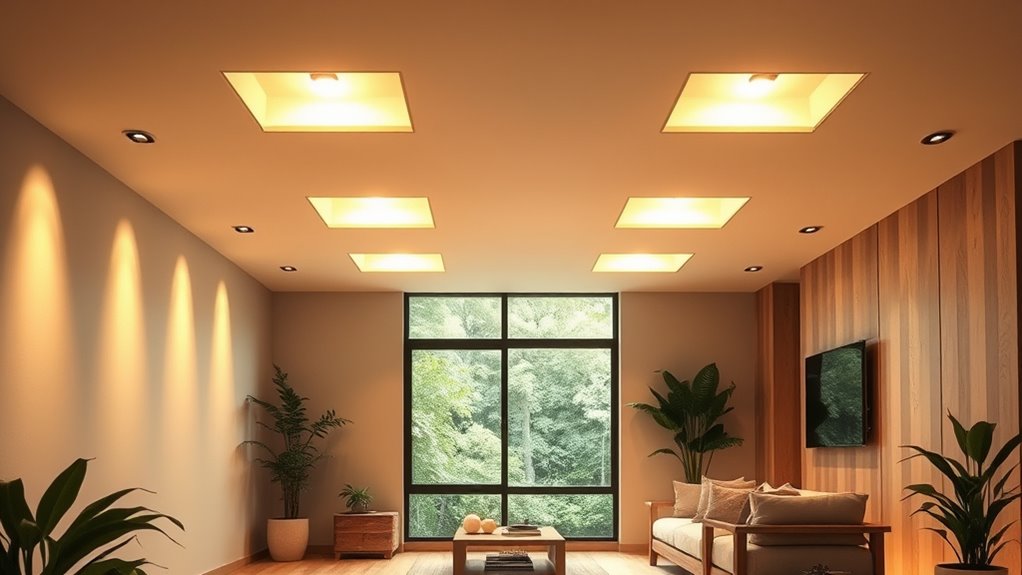

Sustainable lighting combines energy-efficient fixtures with smart design to lower your environmental footprint and reduce energy bills. By choosing LED lights, incorporating daylight harvesting, and using smart controls, you optimize energy use and extend fixture lifespan. These strategies create comfortable, healthier indoor environments while supporting resource conservation. As technology advances, implementing these solutions becomes easier and more affordable. If you want to discover how to make your lighting even smarter and more efficient, there’s more to explore.
Key Takeaways
- Incorporate energy-efficient fixtures like LEDs to reduce electricity consumption and environmental impact.
- Utilize smart controls and automation for real-time lighting adjustments and optimal energy use.
- Implement daylight harvesting techniques to maximize natural light and minimize artificial lighting needs.
- Design spaces with flexible, adaptable lighting systems that respond to occupancy and daylight availability.
- Choose fixtures compatible with sustainable technologies to extend lifespan and support eco-friendly building practices.
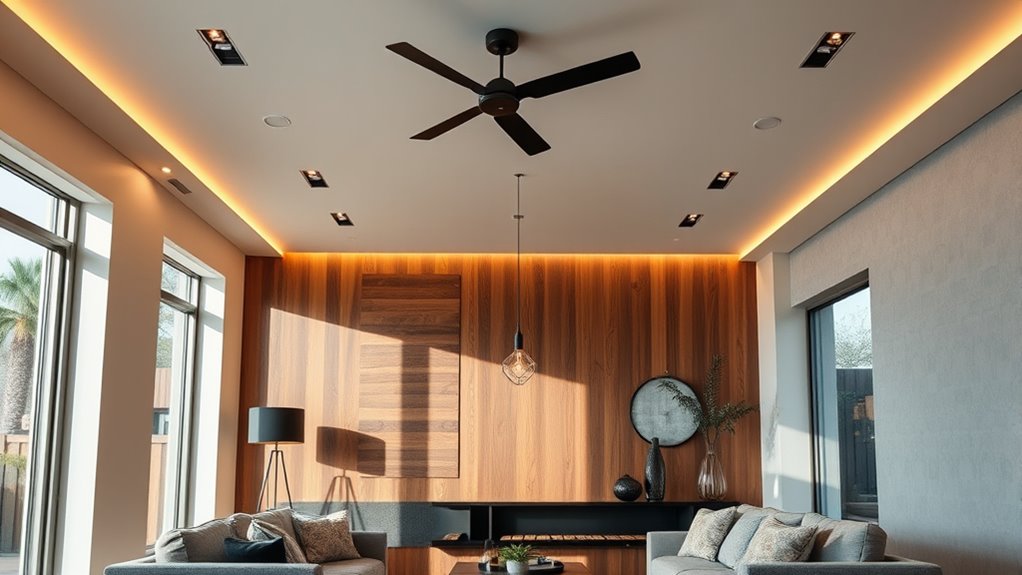
Sustainable lighting is an essential step toward reducing energy consumption and minimizing environmental impact. When you choose energy-efficient fixtures and smart lighting design, you’re making a tangible difference in resource conservation. One of the most effective tools available is smart controls, which allow you to optimize lighting based on real-time needs. These controls can automatically adjust brightness levels, turn lights off when they’re not needed, and even customize settings for different zones, helping you save energy without sacrificing comfort. By integrating smart controls into your lighting system, you gain the ability to monitor and manage usage efficiently, ensuring that lights operate only when necessary. Additionally, implementing lighting automation technology can further streamline energy management and improve overall efficiency.
Daylight harvesting is another innovative technique that leverages natural light to lower energy use. It involves installing sensors that detect the amount of daylight entering a space and then adjusting artificial lighting accordingly. During sunny days, your system dims or turns off electric lights, relying on natural illumination to meet the room’s needs. When daylight levels decrease, the system gradually increases artificial lighting to maintain a consistent, comfortable environment. This not only reduces electricity consumption but also creates a more pleasant and healthier indoor atmosphere, as occupants benefit from natural light exposure.
Daylight harvesting adjusts artificial lighting based on natural light, reducing energy use and enhancing indoor comfort.
Incorporating smart controls and daylight harvesting into your lighting design isn’t complicated, and the benefits are substantial. Modern fixtures are often compatible with these systems, making upgrades straightforward. You can program your lighting to respond dynamically to changing conditions, ensuring energy is used efficiently throughout the day. This approach minimizes waste and extends the lifespan of your lighting fixtures, saving you money in the long run. Plus, these smart systems often come with user-friendly interfaces, giving you control over settings and usage patterns without extensive technical knowledge.
When you prioritize sustainable lighting, you’re adopting a solution that aligns with broader environmental goals while also enhancing your space. By reducing unnecessary energy consumption, you cut down on greenhouse gas emissions and lower your electricity bills. Implementing smart controls and daylight harvesting not only makes your lighting more efficient but encourages a mindset of thoughtful resource use. As technology advances, these systems become more affordable and easier to integrate, making sustainable lighting accessible for both residential and commercial applications. Ultimately, embracing these innovations helps you contribute to a healthier planet while creating a well-lit, comfortable environment that adapts intelligently to your needs.
Top picks for "sustainable light energy"
Open Amazon search results for this keyword.
As an affiliate, we earn on qualifying purchases.
Frequently Asked Questions
How Do I Choose the Most Energy-Efficient Lighting Fixtures?
To select the most energy-efficient lighting fixtures, consider the lighting color that suits your space—cooler tones for task areas and warmer tones for ambiance. Focus on fixture placement to maximize coverage and reduce waste. Look for fixtures with high energy efficiency ratings, like LED options, and verify they are appropriately sized for your area. This way, you get bright, sustainable lighting that saves energy and enhances your environment.
What Are the Latest Innovations in Sustainable Lighting Technology?
You’ll find the latest innovations in sustainable lighting technology include smart controls that optimize energy use and OLED lighting, which offers ultra-thin, flexible, and highly efficient illumination. These advancements allow you to customize lighting based on occupancy or daylight, reducing waste. By integrating smart controls and OLEDs into your design, you maximize energy efficiency and create a more sustainable, visually appealing environment.
How Does Lighting Impact Overall Energy Consumption in Buildings?
Lighting markedly impacts your building’s energy consumption—poor lighting quality wastes energy, while efficient lighting enhances occupant comfort. You can reduce overall energy use by choosing energy-efficient fixtures and designing thoughtfully. Good lighting balances brightness and glare, minimizing unnecessary energy use. When you prioritize sustainable lighting, you create a comfortable environment that saves energy, lowers costs, and supports eco-friendly building practices.
Are There Government Incentives for Installing Eco-Friendly Lighting?
Yes, you can take advantage of government rebates and tax incentives when installing eco-friendly lighting. These programs are designed to encourage energy efficiency, helping you save money upfront and reduce long-term costs. By choosing energy-efficient fixtures and sustainable lighting designs, you not only lower your building’s energy consumption but also qualify for financial perks, making environmentally conscious upgrades more affordable and appealing.
What Maintenance Practices Maximize the Lifespan of Energy-Efficient Fixtures?
To maximize your energy-efficient fixtures’ lifespan, you should regularly perform bulb replacement and fixture cleaning. Don’t overlook these simple steps—cleaning prevents dust buildup that hampers performance, while timely bulb replacement ensures consistent lighting and avoids damage. Some may think maintenance is tedious, but it’s worth it. Proper care keeps your fixtures running efficiently longer, saving you money and reducing waste in the long run.
Conclusion
As you embrace sustainable lighting, imagine a room bathed in warm, natural glow, where energy-efficient fixtures quietly save resources. It’s a stark contrast to harsh, wasteful bulbs that drain power and dim the environment’s beauty. By choosing mindful design, you create spaces that shine brighter with less impact. Your choices illuminate a future where elegance and sustainability walk hand in hand, turning everyday lighting into a powerful statement for a healthier planet.