Projector brightness isn’t just about the lumen number—you need to understand how calibration, ambient light, and room size affect image quality. Higher lumens don’t always mean a better picture, especially in small or well-lit spaces. Focus on matching your projector’s brightness to your environment and usage to avoid washout and disappointment. If you keep these factors in mind, you’ll make smarter choices and get better results—there’s more to know to help you choose wisely.
Key Takeaways
- Higher lumens don’t always mean better brightness; consider ambient light, room size, and calibration for true image quality.
- Proper calibration and environment testing are essential to ensure projector brightness meets real-world viewing needs.
- Focus on contrast, color accuracy, and calibration rather than just lumen ratings for better image clarity.
- Match projector brightness to your room size and lighting conditions to avoid washed-out images or insufficient brightness.
- Avoid relying solely on lumen numbers; understand how ambient light and calibration impact actual perceived brightness.

datacolor SpyderPro Monitor Calibrator & Screen Color Calibration Tool
- Achieve True Color: Accurate color display for editing and viewing
- Wide Compatibility: Calibrates LED, OLED, and Mini LED screens
- Improve Workflow: Includes projector calibration and screen analysis
As an affiliate, we earn on qualifying purchases.
As an affiliate, we earn on qualifying purchases.
What Is Projector Brightness and Why Does It Matter?

Have you ever wondered why some projectors produce bright, vivid images while others appear dull or washed out? It all comes down to projector brightness and how you optimize it. Proper projector calibration is essential; it ensures your device displays images at its best. Additionally, understanding biohacking techniques can help you apply focused strategies to enhance visual clarity and overall viewing experience. Contrast enhancement also plays a key role, making dark areas darker and bright areas stand out. When these elements are adjusted correctly, the image appears sharper, more vibrant, and easier to see, even in well-lit rooms. Without proper calibration or contrast adjustment, your projector might struggle to deliver the full visual impact. Brightness isn’t just about lumens; it’s about how well your projector’s settings are tuned. Mastering these factors helps you maximize the image quality and get the most out of your projection experience. Additionally, understanding digital content formats can greatly enhance your projection setup by ensuring compatibility with various media types.

L LOHAS LED Night Light Projector, Night Lights Plug into Wall Light Sensor
- Adjustable Brightness: 0-150 lumens brightness control
- Rotatable Plug: 180° adjustable socket for vertical/horizontal use
- Automatic Light Sensor: Turns on/off based on ambient light
As an affiliate, we earn on qualifying purchases.
As an affiliate, we earn on qualifying purchases.
What Are Lumens and How Do They Measure Brightness?

Lumens measure the total amount of visible light a projector emits, giving you a sense of its brightness. This measurement helps you compare different models and determine which one suits your space best. Understanding lumens guarantees you’re choosing a projector with the right brightness for your needs. Additionally, selecting a projector that fits your smart lifestyle choices can enhance your overall viewing experience. For instance, a projector with high contrast ratios ensures deeper blacks and brighter whites, improving image clarity. Moreover, opting for a projector that features a high-performance engine can significantly enhance overall image quality and clarity. Consider also the home theater fundamentals like sound and lighting to create an immersive movie night experience. Furthermore, understanding how hydrotherapy techniques utilize water can inspire a relaxing atmosphere for your viewing space.
Definition of Lumens
Understanding brightness in projectors starts with knowing what lumens are. Lumens measure the total amount of visible light a projector emits, directly influencing how bright your image appears. Higher lumens mean a brighter image, which is essential in well-lit rooms. However, lumens don’t tell the whole story; factors like color calibration also affect how vivid and accurate the image looks. A projector with more lumens may use more power, increasing power consumption, so balance brightness with energy efficiency. Remember, a higher lumen count isn’t always better if color calibration isn’t optimized. It’s about finding the right combination to produce clear, vibrant images without unnecessary power drain. Understanding these basics helps you choose a projector that suits your environment and needs.
Measuring Brightness Accuracy
Measuring brightness accuracy involves more than just looking at a projector’s lumen rating; it requires understanding how lumens are quantified and what they truly represent. Lumens measure the total light output, but factors like color calibration can affect perceived brightness and image quality. A projector with high lumens isn’t always brighter in real-world conditions if color calibration isn’t accurate. Additionally, power consumption influences brightness performance—more efficient models produce comparable brightness with less energy. To gauge true brightness, consider testing the projector in your environment, verifying color calibration is optimized, and comparing power consumption alongside lumen ratings. This approach helps you avoid blindly trusting lumen numbers and ensures you select a projector that delivers consistent, accurate brightness tailored to your needs.
![Outdoor-Projector-4K [VIDAA Live TV/40W Dolby/920 ISO] with WiFi6 and Bluetooth Compatible with Netflix, Smart Projector, AI Voice Control & Auto Focus, HDR10, Movie Proyector for Ceiling Home Theater](https://m.media-amazon.com/images/I/5127Br3WkBL._SL500_.jpg)
Outdoor-Projector-4K [VIDAA Live TV/40W Dolby/920 ISO] with WiFi6 and Bluetooth Compatible with Netflix, Smart Projector, AI Voice Control & Auto Focus, HDR10, Movie Proyector for Ceiling Home Theater
- Smart TV-like VIDAA OS: Fast, stable, secure with cloud storage
- Extensive App Selection: Over 1,000 channels including Netflix, YouTube
- AI Content Recommendations: Suggests region-specific apps and channels
As an affiliate, we earn on qualifying purchases.
As an affiliate, we earn on qualifying purchases.
Does More Lumens Always Mean a Better Picture?

Does More Lumens Always Mean a Better Picture?
Having more lumens doesn’t always guarantee a better picture, especially if image quality suffers. Room size and ambient light considerably influence how bright your projector needs to be, so a high-lumen model isn’t always ideal. Consider these factors carefully to find the right balance for your viewing environment. Additionally, just as inclusive casting enhances representation in fashion, understanding your projector’s specifications can lead to a more tailored viewing experience. Proper cleaning techniques for your projector lens can also improve image clarity and prevent distortion. Just as canine affection is expressed in various ways, the right brightness can enhance the emotional impact of your viewing experience. For optimal results, consider implementing home safety measures that enhance your overall viewing comfort. Investing in a projector with the right synthetic lubricants can also ensure smoother operation and longevity.
Brightness vs. Image Quality
Many assume that more lumens automatically mean a better picture, but that’s not always the case. Brightness alone doesn’t guarantee high image quality. If a projector has high lumens but poor contrast ratio, your images can look washed out or flat, lacking depth. Similarly, color accuracy plays an essential role—more lumens won’t help if the projector can’t reproduce true, vibrant colors. A projector with lower brightness but better contrast and accurate colors can produce a more vivid, sharp image in a dim or moderate-light room. Ultimately, balancing brightness with contrast ratio and color fidelity creates a better viewing experience. So, don’t just focus on lumens; consider how these factors work together to deliver a clear, colorful picture. Additionally, understanding tool power protection can help ensure that your projector operates safely and efficiently, enhancing its overall performance.
Room Size Considerations
While higher lumen output can help project a brighter image, it doesn’t automatically mean you’ll get the best picture for your room size. If your space is small, excessive lumens can wash out colors and reduce contrast, making the image less vibrant. Consider how color calibration can improve picture quality by enhancing color accuracy regardless of brightness. Additionally, the screen material plays a role; a matte screen can diffuse light and prevent glare, allowing you to use a higher lumen projector without sacrificing image quality. For larger rooms, higher lumens are beneficial to maintain visibility across greater distances, but balancing brightness with color calibration ensures your image remains sharp and true to life. Ultimately, matching lumen output to room size and screen setup optimizes your viewing experience. Furthermore, just as nail strength can vary between individuals, the optimal lumen level for your setup may differ based on specific conditions and preferences. Just like urban traffic confidence can enhance a cyclist’s experience, understanding your projector’s lumen needs can significantly improve your viewing pleasure. Additionally, being aware of media literacy can help you discern the marketing claims surrounding projector specifications, ensuring you make informed decisions. For outdoor settings, consider incorporating seating areas to enhance comfort and enjoyment during viewing. A well-calibrated projector can ensure dialogue clarity in your viewing experience, making it easier to follow conversations and enjoy the content fully.
Ambient Light Impact
Brightening your projector image with more lumens might seem like the obvious solution, but it’s not always the best choice if your room isn’t dark enough. Higher lumens can help combat ambient light, but they don’t guarantee a better picture. Excess brightness can wash out colors, making color calibration more difficult, and diminish contrast. This often results in a less vibrant image, even if it appears brighter. Plus, increased lumens typically mean higher power consumption, which can impact your projector’s efficiency and longevity. Instead of blindly chasing lumens, focus on optimizing your room’s lighting conditions, adjusting color calibration, and choosing a projector with suitable brightness for your environment. This approach ensures a clearer, more accurate picture without unnecessary energy use. Additionally, maintaining indoor air quality is essential, as poor air conditions can affect viewer comfort and overall experience. Understanding ambient light impact can further enhance your viewing experience by guiding you in selecting the right projector settings. Implementing effective soundproofing tips in your viewing area can also help minimize distractions, allowing for a more immersive experience.

120inch Projector Screen with Stand: Portable Projector Screen Outdoor Indoor Front/Rear16:9 4K HD with Carry Bag Sandbag- Movie Screen for Backyard Moive Night, Camping, Theater
- Stable and Durable Base: Reinforced steel support for stability
- Weather-Resistant Design: Includes windproof accessories and sandbags
- High-Quality Visuals: Vibrant 4K HD, wrinkle-free projection surface
As an affiliate, we earn on qualifying purchases.
As an affiliate, we earn on qualifying purchases.
How Do I Find the Right Brightness for My Room Size and Lighting?

How do you determine the right projector brightness for your room? First, consider your room size—larger spaces need higher lumens to fill the area without losing image clarity. Think about projection angles; a wide-angle setup may require more brightness, especially if the projector is mounted high or at an angle, which can affect image quality. Mounting options also matter—ceiling mounts or portable stands can impact how much brightness you need, depending on distance and angle. If your room has moderate ambient light, aim for a projector with at least 2,500 lumens for a clear picture. For darker rooms, lower brightness levels work fine. Ultimately, matching your projector’s brightness to your room’s size, projection angles, and mounting options guarantees ideal viewing without overbuying. Additionally, using lumens ratings can help you select the right projector based on your specific lighting conditions.
What Brightness Do Different Uses Require?
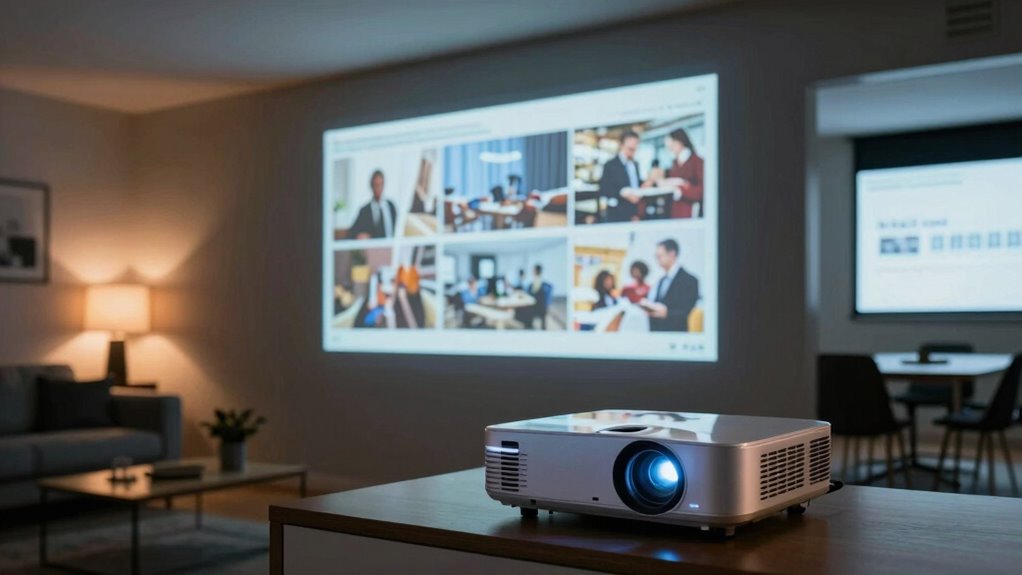
Different activities and settings demand varying levels of projector brightness to guarantee a clear and enjoyable viewing experience. For movies and home theaters, you’ll want a projector with enough brightness to maintain color accuracy in dim or moderately lit rooms, ensuring vivid images without washing out details. Creative storytelling can enhance the overall atmosphere, making the viewing experience more engaging. In presentations or classrooms, higher brightness levels help keep images sharp and visible even with ambient light, but sound integration remains vital to complement visuals. Effective solar system design can also benefit from understanding how lighting conditions affect visibility and presentation quality. Gaming setups benefit from moderate brightness combined with precise color accuracy for immersive experiences. For outdoor use, especially during daylight, a high-lumen projector is indispensable to overcome ambient light and produce bright, vibrant images. Achieving balance between brightness and other factors ensures you get the best quality, whether it’s for entertainment, education, or professional presentations.
Common Mistakes When Choosing Projector Brightness (And How to Avoid Them)

One common mistake when choosing a projector is selecting a model with too high or too low brightness for your specific needs, which can lead to poor image quality or unnecessary expense. Overshooting brightness may cause washed-out images and increased noise levels, reducing overall clarity. Conversely, too little brightness results in dim images and poor visibility, especially in well-lit rooms. To avoid these issues, consider your room’s ambient light and the importance of color accuracy.
| Mistake | Consequence | Solution |
|---|---|---|
| Ignoring ambient light | Dim images or washed-out colors | Match brightness to room lighting |
| Overlooking color accuracy | Poor image fidelity | Choose projectors with good color reproduction |
| Neglecting noise levels | Distraction and image disturbance | Opt for models with low noise levels |
| Focusing solely on lumens | Misjudging overall image quality | Prioritize color accuracy and noise control |
| Ignoring room size | Inadequate brightness or overspending | Match projector brightness to room dimensions |
How to Test and Evaluate Projector Brightness in Your Space

Testing and evaluating projector brightness in your space is essential to guarantee you get a clear, vibrant image. Start by examining the ambient light conditions—darker rooms enhance brightness perception. Project your image on your intended surface and check for color accuracy; colors should appear true and not washed out. Adjust the projector’s settings if possible to optimize brightness and contrast. Pay attention to sound integration—make sure the projector’s audio matches the visual quality for a seamless experience. Observe how bright the image appears from different angles and distances, ensuring consistent visibility. Use a light meter if available to measure luminance directly, or compare the projected image to other screens in similar lighting. Proper testing helps you choose a projector that performs well in your specific environment.
Frequently Asked Questions
Can Projector Brightness Affect Image Color Accuracy?
Yes, projector brightness can affect image color accuracy. When brightness levels are inconsistent, it hampers your ability to maintain proper color calibration, leading to dull or overly vibrant colors. You should focus on brightness consistency to guarantee accurate color reproduction. Too much brightness might wash out colors, while too little can make details hard to see. Proper calibration and stable brightness settings help preserve true colors and a clear, vibrant image.
How Does Ambient Light Impact Perceived Projector Brightness?
Ambient light directly impacts how you perceive your projector’s brightness, affecting color fidelity and overall image clarity. When there’s ambient interference, it washes out the projected image, making colors look dull and less vibrant. To enjoy ideal color accuracy, reduce ambient light sources or increase projector brightness accordingly. Remember, even high lumens won’t compensate for bright surroundings, so controlling ambient light is key to maintaining vivid, true-to-life colors.
Are There Any Health Concerns Related to High-Brightness Projectors?
They say, “Better safe than sorry,” and that’s true with high-brightness projectors. While they don’t cause direct eye damage, prolonged exposure to intense light can lead to eye strain and discomfort. To protect your eye safety, avoid staring directly into the projector beam and take regular breaks. Using appropriate screen settings and ambient lighting minimizes risks, ensuring your viewing experience stays comfortable and safe.
How Does Projector Brightness Influence Energy Consumption?
Higher projector brightness increases power consumption, meaning it uses more energy to produce brighter images. If you choose a projector with excessive brightness for your needs, you’ll likely waste energy and reduce overall energy efficiency. To save on power consumption, select a projector with adequate brightness for your environment, and consider models that offer energy-saving features. This way, you balance performance with energy efficiency, lowering your electricity costs and environmental impact.
Is Higher Lumen Rating Always Better for Outdoor Projectors?
You might think a higher lumen rating always means better outdoor projection, but that’s not true. While it offers brighter images, it can also lead to poor color calibration and increased power consumption. Ironically, cranking up the lumens often sacrifices color accuracy and efficiency. So, instead of blindly chasing brightness, focus on a balanced projector that delivers vibrant colors without draining your power or compromising image quality.
Conclusion
Remember, choosing the right projector brightness isn’t just about chasing higher lumens—it’s about matching your space and needs. Did you know that 80% of buyers regret their purchase because they overlooked room lighting? By understanding how brightness impacts picture quality and avoiding common mistakes, you’ll guarantee your projector delivers a clear, vibrant image every time. Take the time to test and evaluate before buying—it’s worth it for the perfect viewing experience.