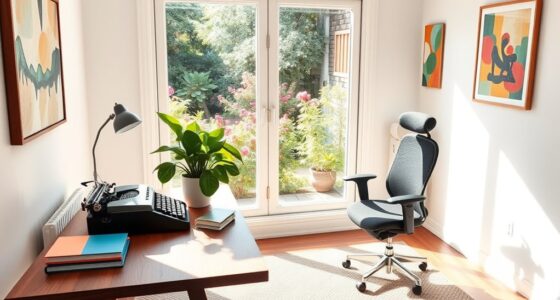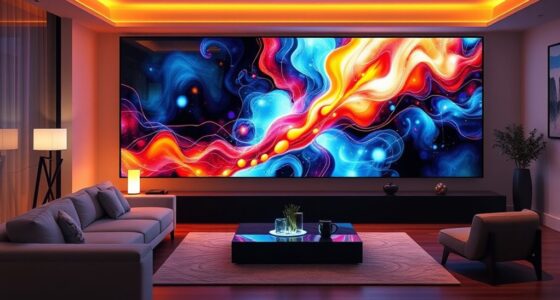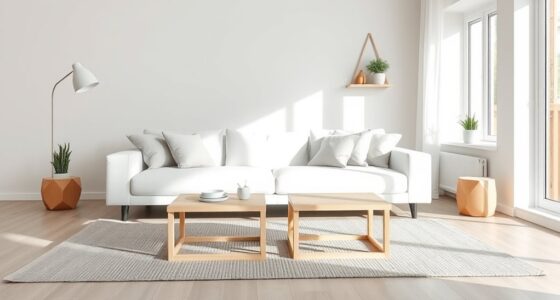
To set the mood with illumination, focus on selecting the right color temperature and strategic fixture placement. Warm lights create cozy, inviting atmospheres, while cooler tones energize a space. Use fixtures thoughtfully to highlight features, provide functional lighting, and layer different types of lights for variety. Proper positioning minimizes shadows and glare, enhancing both ambiance and usability. Keep exploring how combining these techniques can transform your environment into a beautifully tailored space.
Key Takeaways
- Use color temperature strategically to create warm, inviting or bright, energizing atmospheres based on room purpose.
- Layer ambient, task, and accent lighting to craft a dynamic, balanced environment that enhances mood.
- Proper fixture placement, such as high ceiling lights or accent spots, directs focus and minimizes shadows.
- Adjust lighting intensity and direction to evoke specific emotional responses and improve room functionality.
- Combine lighting design principles to transform spaces from ordinary to extraordinary, enhancing aesthetic and usability.
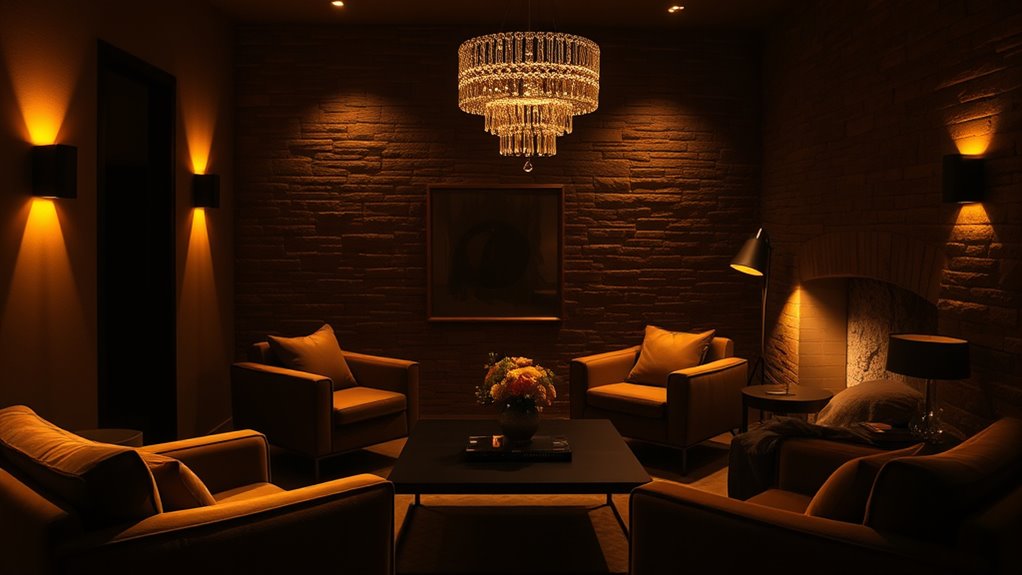
Have you ever wondered how lighting can transform a space? It’s more than just illuminating a room; it’s about creating a mood, highlighting features, and making the environment feel welcoming or dramatic. One of the key factors in achieving this is understanding how color temperature and fixture placement work together to set the perfect tone. When you choose the right color temperature, you influence the atmosphere profoundly. Warm tones, with lower Kelvin ratings, produce a cozy, inviting glow that’s perfect for living rooms and bedrooms. Cooler tones, with higher Kelvin ratings, offer a crisp, energizing light suitable for workspaces or kitchens. By selecting the appropriate color temperature, you can subtly guide the emotional response of anyone in the space.
Fixture placement is equally essential. Where you position your lights can make all the difference. For example, placing fixtures high on the ceiling with downward-directed light can create a broad, even illumination, ideal for general lighting. Conversely, if you want to highlight artwork or architectural features, positioning accent lights closer to the objects with adjustable fixtures directs attention precisely where you want it. Proper fixture placement also ensures that shadows and glare are minimized, making the space more comfortable and functional. It’s about balancing ambient, task, and accent lighting to craft a layered, dynamic environment.
When considering fixture placement, think about the purpose of each area. In a living room, you might want soft ambient lighting to foster relaxation, supplemented by table lamps or sconces that provide task lighting without overpowering the space. In a kitchen, bright, well-distributed fixtures ensure safety and efficiency, but you can add pendant lights over the island to introduce visual interest and warmth. For bedrooms, the focus often shifts to softer, more diffuse lighting, with fixtures placed to avoid harsh shadows or direct glare. Adjusting fixture placement based on the room’s function helps you create a balanced lighting scheme that enhances both aesthetics and usability. Additionally, understanding the best lighting design practices can help optimize the mood and functionality of your space.
Ultimately, the interplay between color temperature and fixture placement allows you to craft a mood that aligns with your vision for each space. Thoughtful choices in these areas can turn a plain room into a cozy retreat or a vibrant hub of activity. By paying attention to these details, you’re not just lighting a room—you’re designing an experience. So, next time you plan your lighting, remember that the right combination of color temperature and fixture placement can elevate your space from ordinary to extraordinary.
Frequently Asked Questions
How Does Color Temperature Affect Mood Creation?
Color temperature notably influences your mood by leveraging color psychology; warm tones like yellow and orange create cozy, inviting atmospheres, boosting relaxation. Cool tones such as blue and white promote focus, calmness, and alertness, making them ideal for workspaces. By choosing appropriate color temperatures, you actively enhance the mood of a space, making it more comfortable or energizing, depending on your desired effect. Your lighting choices directly shape emotional responses and ambiance.
What Are the Latest Trends in Lighting Technology?
You’ll notice that the latest lighting trends focus on LED advancements and sustainable fixtures. These innovations let you create dynamic, energy-efficient environments that adapt to your needs. Smart LED systems offer customizable lighting scenes, while eco-friendly fixtures reduce environmental impact. By embracing these trends, you can enhance ambiance and functionality, all while supporting sustainability. Stay ahead by exploring the newest LED technologies and sustainable options to transform your space effectively.
How Can Smart Lighting Systems Enhance Ambiance?
Imagine transforming your space instantly with a simple voice control—smart lighting systems do just that, elevating your ambiance effortlessly. You can dim, brighten, or change colors in seconds, creating the perfect mood every time. Plus, they boost energy efficiency, saving you money while making your home feel more inviting. With these systems, you control your atmosphere, making every moment feel personalized, cozy, and truly unforgettable.
What Are Common Mistakes in Lighting Design?
You often make mistakes by not using dimmer switches, which help control mood and brightness levels. Poor fixture placement can also create harsh shadows or uneven lighting, detracting from the ambiance. To improve, plan your lighting layout carefully, ensuring fixtures are placed strategically to highlight key areas without overwhelming the space. Avoid cluttered or overly bright setups, and always consider how dimmers can give you flexible mood control.
How Does Natural Light Influence Interior Illumination?
You might think natural light is just a bonus, but Sunlight dynamics and daylight integration actually shape your space’s vibe. It influences interior illumination effortlessly, bringing warmth and energy during the day. Ironically, relying solely on natural light can be tricky—too much glare or uneven distribution. Yet, when you master its flow, your space feels alive, vibrant, and perfectly lit by nature itself.
Conclusion
Remember, lighting isn’t just about brightness; it’s about creating an atmosphere that resonates with your mood. By thoughtfully choosing and placing your lights, you set the tone and make your space truly yours. As the saying goes, “A picture is worth a thousand words,” and in lighting, your illumination speaks volumes. So, experiment and trust your instincts—your perfect ambiance is just a switch away.