
To master art placement, focus on height, scale, and balance to create a harmonious display. Hang artwork at eye level, typically 57 to 60 inches from the floor, for immediate impact. Guarantee the size of your pieces complements the wall and furniture, avoiding overwhelming or underwhelming effects. Balance your arrangement by mixing different sizes and styles to create a cohesive visual story. Explore further to discover how lighting and textures enhance your art display.

Get art and craft supplies delivered free — and shop member deals
- Fast, free delivery on millions of items
- Access to Prime Big Deal Days deals on October 6–7
- Prime Video, Amazon Music and more included
Key Takeaways
- Position artwork at eye level, typically 57-60 inches from the floor, for immediate visual connection.
- Ensure large pieces are proportionate to wall and furniture size to create balance and avoid overwhelming the space.
- Use lighting to emphasize textures, details, and to create mood, enhancing the artwork’s visual impact.
- Arrange smaller artworks in groups or varied heights to establish rhythm and maintain harmony.
- Balance visual weight by thoughtfully combining height, scale, and lighting to craft a cohesive, curated display.

Have you ever wondered how the right placement can transform a piece of art from ordinary to eye-catching? It’s all about understanding how height, scale, and balance work together to create a visual impact. When you position artwork thoughtfully, you’re not just hanging a picture; you’re crafting a focal point that enhances the entire space. One key to achieving this is contemplating lighting effects, which can dramatically influence how your art appears. Proper lighting highlights textures and details, making wall textures pop and adding depth. For example, a piece with a textured surface benefits from angled lighting that casts subtle shadows, emphasizing its tactile qualities. Conversely, even lighting can give a clean, modern feel, showcasing the art’s colors and lines without distraction.
The height at which you hang your art matters just as much as the piece itself. Generally, placing artwork at eye level creates an immediate connection. This means about 57 to 60 inches from the floor to the center of the piece for most rooms. However, it’s also essential to think about the wall textures surrounding your art. Rough, textured walls like brick or plaster can influence your placement, as they may compete with or complement the artwork. In such cases, hanging art slightly higher or lower can make a significant difference in achieving harmony. If your wall features intricate textures, consider how lighting can enhance or soften these features, creating a layered look that draws viewers in.
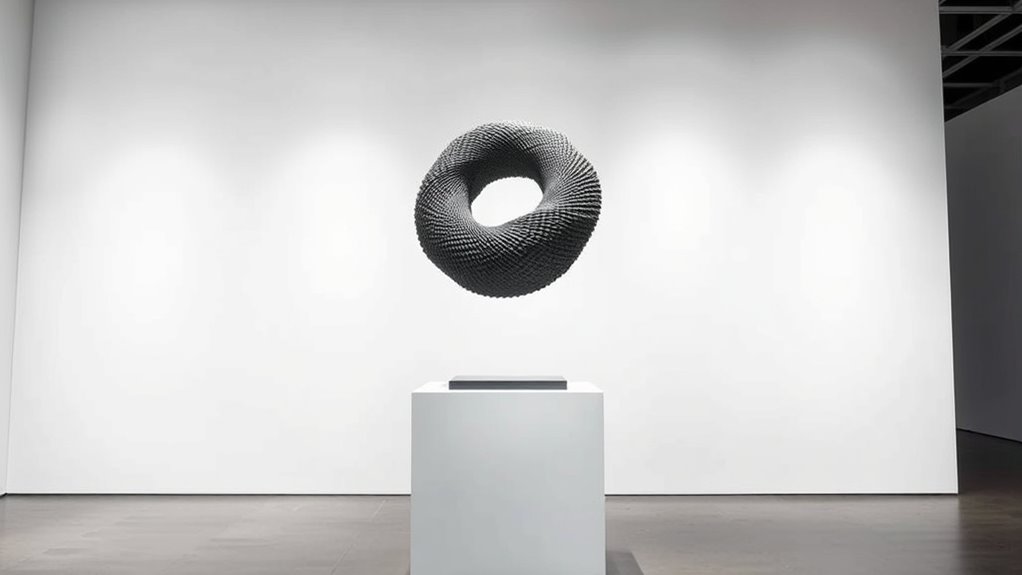
Scale is another vital factor. Large art pieces can dominate a space, so they should be proportionate to the wall and furniture. Small works, on the other hand, need to be grouped or hung at a height that prevents them from appearing lost. When balancing scale, think about the room’s overall proportions and how lighting can help guide the eye. A well-placed, sizable piece with strategic lighting can serve as an anchor in a room, while multiple smaller artworks arranged thoughtfully can generate rhythm and movement. Additionally, understanding wall textures can help you choose the most effective placement and lighting for your artwork.
Finally, achieving balance isn’t just about symmetry. It’s about creating a visual harmony that feels comfortable and intentional. Use lighting effects to highlight different parts of your art arrangement, ensuring each piece commands attention without overwhelming the space. By paying attention to height, scale, and balance—and how lighting interacts with wall textures—you can elevate your art placement from merely decorating to curating a compelling visual story.
art hanging kit with level and measuring tape
As an affiliate, we earn on qualifying purchases.
As an affiliate, we earn on qualifying purchases.
Frequently Asked Questions
How Does Lighting Affect Art Placement?
Lighting greatly influences art placement by highlighting key features and creating mood. Using lighting techniques like spotlights or soft ambient light directs viewers’ attention and enhances the artwork’s impact. Shadow effects add depth and dimension, making the piece stand out. You should consider how lighting interacts with the artwork’s position, ensuring it’s neither too harsh nor too dim, to maximize visual appeal and harmony within your space.
What Are Common Mistakes in Art Placement?
They say, “A stitch in time saves nine,” and that rings true in art placement. Common mistakes include ignoring the art hierarchy, which disrupts the visual flow, and neglecting the focal point, making the piece less engaging. You might misplace artwork too high or low, or overlook scale, causing imbalance. Always consider the viewer’s perspective to create harmony, ensuring each piece enhances your space without overpowering it.
How Do Different Room Styles Influence Art Choices?
You should choose art style and color harmony based on your room’s style to create a cohesive look. For modern spaces, opt for sleek, minimal pieces with bold colors, while traditional rooms benefit from classic artwork with softer tones. Consider how the art complements your furniture and decor, ensuring the scale fits the space. This thoughtful approach enhances your room’s ambiance and makes your art a seamless part of the overall design.
Can Art Placement Impact Room Acoustics?
Think of art placement as tuning a musical instrument—your positioning can influence the room’s acoustic effects. When you carefully choose where to hang art, you create a visual rhythm that subtly impacts sound reflection and absorption. Proper art positioning can soften echoes or direct sound waves, enhancing your space’s acoustics. So, yes, your art isn’t just eye candy; it actively shapes how sound travels and feels in your room.
How Do You Integrate Art Into Small Spaces?
You can integrate art into small spaces by consulting with an art expert to select pieces that fit your room’s vibe. Focus on wall curating, choosing artwork that complements your space without overwhelming it. Use strategic placement at eye level to create focal points, and consider multi-functional pieces or wall-mounted art to maximize space. This approach keeps your small room feeling stylish, balanced, and inviting without clutter.
adjustable picture hanging wire and hooks
As an affiliate, we earn on qualifying purchases.
As an affiliate, we earn on qualifying purchases.
Conclusion
When you master the dance of height, scale, and balance, your space transforms into a living canvas. Every piece becomes a brushstroke, guiding the eye and stirring emotion. Like a symphony, art placement orchestrates harmony and tension, inviting viewers to lose themselves in its rhythm. Trust your instincts, and let your sense of proportion be the compass—your walls will tell stories that echo long after the lights go out.
As an affiliate, we earn on qualifying purchases.
As an affiliate, we earn on qualifying purchases.
Fall Picks
fall essentials
As an affiliate, we earn on qualifying purchases.