
TL;DR

Get art and craft supplies delivered free with Prime
- Fast, free delivery on millions of items
- Prime Video, Amazon Music and more included
- Member-only deals all year
Cy Kuckenbaker’s short film “Everything Twice” connects his discovery that he was born with a rare disease to a handmade, slow analog photography practice. The project uses West Coast images made with homemade cameras to reflect on disability, disconnection and self-discovery. The source report does not identify the disease or provide details about the film’s release.
Photographer Cy Kuckenbaker has made a short film, “Everything Twice,” linking his discovery that he was born with a rare disease to a slow, handmade approach to analog photography. A report by Colossal describes the work as a meditation on disability and how people orient themselves in the world, pairing Kuckenbaker’s medical experience with images of West Coast landscapes and sights.
According to Colossal, Kuckenbaker noticed from childhood that one of his eyes drooped. He initially connected it to a snowboarding accident, but doctors dismissed that explanation. After what the report describes as many tests over many years, he learned he had been born with a rare disease. The source does not name the condition or give further medical details.
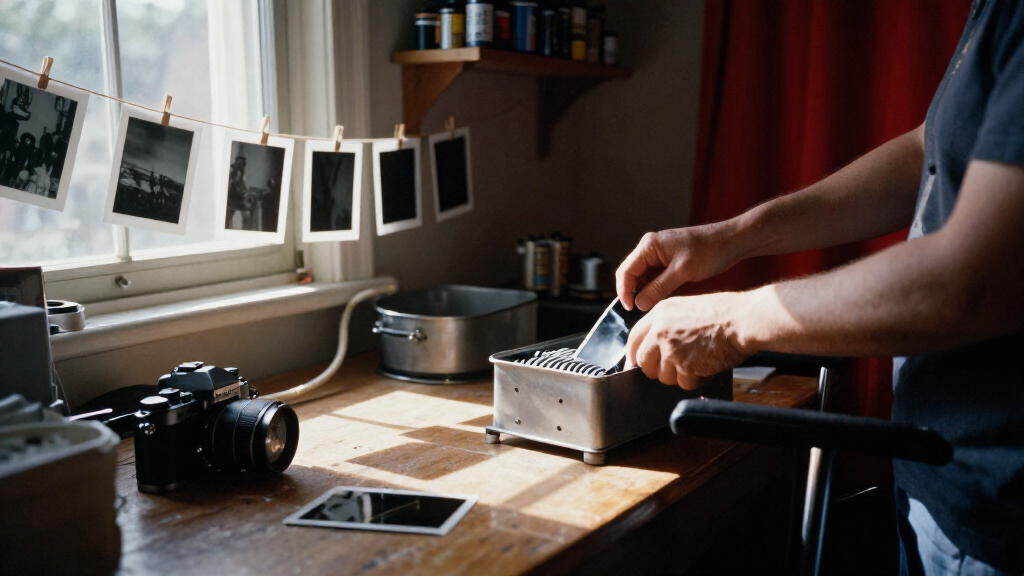
The film also follows a photography practice Kuckenbaker began as a response to burnout. He made cameras from cardboard boxes and drugstore magnifying glasses, then used them to photograph a range of West Coast landscapes and other sights. Colossal says the labor-intensive process echoes the extended period it took him to understand his condition.
The report characterizes “Everything Twice” as both self-discovery and contemplation, addressing disconnection and loss as well as disability. It does not provide a runtime, premiere date, distribution information or direct statements from Kuckenbaker beyond describing the project and its methods.
How Handmade Images Reflect Diagnosis
The project brings a personal health experience into a visual form without treating the diagnosis as the only subject. Its focus on slow, manual photography connects the time involved in making each image with the long process of seeking an explanation for a lifelong physical difference. That connection gives viewers a way to consider how uncertainty and medical investigation can shape a person’s sense of self.
For readers, the film also offers an account of disability grounded in one photographer’s experience rather than a broad claim about everyone with a rare condition. Kuckenbaker’s homemade cameras and landscapes make the work a creative project as well as a record of discovery. The available report does not establish how the film has been received or whether it is intended to represent experiences beyond his own.
Popular right now

De'Longhi Magnifica Evo Fully Automatic Espresso Machine with Manual Milk Frother, Silver

Bose QuietComfort True Wireless Noise-Cancelling Earbuds, Black

Vitamix Propel Series 750 Professional-Grade Blender, 4 Programs, Black
As an affiliate, we earn on qualifying purchases.
From Eye Droop to Diagnosis
The report’s account begins with a visible feature Kuckenbaker had noticed since childhood: a drooping eye. He attributed it to a snowboarding accident, but doctors rejected that explanation. The report says the eventual diagnosis came after numerous tests and many years, but does not specify when the testing took place or who made the diagnosis.
Separately, Kuckenbaker began working with analog photography to address burnout. Rather than relying on standard camera equipment, he built simple cameras from readily available materials and photographed places on the West Coast. Colossal presents the film as bringing those two threads together: a drawn-out medical discovery and an intentionally slow creative process.
“The film is “equal part self-discovery and contemplation on disconnection and loss.””
— Colossal’s report on “Everything Twice”
Medical and Release Details Unreported
The source does not identify the rare disease, explain its symptoms or describe its effects beyond Kuckenbaker’s account of a drooping eye. It also does not provide medical records or independent confirmation; the diagnosis is described in the report as part of his experience.
Other details about the film remain unavailable in the supplied material, including its release date, runtime, screening plans and whether it can be viewed online. The report does not include direct interview quotations from Kuckenbaker, so his own fuller account of the diagnosis and the film’s development is not available here.
Film Access and Further Details
The source material does not announce a next screening, publication or distribution milestone for “Everything Twice.” Readers seeking to watch the film or learn more about the diagnosis will need further information from Kuckenbaker or the project’s official channels. Any release plans, additional medical context or statements from the photographer remain unconfirmed in the report.
Key Questions
What is “Everything Twice”?
It is a short film by photographer Cy Kuckenbaker, described by Colossal as connecting his rare-disease diagnosis with a handmade analog photography practice.
What rare disease does Kuckenbaker have?
The supplied report does not name the rare disease or provide medical details about it.
How were the photographs made?
Kuckenbaker used homemade cameras built from cardboard boxes and drugstore magnifying glasses to photograph West Coast landscapes and other sights.
Why does the film connect photography with the diagnosis?
Colossal describes both as slow processes: making labor-intensive analog photographs and taking years and many tests to reach a diagnosis. The film uses that parallel to explore self-discovery and disconnection.
When and where can the film be watched?
The supplied source does not state a release date, screening schedule or viewing link.
Source: thisiscolossal.com