
Floating frames give your artwork a sleek, modern look by highlighting edges and creating a sense of depth that makes pieces feel like they hover. Traditional frames, on the other hand, offer a classic, polished border that adds a timeless finish and emphasizes durability. Your choice depends on whether you prefer a contemporary or a timeless aesthetic. Keep exploring to discover which style best suits your space and artwork.
Key Takeaways
- Floating frames create a modern, sleek look by suspending artwork, highlighting edges and adding depth, unlike traditional frames’ solid borders.
- Traditional frames offer a classic, polished appearance with a finished border, suitable for vintage or formal art display.
- Floating frames require secure, level hardware for proper mounting, emphasizing a contemporary aesthetic and presentation.
- Traditional frames are durable, emphasizing timelessness and providing a more formal, protective enclosure for artwork.
- Choice depends on desired style: floating frames for modern, minimalist spaces; traditional frames for classic, elegant displays.
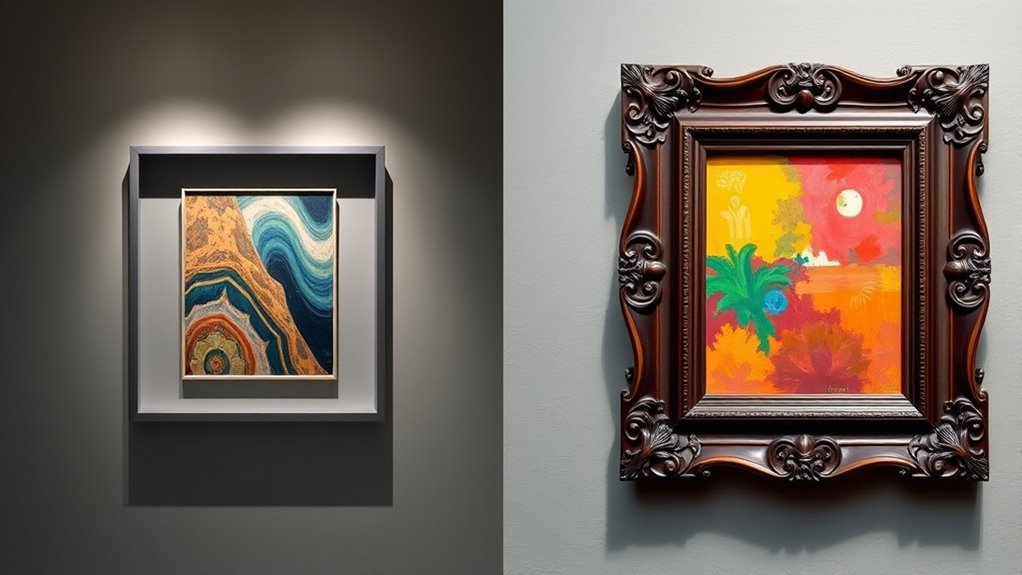
When choosing how to frame your artwork, understanding the differences between floating frames and traditional frames can make a big impact on your display. Your decision influences not only how your piece is perceived but also how it fits into your overall gallery display or wall mounting setup. Floating frames give your artwork a modern, sleek look by suspending the piece within the frame, creating a sense of depth and making the art appear as if it’s hovering. This style works exceptionally well when you want to highlight the edges of your artwork, especially if it has a unique border or textured edge. The absence of a bulky frame around the artwork allows viewers to focus directly on the piece itself, making it ideal for gallery displays where lighting and presentation are key.
Wall mounting with floating frames is straightforward, but it’s essential to contemplate the right hardware to ensure stability and safety. Because floating frames often involve a gap between the art and the frame’s edges, you need to make sure the mounting system is secure and level. When mounted correctly, floating frames can add a contemporary aesthetic to your space, whether you’re showcasing paintings, prints, or photographs. They’re particularly effective in minimalist or modern settings, where clean lines and simplicity are desired. Additionally, floating frames can be customized to fit various sizes and styles, giving you flexibility in how you present your artwork on the wall. Considering drivetrain wear and proper hanging techniques can help preserve the integrity of your artwork over time.
Traditional frames, on the other hand, tend to provide a more classic, finished look. They usually feature a solid border that surrounds and protects the artwork, emphasizing its importance and giving it a polished appearance. When mounting traditional frames on your wall, you often use hooks or brackets that complement the frame’s weight and style. These frames are versatile and suitable for a wide range of art, from vintage posters to formal portraits. For gallery display purposes, traditional frames can create a sense of formality and timelessness, especially when paired with matting or decorative borders.
Both framing styles serve different aesthetic and functional purposes. If you want a contemporary vibe with minimal distraction, floating frames are a smart choice. If you prefer a classic look that emphasizes tradition and durability, then traditional frames are the way to go. Whichever you choose, ensure your wall mounting approach is secure and well-aligned to highlight your artwork’s best features. The right framing method not only protects your art but also enhances its visual impact within your space.
Frequently Asked Questions
Are Floating Frames More Expensive Than Traditional Frames?
Floating frames are generally more expensive than traditional frames because of their unique design and material differences. The cost comparison shows that floating frames often use higher-quality materials and require more intricate craftsmanship, which increases their price. You’ll notice that the premium for a floating frame reflects its modern, sleek appearance and the added complexity in manufacturing, making it a pricier choice for displaying your artwork or photos.
How Do Floating Frames Affect Artwork Preservation?
Floating frames cradle your artwork like a gentle embrace, allowing glass protection to shield it from dust and damage, while air circulation breathes life into the piece. This setup prevents direct contact with glass, reducing pressure points and potential warping. As a result, your art remains vibrant and well-preserved over time, with the floating frame acting as a delicate guardian that balances protection and elegance beautifully.
Can Floating Frames Be Customized to Fit Any Artwork Size?
Yes, floating frames can be customized to fit any artwork size. With various customization options, you can select the perfect frame sizing to match your artwork’s dimensions. Many providers offer adjustable or custom-made floating frames, ensuring a snug fit without compromising the visual appeal. This flexibility allows you to showcase your artwork beautifully, regardless of its size, while maintaining a sleek, modern look.
Do Floating Frames Require Special Cleaning or Maintenance?
Did you know that proper cleaning can extend your floating frame’s lifespan by up to 30%? Floating frames don’t require special cleaning, but you should follow simple maintenance routines like dusting regularly with a soft cloth and avoiding harsh chemicals. This keeps your artwork looking pristine and prevents damage. Minimal effort guarantees your floating frame remains a stunning showcase for your art, with no complicated cleaning requirements needed.
Are Floating Frames Suitable for Outdoor or Humid Environments?
Floating frames are generally not suitable for outdoor or humid environments because they lack weather resistance and material durability needed to withstand moisture and temperature changes. Exposure to humidity can cause warping or damage, so if you want to display art outside, opt for frames specifically designed for outdoor use. For indoor spaces with high humidity, consider sealed, weather-resistant frames to protect your artwork effectively.
Conclusion
Ultimately, whether you choose floating or traditional frames depends on your style and preference. Floating frames offer a sleek, modern look, perfect for highlighting contemporary art or that Mona Lisa you’ve got hanging in your hallway. Traditional frames bring timeless charm, like a trusty Gutenberg press in your gallery. Whichever you choose, remember that your choice reflects your personal taste—so go ahead, make your art the star, and let your walls tell your story.