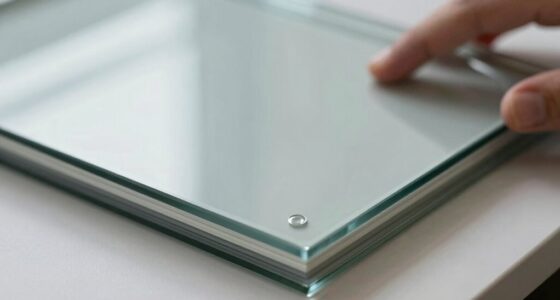
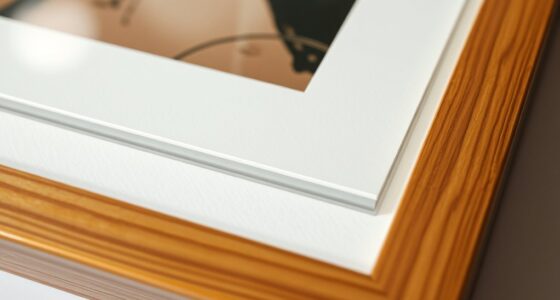
Using acid-free materials and UV protection in your conservation framing is essential for preserving your artwork or artifacts. Acid-free backing prevents deterioration caused by acidic degradation, extending your piece’s lifespan. UV filtering glass or acrylic shields against harmful light that can fade colors and degrade materials. Implementing these techniques shows your commitment to safeguarding cultural heritage and guarantees your objects stay in ideal condition over time. Keep exploring to discover even more effective preservation methods.
Open a free Amazon Business account
Business pricing, bulk buying and tax-exempt orders.
As an affiliate, we earn on qualifying purchases.
Key Takeaways
- Using acid-free materials in framing prevents chemical degradation and extends the lifespan of artworks and artifacts.
- UV protection, via UV-filtering glass or acrylic, shields objects from irreversible light damage and fading.
- Proper framing techniques that include acid-free backing and UV filters demonstrate a commitment to long-term preservation.
- Framing with these methods makes conservation efforts accessible, emphasizing their role in safeguarding cultural heritage.
- Effective framing practices help maintain the original condition of artifacts, fostering public support and informed policy decisions.

Have you ever wondered how the way we talk about conservation influences public support and policy? The language we use shapes perceptions, encouraging people to see preservation as vital. When discussing conservation, framing it around protection and longevity makes a big difference. For example, emphasizing the importance of archival mounting highlights the need for proper preservation techniques that guarantee artifacts and artwork survive for future generations. Archival mounting isn’t just about displaying items; it’s about safeguarding their integrity through thoughtful methods. Using acid-free materials in mounting and framing prevents deterioration caused by acidic degradation, which can weaken and discolor objects over time. When you frame a piece with acid-free backing, you’re actively extending its lifespan, making it less vulnerable to the damaging effects of acidity.
Proper preservation with acid-free mounting extends artifact lifespan and safeguards cultural heritage.
But framing isn’t enough; UV protection plays a fundamental role. Ultraviolet light can cause irreversible damage, fading colors and degrading materials. When you opt for UV-filtering glass or acrylic, you’re taking a proactive step to shield your collection from harmful light exposure. Highlighting UV protection in conservation framing communicates a commitment to preservation, reinforcing the idea that protecting cultural and historical items is a priority. It’s not just about aesthetics but about implementing preservation techniques that serve a practical purpose. These techniques, like using acid-free mounting boards and UV filters, are proven methods that help maintain the original condition of objects, fostering trust and appreciation among those who value conservation.
Understanding the importance of cybersecurity threats in merchant services is also crucial, as digital vulnerabilities can compromise sensitive data. The language around preservation techniques helps shape public attitudes by making conservation seem accessible and necessary. When you frame conservation efforts as investments in future knowledge and cultural identity, it resonates more deeply. For instance, explaining that archival mounting with acid-free materials isn’t just a technical detail but a vital step in protecting history encourages support. It turns abstract ideas into tangible actions people can understand and appreciate. When policies incorporate these framing strategies, they often prioritize funding for conservation practices that include proper mounting and UV protection. This cohesion between messaging and policy helps build a culture that values preservation as an ongoing commitment.
In essence, how you talk about conservation—focusing on effective preservation techniques like archival mounting and UV protection—can influence public perception and policy decisions. Framing conservation as a responsible, necessary act ensures that future generations will inherit a richer, more enduring cultural legacy.
As an affiliate, we earn on qualifying purchases.
Frequently Asked Questions
How Do Acid-Free Materials Impact Long-Term Artwork Preservation?
Using acid-free materials helps preserve your artwork by preventing acid migration, which can cause deterioration over time. These materials neutralize acids that might otherwise weaken paper and other surfaces, ensuring better material longevity. When you choose acid-free backing and mats, you’re actively protecting your artwork from yellowing, brittleness, and damage caused by acidity, so your piece stays vibrant and intact for years to come.
What Are the Best UV Protection Options for Different Art Types?
Did you know that UV filtering can reduce light damage by up to 99%? For different art types, acrylic glazing with UV protection is your best choice, especially for valuable or delicate pieces. It blocks harmful rays while providing clarity. Consider specialized UV filtering glass for paintings or photographs, and opt for acrylic glazing for a lightweight, shatter-resistant option. This approach helps preserve your artwork’s vibrancy and integrity over time.
How Often Should Conservation Framing Be Inspected or Replaced?
You should inspect your conservation framing at least once a year to guarantee it remains in good condition. Regular framing maintenance helps catch issues like UV damage or acid deterioration early. Replace or upgrade your framing when you notice signs of aging, discoloration, or damage. Keeping an eye on your framing’s condition ensures your artwork stays protected and preserved for years to come, maintaining its value and appearance.
Are There Eco-Friendly Conservation Framing Materials Available?
Yes, eco-friendly conservation framing materials are available. You can choose biodegradable plastics and recycled materials that decrease environmental impact while protecting your artwork. These options often meet conservation standards and provide UV protection. By selecting these sustainable materials, you help preserve the environment and ensure your artwork stays safe over time. Always check with your framer to ensure the eco-friendly materials meet conservation requirements for long-term preservation.
Can Conservation Framing Be Customized for Unique or Delicate Artworks?
You can definitely customize conservation framing for delicate artwork, and it’s a smart choice—about 65% of collectors opt for tailored framing to protect their pieces. With custom framing, you guarantee the materials and techniques suit the artwork’s unique needs, providing extra support and protection. This approach prevents damage and preserves the piece’s integrity over time. So, go ahead and work with a professional to create a perfect, personalized framing solution for your delicate artwork.
As an affiliate, we earn on qualifying purchases.
Conclusion
By choosing acid-free materials and UV protective glass, you truly safeguard your artwork’s future. Some experts once debated whether UV protection was necessary for all pieces, but recent studies confirm it prevents fading and deterioration over time. So, when you frame your art with these conservation methods, you’re not just enhancing its appearance—you’re actively preserving its integrity for generations to come. Trust in these proven techniques to keep your collection vibrant and lasting.
As an affiliate, we earn on qualifying purchases.
UV filtering acrylic for art preservation
As an affiliate, we earn on qualifying purchases.
As an affiliate, we earn on qualifying purchases.
Fall Picks
fall essentials
As an affiliate, we earn on qualifying purchases.