To choose the right frame for your artwork, consider its style, colors, and the mood you want to create. Match the frame’s material and color to support and enhance the piece—warm tones work well with earthy woods, while cool artwork benefits from metallic or cooler shades. Think about your space and how the frame complements it. Keep in mind, the right choice can transform your display, and exploring options can lead to stunning results.
Key Takeaways
- Match the frame’s color and finish to complement and enhance your artwork’s palette and style.
- Choose materials that reflect the artwork’s mood, style, and the environment where it will be displayed.
- Consider the space and setting to select a frame that harmonizes with the room’s decor and artwork’s character.
- Use color coordination strategies, pairing warm tones with earthy finishes and cool tones with metallic or sleek frames.
- Opt for durable materials like metal or high-quality plastics for high-traffic or humid areas, or premium wood for a timeless look.
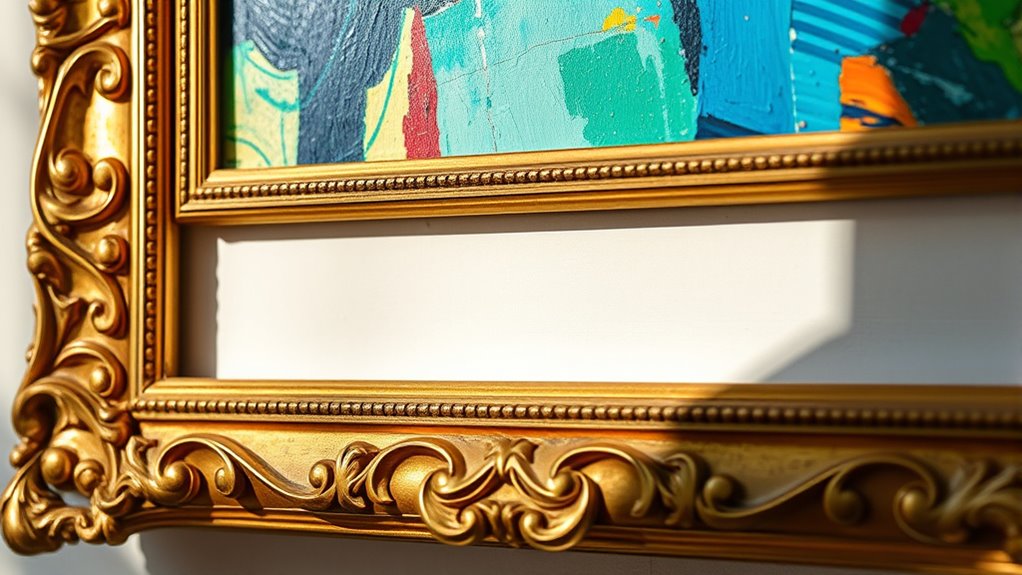
Selecting the right frame can dramatically enhance the overall impact of your artwork. It’s not just about choosing something that looks good; it’s about picking a frame that complements your piece’s colors, style, and material. When you focus on color coordination, you ensure the frame enhances rather than distracts from your artwork. For instance, if your piece features warm tones like reds and oranges, choosing a frame with earthy hues or warm wood finishes can create harmony. Conversely, if your artwork is cool-toned, with blues and greens, opt for a frame in cooler shades or sleek metallics that highlight those colors. The goal is to find a balance where the frame supports the artwork’s palette, making it pop and drawing viewers in.
Material selection plays a pivotal role in how your artwork is perceived. Different materials evoke different moods and styles. For example, classic wooden frames, such as oak or mahogany, bring a timeless, warm feel that works well with traditional art or photographs. Modern pieces might benefit from sleek metal frames, which lend a contemporary, minimalist vibe. If you want to add texture and depth, consider ornate or carved frames that bring a sense of richness and craftsmanship. The material you choose should match the character of your artwork and your personal aesthetic. If your piece has a rustic or vintage look, distressed or reclaimed wood frames can reinforce that style. For more abstract or modern work, clean-lined metal or acrylic frames can provide a fresh, unobtrusive border. Incorporating furniture styles into your framing choices can also help create a cohesive visual story.
When deciding on material, also consider the environment where the artwork will hang. Durable materials like metal or high-quality plastics are ideal for high-traffic areas or spaces prone to humidity. For a gallery-style setting or a home that aims for elegance, premium wood or custom-crafted frames can elevate the presentation. Think about how the materials will age over time. Wood, for example, develops a patina that can add character, while certain plastics and metals are more resistant to wear and tear.
Ultimately, your choice of frame should reflect both the artwork’s style and the space it inhabits. Pay attention to how color coordination and material selection work together to create a cohesive look. Don’t rush your decision; take your time to compare options, visualize how different frames will look with your piece, and choose the one that best enhances the visual story you want to tell. The right frame isn’t just a border—it’s an integral part of your artwork’s presentation.
Frequently Asked Questions
How Do I Match a Frame to Unconventional or Modern Art Styles?
To match a frame with unconventional or modern art styles, opt for contemporary framing that highlights the artwork’s unique qualities. Choose minimalist aesthetics like sleek, simple frames that don’t overpower bold, abstract pieces. You can also experiment with unconventional materials or colors to create contrast. The goal is to enhance the artwork’s modern feel while maintaining a clean, stylish look that complements its originality.
What Are the Environmental Considerations When Choosing Framing Materials?
When choosing framing materials, you should consider environmental factors by opting for sustainable materials like FSC-certified wood or recycled metals. Look for eco-friendly finishes that minimize toxic chemicals and reduce your ecological footprint. These choices help safeguard the environment while showcasing your artwork. By prioritizing sustainable options, you ensure your framing process aligns with eco-conscious practices, making your display more responsible and environmentally friendly.
How Can I Ensure My Frame Complements My Interior Decor?
A picture is worth a thousand words, so make sure it fits seamlessly. To guarantee your frame complements your interior decor, focus on color coordination and style harmony. Match the frame’s hue with existing furniture or wall colors, and choose a style that echoes your room’s aesthetic—whether modern, vintage, or rustic. Pay attention to the overall vibe, creating a cohesive look that enhances your space and highlights your artwork.
What Is the Best Way to Maintain and Clean My Framed Artwork?
To keep your framed artwork looking its best, regularly dust the frame with a soft cloth and clean the glass with a gentle glass cleaning solution to avoid streaks. Don’t forget to check for mold, especially in humid environments, and wipe away any moisture promptly to prevent mold prevention issues. Keep the artwork away from direct sunlight and humidity to maintain its vibrancy and prevent damage over time.
How Do I Choose a Frame for Artwork With Sentimental Value?
Imagine your sentimental artwork as a treasured family recipe; you want it preserved perfectly. To choose the right frame, explore custom framing options that complement its story and use preservation techniques like UV glass and acid-free mats. Opt for a style that resonates with your memories, ensuring it’s protected for generations. Trust your instincts, but also consult professionals to find a frame that honors your emotional connection.
Conclusion
Now that you know how to pick the perfect frame, you’re ready to showcase your artwork with confidence. Remember, the right frame can make your piece shine and truly stand out. Don’t be afraid to experiment until it feels just right—think of it as finding the needle in the haystack. With a little patience and a keen eye, your artwork will look polished and complete, turning your space into a gallery worth showing off.