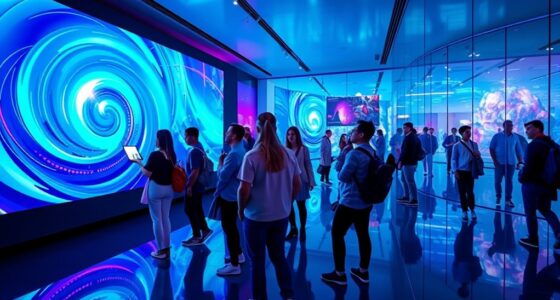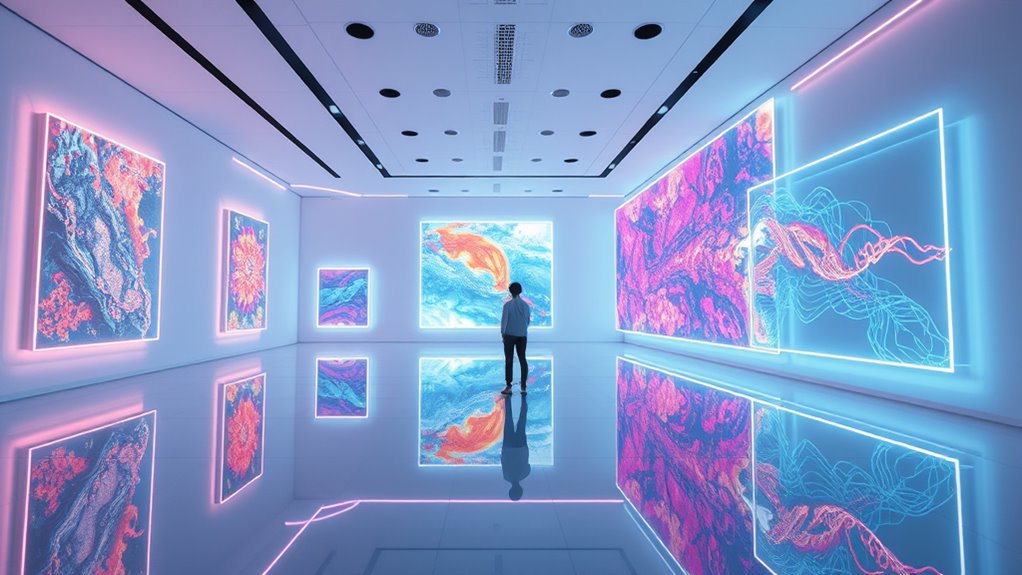

Virtual galleries in the metaverse are transforming how you experience and curate art by offering immersive, accessible digital spaces from anywhere. You can explore interactive environments, view artworks in 3D, and even own digital pieces secured by blockchain technology. These galleries break down geographic barriers, allowing you to connect with artists worldwide and attend exclusive events virtually. As this technology evolves, you’ll discover even richer ways to engage with art in the digital domain.
Key Takeaways
- Virtual galleries enable global access, breaking geographic barriers and democratizing art exploration and participation.
- Immersive, interactive environments enhance user engagement, allowing users to walk through, zoom, and interact with digital artworks.
- Blockchain technology ensures digital ownership security, authenticity, and seamless trading of digital art assets.
- The metaverse offers sensory-rich, customizable spaces that elevate traditional art viewing to a more engaging experience.
- Ongoing technological advancements will continue transforming virtual galleries, enriching digital art discovery and interaction in the metaverse.
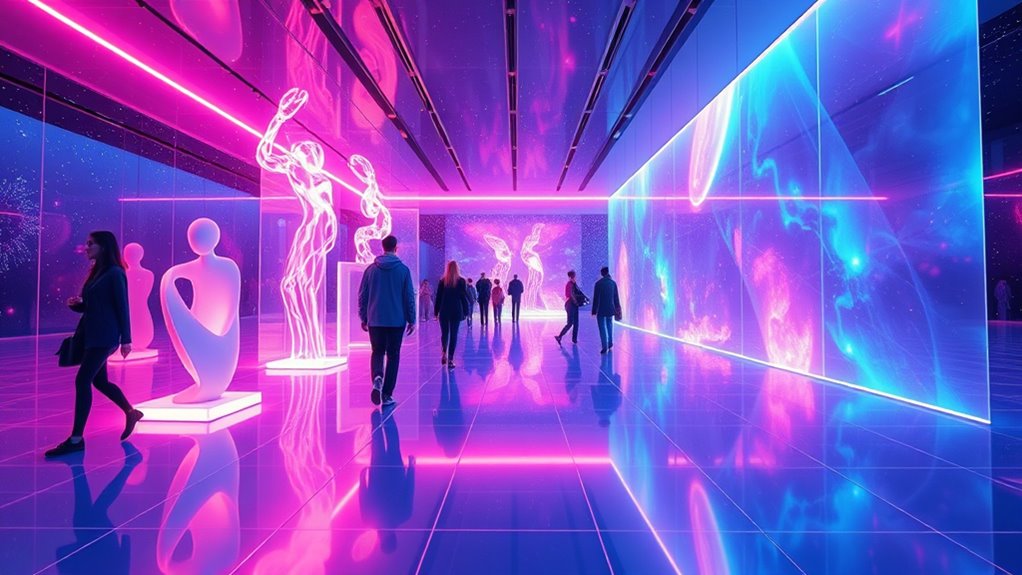
Virtual galleries in the metaverse are transforming how you experience art, making it more accessible, immersive, and interactive than ever before. Instead of visiting physical locations, you can explore vast, beautifully crafted digital spaces from anywhere in the world. These virtual environments allow you to walk through galleries, view artworks in 3D, and interact with pieces in ways that traditional galleries simply can’t offer. It’s a new way to connect with art on a deeper level, engaging your senses and curiosity without the constraints of physical space.
Virtual metaverse galleries make art accessible, immersive, and interactive—exploring digital spaces from anywhere in the world.
One of the key innovations driving this shift is digital ownership. When you buy or collect art in the metaverse, you’re not just purchasing a digital image; you’re acquiring a unique token of ownership—often through blockchain technology—that verifies your rights to that piece. This adds a layer of security and authenticity, ensuring that your digital art collection is truly yours. Digital ownership also opens up new possibilities for artists and collectors alike, as it enables them to sell, trade, or showcase art across multiple platforms seamlessly. You can curate a personalized virtual gallery that reflects your taste, all while knowing your collection’s provenance is secure and transparent.
Immersive experiences are at the heart of virtual galleries, giving you a sense of presence and involvement that elevates traditional viewing. Instead of passively observing artworks behind glass or on screens, you’re invited into a curated environment where you can walk around, zoom in, and even interact with the pieces. Imagine standing in a virtual room, surrounded by masterpieces, feeling as if you’re actually inside an art museum. Some platforms incorporate augmented reality elements, allowing you to project artworks into your physical space or explore them from different angles. This level of interaction makes art more engaging, inspiring a personal connection that’s difficult to achieve in physical galleries. Additionally, high color accuracy in digital displays enhances the visual fidelity, making the experience more true to life.
Furthermore, virtual galleries in the metaverse are breaking down geographic barriers, giving artists and audiences from all over the world a shared space to connect. You no longer need to travel to major cities to experience top-tier exhibitions. Instead, you can attend exclusive openings, participate in live discussions, or even meet artists—all within the digital domain. This democratization of art access fosters a more inclusive community, where everyone has a chance to discover, appreciate, and invest in meaningful works. As the technology continues to evolve, expect these immersive, accessible spaces to become even more sophisticated, transforming how you discover and engage with art in ways that are personalized, secure, and deeply enriching.

Abacus Brands Virtual Reality Animals! Gift Box – Illustrated Interactive VR Book and STEM Learning Activity Set – for Ages 8 and Up
THE ULTIMATE GIFT EXPERIENCE! Discover the animal kingdom like never before, with over 96 pages of interactive content…
As an affiliate, we earn on qualifying purchases.
As an affiliate, we earn on qualifying purchases.
Frequently Asked Questions
How Do Virtual Galleries Impact Traditional Art Sales?
Virtual galleries boost traditional art sales by expanding your reach globally, allowing more people to discover and buy your work. They emphasize digital authenticity, assuring collectors of the artwork’s credibility online. By offering global accessibility, you can connect with buyers who might never visit physical galleries. This expanded exposure increases sales opportunities while maintaining the integrity of your art, making virtual galleries a powerful complement to traditional sales channels.
What Are the Costs Involved in Creating a Virtual Gallery?
Creating a virtual gallery involves costs like setting up virtual infrastructure, which includes platform development, server hosting, and 3D design. You’ll also need to allocate funds for licensing fees to legally showcase artwork and software subscriptions for design tools. These expenses can vary based on complexity, but investing in quality infrastructure and legal compliance guarantees a seamless, professional experience that attracts visitors and potential buyers.
How Do Artists Benefit From Virtual Gallery Exhibitions?
Imagine your art becomes a vibrant brushstroke on a global canvas, reaching viewers worldwide. Virtual gallery exhibitions let you harness interactive storytelling, engaging audiences in innovative ways. You benefit by expanding your reach beyond physical boundaries, gaining exposure to diverse audiences and potential collectors. Plus, you can showcase your work continuously without the constraints of traditional venues, turning your art into an accessible, dynamic experience that sparks connection and growth across the digital universe.
What Platform Features Are Essential for a Successful Virtual Gallery?
You need platform features that boost user engagement and guarantee accessibility. Interactive elements like clickable info panels, virtual tours, and live chats keep visitors involved. Prioritize easy navigation, mobile compatibility, and multilingual support so everyone can explore effortlessly. Incorporate high-quality visuals and seamless loading times to enhance experience. These features make your virtual gallery inviting, engaging, and accessible, ultimately increasing visitor retention and expanding your reach in the digital art world.
How Secure Is the Ownership of Digital Artworks in the Metaverse?
Oh, your digital artworks are perfectly secure, right? Think again. Digital ownership in the metaverse relies heavily on blockchain security, which is robust but not infallible. While blockchain provides proof of ownership and authenticity, hacking and smart contract vulnerabilities still pose risks. So, you might enjoy your virtual gallery, but don’t forget—your digital assets aren’t entirely invincible. Stay vigilant, and keep an eye on security updates.

Dreamscreens – Convert Your TV into a Digital Art Gallery | Displays 500+ Digital Art Pieces| Art TV | Wall Art (Dream Digital Art 4K)
Over 500 Photos Amazing Digital Art Images Displayed on Your TV in Ultra High Definition 4K Resolution
As an affiliate, we earn on qualifying purchases.
As an affiliate, we earn on qualifying purchases.
Conclusion
As you step into the world of virtual galleries, you’ll find yourself soaring through a boundless universe where art knows no limits. The metaverse transforms your viewing experience into a vibrant tapestry, inviting you to explore, interact, and connect like never before. Just as a magnet pulls metal, these digital spaces draw you in, making art more accessible and immersive. Embrace this evolution—your next masterpiece could be just a click away in this ever-expanding digital gallery.

Canvia Smart Digital Canvas Display and Frame – for Fine Painting, Wall Art, NFTs, Personal Photos & Videos – Advanced HD Display, NFT Compatibility, Video Playback, Google Photos, 16GB Storage
Realistic Art For Your Wall – Utilizing our patented ArtSense technology, the Canvia smart digital art frame displays…
As an affiliate, we earn on qualifying purchases.
As an affiliate, we earn on qualifying purchases.

Virtual Reality Beginner's Guide + Google Cardboard Inspired VR Viewer
As an affiliate, we earn on qualifying purchases.
As an affiliate, we earn on qualifying purchases.