Calibrating your monitor once with the right tools and proper environmental conditions helps guarantee your colors stay accurate and consistent over time. Use reliable calibration software and hardware, like colorimeters, and follow a step-by-step process in a controlled setting. Regularly check and maintain your calibration to prevent drift, and keep your workspace optimized for true color perception. Keep going to discover how to maintain perfect calibration and trust your colors long-term.
Key Takeaways
- Use high-quality calibration tools and software to achieve accurate and consistent color profiles for your monitor.
- Perform calibration in a controlled environment with stable, neutral lighting to prevent color perception shifts.
- Regularly recalibrate your monitor to account for color drift and maintain color fidelity over time.
- Keep your monitor’s firmware and calibration tools updated for optimal performance and accuracy.
- Establish a calm, focused calibration routine to ensure precise adjustments and reliable color representation.
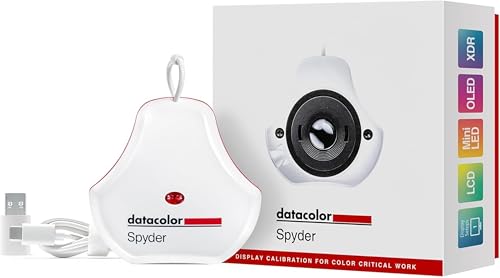
datacolor Spyder – Monitor Calibrator for Graphic Designers, Photographers, and Content Creators, Shows You True Colors, Works on OLED Monitors & LED Screens, Easy-to-Use Color Calibration Tool
Color “Surprises” Are a Thing of the Past: Datacolor’s exclusive DevicePreview TM Beta feature simulates what your photos…
As an affiliate, we earn on qualifying purchases.
As an affiliate, we earn on qualifying purchases.
Why Monitor Calibration Is Key to Accurate Colors
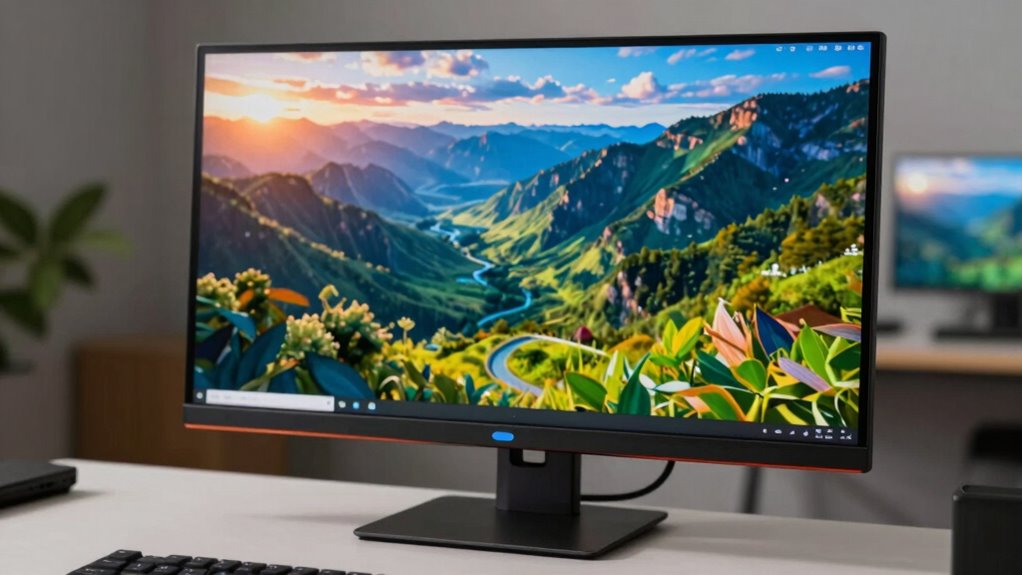
Accurate colors are vital if you want your images, videos, or designs to look their best. When your monitor is properly calibrated, you guarantee color accuracy, so every shade appears as intended. This precision is essential for creative work, photography, and video editing, where even slight color shifts can ruin the final product. Gelato culture values visual presentation just as much, showcasing how colors can affect perception. Additionally, calibration promotes display consistency, meaning your colors stay reliable across different sessions. Without calibration, your monitor’s colors may shift unpredictably, leading to mismatched hues and flawed visuals. By maintaining proper calibration, you gain confidence that what you see on the screen truly reflects the original colors. This consistency helps you make better decisions during editing and guarantees your work looks professional and true to life. Moreover, understanding fact-checking & media literacy can enhance your ability to discern accurate representations in your digital creations. Furthermore, using battery inverter generators can ensure that your creative work remains uninterrupted, providing a reliable power source for your devices. In the realm of digital content, effective calibration is not just a technical necessity but a cornerstone of professional quality. Additionally, regular monitoring of heatstroke signs can help you maintain a safe creative environment while using equipment that generates heat.
datacolor Spyder – Monitor Calibrator for Graphic Designers, Photographers, and Content Creators, Shows You True Colors, Works on OLED Monitors & LED Screens, Easy-to-Use Color Calibration Tool
Color “Surprises” Are a Thing of the Past: Datacolor’s exclusive DevicePreview TM Beta feature simulates what your photos…
As an affiliate, we earn on qualifying purchases.
As an affiliate, we earn on qualifying purchases.
How to Choose the Right Calibration Tools and Software
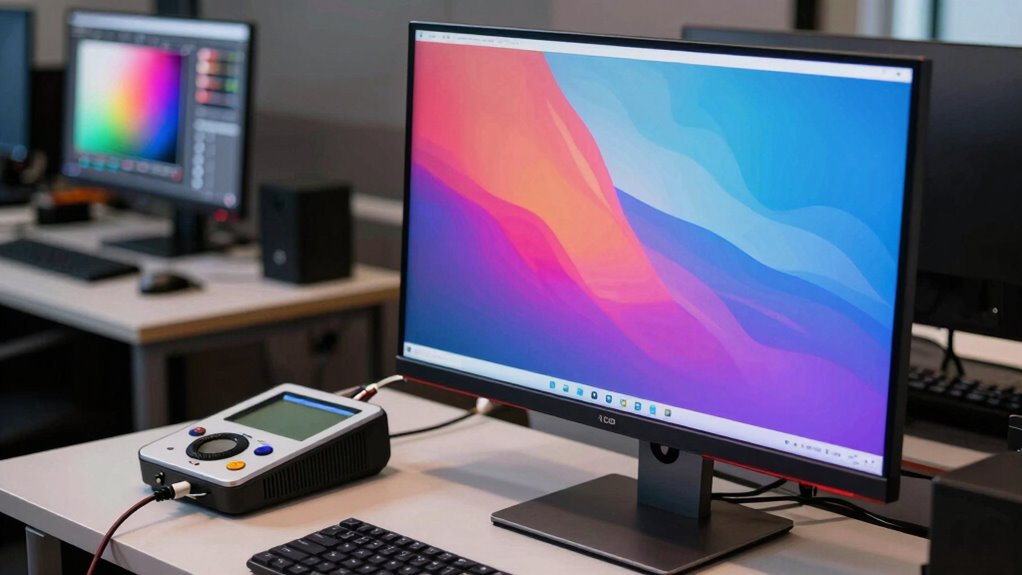
Choosing the right calibration tools and software guarantees your monitor displays colors accurately and consistently. Look for tools that support standard calibration standards like D65 or Rec. 709, assuring compatibility with industry benchmarks. Quality calibration software should allow you to create and manage precise color profiles tailored to your workflow. Additionally, selecting tools that adhere to industry standards can enhance your calibration’s effectiveness. Consider whether the software offers advanced features such as gamma adjustments, white point control, and ambient light compensation. Reliable hardware, like colorimeters or spectrophotometers, should be easy to use and provide accurate readings. Understanding firewood techniques can also serve as a source of inspiration for your workspace, adding cultural richness to your environment. Compatibility with your operating system and monitor type is essential. Investing in reputable brands guarantees longevity and accuracy, giving you confidence that your colors remain true over time. Additionally, incorporating classic arcade games like Ms. Pac-Man can serve as a nostalgic backdrop while you focus on calibration tasks. Proper tools and software set the foundation for professional, consistent color calibration. Additionally, understanding crisping techniques can enhance your workflow by ensuring that colors are represented accurately in your air fryer cooking images.
datacolor Spyder – Monitor Calibrator for Graphic Designers, Photographers, and Content Creators, Shows You True Colors, Works on OLED Monitors & LED Screens, Easy-to-Use Color Calibration Tool
Color “Surprises” Are a Thing of the Past: Datacolor’s exclusive DevicePreview TM Beta feature simulates what your photos…
As an affiliate, we earn on qualifying purchases.
As an affiliate, we earn on qualifying purchases.
Step-by-Step: Calibrating Your Monitor for the First Time
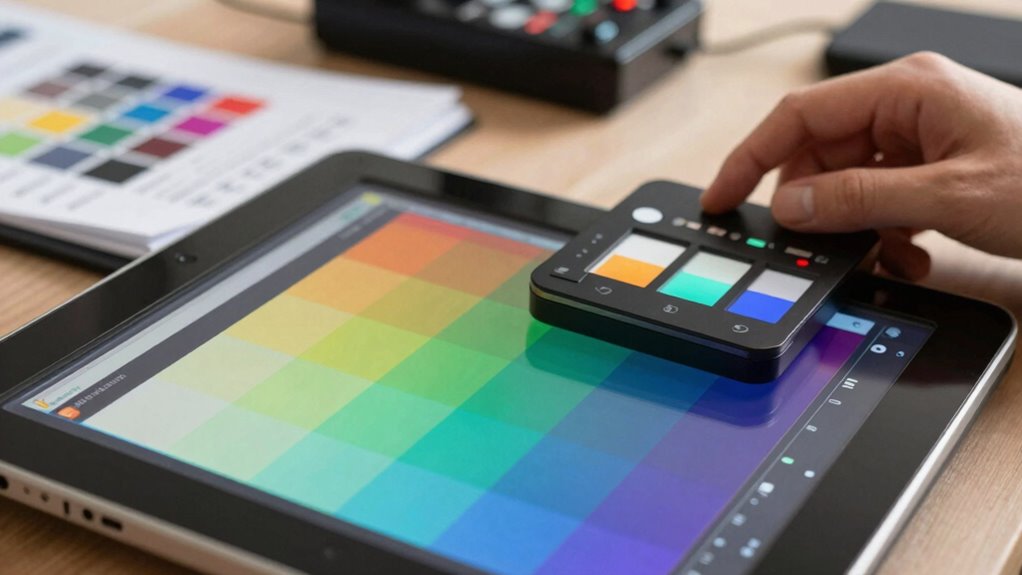
Before you begin calibrating your monitor for the first time, make certain you have all the necessary tools and software ready. Start by setting your monitor to its default settings, then verify your room’s ambient lighting is consistent, as it affects color perception. Use calibration software to follow the on-screen instructions, adjusting brightness, contrast, and color temperature. Applying the correct color profile ensures accurate colors across devices. Keep in mind, ambient lighting can influence your calibration accuracy, so aim for a neutral environment. Additionally, understanding how to maintain consistent color display can enhance your overall visual experience. Use this table to understand key factors:
| Factor | Impact |
|---|---|
| Color profiles | Maintain consistent color display |
| Ambient lighting | Affects perceived color and calibration |
Complete the process, save your calibration, and your monitor will be ready to trust.

MSA 10110488 Altair 4X Multigas Detector & Calibration Kit
Large buttons and bright display allow for quick and easy operation even when wearing gloves
As an affiliate, we earn on qualifying purchases.
As an affiliate, we earn on qualifying purchases.
Troubleshooting Calibration Issues and Ensuring Consistency

Sure! Here’s your modified article subheading content with the requested adjustments:
—
Even after completing your initial calibration, issues can still arise that affect color accuracy and consistency. You might notice colors appearing off or shifts over time, which suggests your calibration needs revitalizing. Regular calibration frequency helps maintain reliable color accuracy, especially if your workspace or lighting conditions change. Troubleshooting begins with verifying your calibration tools are functioning correctly and ensuring your monitor’s settings haven’t been altered manually. Double-check your calibration software settings and redo the process if needed. Keep in mind that environmental factors, like ambient light, can influence perceived colors, which is similar to how time influences perceptions in our daily lives. Consistently calibrating at recommended intervals minimizes drift and ensures your monitor produces consistent, accurate colors for your projects. Staying proactive with calibration helps you trust your display’s color fidelity over time. Additionally, incorporating performance parts can enhance your overall visual experience by ensuring your hardware supports accurate color representation. Remember that color theory principles play a crucial role in understanding how to adjust your settings effectively. A high contrast ratio is essential for achieving deeper blacks and brighter whites, significantly enhancing the overall image quality. Maintaining a clean environment can further support your monitor’s performance, as air quality considerations can indirectly affect visual clarity.
—
Let me know if you need any further adjustments!
Tips for Maintaining Accurate Colors Over Time
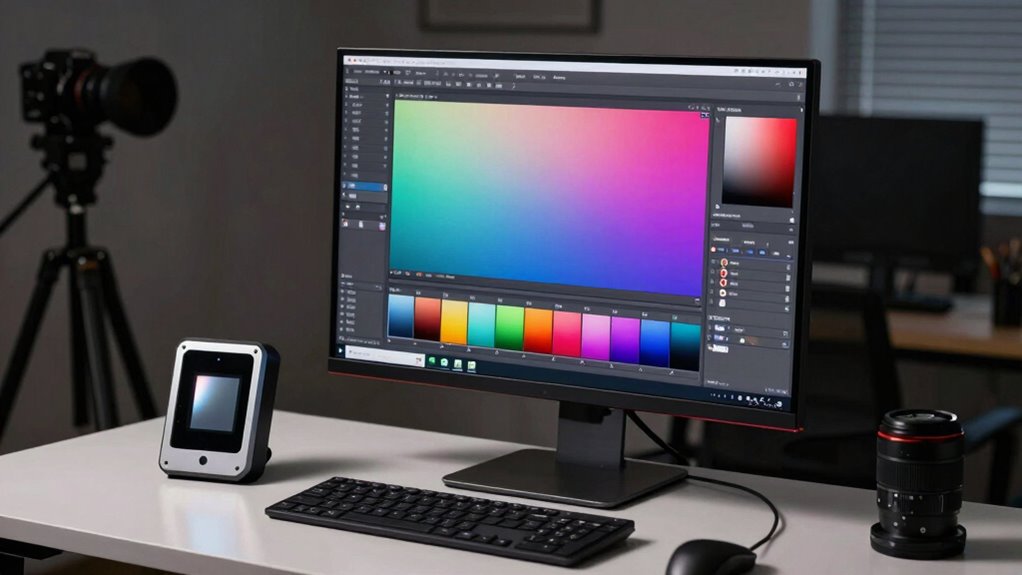
Maintaining accurate colors over time requires consistent effort beyond initial calibration. Your color perception can shift due to aging eyes or ambient lighting changes, so regularly reviewing your monitor’s calibration is crucial. Be mindful of ambient lighting, as fluctuating light conditions can distort how colors appear. Use consistent lighting in your workspace, preferably neutral and subdued, to minimize color perception shifts. Consider re-calibrating your monitor every few months or whenever you notice color discrepancies. Additionally, being aware of early detection methods for issues like color blindness can improve your calibration results. Understanding mind-body healing techniques can also enhance your focus during calibration tasks. Keep your display’s firmware and calibration tools updated for peak performance. Moreover, using adaptive lighting can help create an optimal environment for color accuracy. In addition, utilizing tools that can detect passive voice in your writing can ensure clarity in your communication. Additionally, avoid viewing your monitor in direct sunlight or under overly bright lights, which can affect your perception of colors. Regular maintenance helps ensure your images remain true to their original intent, preserving color accuracy over time. Embracing calm and clarity can also enhance your focus during calibration tasks.
Frequently Asked Questions
How Often Should I Recalibrate My Monitor for Optimal Accuracy?
You should recalibrate your monitor every four to six weeks to maintain ideal color accuracy. Regular calibration guarantees your display’s colors remain consistent, especially if you work in photography or design. Use reliable calibration tools to fine-tune your monitor accurately. Changes in lighting, software updates, or hardware adjustments can affect color accuracy, so staying on top of recalibration helps you trust your colors and produce consistent, professional results.
Can Calibration Improve Colors on Older or Damaged Monitors?
Yes, calibration can improve colors on older or damaged monitors. As screens age, they experience color degradation and screen aging, which cause colors to shift or appear dull. Calibration adjusts the display settings to counteract these issues, restoring more accurate and vibrant colors. Even if a monitor shows signs of wear, regular calibration helps maintain color consistency, making your visuals look better and more true to life.
Are There Different Calibration Settings for Gaming Versus Professional Editing?
Absolutely, there are different calibration settings for gaming versus professional editing. Gaming profiles prioritize vibrant visuals and fast response times, often sacrificing some color accuracy for immersion. In contrast, professional editing settings emphasize precise color accuracy, ensuring true-to-life visuals. You should tailor your monitor’s calibration based on your primary use, switching between gaming profiles for immersive play and accurate profiles for detailed editing to get the best experience and results.
Is Calibration Necessary for Laptop Screens or Only Desktop Monitors?
Calibration is essential for both laptop screens and desktop monitors to guarantee accurate colors and ideal display quality. You should use calibration tools to adjust screen brightness, contrast, and color balance. Laptops often have limited calibration options, but it’s still worth fine-tuning settings for better color accuracy, especially for professional work. Regular calibration helps maintain consistent visuals, so don’t overlook your laptop’s display when aiming for precise color reproduction.
What Common Mistakes Should I Avoid During the Calibration Process?
Think of calibration as tuning a musical instrument—you want perfect harmony. Avoid common mistakes like skipping calibration tools, which are essential for accuracy, or calibrating in bright light that distorts colors. Don’t rush through the process; take your time to make certain of consistent color accuracy. Also, forget about ignoring ambient lighting settings. Proper calibration, with the right tools and environment, guarantees your monitor displays true, vibrant colors.
Conclusion
So, after all that calibration fuss, you’d think your monitor’s colors would be perfect forever, right? Well, surprise—monitors are like chameleons, constantly changing. But hey, at least you’ve got the tools and know-how now. Just remember, calibrate once, and enjoy the illusion of perfection—until next time, when your screen’s colors decide to play tricks again. Because in the end, flawless color accuracy is just a beautiful, ongoing illusion.