If you want sharper lines, a flatbed scanner generally performs better because it uses precise sensors and higher resolution capabilities, capturing fine detail and textures effectively. Overhead scanners are good for quick, accurate captures but may not always produce as crisp lines, especially if settings aren’t optimized. To learn how to get the best results with each type and troubleshoot common issues, keep exploring the details below.
Key Takeaways
- Flatbed scanners excel at capturing detailed textures and subtle nuances, offering superior overall image quality.
- Overhead scanners provide more precise, distortion-free lines, making them ideal for high-fidelity, sharp line work.
- Flatbeds are better suited for textured or delicate originals, while overheads are optimized for crisp, clean line accuracy.
- Flatbed scanners tend to introduce slight distortions with uneven contact; overheads maintain consistent line sharpness.
- For maximum line sharpness, overhead scanners generally outperform flatbeds in producing clear, precise lines.

Epson – Perfection V39 II – Color Photo, Tax Receipt & Document Flatbed Scanner – 4800 dpi Optical Resolution – High-Rise, Removable Lid – Scan to Cloud – USB Power – Image Scanning – Black
CLEAR, DETAILED PHOTO SCANS – Achieve amazing image clarity and detail with a 4800 dpi optical resolution, perfect…
As an affiliate, we earn on qualifying purchases.
As an affiliate, we earn on qualifying purchases.
How Do Flatbed and Overhead Scanners Capture Lines Differ?
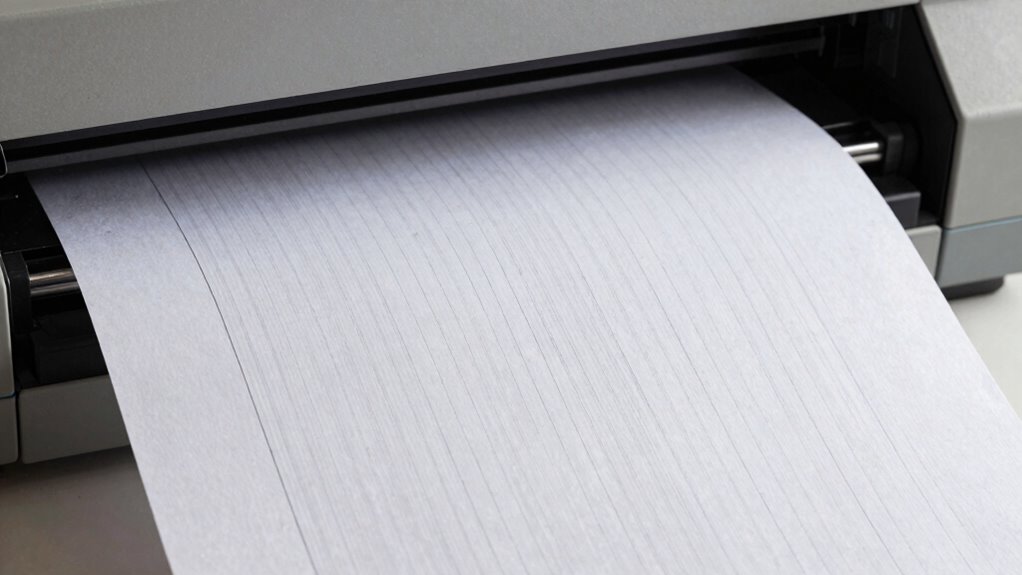
While both flatbed and overhead scanners are designed to digitize images and documents, they capture lines in very different ways. During historical scanning, flatbed scanners use a stationary glass surface and a moving sensor to scan each line sequentially, which helps preserve color accuracy by capturing fine details consistently. Overhead scanners, on the other hand, employ a camera-like sensor that captures the entire image from above in a single shot, often resulting in faster scans. Flatbeds tend to produce sharper lines because their sensors move precisely across the document, making them ideal for detailed work. Overhead scanners may sacrifice some line sharpness for speed, but their ability to quickly capture large or multiple images can be advantageous in various scanning tasks. This exploration of content formats in scanning technology highlights the distinct advantages and trade-offs of each method.

ScanSnap SV600 Overhead Book and Document Scanner, Black
Easily scan newspapers, magazines, documents or books directly without cutting or damaging them
As an affiliate, we earn on qualifying purchases.
As an affiliate, we earn on qualifying purchases.
What Factors Affect Line Sharpness When Scanning?
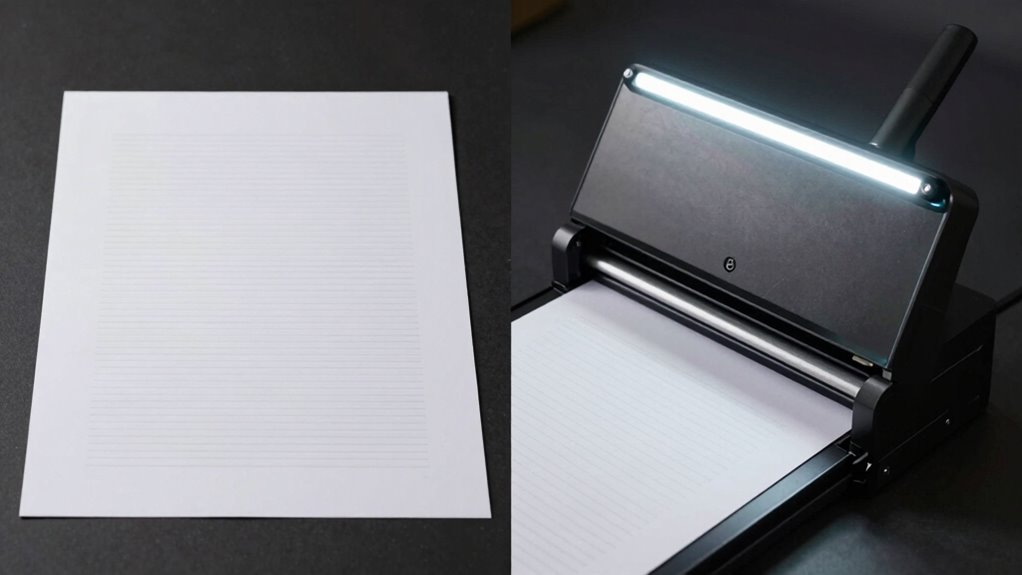
Your line sharpness when scanning depends on several key factors. The thickness of your document can cause blurriness if it’s too bulky, while choosing higher resolution settings improves detail. Additionally, accurate document positioning guarantees the scanner captures lines precisely without distortion. Moreover, understanding color accuracy can also influence how well lines are rendered during the scanning process. Furthermore, twin flame connections can sometimes lead to emotional distractions that affect focus during the scanning task.
Document Thickness Impact
Document thickness plays a crucial role in determining line sharpness when scanning because thicker materials can cause uneven contact or slight gaps between the document and the scanner’s glass surface. This unevenness leads to blurred or distorted lines, especially if the scanner isn’t properly calibrated. The document material’s flexibility and density also influence how well it flattens during scanning. Consider this imagery:
| Thin, rigid paper | Slight gap, sharp lines | Consistent contact |
|---|---|---|
| Thick, flexible paper | Uneven surface, blurred lines | Calibration needed |
| Cardstock | May cause pressure issues | Calibration improves clarity |
| Fabric or textured material | Gaps and distortions | Proper handling helps |
| Metal or glossy surface | Reflection issues | Calibration can mitigate |
Ensuring correct scanner calibration and choosing appropriate document material helps keep lines sharp despite thickness variations. Additionally, embracing curiosity as a success tool can inspire innovative techniques for improving scanning quality and overall results. Understanding regional flavors and chicory can also lead to unique insights that enhance the overall scanning experience.
Scanner Resolution Settings
Scanner resolution settings directly influence line sharpness because higher resolutions capture more detail, resulting in crisper images. When you increase resolution, lines appear clearer, especially on detailed or fine-textured documents. However, higher resolutions demand more from your scanner’s power supply, which can impact stability and consistency. Color accuracy also benefits from ideal resolution settings, as sharper details help preserve true hues and tones. Keep in mind, excessively high resolutions may slow down scanning speed and generate larger file sizes, so find a balance based on your needs. Adjusting resolution thoughtfully ensures your scans maintain clarity without overtaxing your equipment’s power supply, ultimately producing sharper, more precise lines for professional results.
Document Positioning Accuracy
Proper positioning during scanning is essential because even slight misalignments can cause lines to appear blurry or skewed. When you don’t align your document correctly, it impacts color accuracy and overall sharpness. Factors affecting line sharpness include:
- Paper handling: Poorly fed or wrinkled paper can shift during scanning, reducing precision.
- Alignment: Crooked placement leads to skewed lines and uneven edges.
- Scanner calibration: An uncalibrated scanner may not capture details accurately, affecting sharpness and color fidelity.
Ensuring proper document positioning helps maintain crisp, clear lines and accurate colors. Take your time aligning the document, handle paper smoothly, and regularly calibrate your scanner for ideal results. These steps keep lines sharp and images true to life.

Epson WorkForce ES-50 Portable Sheet-Fed Document Scanner for PC and Mac
Fastest and lightest mobile single sheet fed document scanner in its class(1) small, portable scanner ideal for easy,…
As an affiliate, we earn on qualifying purchases.
As an affiliate, we earn on qualifying purchases.
How Do Image Resolution and Scan Settings Impact Line Clarity?
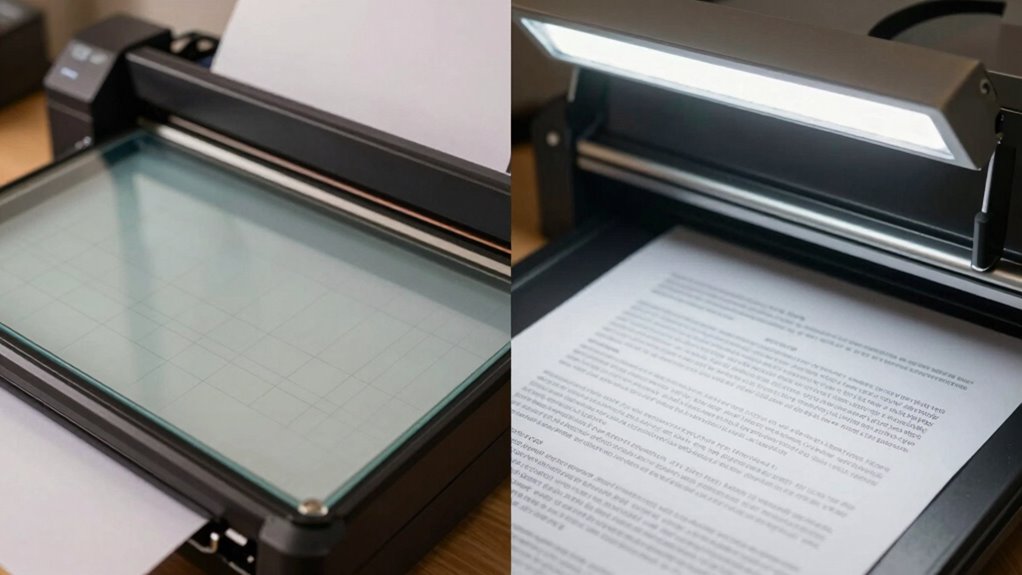
Understanding how image resolution and scan settings influence line clarity is essential for achieving sharp, detailed results. Higher resolutions, like 600 DPI or more, capture finer lines and prevent blurring. Adjusting scan settings such as contrast and sharpness can enhance line definition, making lines appear crisper. Keep in mind that color accuracy impacts how well lines stand out against backgrounds, especially in colored or textured paper. Paper texture plays a role too; rough or uneven surfaces can cause lines to appear fuzzy or jagged, regardless of resolution. To get the best results, select a resolution that balances detail with file size, and fine-tune your settings to match the paper’s characteristics. This approach guarantees lines stay sharp and clear, whether you’re scanning detailed artwork or precise technical drawings.
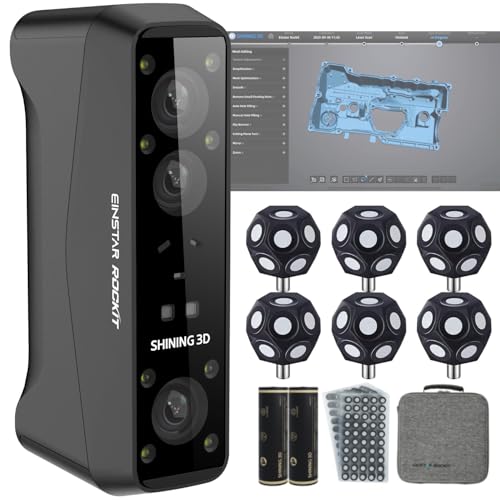
Einstar Rockit Wireless Handheld 3D Scanner with Scanning Software, Dual Light, 38 Laser Lines, 7 Parallel Laser Lines, 0.05mm HD Resolution for Reverse Engineering, Manufacturing and Art
Dual light sources- Blue Laser: 38 laser lines (19 + 19 crossed) for fast, large-area scanning + 7…
As an affiliate, we earn on qualifying purchases.
As an affiliate, we earn on qualifying purchases.
Why Scanner Alignment and Stability Matter for Precise Lines

When a scanner isn’t properly aligned and stable, even minor movements or tilts can distort your images and blur fine lines. This instability affects color accuracy, making colors appear off or inconsistent. It also impacts software compatibility, as misaligned scans may not work smoothly with editing tools or color correction programs. To achieve sharp, precise lines, make sure your scanner is firmly positioned and calibrated correctly. Additionally, using the right flywheel upgrades can enhance the overall performance of your equipment. Proper alignment is crucial because it ensures that the scanner’s resolution is fully utilized, providing the best quality output. Furthermore, maintaining a mindful presence during scanning can significantly improve focus and attention to detail.
Properly align and stabilize your scanner for accurate, clear, and consistent scans every time.
- Prevents distortions that compromise line clarity
- Guarantees consistent color reproduction
- Enhances compatibility with editing software
- Incorporating sulfate-free options can help maintain the vibrancy of your scanned images by reducing glare and enhancing detail.
A stable, aligned scanner minimizes errors, giving you clearer, more accurate results. Proper setup directly influences the quality of your scans, especially when capturing fine details and sharp lines. Additionally, incorporating herbal baths into your wellness routine can help maintain focus, further aiding in precision tasks like scanning. Don’t overlook stability—it’s key to maintaining high color accuracy and seamless software integration.
How Lighting and Reflection Influence Scan Quality
Here’s the revised content following your instructions:
—
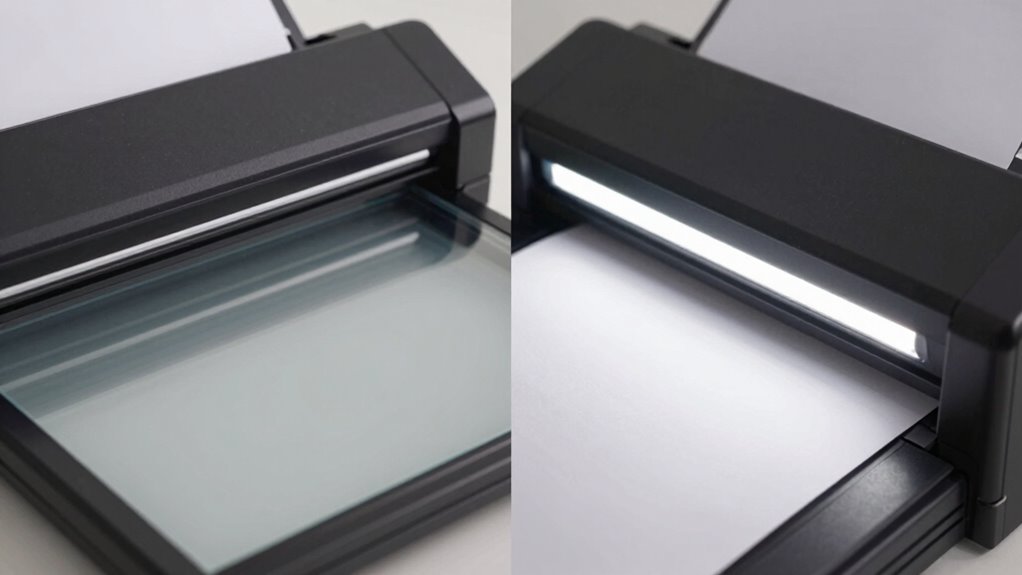
Lighting conditions directly affect how clear your scan appears, with uneven or poor lighting causing shadows or glare. Reflection effects can distort details or create unwanted artifacts, reducing overall quality. Paying attention to proper lighting and minimizing reflections helps you achieve sharper, more accurate scans. Additionally, maintaining good indoor air quality can prevent dust accumulation on the scanner surface, further enhancing the clarity of your scans. Using a portable oil radiator can help regulate temperature and humidity, creating an optimal environment for scanning. Incorporating natural lighting techniques can also improve visibility and detail in your scanned images, as proper lighting enhances extraction methods used in scanning processes. Furthermore, understanding auditory processing techniques can provide insights into how sound environments might influence focus during the scanning process.
—
Impact of Lighting Conditions
Light conditions and reflections play a crucial role in determining scan quality, often making or breaking the clarity of your images. Proper lighting guarantees accurate color reproduction, so your scans are true to the original. Poor lighting can lead to color inaccuracies and uneven exposure, affecting the overall quality. Additionally, reflections can introduce glare, obscuring details and reducing sharpness. When choosing between flatbed and overhead scanners, consider how lighting impacts power consumption—overhead models often need more consistent lighting setups, increasing energy use. To optimize scan quality, guarantee even lighting, minimize glare, and adjust settings accordingly. Being mindful of these factors helps you achieve sharper lines and more accurate reproductions, regardless of the scanner type.
Reflection Effects on Clarity
Reflections can greatly diminish scan clarity by creating glare and obscuring fine details. When reflections bounce off shiny surfaces or glossy materials, they distort color accuracy, making images look washed out or overly bright. This glare forces you to redo scans, reducing overall scanning speed. Overhead scanners are more prone to reflection issues because of their lighting setup, which can cause uneven illumination and unwanted glare. Flatbed scanners typically handle reflections better due to their enclosed design, but glare can still occur if the document’s surface is reflective. To improve clarity, guarantee proper lighting angles and remove any reflective surfaces before scanning. Reducing reflections enhances both color accuracy and scanning speed, resulting in sharper, more precise lines and details. Additionally, ensuring that the paint is properly strained before use can help achieve optimal results in airless paint spraying, similar to how clarity is improved in scanning.
Which Scanner Type Handles Fine Details Better?

When it comes to capturing fine details, flatbed scanners generally outperform overhead scanners due to their higher resolution capabilities and more precise image sensors. This makes them better at capturing intricate textures and subtle lines, essential for projects demanding sharpness. Additionally, flatbeds often provide superior color accuracy, ensuring your detailed images and color-sensitive documents stay true to the original. They also tend to offer better document durability, as the flatbed surface minimizes movement and distortion during scanning. Furthermore, testing accuracy in scanning can significantly impact the quality of your results. Investing in quality scanning equipment can enhance your overall family waterpark prep, ensuring that important documents are preserved effectively for your trip. Moreover, using high-resolution images can greatly enhance the visual appeal of your scanned documents. Innovative portable restroom solutions can also benefit from high-quality imaging, as clear documentation helps in planning and execution. Additionally, having access to an easy conversion tool** can help ensure that any financial documents are accurately represented in the appropriate numerical units.
- Higher resolution results in crisper, more detailed images
- Better color accuracy preserves fine color nuances
- Enhanced document stability reduces risk of damage or misalignment
If sharp lines and intricate details matter most, a flatbed scanner is your best choice for precision and clarity.**
Tips for Optimizing Scan Quality for Sharp Lines
To get the sharpest lines, start by adjusting your scanner settings to the appropriate mode and contrast. Use the highest resolution available to capture fine details clearly. Also, make sure your originals are clean and flat for the best possible scan quality.
Adjust Scanner Settings Properly
Adjusting your scanner settings correctly is essential for capturing sharp, clear lines in your scans. Proper settings can improve color accuracy and optimize scanning speed, making your workflow more efficient. To achieve this, consider these tips:
- Calibrate color settings to match the original document, ensuring accurate color reproduction.
- Adjust the resolution based on your needs; higher resolution can enhance line sharpness without sacrificing speed.
- Fine-tune the scan mode—use line art or black-and-white modes for sharper lines and quicker scans.
Use High-Resolution Scanning
Have you considered how high-resolution scanning can dramatically improve the clarity of your lines? Increasing your scanner’s resolution boosts detail, ensuring sharper edges and more precise lines. This setup benefits both flatbed and overhead scanners, especially when color accuracy matters, as higher resolution captures more subtle color variations without blurring. Keep in mind, though, that higher resolution can slow down scanning speed, so balance your needs accordingly. If you’re scanning detailed artwork or technical drawings, opt for the highest resolution your scanner offers. This will help preserve crispness and sharpness, making lines stand out clearly. Just remember, the goal is to find the right compromise between scan quality and efficiency for your specific projects.
Keep Originals Clean and Flat
Ensuring your originals are clean and flat is essential for achieving sharp, clear lines in your scans. When your documents are free of dust, smudges, or wrinkles, you improve color accuracy and help preserve document durability over time. To optimize scan quality, consider these tips:
- Gently clean your originals with a soft cloth to remove dust and fingerprints.
- Flatten curled or folded pages by placing a heavy, clean weight on them for a few minutes.
- Handle documents carefully to avoid creases or tears that can distort lines and reduce overall clarity.
Troubleshooting Blurry or Faint Lines in Your Scans

Blurry or faint lines in your scans can be frustrating, but they often stem from simple issues you can fix quickly. First, check your scanner settings for best color accuracy; adjusting brightness and contrast can make lines sharper. Guarantee your original document is clean and flat, as wrinkles or smudges can cause faint lines. Consider the scanner’s resolution; higher DPI settings usually improve line clarity. Additionally, evaluate user ergonomics—poor positioning or unstable placement may lead to inconsistent scans. Regularly clean the scanner glass and calibration sensors to prevent debris from blurring lines. Finally, if your scanner has software updates, install them to improve overall image quality. Addressing these factors can considerably enhance line sharpness and scan clarity.
When Should You Choose a Flatbed Scanner for Better Line Preservation?

When preserving fine lines and detailed features in your scans, choosing the right scanner type makes a significant difference. A flatbed scanner is ideal when you need high color accuracy and sharp line details. You should opt for a flatbed if:
- You’re scanning artwork or delicate documents that demand precise detail
- Color fidelity is vital for your project
- You value consistent scanning speed without sacrificing quality
Flatbed scanners excel at capturing fine lines sharply, especially when detailed features matter most. They provide consistent results for complex images and guarantee that subtle nuances are preserved. While they may be slower than overhead scanners, their ability to maintain line sharpness and color accuracy makes them a better choice for detailed work where quality is essential.
Is an Overhead Scanner Better for Capturing Sharp, Precise Lines?

Are overhead scanners better suited for capturing sharp, precise lines? Generally, yes. Their design minimizes distortion, making them ideal for documents where line clarity matters most. Overhead scanners excel in maintaining color accuracy, ensuring the details and hues in your images stay true to the original. This precision is especially important for document archiving, where legibility and detail preservation are essential. Because overhead scanners scan from above, they often produce less distortion compared to flatbed models, resulting in crisper lines and cleaner images. If your focus is on capturing sharp, accurate details with high fidelity, an overhead scanner offers a significant advantage. It’s a reliable choice for projects demanding precision, clarity, and consistent color accuracy.
Frequently Asked Questions
How Does Scanner Bed Size Affect Line Sharpness?
A larger scanner bed can affect line sharpness by potentially reducing color accuracy and resolution quality if the scanner isn’t designed for bigger surfaces. When you choose a scanner with appropriate resolution settings, you guarantee sharper lines and better detail, regardless of bed size. Always opt for a scanner that matches your project needs, balancing bed size with resolution options to maintain crisp, accurate lines in your scans.
Can Post-Processing Improve Line Clarity in Scans?
Think of post-processing as a magic wand that can sharpen your scan’s lines. Yes, it can improve line clarity, especially by enhancing color accuracy and reducing noise. You can fine-tune details and make lines crisper, but don’t rely solely on it. Proper scanner settings and quality equipment lay the foundation. Post-processing then acts as the finishing touch, turning a good scan into a stunning, sharp image.
Do Different Paper Types Influence Line Detail?
Different paper types definitely influence line detail. For sharp lines, choose smooth, tightly woven paper that minimizes ink absorption and prevents bleeding. Textured or rough paper tends to absorb ink unevenly, blurring lines and reducing clarity. So, when scanning, opt for smoother paper to preserve line sharpness. This way, your scanner captures crisp, clear details, and your images look professional, with minimal post-processing needed.
What Are the Best Maintenance Tips for Sharp Line Scans?
To keep your scans sharp, regularly perform calibration techniques to guarantee your scanner’s settings are accurate. Follow proper cleaning procedures by gently removing dust and smudges from the scanner glass with a soft, lint-free cloth. Check for any debris that might affect image quality. Regular maintenance, including calibration and cleaning, helps prevent line blurring and keeps your scans crisp and precise over time.
How Does Scan Speed Impact Line Detail Preservation?
Faster scan speeds can compromise line detail preservation, making your scans less sharp and reducing color accuracy. When you increase scan speed, the scanner resolution may drop, causing lines to blur or become less defined. To keep lines sharp, you’ll want to balance scan speed with high scanner resolution, ensuring that detailed lines stay crisp and colors remain accurate. Slower scans often produce better results for fine line work.
Conclusion
In the end, choosing between a flatbed and an overhead scanner depends on your needs. If you want crisp, precise lines, an overhead scanner often takes the crown, especially for detailed artwork or blueprints. But don’t forget, proper setup and settings are key—like a good knight wielding a sword. So, take your time, optimize your scans, and you’ll be capturing sharp lines that even a Renaissance painter would admire.