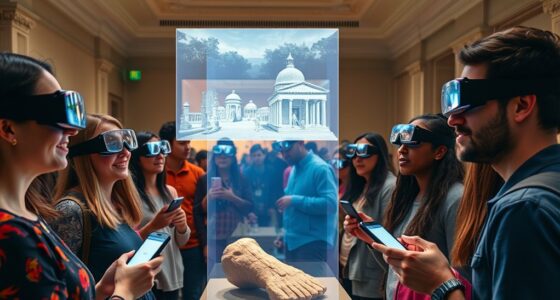
Online learning platforms are revolutionizing digital art education by making it more accessible, interactive, and personalized for you. You can connect with mentors, participate in engaging tutorials, and join vibrant communities to collaborate and share ideas. As technology advances, expect immersive tools like augmented reality and AI-driven feedback to become common, further enriching your learning experience. Keep exploring these innovations to stay ahead in your digital art journey.
Key Takeaways
- AI-driven personalized feedback will tailor learning experiences to individual skill levels and goals.
- Augmented reality tools will create immersive, interactive environments for hands-on digital art practice.
- Virtual mentorship will expand globally, providing direct guidance regardless of geographic location.
- Community features will foster collaboration, critique, and sharing to simulate real-world artistic networks.
- Continuous technological advancements will make high-quality, accessible digital art education increasingly widespread.

Are you looking to enhance your digital art skills from the comfort of your home? Online learning platforms have revolutionized how artists learn and grow, offering a range of tools to help you develop your craft. One of the most exciting features they offer is virtual mentorship, which connects you with experienced digital artists who can provide personalized guidance. Unlike traditional classes, virtual mentorship allows you to receive tailored feedback, ask specific questions, and learn at your own pace. This one-on-one interaction helps you understand complex techniques more deeply and accelerates your development as an artist. These platforms also often incorporate interactive tutorials that make learning engaging and practical. Instead of passively watching videos, you actively participate through exercises, quizzes, and real-time assignments that reinforce what you’ve learned. Interactive tutorials break down complicated concepts into manageable steps, making it easier to grasp new tools and methods. They often include instant feedback, so you know immediately if you’re on the right track, which boosts your confidence and keeps you motivated. Additionally, the availability of resources and tools can significantly impact your learning efficiency and success.
Online platforms also foster a sense of community, where you can share your work, exchange ideas, and get inspired by others. Many platforms have forums, critique groups, or live workshops that replicate the collaborative environment of traditional art schools. These features encourage you to push your boundaries and experiment with different styles without feeling isolated. Moreover, the accessibility of these resources means you can customize your learning journey. Whether you’re a beginner or an advanced artist, you can choose courses that suit your skill level and interests, from character design to digital illustration or concept art. The flexibility to learn anytime, anywhere, makes it easier to fit art education into your busy schedule.
The future of digital art education on online platforms is promising, with advancements in virtual mentorship and interactive tutorials leading the way. As technology evolves, expect even more immersive experiences, like augmented reality tools and AI-driven feedback, to become commonplace. These innovations will make learning more intuitive and dynamic, providing you with a richer, more personalized experience. Ultimately, online platforms empower you to take control of your artistic journey, offering the tools, guidance, and community support you need to excel. Whether you’re honing your skills for fun, freelance work, or a future career, the resources and tools available are expanding, making high-quality art education more accessible than ever before.
Frequently Asked Questions
How Do Online Platforms Support Personalized Art Feedback?
Online platforms support personalized art feedback through interactive critiques that engage you directly with instructors and peers. They offer tailored mentorship, where mentors customize guidance based on your unique style and skill level. This interactive approach helps you improve faster, as you receive specific suggestions and encouragement. Additionally, features like real-time comments and video reviews make feedback more dynamic, ensuring you feel supported and motivated on your artistic journey.
Are There Certifications Available Upon Course Completion?
Think of online courses as bridges to new worlds, and yes, many platforms offer art certification upon completion. These art credentials can boost your portfolio and validate your skills, making your work stand out. While certification validity varies, reputable platforms ensure their credentials hold weight in the industry. You can confidently showcase your newfound expertise, knowing your art credentials are recognized and meaningful in your artistic journey.
How Do Platforms Foster Community Among Digital Art Students?
You can foster community among digital art students through virtual meetups and peer critiques. These platforms encourage interaction by hosting regular online gatherings where students share ideas, showcase work, and give constructive feedback. Participating in peer critiques helps you improve your skills while building connections. By engaging actively in these activities, you create a supportive environment, making your learning experience more collaborative and inspiring.
What Are the Costs Associated With Premium Digital Art Courses?
Premium digital art courses typically have a varied cost structure, with pricing models including monthly subscriptions, one-time payments, or tiered plans. You might pay anywhere from $50 to several hundred dollars, depending on course depth and instructor reputation. These costs often cover high-quality tutorials, personalized feedback, and exclusive resources, making it a worthwhile investment if you’re serious about improving your skills and accessing all-encompassing learning materials.
How Do Online Courses Stay Updated With Emerging Digital Tools?
You wonder how online courses keep pace with emerging software and industry trends. They stay updated through real-time collaborations with software developers, industry experts, and ongoing curriculum revisions. Course creators monitor the latest tools, incorporate new features, and adapt lessons accordingly. This constant evolution guarantees you learn the most current techniques, keeping you ahead in a rapidly changing digital art landscape. The secret ingredient? Active engagement with the industry itself.
Conclusion
Imagine stepping into a vast gallery where every brushstroke and pixel is at your fingertips. Online platforms make this possible, connecting you with expert teachers and fellow artists worldwide. Just like a digital canvas that expands endlessly, your creative journey can grow beyond borders and boundaries. Embrace these tools, and you’ll find that mastering digital art isn’t just a dream—it’s a vibrant, accessible reality waiting for you to explore.