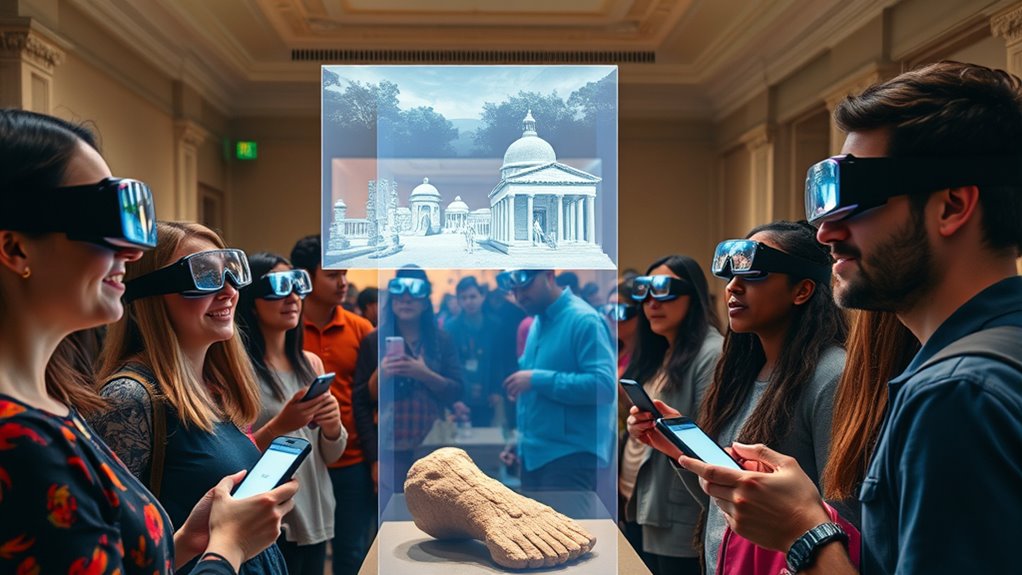

Augmented reality transforms your museum visit by creating interactive and immersive experiences. You can explore virtual reconstructions of historical sites, manipulate 3D artifacts, or access detailed info just by approaching exhibits. AR keeps you engaged without overwhelming the space and offers personalized, accessible content suited to your interests. It turns a passive tour into an active adventure, making learning fun and memorable. Keep exploring to discover how AR can deeply enhance your cultural experiences.
Key Takeaways
- AR creates immersive, interactive exhibits that encourage hands-on learning and deepen visitor engagement with artifacts.
- Virtual tours powered by AR make inaccessible or distant sites accessible, enriching cultural exploration.
- Seamless AR overlays provide real-time information, videos, and animations without distracting from physical exhibits.
- Personalization features adapt content to visitor interests, increasing relevance and participation during museum visits.
- Overall, AR transforms traditional experiences into engaging, participatory adventures that foster emotional connections.
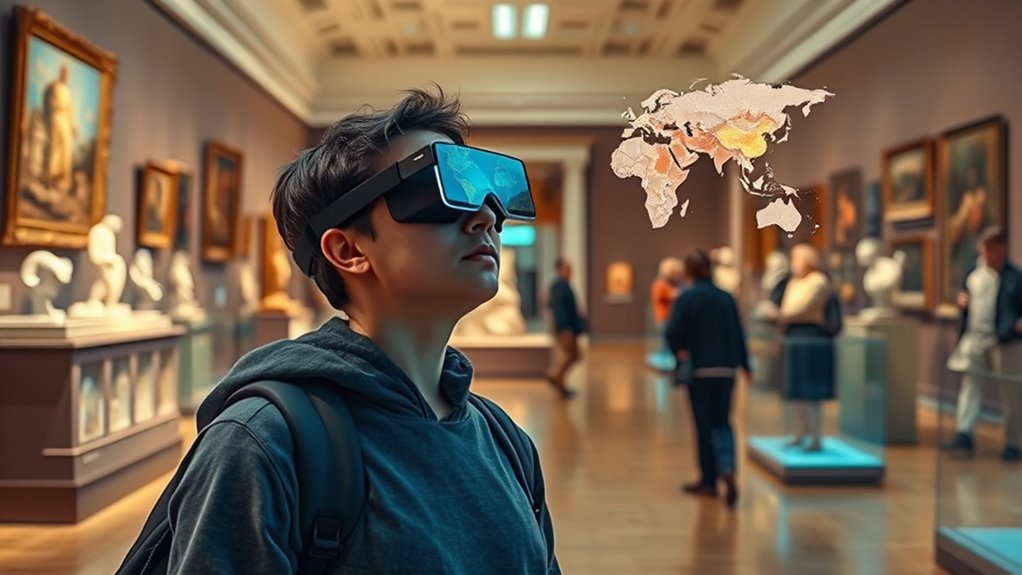
Augmented reality (AR) is transforming how museums engage visitors by blending digital content with the physical environment. Instead of passively observing artifacts behind glass, you now have the opportunity to interact with exhibits in dynamic, immersive ways. AR-powered interactive exhibits invite you to explore history, art, and science firsthand, making your museum visit more engaging and memorable. With AR, you can manipulate virtual objects, access detailed information, or see reconstructions of ancient sites right within the gallery space. These interactive experiences enable you to go beyond traditional displays, encouraging hands-on learning and curiosity.
One of the most compelling ways AR enhances museum visits is through virtual tours. If you’re unable to visit a particular site or exhibit in person, virtual tours powered by AR offer an immersive alternative. You can virtually walk through historical landmarks, ancient ruins, or famous museums from anywhere, experiencing a sense of presence and scale that static images simply can’t provide. These virtual tours often incorporate AR elements that allow you to examine artifacts in 3D, toggle informational overlays, or even view reconstructions of ruins and artifacts as they once appeared. This technology bridges geographical gaps and provides access to cultural treasures that might otherwise be out of reach.
As you navigate through an AR-enhanced museum, you’ll notice that the boundaries between the physical and digital worlds blur. For example, when you approach an exhibit, AR apps might activate to overlay additional context—such as videos, animations, or detailed descriptions—directly on your device or AR glasses. This seamless integration keeps you engaged without overwhelming the space or distracting from the artifacts. It also enables museum staff to update content easily, ensuring that information remains current and tailored to different audiences. The interactive nature of these exhibits encourages you to participate actively rather than passively observe, deepening your understanding and emotional connection to the displays.
Furthermore, AR can personalize your experience, adapting content based on your interests or previous interactions. If you show particular curiosity about a specific artifact, the system might suggest related exhibits or provide more in-depth information. This customization makes your visit more relevant and engaging, fostering a sense of discovery. Additionally, augmented reality technology can enhance accessibility for diverse audiences, including those with visual or physical impairments, by providing alternative ways to engage with exhibits. Overall, AR transforms the traditional museum experience into a vibrant, participatory adventure, where learning feels natural, fun, and deeply immersive. By blending interactive exhibits with virtual tours, AR ensures that you’re not just a viewer but an active participant in the story the museum aims to tell.
Frequently Asked Questions
What ARe the Costs Associated With Implementing AR in Museums?
You’ll need to consider the cost analysis for implementing AR in your museum, which includes hardware, software development, and ongoing maintenance. Funding sources can help offset expenses, such as grants, sponsorships, or government support. While initial costs may seem high, investing in AR can boost visitor engagement and revenue over time. Be sure to evaluate all costs carefully and explore diverse funding options to make the project financially feasible.
How Do AR Experiences Cater to Visitors With Disabilities?
AR experiences cater to visitors with disabilities through accessible design and inclusive technology. You can incorporate features like audio descriptions, subtitles, and adjustable interfaces to guarantee everyone can enjoy the exhibits. By focusing on inclusive technology, you create an environment where visitors with different needs feel welcomed and engaged. This approach not only enhances accessibility but also enriches the museum experience for all visitors, fostering a more inclusive and enjoyable environment.
What ARe the Technical Requirements for Museum Staff to Maintain AR Exhibits?
You need reliable AR hardware like tablets and headsets, along with a stable internet connection, to keep exhibits running smoothly. While tech is vital, staff training is equally critical—learning to troubleshoot AR devices and update software ensures seamless experiences. Balancing sophisticated equipment with skilled personnel creates a harmonious environment where technology and expertise coexist, transforming maintenance from a challenge into an opportunity for innovation.
How Can AR Be Integrated With Existing Museum Educational Programs?
You can integrate AR into your museum’s educational programs by developing interactive storytelling experiences that bring exhibits to life. Use AR to create cultural immersion, allowing visitors to explore historical scenes or artifacts in a more engaging way. Incorporate AR activities into guided tours or workshops, encouraging active participation. This approach enhances learning, makes history more tangible, and fosters deeper connections with your exhibits.
What ARe the Privacy Concerns Related to AR Visitor Data Collection?
Imagine your eyes scanning a virtual exhibit, but behind the scenes, your data streams into the museum’s servers. Privacy concerns arise around data security and visitor consent, as personal information like location and preferences are collected. You should be aware that museums must prioritize safeguarding your data and obtaining clear, informed consent. Without these measures, your privacy could be compromised, undermining trust and the immersive experience AR aims to create.
Conclusion
By embracing augmented reality, you transform museum visits into immersive adventures, like stepping into another world. It’s a tool that makes history and art come alive right before your eyes, engaging you in ways static displays never could. As you explore with AR, you’ll find yourself more connected and curious, turning a simple visit into an unforgettable experience. With technology as your guide, the museum becomes a gateway to discovery, waiting to be accessed.