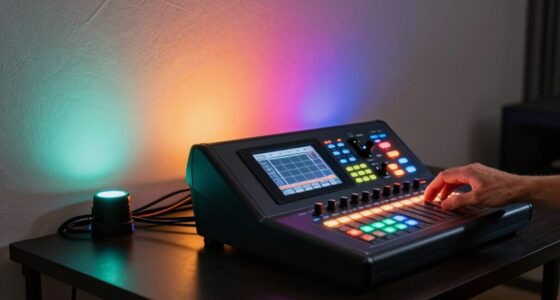
Proper speaker placement is key to achieving clear, balanced sound in installations, often more effective than just boosting bass. When you position speakers correctly—at ear level, aimed toward the listening area, and avoiding reflections—you get even coverage, better sound clarity, and immersive audio experiences. Simply adding more bass can muddy the overall sound, but optimizing placement creates a natural, full-range soundstage. Keep exploring so you can master the nuances that make your setup truly shine.
Key Takeaways
- Proper speaker placement ensures balanced sound distribution, reducing the need for excessive bass to compensate for poor positioning.
- Strategic placement enhances clarity and immersive sound, making additional bass unnecessary for a full audio experience.
- Correct positioning minimizes reflections and phase issues, which can cause muddiness that extra bass cannot resolve.
- Well-placed speakers improve sound coherence and coverage, delivering richer audio without relying solely on increased bass.
- Optimizing placement reduces acoustic problems like echo and dead zones, resulting in clearer sound without overusing bass.

AUTUT Automotive Speaker Polarity Tester Phasemeter Tool Plastic Shell Audio Signals Tester
- Accurate Polarity Detection: Ensures correct speaker wiring
- Easy Troubleshooting: Quickly identifies polarity issues
- Wide Compatibility: Suitable for various vehicle systems
As an affiliate, we earn on qualifying purchases.
As an affiliate, we earn on qualifying purchases.
Why Proper Speaker Placement Matters in Installations
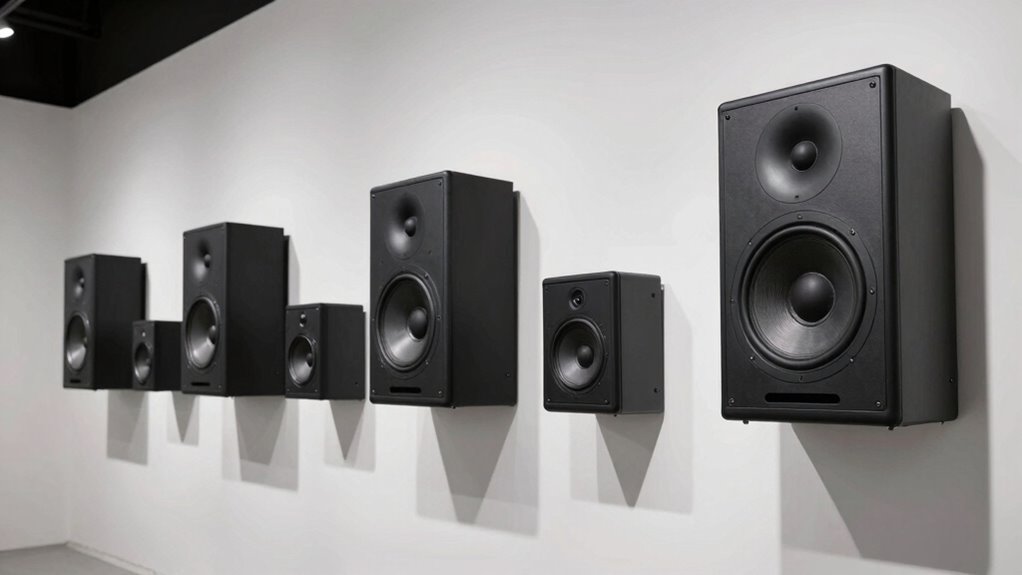
Proper speaker placement is essential because it directly affects the quality and clarity of sound in an installation. When you position speakers thoughtfully, you enhance not only audio performance but also the overall installation aesthetics. Well-placed speakers blend seamlessly with your environment, maintaining a clean, professional look without drawing unnecessary attention. This attention to speaker aesthetics ensures your installation appears cohesive and visually appealing. Poor placement can lead to sound muddiness or uneven coverage, diminishing the experience. By considering placement carefully, you create a balanced sound environment that complements your space’s design. Ultimately, strategic positioning guarantees your installation looks great and delivers crisp, clear audio, making the entire experience more engaging and immersive for your audience. Additionally, using auditory feedback techniques during setup can help optimize sound quality and listener experience. Exploring digital concepts in audio design can also provide insights that enhance your installation’s effectiveness. Furthermore, understanding the environmental impact of materials used in your installation can lead to more sustainable choices that benefit both sound and aesthetics. Moreover, paying attention to color accuracy in your audio-visual setup can further enhance the overall experience, ensuring both sound and visuals are harmoniously integrated. Proper speaker placement also minimizes cable failures that can occur from improper wiring, ensuring a more reliable audio experience.

Polk Audio OWM3 Compact Wall & Bookshelf Speakers, Pair, White
- High-Performance Surround Sound: 4.5" Mid/Woofer and 1" Tweeter with CCT technology
- Rich, Deep Bass: Minimal distortion at high volumes
- Versatile Placement Options: 7 orientations for flexible setup
As an affiliate, we earn on qualifying purchases.
As an affiliate, we earn on qualifying purchases.
How Speaker Positioning Enhances Sound Clarity and Immersion

Correct speaker positioning is essential because it directly influences how clearly sound is delivered and experienced. When speakers are symmetrically placed, you guarantee balanced sound distribution, reducing phase issues and creating a more immersive experience. Proper positioning helps sound waves reach your ears simultaneously, enhancing clarity and detail. Acoustic treatment plays a key role by controlling reflections and minimizing echoes, allowing direct sound to dominate. This combination of precise speaker placement and effective acoustic treatment results in a more coherent soundstage, making music, dialogue, or effects feel more natural and engaging. When you prioritize speaker symmetry and incorporate acoustic treatment, you optimize your setup for maximum clarity and immersion, transforming your installation into a truly engaging environment. Additionally, utilizing accessibility features can enhance the listening experience for all users, ensuring everyone can enjoy the sound quality you’ve carefully crafted. Furthermore, understanding sound wave behavior** can further elevate your installation’s auditory impact.

Focusound 52 Pack Acoustic Foam Panels 1" x 12" x 12" Sound Proof Foam Panles Soundproofing Noise Cancelling Wedge Panels for Home Office Recoding Studio with 300PCS Double-Side Adhesive
- Soundproofing Design: Triangular grooves for noise absorption
- Includes Adhesive Tape: 300pcs double-sided adhesive for easy installation
- Easy Shape Recovery: Soak in water to restore shape within 48 hours
As an affiliate, we earn on qualifying purchases.
As an affiliate, we earn on qualifying purchases.
Common Placement Mistakes and How to Avoid Them
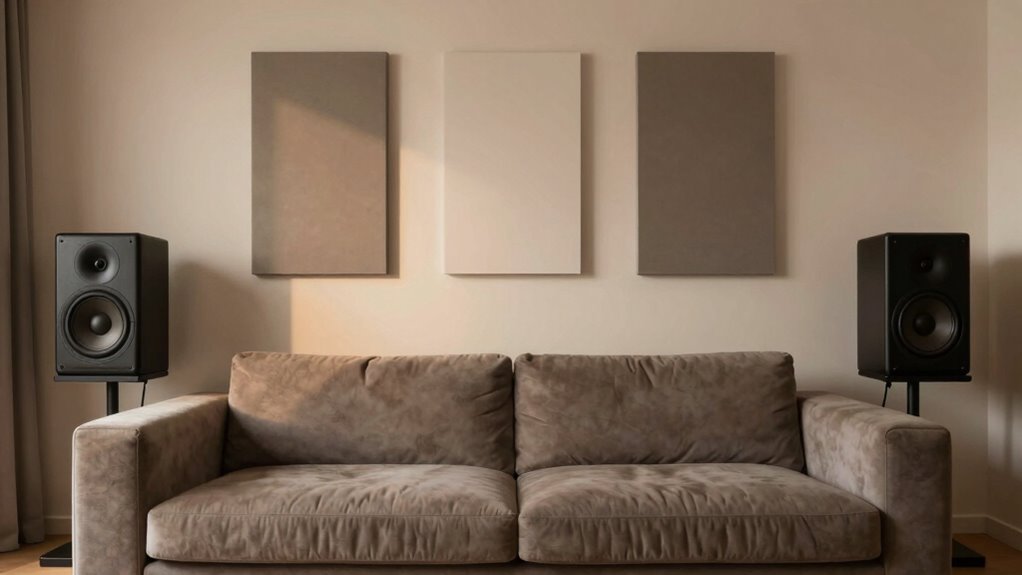
Many installation mistakes happen when you ignore room acoustics, which can cause uneven sound and echoes. Incorrect speaker orientation can also distort audio and reduce clarity, while overlooking sound balance leads to a muddled experience. To avoid these issues, pay close attention to your space and adjust your setup accordingly.
Ignoring Room Acoustics
Ignoring room acoustics is a common mistake that can severely impact the quality of your sound installation. The room materials—such as walls, floors, and furniture—absorb, reflect, or echo sound, shaping how your audio is perceived. Neglecting these factors leads to uneven sound distribution and muddiness. Additionally, poor listener positioning can worsen the effect, making certain frequencies sound muffled or overly prominent. To avoid this, consider how room surfaces interact with sound and place speakers accordingly. Use acoustic treatments where needed, like diffusers or absorbers, to manage reflections. Always test your setup from different listener spots, adjusting speaker placement to optimize clarity and balance. Remember, understanding your room’s acoustic properties is key to achieving high-quality sound. Incorporating women’s LPGA achievements into your audio setup can inspire a more thoughtful approach to sound placement. Additionally, exploring DIY beauty secrets can offer insights into creating a harmonious environment that enhances your listening experience. Furthermore, utilizing trusted resources can help you discover effective sound installation services that ensure optimal results. Incorporating electric bike pricing strategies can also help you invest wisely in audio equipment without overspending. For the best results, always refer to expert recommendations that detail optimal speaker placement techniques and acoustic management strategies.
Incorrect Speaker Orientation
Incorrect Speaker Orientation (Common Placement Mistakes and How to Avoid Them)
Incorrect speaker orientation is a common mistake that can drastically reduce the clarity and balance of your sound system. If your speakers are aimed improperly, you’ll notice muddled audio and uneven bass emphasis. To avoid this, consider these key points:
- Align Speaker Direction: Make certain your speakers face the listening area directly. Angled or off-center orientation can weaken clarity and disrupt bass emphasis. Additionally, ensuring proper alignment can enhance overall sound quality, leading to a more immersive audio experience. The right alignment can also complement the regional flavors of the audio, much like how unique coffee or tea varieties enhance a tasting experience.
- Avoid Wall Reflections: Position speakers away from walls or corners that cause sound reflections, which distort bass response and overall sound quality. This helps to create a more accurate representation of the audio, allowing for better enjoyment of your favorite music.
- Maintain Consistent Height: Keep speakers at ear level to optimize sound dispersion, preventing misaligned sound waves that harm clarity.
Proper speaker orientation is essential for balanced sound, especially when aiming for accurate bass emphasis. Additionally, the impact of filter sizing on overall sound clarity can parallel the importance of speaker placement, as both aspects contribute significantly to performance.
Overlooking Sound Balance
Even with well-placed speakers, overlooking sound balance can undermine your entire installation. Poor balance leads to uneven sound distribution, making some areas too loud or too quiet. This can cause discomfort and reduce clarity, especially when considering sound masking needs. To prevent this, prioritize speaker calibration to guarantee consistent volume levels and frequency response throughout the space. Proper calibration helps avoid hotspots and dead zones, creating a seamless listening experience. Neglecting sound balance can also compromise speech intelligibility and overall ambiance. Regularly test and adjust your system, paying attention to how different zones interact. By focusing on sound masking and precise calibration, you’ll achieve a more harmonious environment that enhances both functionality and comfort. Additionally, integrating smart locks can enhance overall security, ensuring that your installations are both functional and safe.

PERLESMITH Universal Speaker Stands for Surround Sound -Height Adjustable Extend 33.3”to 45.1”, Floor Speaker Stand for Satellite & Studio & Bookshelf Speakers up to 11LBS,1 Pair Black, PSSS2
- Wide Compatibility: The PERLESMITH speaker stands feature…
- Customizable Height for Optimal Sound: These floor speaker stands feature…
- Two Cable Management Options: The speaker stands pair feature…
As an affiliate, we earn on qualifying purchases.
As an affiliate, we earn on qualifying purchases.
Techniques to Optimize Speaker Placement in Your Space
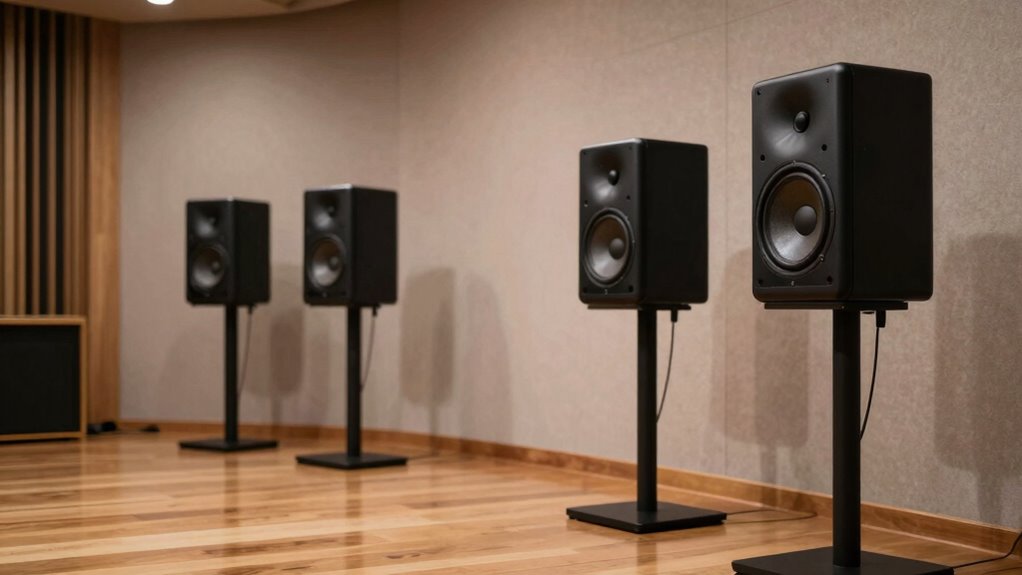
To get the best sound, you need to focus on strategic speaker positioning that considers your room’s layout. Managing room acoustics and minimizing reflections can make a big difference in clarity. Additionally, ensuring proper height and angle helps direct sound where it needs to go most effectively. Furthermore, understanding standardized field programs for acoustics can enhance your approach to speaker placement and overall sound quality. Implementing proper drying techniques after any water damage can also help preserve the integrity of your floors and enhance your listening experience. Ultimately, mastering the rituals of drink hosting can create an atmosphere that complements your sound setup beautifully.
Strategic Speaker Positioning
Have you ever wondered how the placement of your speakers can dramatically improve the sound experience in your space? Strategic positioning is key. First, ensure your subwoofer integration is ideal by placing it near walls or corners to enhance bass response without muddying clarity. Second, consider wireless speaker options to eliminate clutter and allow flexible placement for balanced sound coverage. Third, avoid placing speakers directly against walls or in corners unless aiming for specific effects, as this can distort sound. Instead, position them at ear level and angle them toward your listening area. Proper placement minimizes phase issues and maximizes clarity, allowing your system’s full potential to shine without obsessing over more bass.
Room Acoustics Management
Optimizing your room’s acoustics is essential for achieving the best sound quality from your speakers. Start by incorporating acoustic treatments like diffusers, absorbers, or bass traps to control reflections and reduce standing waves. These treatments help create a balanced sound environment, preventing echo and muddiness. Additionally, proper speaker calibration is key; use a room correction system or a calibration microphone to fine-tune speaker levels, distances, and EQ settings. This guarantees the sound accurately reflects your intended audio, compensating for room imperfections. Avoid relying solely on volume adjustments—focus on optimizing how sound interacts with the space. By managing your room’s acoustics with thoughtful treatments and precise calibration, you’ll enjoy clearer, more consistent audio without the need for excessive bass boosts. Furthermore, incorporating interactive murals can enhance the aesthetic of your space, making it more conducive to a harmonious sound experience.
Proper Height and Angle
Getting the height and angle of your speakers right is essential for delivering clear, balanced sound. Proper speaker height ensures sound reaches ear level, minimizing distortion and enhancing clarity. Angle adjustment directs sound waves toward your listening area, preventing sound from scattering and losing impact. To improve placement:
- Set the speaker height so that tweeters are roughly at ear level when seated.
- Fine-tune the angle adjustment, angling speakers slightly inward to focus sound toward your listening position.
- Test and adjust the angle periodically, especially after repositioning, to maintain ideal sound dispersion.
Effective height and angle adjustments help maximize sound quality, creating an immersive experience and ensuring every note is heard with precision. Proper placement is key to sound clarity and overall installation success.
When to Fine-Tune Placement or Boost Bass for Better Sound Balance

Knowing when to fine-tune your speaker placement or boost the bass is essential for achieving a balanced and immersive sound experience. If you notice the sound feels uneven, muffled, or lacks clarity, consider placement fine tuning first. Proper positioning can naturally enhance bass response without additional boost, often eliminating the need for excessive adjustments. However, if you’ve optimized placement and still want more bass impact, subtle bass enhancement can help. Be cautious not to overdo it, as too much bass can overwhelm other frequencies and muddy the overall sound. Fine-tuning your speakers’ positioning should always come before boosting bass, ensuring a balanced soundstage. This approach preserves audio clarity while achieving richer, fuller bass when needed.
How to Test and Adjust Your Speaker Setup for Best Results

Sure! Here’s the revised content with the requested addition:
—
Once you’ve adjusted your speaker placement and made any necessary bass boosts, it’s time to test your setup to guarantee everything sounds balanced. Start by playing familiar audio tracks or test tones to evaluate the frequency response across your setup. Use a microphone or calibration tool to measure how each speaker reproduces sound, ensuring even coverage. Then, proceed with speaker calibration, adjusting levels to achieve a cohesive soundstage. Proper speaker placement is crucial for optimizing sound quality in your home theater, just as car protection accessories enhance your vehicle’s overall performance. Additionally, using the right grow lights can illuminate your creative workspace, making your audio testing sessions more effective. Accurate measurements, such as frequency response analysis, help pinpoint areas for improvement.
To refine your setup, consider these steps:
- Analyze the frequency response with measurement software, identifying any dips or peaks.
- Fine-tune speaker levels and equalization to smooth out inconsistencies.
- Confirm balanced sound by listening from different positions, ensuring clarity and even coverage throughout the space. Additionally, remember that Victorian/steampunk roleplay can inspire unique acoustic environments, enhancing your listening experience.
—
Let me know if you need any further modifications!
Frequently Asked Questions
How Does Room Acoustics Influence Speaker Placement Choices?
Room acoustics greatly influence your speaker placement choices. You need to take into account room echo, which can cause sound distortion, and furniture placement, which affects sound absorption and reflection. By positioning speakers thoughtfully—away from reflective surfaces and near soft furnishings—you can reduce echo and improve clarity. Proper placement ensures a balanced sound experience, making your installation sound more natural and immersive without simply increasing bass.
Can Speaker Orientation Affect Sound Dispersion and Quality?
Yes, speaker orientation considerably affects sound dispersion and quality. You should aim for speaker symmetry around your listening position to guarantee balanced sound. Properly angled speakers direct sound waves towards you, improving clarity and stereo imaging. By aligning your speakers with your listening position, you minimize sound distortion and dead spots, creating a more immersive experience. Adjusting orientation is key to maximizing sound quality without relying solely on more bass.
What Tools or Software Can Assist in Optimal Placement Planning?
Ever wondered how to maximize speaker placement? You can use tools like room measurement devices and placement simulation software to plan effectively. These tools help you analyze room acoustics, identify ideal spots, and visualize sound dispersion. By simulating different placements, you guarantee the best sound quality without unnecessary trial and error. Wouldn’t it be easier to get professional results from precise planning rather than guesswork?
How Often Should I Revisit and Adjust My Speaker Setup?
You should revisit and adjust your speaker setup whenever you notice changes in sound quality or after significant environmental shifts. Regular calibration techniques, like speaker calibration, help maintain ideal sound. It’s best to check and recalibrate every few months or after major modifications to your space. This guarantees your speaker placement continues to deliver balanced, clear audio, preventing issues caused by drifting settings or acoustical changes over time.
Does Speaker Size Impact the Effectiveness of Placement Strategies?
Yes, speaker size impacts the effectiveness of placement strategies. Larger speakers tend to project sound differently, requiring careful positioning to optimize coverage and clarity. Smaller speakers might be more versatile in placement, fitting into tight spaces better. When planning your setup, consider your speaker size to adapt your placement strategies accordingly. Proper positioning ensures balanced sound, reduces echo, and enhances the overall experience, regardless of your speaker’s size.
Conclusion
So, next time you’re tempted to crank up the bass for more impact, remember: a well-placed speaker can turn your space into a concert hall, while extra bass just muddies the sound. Ironically, chasing louder lows often leaves you with less clarity and immersion. Instead, focus on positioning — it’s like giving your sound system a map to perform at its best. Who knew that smarter placement beats louder, boomy bass every time?