
To curate art for your corporate office effectively, focus on strategic placement that guides movement and creates welcoming, engaging spaces. Consider color psychology to evoke the desired mood—calm, focus, or energy—while balancing bold and subtle pieces to suit each area. Pay attention to space flow, ensuring artworks support navigation and avoid clutter. Thoughtful curation reflects your company’s identity and inspires productivity. Keep these best practices in mind, and you’ll create a workplace that impresses and motivates—discover how to perfect your approach.
Key Takeaways
- Strategically position large artwork behind reception and at eye level in conference rooms to set a welcoming and engaging environment.
- Use natural pathways to place art where it naturally draws attention, supporting space flow and navigation.
- Incorporate colors like blues and greens for calmness, reds and oranges for energy, aligning artwork with company culture.
- Balance bold and subtle pieces, mixing mediums and sizes to prevent clutter and maintain visual interest.
- Consider lighting to enhance artwork’s vibrancy and ensure placement fosters motivation, reflection, and a cohesive atmosphere.

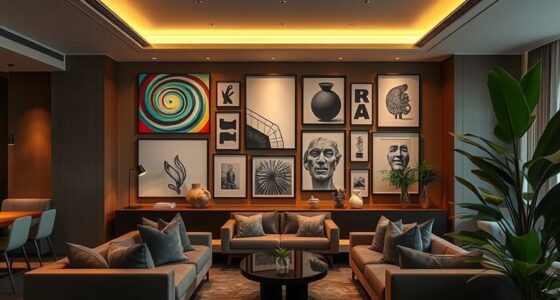
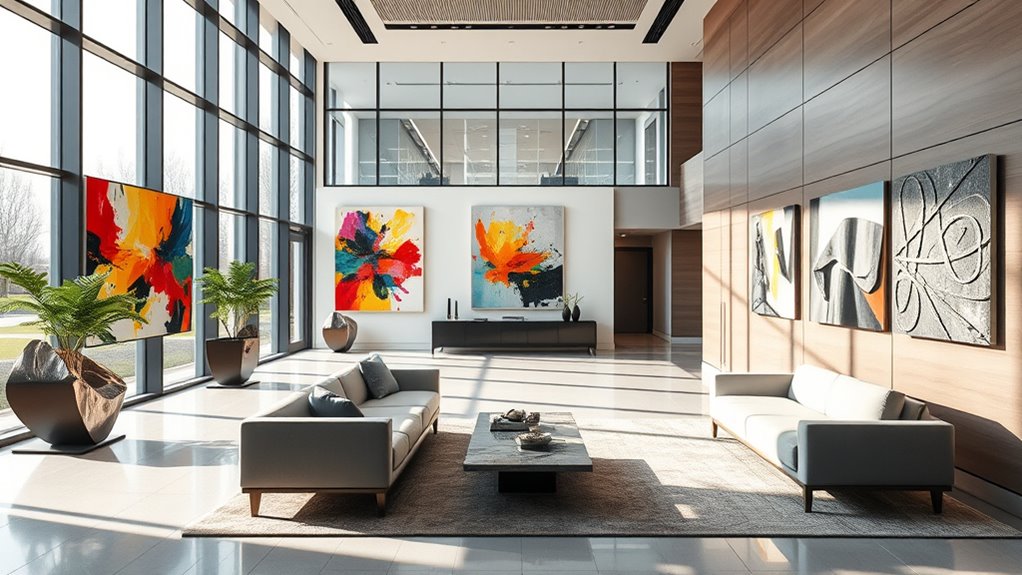
Have you ever wondered how the right artwork can transform a corporate office into a dynamic and inspiring space? The secret lies in thoughtful art placement. When you position artwork strategically, it guides movement, influences mood, and enhances the overall atmosphere. For example, hanging a large piece behind a reception desk immediately captures attention and sets a welcoming tone. In conference rooms, placing art at eye level ensures it becomes a focal point during meetings, fostering engagement. You also want to consider the flow of the space—placing pieces where natural pathways lead encourages people to pause and reflect. Proper art placement isn’t just about aesthetics; it’s about creating a cohesive environment that supports your company’s identity and enhances productivity.
Color psychology plays a vital role in selecting artwork for your office. Different colors evoke specific emotions and behaviors, so choosing the right hues can influence how employees and clients perceive your space. For instance, blues and greens are calming and promote focus, making them ideal for workstations or areas where concentration is key. Reds and oranges energize and stimulate, perfect for collaborative zones or creative departments. Yellows evoke optimism and friendliness, which can brighten up reception areas or break rooms. When you understand color psychology, you can curate art that aligns with your company’s culture and goals, fostering a positive environment. The colors in the artwork should complement your existing décor and reinforce the message you want to convey.
As you select pieces, think about balance and harmony. Avoid overwhelming a space with too many bold colors or large artworks unless they serve a specific purpose. Instead, aim for a curated collection that maintains visual interest without cluttering the environment. Mix different mediums and styles to create a dynamic yet cohesive aesthetic. Keep in mind the scale of the artwork relative to the wall and room size—larger pieces can act as statement focal points, while smaller works can add subtle accents. Lighting also amplifies the impact of art; proper illumination draws attention and enhances color vibrancy. When you combine strategic art placement with an understanding of color psychology, you craft an environment that’s both functional and inspiring, reflecting your brand’s identity and fostering creativity.
Ultimately, curating art for your corporate office isn’t just about decoration—it’s about shaping a space that motivates, communicates, and energizes. By paying attention to where you hang your pieces and choosing colors thoughtfully, you create a workplace that inspires your team and impresses visitors.

Framed Botanical Wall Art for Living Room, 4 Piece Rustic Floral Canvas Paintings Prints ArtWork for Walls, Vintage Flower Butterfly Pictures for Farmhouse Dining Room Hallway Bedroom Kitchen Bathroom Wall Decor
[Framed Wall Art]: A set of 4 vintage framed floral wall art prints with simple and rustic patterns,…
As an affiliate, we earn on qualifying purchases.
As an affiliate, we earn on qualifying purchases.
Frequently Asked Questions
How Do I Select Artwork That Aligns With My Company’s Brand?
To select artwork that aligns with your company’s brand, focus on how it supports your brand alignment and visual identity. Choose pieces that reflect your company’s core values, color palette, and overall aesthetic. Think about your target audience and the message you want to convey. By staying consistent with your branding elements, you’ll create a cohesive environment that enhances your company’s image and makes a lasting impression.
What Is the Typical Budget Range for Corporate Art Collections?
Think of your budget like a carefully tended garden—knowing your limits helps your collection flourish. For corporate art collections, budgets typically range from a few thousand to hundreds of thousands of dollars, depending on your company’s size and goals. Consider investment strategies, such as leveraging art leasing programs, to maximize value without overspending. This approach allows you to diversify your collection and keep it fresh, aligning with your brand and budget.
How Can I Ensure Artwork Appeals to Diverse Employee Preferences?
To guarantee artwork appeals to diverse employee preferences, actively seek input from your staff, considering their cultural backgrounds and interests. Incorporate pieces that reflect cultural inclusivity, showcasing a variety of styles and perspectives. You can also display artwork from different cultures or artists, fostering a sense of belonging and appreciation. Regularly update and rotate collections to keep the environment fresh and engaging, demonstrating your commitment to inclusivity and employee preferences.
What Are the Legal Considerations When Acquiring Corporate Art?
You might assume legal issues are minor, but safeguarding your company starts with understanding intellectual property rights. When acquiring corporate art, verify you review art acquisition agreements carefully to avoid infringement. Confirm artists hold proper rights, and secure licenses if needed. This prevents legal disputes and protects your investment, making sure your collection is both beautiful and compliant. Always consult legal experts to navigate complex intellectual property laws effectively.
How Often Should Corporate Art Collections Be Rotated or Updated?
You should update your corporate art collection every 1-3 years to keep it fresh and engaging. Regular art maintenance guarantees pieces stay in top condition, while collection documentation helps track what’s been displayed and when. Rotating artwork prevents stagnation and reflects your company’s evolving identity. By staying attentive to these aspects, you create a dynamic environment that continuously enhances your space and impresses visitors.

XIANSHOU Textured Wall Art Gold Wall Decor Modern Wall Picture 24"x48" Artwork for Bedroom Decorative Painting for Dining Room Area
Canvas artwork size: This textured wall art measures 24×48 inches; Life needs a little art to spice it…
As an affiliate, we earn on qualifying purchases.
As an affiliate, we earn on qualifying purchases.
Conclusion
So, next time you carefully select that “inspiring” artwork for the office, remember—your carefully curated pieces might just become the most talked-about conversation starters… or the biggest distraction. Who knew that art meant to boost productivity could also spark debates about abstract meanings or questionable taste? But hey, isn’t that the true charm of a well-curated space? After all, nothing says “professional” quite like a little artistic chaos.

DVBOCS A Little Spot And Color Psychology Poster Kid Educational Canvas Print Painting Emotional Management Mental Health Wall Art Decor For Office School Classroom Bedroom Decor 12x16in Unframed
Color Psychology Integration: This unique canvas print leverages the principles of color psychology to engage young minds, making…
As an affiliate, we earn on qualifying purchases.
As an affiliate, we earn on qualifying purchases.

Micomlan Led Desk Lamp with Clamp, Architect Desk Lamp for Home Office with Atmosphere Lighting, 24W Ultra Bright Auto Dimming Computer Light Stepless Dimming and Tempering LED Table Light
7 Rotatable Joints: Micomlan swing arms led desk light features 7 strongly damped joints with 3 ultra bright…
As an affiliate, we earn on qualifying purchases.
As an affiliate, we earn on qualifying purchases.