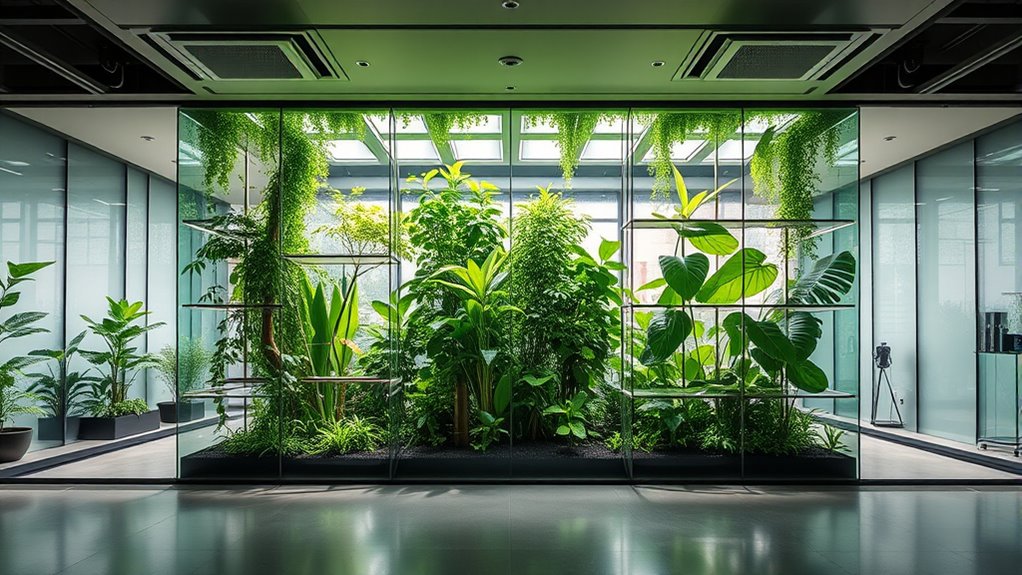

Climate-controlled exhibition design is essential if you want to safeguard artifacts and artworks from environmental damage. It involves carefully managing temperature, humidity, and lighting to prevent deterioration over time. Using sustainable materials not only supports eco-friendly practices but also creates a more engaging visitor experience. Thoughtful climate control combined with sustainable elements ensures the longevity of your collection while fostering a responsible, immersive environment. Keep exploring to discover how these practices work together seamlessly.
Key Takeaways
- Implements precise climate management to preserve artifacts by regulating temperature, humidity, and lighting conditions.
- Uses sustainable, eco-friendly materials to minimize environmental impact and promote responsible exhibit practices.
- Incorporates energy-efficient lighting and insulation to enhance visitor comfort and reduce power consumption.
- Features educational displays and interactive elements that highlight sustainable design and climate control benefits.
- Ensures artifact longevity and safety while fostering eco-conscious visitor engagement and awareness.

Climate-controlled exhibition design guarantees that artifacts and artworks are preserved in ideal conditions by carefully managing temperature, humidity, and lighting. This meticulous approach is essential for maintaining the integrity of delicate objects, preventing deterioration caused by environmental fluctuations. When designing such spaces, you’ll want to prioritize sustainable materials, which not only reduce environmental impact but also contribute to a healthier environment within the exhibit. Using eco-friendly materials like recycled metals, sustainably sourced wood, and non-toxic paints ensures your exhibition aligns with contemporary sustainability standards. These choices also resonate with visitors who increasingly value eco-conscious practices, fostering a positive perception of your institution and reinforcing your commitment to responsible stewardship.
Prioritize sustainable materials in climate-controlled exhibits to protect artifacts and promote eco-conscious stewardship.
Incorporating sustainable materials into your climate-controlled environment doesn’t just benefit the planet; it can also enhance visitor engagement. When visitors see that you’re committed to environmentally friendly practices, it encourages them to connect more deeply with your exhibit. They appreciate transparency about your sustainable choices, which can turn a simple viewing into an educational experience. Showcasing how these materials contribute to the preservation of art and artifacts makes your exhibit more meaningful. Additionally, sustainable design elements, such as energy-efficient lighting and insulation, help create a comfortable space that invites prolonged engagement. Visitors are more likely to spend time exploring when they feel comfortable and see your organization’s dedication to sustainability.
Designing with visitor engagement in mind also means integrating interactive features that highlight your sustainable practices. For example, you might include informational displays explaining how sustainable materials work or how climate control systems are energy-efficient. These features educate visitors while reinforcing your commitment to environmentally responsible design. The right lighting, carefully controlled to prevent damage, can also be used creatively to enhance visual appeal and draw visitors’ attention to key artifacts. When people feel connected to the story behind the exhibit and see your efforts to reduce environmental impact, they’re more likely to leave with a deeper appreciation for both the artifacts and your institution’s values.
Ultimately, climate-controlled exhibition design that emphasizes sustainable materials and visitor engagement creates a more immersive, responsible, and memorable experience. It ensures the longevity of your collection while promoting environmental consciousness. By thoughtfully integrating eco-friendly choices into your climate management systems, you not only safeguard your artifacts but also foster a stronger connection with your audience. This approach demonstrates that sustainability and preservation go hand in hand, making your exhibition more impactful and meaningful for everyone who walks through your doors.
Frequently Asked Questions
What Are the Latest Advancements in Climate Control Technology for Exhibits?
You’ll find that the latest advancements in climate control technology for exhibits include smart sensor integration, which actively monitors and adjusts conditions for *ideal* preservation. Additionally, renewable energy solutions like solar panels power systems sustainably, reducing environmental impact. These innovations enable you to maintain precise, energy-efficient climate control, ensuring your exhibits stay protected while supporting eco-friendly practices. Embracing these technologies helps keep your exhibit environment stable and sustainable.
How Do Climate Controls Impact the Preservation of Sensitive Artifacts?
You see, climate controls are vital for preventing artifact degradation by maintaining stable temperature and humidity levels. This stability minimizes deterioration caused by fluctuations, helping preserve sensitive artifacts over time. Additionally, climate control enhances visitor comfort, making the experience more enjoyable and allowing visitors to focus on the exhibits. Proper climate management ensures both the longevity of artifacts and a comfortable environment, balancing preservation needs with visitor satisfaction.
What Are the Energy Consumption Considerations for Climate-Controlled Environments?
You might worry about high energy costs, but focusing on energy efficiency helps manage expenses effectively. Climate-controlled environments require careful planning to balance ideal conditions with sustainable energy use. By investing in advanced insulation, efficient HVAC systems, and smart controls, you reduce energy consumption without sacrificing artifact preservation. This approach ensures cost management while maintaining the precise climate needed, making your exhibition both eco-friendly and financially sustainable.
How Do Climate Controls Adapt to Different Types of Exhibition Materials?
You adapt climate controls by implementing material-specific stabilization, tailoring humidity and temperature settings to each exhibit’s needs. Using adaptive climate strategies, you guarantee delicate items like textiles or electronics stay stable without excess energy use. You monitor and adjust environmental conditions in real-time, creating a balanced environment that protects materials while optimizing energy efficiency, ensuring your exhibits remain preserved and accessible for visitors without unnecessary resource expenditure.
What Are the Best Practices for Maintaining Consistent Climate Conditions?
You should regularly monitor humidity management and temperature stability to keep conditions consistent. Use automated climate control systems that adjust in real-time, ensuring stable humidity levels and temperatures. Maintain proper insulation and seal openings to prevent fluctuations. Schedule routine maintenance and calibrations for your equipment, and set alarm alerts for any deviations. Consistent climate management protects your exhibits, preserves materials, and provides an ideal viewing experience.
Conclusion
By mastering climate-controlled exhibition design, you become the guardian of priceless treasures, creating a sanctuary where history and art breathe in harmony. Think of your space as a delicate greenhouse, nurturing fragile artifacts while shielding them from the unpredictable weather outside. Your careful attention guarantees visitors experience a seamless journey through time and culture, preserved in perfect balance. With each detail, you turn your exhibition into a resilient oasis that safeguards the past for generations to come.