
When designing exhibitions for all visitors, you should incorporate inclusive features from the start, like ramps, wider pathways, and adjustable displays. Use assistive technologies such as audio guides, Braille descriptions, and tactile elements to accommodate diverse needs. Clear signage, sensory zones, and trained staff help create a welcoming environment. By focusing on accessibility as a core value, you guarantee everyone can enjoy the experience — and you’ll find more ideas on how to do this effectively as you explore further.
Key Takeaways
- Integrate accessibility features early in the planning process to ensure inclusive design from the start.
- Use assistive technologies like audio guides, braille descriptions, and visual aids to accommodate diverse needs.
- Design navigable, barrier-free spaces with ramps, wider pathways, and accessible display heights.
- Incorporate tactile elements, high-contrast signage, and sensory zones to enhance experiences for all visitors.
- Train staff to support diverse visitors effectively and promote an inclusive, welcoming environment.
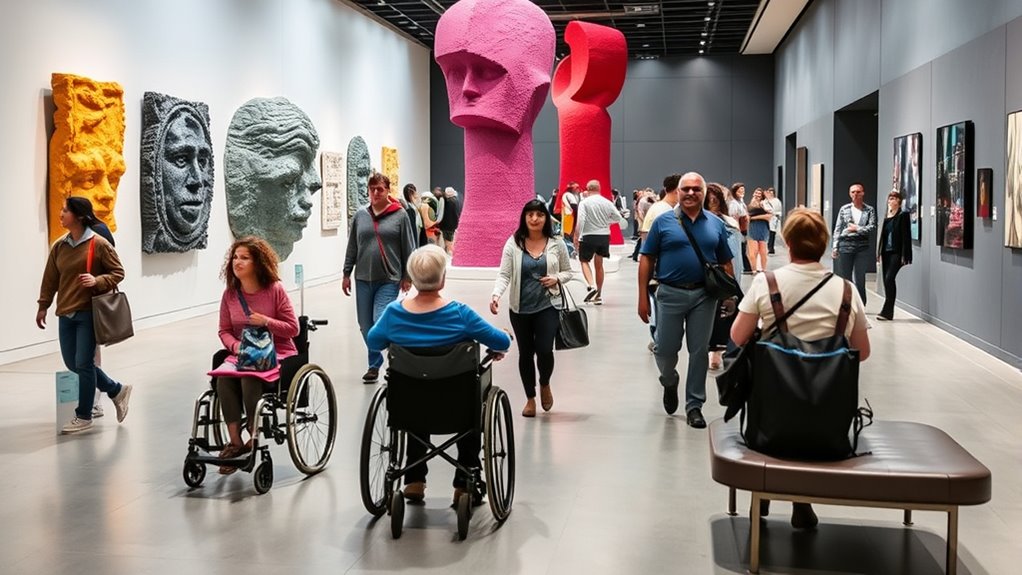
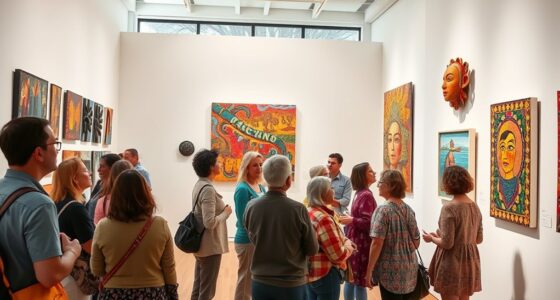
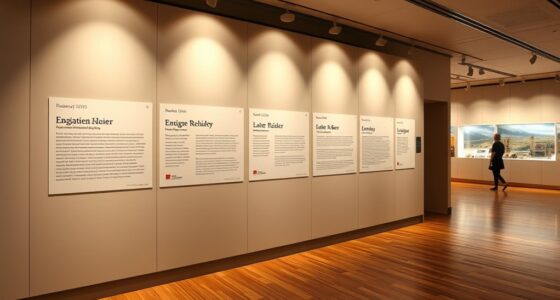
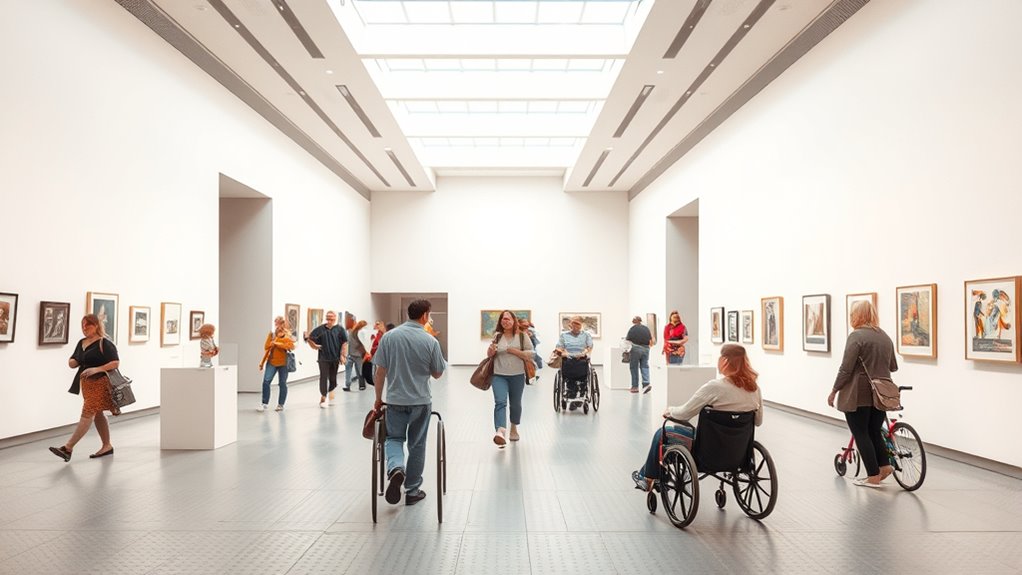
Accessibility in exhibitions is essential to guarantee that everyone can experience and enjoy cultural and artistic offerings. When you design with accessibility in mind, you create an environment where all visitors, regardless of their abilities, can engage fully with the exhibits. One effective way to achieve this is by integrating assistive technologies, which can bridge gaps that might otherwise exclude certain visitors. For example, audio guides with headphones, Braille descriptions, or visual aids help ensure that people with disabilities can access information and appreciate the details of each display. These tools make the exhibition more inclusive and welcoming, encouraging visitors to explore at their own pace. Incorporating specialized equipment tailored to various needs can further enhance the accessibility experience for diverse audiences. Inclusive design is another critical component in making exhibitions accessible. Instead of adding accessibility features as an afterthought, you should incorporate them from the outset. This approach involves planning spaces that are navigable for people with mobility challenges, such as wider pathways, ramps, and barrier-free entrances. It also means considering the height and placement of displays so that they’re visible and reachable for everyone. When you adopt inclusive design principles, you’re not just ticking boxes—you’re creating an environment where diversity is embraced and all visitors feel comfortable and valued. This mindset transforms the exhibition into a space that celebrates accessibility as a core value rather than an optional feature. You also need to think about clear signage, tactile elements, and sensory-friendly zones. Clear, high-contrast signs help visitors with visual impairments find their way easily, while tactile guides or textured flooring can assist those who rely on touch or have difficulty with navigation. Sensory-friendly zones provide a quiet space for visitors who may feel overwhelmed by sensory input, ensuring they can enjoy the experience comfortably. When you combine assistive technologies with inclusive design strategies, you’re effectively removing barriers and opening up the cultural space to everyone. Moreover, training your staff to understand accessibility needs plays a crucial role. When your team is knowledgeable about assistive devices and inclusive practices, they can better support visitors and create a more positive experience. By prioritizing these elements, you demonstrate that accessibility isn’t just a technical requirement but a fundamental aspect of respectful, thoughtful exhibition design. Ultimately, designing for all visitors fosters an environment where cultural and artistic expressions are truly universal, enriching everyone’s experience and broadening the reach of your exhibition.
Frequently Asked Questions
How Can Virtual Tours Improve Accessibility for Remote Visitors?
Virtual tours considerably boost remote accessibility by enabling you to experience exhibitions from anywhere. They foster virtual engagement, allowing you to explore exhibits at your own pace and comfort. By offering high-quality visuals, audio descriptions, and interactive features, virtual tours guarantee that visitors with diverse needs can access and enjoy the content. This makes exhibitions more inclusive, reaching a broader audience and providing meaningful engagement for remote visitors who might otherwise be excluded.
What Funding Options Are Available for Accessible Exhibition Design?
Ever wonder how to fund accessible exhibition design? You can explore grant opportunities from government agencies, arts organizations, and private foundations dedicated to accessibility. Sponsorship options also exist, where local businesses or community groups support inclusive projects. Don’t overlook crowdfunding campaigns or partnerships with nonprofits focused on accessibility. These options help guarantee your exhibition is welcoming for everyone, making a lasting impact while securing necessary resources.
How Do Cultural Differences Influence Accessibility Needs?
Cultural perceptions and language barriers greatly influence accessibility needs you should consider. You might find that different cultures interpret signage, symbols, or accessibility features uniquely, affecting visitor understanding and comfort. To address this, you can incorporate multilingual signage, culturally sensitive design elements, and staff training. By doing so, you guarantee your exhibition is inclusive, welcoming diverse visitors, and respects their cultural backgrounds, making the experience accessible and engaging for everyone.
What Training Is Needed for Staff to Assist Differently-Abled Visitors?
You need to master staff training that’s as thorough as an Olympic athlete’s routine, focusing on accessibility awareness. This means teaching your team how to assist differently-abled visitors with patience and confidence, covering everything from verbal communication to physical support. The more your staff understands diverse needs, the better they’ll serve everyone, transforming your exhibition into a truly inclusive space where all visitors feel valued and welcomed.
How Can Technology Enhance Tactile and Sensory Experiences?
You can enhance tactile and sensory experiences by integrating technology like haptic feedback devices, which let visitors feel textures and vibrations, making exhibits more engaging. Sensory overlays, such as visual or auditory modifications, help visitors with sensory sensitivities better understand the display. These tools create immersive experiences, allowing all visitors to interact more deeply and comfortably, fostering inclusivity and enriching their overall museum journey.
Conclusion
By designing with accessibility in mind, you open a door to everyone’s curiosity, turning exhibitions into gateways of discovery. Your efforts become a bridge, connecting diverse minds and experiences like a sturdy, unbroken chain. When you embrace inclusive design, you craft a space where all visitors can explore freely, like sunlight breaking through clouds. Ultimately, your commitment transforms exhibitions into vibrant tapestry—rich, welcoming, and accessible to all, illuminating the path for every curious soul who steps inside.