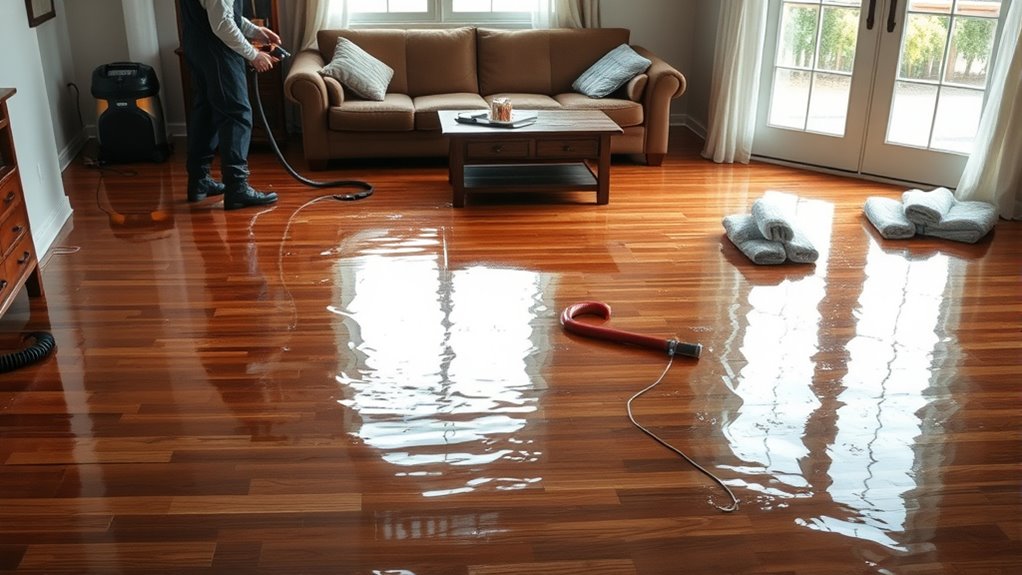

When dealing with water damage, your first step is to turn off the electricity and stop any ongoing leaks to guarantee safety. Document the damage with photos and videos, then uncover your main water shutoff valve to stop the flow. Quickly remove valuable items and start drying affected areas with fans or dehumidifiers. If the damage seems extensive, contact professional water restoration services. Staying proactive and informed helps minimize long-term issues—continue to explore these essential steps for effective recovery.
Key Takeaways
- Immediately turn off electricity and secure the affected area to prevent injury or further damage.
- Document damage with photos and videos to support insurance claims.
- Locate and shut off the main water supply to stop ongoing water intrusion.
- Contact professional water damage restoration services for proper cleanup and drying.
- Notify your insurance company, provide detailed documentation, and keep records of all communications.

Water damage can strike unexpectedly, causing stress and confusion about what to do next. When you’re faced with flooded floors, soaked walls, or lingering dampness, it’s essential to stay calm and act quickly. Your first priority should be safety—turn off the electricity to prevent shocks and avoid walking through water that might be contaminated or electrical. Once you’ve secured the area, begin documenting the damage with photos and videos. This visual record will be invaluable when you file insurance claims later. Taking clear photos not only helps substantiate your claim but also speeds up the process with your provider.
Next, focus on emergency preparedness. Having a plan in place makes managing water damage easier. Know where your main water shutoff valve is and how to operate it, so you can stop additional water flow if a pipe bursts or a fixture leaks. Keep essential supplies like buckets, mops, fans, and moisture meters on hand to help with immediate cleanup and drying. If you’re unsure about the extent of the damage or how to handle it, it’s wise to contact a professional water damage restoration service. They have the training, equipment, and experience needed to efficiently remove water, dry out affected areas, and prevent mold growth. Acting quickly with professional help minimizes long-term damage and reduces the risk of mold, which can develop within 24 to 48 hours.
Using proper mitigation techniques, such as seasonal checklists for cleaning and maintenance, can also help prevent future water damage by identifying potential issues early. Insurance claims are often a critical part of recovering from water damage. Once you’ve secured the scene and documented everything, contact your insurance company to start the claims process. Be prepared to provide detailed descriptions, photos, and a list of damaged items. It’s important to understand your policy coverage beforehand so you’re not caught off guard. Many policies cover water damage caused by burst pipes or accidental leaks, but coverage can vary. An insurance adjuster may need to inspect the property, so cooperate fully and provide all requested information to expedite the process. Keep records of all communications, receipts for emergency repairs, and any estimates from contractors.
Top picks for "deal water damage"
Open Amazon search results for this keyword.
As an affiliate, we earn on qualifying purchases.
Frequently Asked Questions
How Long Does Water Damage Cleanup Typically Take?
Water damage cleanup usually takes anywhere from a few days to a week, depending on the extent of the damage. You’ll start with water extraction to remove standing water quickly, then apply drying techniques to prevent mold growth. The duration depends on factors like the size of the affected area and moisture levels. Staying patient and allowing proper drying guarantees thorough cleanup and reduces future risks.
Are There DIY Methods to Prevent Mold Growth After Water Damage?
Think of your home as a fortress, where prevention is your shield against unseen invaders. For DIY mold prevention, focus on thorough drying and controlling humidity levels—keep your space well-ventilated and use dehumidifiers. Regularly inspect for leaks and clean surfaces with mold inhibitors. With mold growth control in mind, these steps help thwart mold spores from settling and thriving, safeguarding your home’s integrity and your health.
What Insurance Coverage Is Usually Available for Water Damage?
You can usually file insurance claims for water damage, but coverage varies by policy. Most standard homeowners policies include liability coverage for damage caused by sudden, accidental water incidents, like burst pipes. However, coverage for flooding or gradual leaks might need additional flood insurance or specific endorsements. Review your policy carefully to understand what’s covered, and contact your insurer promptly to start the claims process.
Can Water Damage Affect Electrical Systems Permanently?
Water damage can definitely damage electrical systems permanently. You’ll want to watch out for electrical hazards that can cause shocks or fires. Long-term effects might include corroded wiring, faulty outlets, or compromised circuits. If water has infiltrated your electrical system, it’s essential to disconnect power immediately and call a professional electrician. Ignoring these issues risks ongoing hazards and costly repairs, so swift action guarantees safety and prevents further damage.
When Should I Replace Drywall or Flooring After Flooding?
You should replace drywall and pursue flooring restoration when they’ve been soaked for more than 24-48 hours, or if you notice mold, warping, or persistent odors. Drywall replacement is essential if it’s swollen or crumbling, and flooring restoration is necessary if moisture has caused warping or buckling. Promptly acting guarantees your home’s safety and prevents further damage, restoring your space to its original condition efficiently.
Conclusion
Think of water damage as a storm that quickly floods your home’s foundation. Acting fast and knowing the right steps can help you weather the storm and restore your space. Remember, you’re the captain steering your ship through rough waters—timely action and professional help are your lighthouse. With determination and expert guidance, you can dry out the chaos and bring your home back to calm, safe harbor. Don’t wait—take charge and navigate toward recovery today.