
To build a professional artist portfolio, focus on showcasing your best work with a cohesive and customized layout that reflects your style. Use user-friendly platforms that support high-resolution images, easy navigation, and detailed descriptions. Regularly update your collection by removing weaker pieces and organizing work into categories. A well-designed portfolio not only highlights your creativity but also enhances your visibility and connections. Keep exploring, and you’ll discover even more ways to make your portfolio stand out.
Key Takeaways
- Select your best work and organize it into categories or series for easy navigation.
- Use artist-specific website templates that support high-resolution images and customization options.
- Ensure your portfolio is mobile-friendly and easy to navigate across all devices.
- Incorporate branding elements like logos, signatures, and consistent color schemes for a professional look.
- Regularly update your portfolio to showcase new work, remove weaker pieces, and reflect your artistic growth.
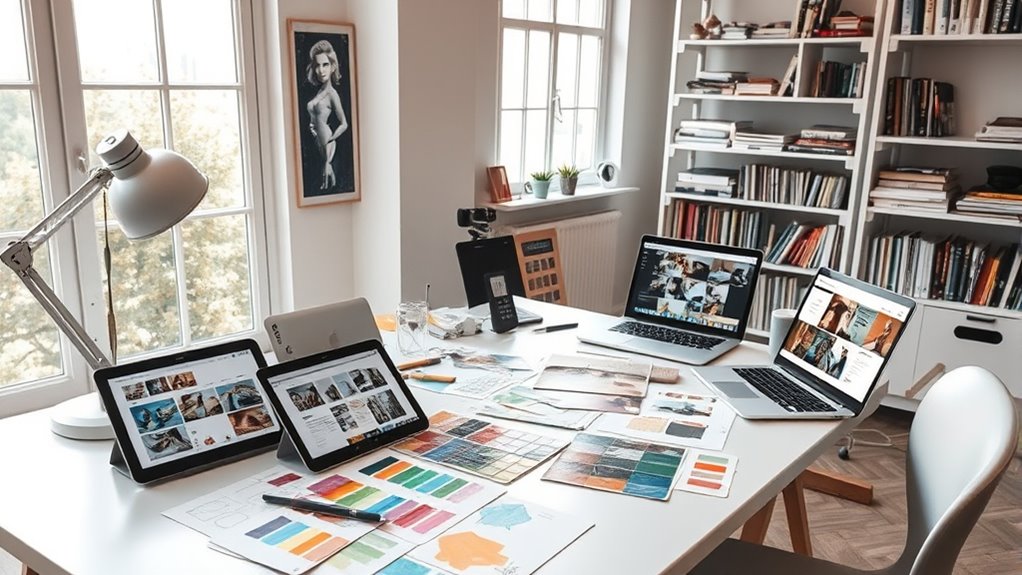
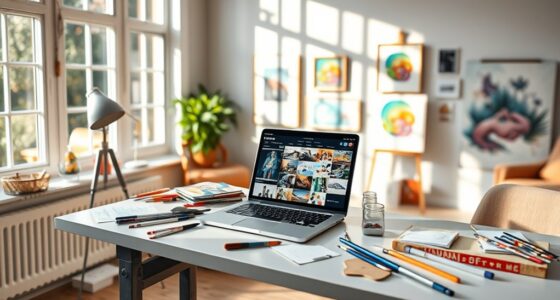
Are you ready to showcase your artistic talents to the world? Creating a professional artist portfolio is your first step toward making a lasting impression. When it comes to building this collection, focus on crafting a compelling digital presentation. A well-designed digital portfolio isn’t just a collection of images; it’s a reflection of your unique style and creative voice. It allows you to reach a broader audience, from potential clients to gallery owners, with just a few clicks. To stand out, you need to invest time in portfolio customization. This means tailoring your online showcase so that it highlights your best work, aligns with your artistic identity, and appeals to the specific audience you want to attract. Customization involves selecting the right layout, fonts, and color schemes that complement your artwork, making sure the presentation feels cohesive and professional. Think of your portfolio as a visual story—each piece should flow seamlessly into the next, guiding viewers through your creative evolution.
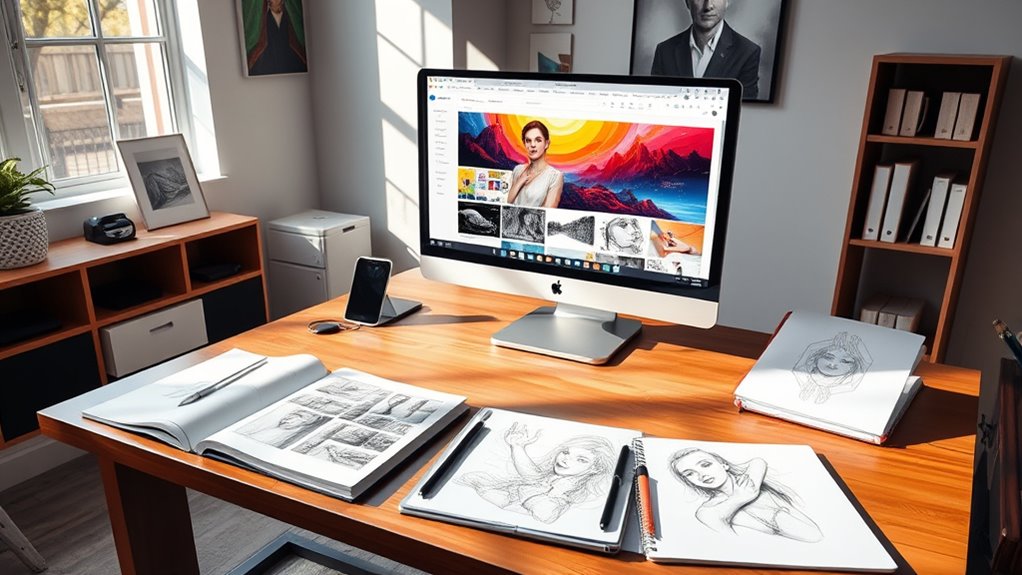
In customizing your portfolio, consider the platform you choose carefully. Many websites offer templates designed specifically for artists, making it easier to create a sleek, professional look without needing advanced technical skills. Look for options that allow you to organize your work into categories or series, so viewers can easily navigate your portfolio. Incorporate high-resolution images to showcase your art in the best light, and ensure your images load quickly to prevent frustration. Adding detailed descriptions or brief artist statements can provide context for your work, helping viewers understand your process and inspiration. Remember, a personalized touch can make your portfolio memorable—use your branding elements, such as a logo or signature style, to reinforce your artistic identity. Additionally, understanding content organization and how it affects viewer engagement can significantly enhance your portfolio’s impact.
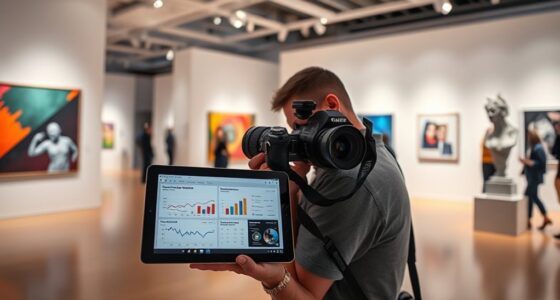
Beyond visuals, your digital presentation should be user-friendly and accessible across devices. Test how it appears on desktops, tablets, and smartphones, adjusting as necessary to provide a seamless experience. Easy navigation encourages viewers to explore your work more thoroughly and stay longer on your site. Keep your content updated regularly, removing weaker pieces and adding new projects to reflect your growth as an artist. Doing so shows professionalism and dedication to your craft. Overall, your digital presentation and portfolio customization are essential tools in establishing your presence in the art world. When done correctly, they not only display your talent but also communicate your unique story, making it easier for others to connect with your work and recognize your potential.

TRANSON Art Portfolio Case Artist Backpack Canvas Bag Large 26” x 19.5” Blue
Heavy duty artist portfolio bag – made of durable canvas, multi-function storage pockets for stretched canvas, canvas panels,…
As an affiliate, we earn on qualifying purchases.
As an affiliate, we earn on qualifying purchases.
Frequently Asked Questions
How Often Should I Update My Portfolio?
You should update your portfolio regularly, ideally every few months, to maintain portfolio consistency and showcase your latest work. Frequent updates keep your portfolio fresh and relevant, reflecting your growth as an artist. If you complete a significant project or develop new skills, add those pieces promptly. Balancing quality over quantity guarantees your portfolio remains compelling without overwhelming viewers, making it a powerful tool for attracting opportunities.
What Digital Tools Are Best for Portfolio Creation?
Think of creating your portfolio as planting a garden; you need the right tools to nurture it. Digital tools like Adobe Portfolio, Behance, and Squarespace offer sleek digital templates that make setup easy. They also help with image optimization, ensuring your work looks sharp. These platforms are user-friendly, customizable, and perfect for showcasing your art professionally. Use them to cultivate an impressive online presence that attracts clients and galleries alike.
How Do I Tailor My Portfolio for Different Clients?
You should tailor your portfolio for different clients by emphasizing pieces that align with their industry and style. Focus on client customization by showcasing relevant work that appeals directly to your target audience. Keep your selection concise and organized, highlighting your versatility while addressing their specific needs. Update your portfolio regularly to reflect your latest skills, ensuring it always resonates with each client’s preferences and project goals.
Should I Include Personal Art Projects?
Yes, include personal art projects in your portfolio to showcase your artistic exploration. Imagine a vibrant mosaic of your creativity, revealing your unique style and passions beyond client work. Personal projects demonstrate your dedication, versatility, and willingness to experiment, making your portfolio more compelling. They give clients a glimpse of your authentic voice and potential, helping you stand out as a dynamic, innovative artist.
How Can I Showcase My Process Effectively?
You can showcase your process effectively by including art process documentation that highlights your creative workflow presentation. Use clear images or videos to illustrate each stage, from initial sketches to final touches. Add brief descriptions to explain your techniques and decision-making. This approach not only demonstrates your skills but also gives viewers insight into your artistic journey, making your portfolio more engaging and authentic.
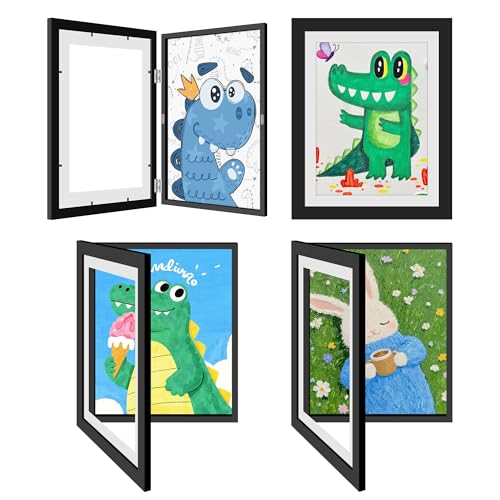
4 Pack Kids Artwork Frames Changeable 8.5 x 11 Inch Children Art Projects Children Art Frames Front Opening Picture Display Frame Holds 150 Drawings for Craft Storage, Room Decor, Portfolio, Black
【180°Front-Open Design】Kids' art frames are designed with a magnetic closure system and a 180º opening design, making it…
As an affiliate, we earn on qualifying purchases.
As an affiliate, we earn on qualifying purchases.
Conclusion
So, after all that effort, you’ve crafted the perfect portfolio—surely enough to land your dream gig, right? Ironically, it’s often not the art itself but how you present it that makes all the difference. Remember, even the most talented artist can fall flat if their work isn’t showcased professionally. So, go ahead, polish those images and refine your presentation—you never know, the key to success might just be in the details you overlook.
artist branding logo design
As an affiliate, we earn on qualifying purchases.
As an affiliate, we earn on qualifying purchases.
mobile-friendly online portfolio builder
As an affiliate, we earn on qualifying purchases.
As an affiliate, we earn on qualifying purchases.