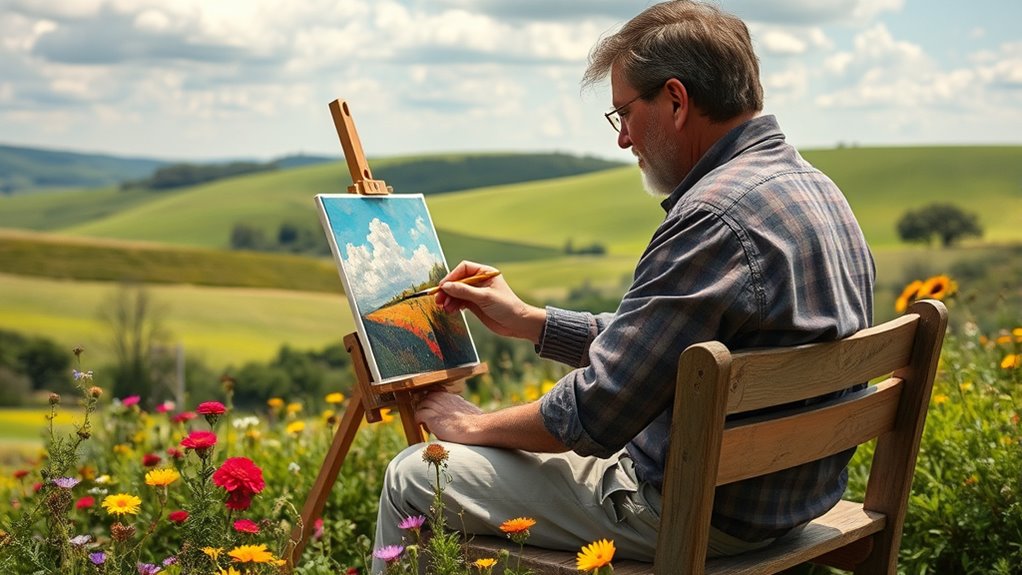

Plein air painting involves capturing landscapes outdoors, allowing you to observe natural light, colors, and textures firsthand. You’ll learn to quickly adapt your brush techniques to changing conditions, using vibrant hues and spontaneous strokes to convey mood and atmosphere. Planning your materials and managing time efficiently helps you make the most of fleeting moments. Keep exploring these essential techniques, and you’ll discover how to create dynamic, true-to-life outdoor landscapes with confidence.
Key Takeaways
- Plein air painting involves creating art outdoors to directly observe and capture natural landscapes.
- Mastering color theory helps depict the changing outdoor lighting and landscape variations authentically.
- Quick, spontaneous brush techniques are essential for capturing fleeting outdoor moments effectively.
- Proper planning and material management ensure artists are prepared for variable outdoor conditions.
- Adapting to shifting light and weather demands confident decisions and real-time experimentation.
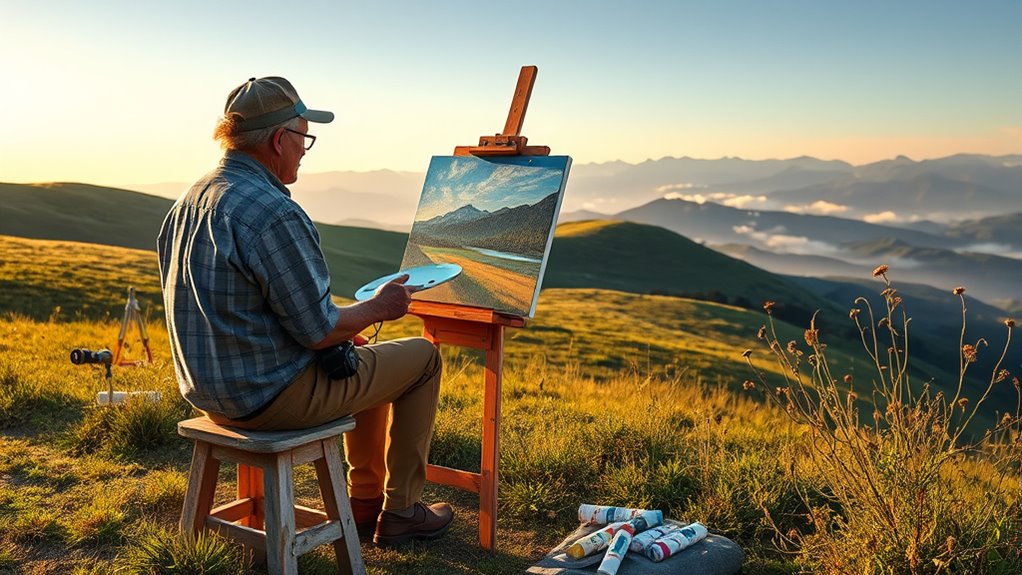
Plein air painting is a mesmerizing art form that involves creating artwork outdoors, directly capturing the beauty of the natural environment. When you step outside with your supplies, you’re immersing yourself in the moment, observing the landscape firsthand rather than relying on photos or studio work. This immediacy demands a good understanding of color theory and brush techniques. Color theory becomes essential because outdoor lighting shifts constantly, affecting how colors appear and interact on your canvas. You’ll learn to mix hues that mirror the subtle variations in sky, foliage, and water, making your paintings feel vibrant and true to life. By understanding how colors affect each other—whether complementary, analogous, or contrasting—you can create depth and harmony that reflect the landscape’s true essence.
Your choice of brush techniques also plays a pivotal role. Since plein air painting often involves quick, spontaneous strokes to capture fleeting moments, you’ll want to develop a range of brushwork styles. Using broad, sweeping strokes can depict large areas like the sky or distant mountains, while finer, more detailed strokes help bring foreground elements into focus. Layering your paint efficiently is key; starting with an underpainting or general washes allows you to establish the scene’s overall tone and mood. As you progress, you can add highlights and details with smaller brushes, emphasizing the textures of leaves, grass, or reflections in water. The right brush technique helps you convey the energy and atmosphere of the landscape, making your artwork lively and engaging. Additionally, understanding the retail hours of art supply stores can help you plan your outdoor excursions more effectively, ensuring you have all necessary materials on hand.
Being outdoors also means adapting your approach to changing conditions. The light shifts, shadows move, and colors evolve, so quick decision-making and confident brushwork are indispensable. You’ll often find yourself experimenting with different techniques on the spot, learning to see colors not just as they appear but as they can be manipulated to evoke mood and depth. Combining your knowledge of color theory with practiced brush techniques, you can capture the essence of a scene with authenticity and immediacy. The more you paint outdoors, the more intuitive your process becomes, allowing you to translate what you see into a vibrant, compelling piece of art. In this way, plein air painting becomes not just a technique but a meditation on nature’s ever-changing beauty.
plein air painting supplies
As an affiliate, we earn on qualifying purchases.
As an affiliate, we earn on qualifying purchases.
Frequently Asked Questions
What Are the Best Weather Conditions for Plein Air Painting?
You should aim for mild weather conditions, ideally with clear skies and gentle breezes, to enjoy plein air painting. Avoid extreme temperatures, heavy rain, or strong winds, as they can hinder your work and damage your supplies. Seasonal impacts matter too—spring and fall often provide ideal lighting and comfortable temperatures. Keep an eye on weather considerations to guarantee a smooth, enjoyable outdoor painting experience.
How Do I Protect My Artwork From Outdoor Elements?
To safeguard your artwork from outdoor elements, start with proper canvas preservation by stretching and priming your canvas correctly. Use protective coatings like varnishes or fixatives to shield your painting from moisture, dust, and UV rays. Additionally, consider carrying a portable easel cover or plastic wrap to shield your work during sudden weather changes. These steps help ensure your plein air masterpieces stay vibrant and intact for years to come.
What Portable Equipment Is Essential for Plein Air Artists?
You need portable easels to set up quickly and lightweight brushes for easy handling during your outdoor sessions. A compact palette and a foldable chair also help you stay comfortable and organized. Consider bringing a small backpack to carry your supplies and a spray bottle to keep your paints moist. With these essentials, you can focus on capturing landscapes without being weighed down by bulky equipment.
How Do I Choose the Right Location for Outdoor Painting?
You should pick scenic spots that inspire you and are easy to access. Look for locations with good lighting, interesting compositions, and minimal distractions. Consider accessibility factors like parking, trails, and safety. Visit different sites to see which ones resonate most with your style. A great location enhances your painting experience, so choose places that motivate you and are manageable to reach, ensuring you can focus on creating your best work.
What Safety Precautions Should I Take While Painting Outdoors?
When painting outdoors, prioritize safety by wearing protective clothing and using insect repellent to avoid bites. Be cautious with your brushes to prevent accidents, like poking yourself or others. Keep your workspace clear of tripping hazards, stay hydrated, and wear sunscreen. Always be aware of your surroundings, including wildlife and weather changes. These precautions help you enjoy painting safely while capturing beautiful landscapes.
portable easel for outdoor painting
As an affiliate, we earn on qualifying purchases.
As an affiliate, we earn on qualifying purchases.
Conclusion
So, next time you step outside with your supplies, remember that plein air painting isn’t just about capturing a scene—it’s about immersing yourself in nature’s ever-changing beauty. Some believe that painting outdoors enhances your connection to the environment, improving your skills and intuition. While science supports the idea that fresh air boosts creativity, the real magic lies in how you engage with the landscape. Grab your brushes and experience firsthand how nature inspires your art.
watercolor brushes for plein air
As an affiliate, we earn on qualifying purchases.
As an affiliate, we earn on qualifying purchases.
art palette for outdoor painting
As an affiliate, we earn on qualifying purchases.
As an affiliate, we earn on qualifying purchases.