
TL;DR

Get art and craft supplies delivered free with Prime
- Fast, free delivery on millions of items
- Prime Video, Amazon Music and more included
- Member-only deals all year
Moving your rig out of your main space is the most effective soundproofing. When in a closet, proper placement, sound absorption, and ventilation are key. Sealing alone won’t solve heat or noise issues.
Ever notice how a closet can turn into a surprisingly good vocal booth? The secret isn’t just stuffing blankets or foam on the walls. It’s about understanding what acoustic dampening really does—and what it doesn’t.
If you want a closet that keeps outside noise out and your voice in, you need a plan. This guide breaks down how to use placement, treatment, and ventilation to make your tiny space work for you. Whether you’re recording vocals or running a rig, these tips will help you get the best sound without turning your closet into a sweaty, noisy mess.
Acoustic dampening
& the rig in the closet.
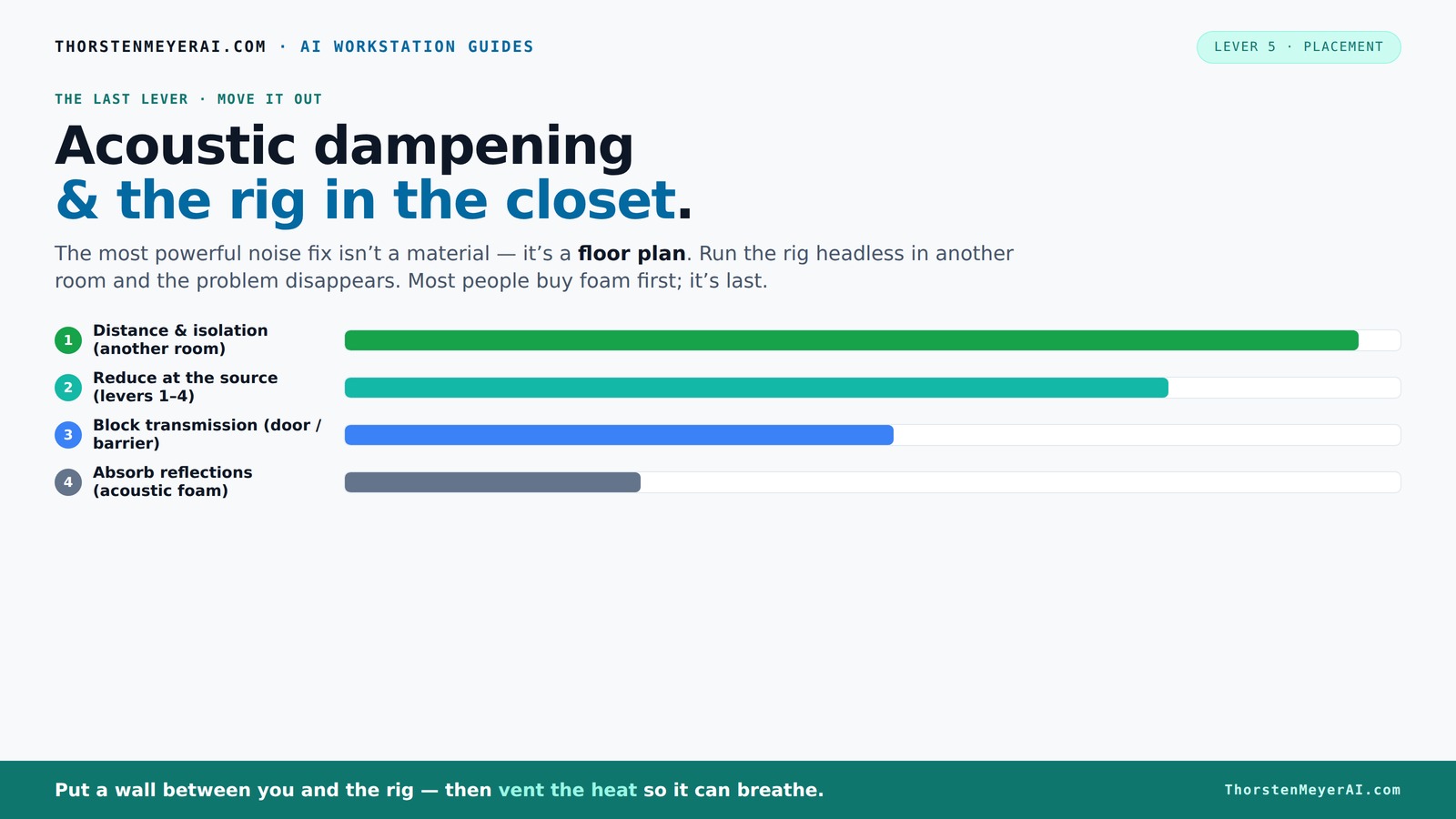
The most powerful noise fix isn’t a material — it’s a floor plan. A rig you can’t hear because it’s in another room beats any amount of foam. Tap the approaches in Part 1 to see what actually works.
(another room)
(levers 1–4)
(door / barrier)
(acoustic foam)
Contain the noise, not the heat
Key Takeaways
- Moving your rig into another room is the most effective way to reduce noise — no treatment needed.
- Proper mic placement and treating reflection points make a big difference in sound clarity.
- Use a mix of absorption (panels, blankets) and isolation (seals, anti-vibration pads) for best results.
- Ventilation is critical — sealed closets trap heat, causing noise and potential damage.
- Full soundproofing is nearly impossible in a closet; focus on reducing noise and managing heat instead.
soundproofing foam panels for recording
As an affiliate, we earn on qualifying purchases.
As an affiliate, we earn on qualifying purchases.
What Acoustic Dampening Actually Solves in a Closet Setup
Acoustic dampening reduces echoes and reflections inside your closet. It softens the sound bouncing around, making recordings clearer and less boxy. But it doesn’t block outside noise or prevent heat buildup.
For example, hanging blankets on the walls can tame that echoey, hollow sound. But it won’t stop your neighbor’s lawnmower or the street noise from leaking in. That’s where soundproofing and placement come in.
Research shows that 80% of noise issues in small spaces come from reflections. The remaining 20% is outside noise that needs barriers or sealing.
Understanding this distinction helps you allocate your efforts wisely. Over-investing in dampening materials might improve internal sound quality but won't significantly reduce external noise. Conversely, focusing solely on sealing without addressing heat and ventilation can lead to equipment overheating and potential damage, undermining your entire setup.
As an affiliate, we earn on qualifying purchases.
How to Find the Best Mic Position and Reflection Points
Start by setting your microphone in the right spot. The best sound comes when the mic is away from walls and reflection points. Use a mirror to find where sound bounces directly into your mic—place panels there.
For example, if you're recording vocals in a closet, position the mic at least 6-12 inches away from nearby walls. Treat the wall behind the mic and the side walls at reflection points with acoustic panels.
In tight spaces, treating the first reflection points is more effective than covering every inch of wall. Focus on the areas that cause the most echo or resonance.
Proper placement is crucial because reflections at certain points can cause comb filtering and phase issues, which muddy your recordings. By strategically positioning the mic and treatment, you ensure a cleaner, more accurate capture of your sound, reducing the need for extensive post-processing.
portable vocal booth for small spaces
As an affiliate, we earn on qualifying purchases.
As an affiliate, we earn on qualifying purchases.
Choosing the Right Materials: Absorption, Isolation, and Sealant
In a tiny closet, you’ll need a mix of materials. Acoustic panels and bass traps absorb sound, while weatherstripping and sealing foam block leaks. For example, dense foam panels or mineral wool can soak up high frequencies, while bass traps tame low-end booms.
Adding a second drywall layer with damping compound like Green Glue can increase mass and block sound transmission—especially for door gaps or seams.
For a quick fix, throw blankets and rugs on the walls and floor. For a more stable setup, consider custom panels and sealing gaps around doors and vents.
Choosing the right materials involves understanding their tradeoffs. Absorptive materials can deaden your space but may also make it overly damp or unnatural if overused. Isolation materials like weatherstripping improve external noise blocking but don’t impact internal sound quality. Balancing these elements ensures your space is both acoustically friendly and effectively sealed from outside noise.
sound isolation shields for microphones
As an affiliate, we earn on qualifying purchases.
As an affiliate, we earn on qualifying purchases.
Placement Strategies for Maximum Sound Control
Effective placement involves treating the most problematic surfaces. Place acoustic panels on side walls at reflection points, behind the mic, and on the ceiling above your head. Seal the door with weatherstripping to prevent outside noise leaks.
For example, in a closet, hang foam panels at reflection points, add bass traps in corners, and install a door seal or a soundproof curtain. Use rugs or mats on the floor to absorb footstep noise and reduce bouncing sound.
Remember, the goal is to control sound inside and block it from escaping. Think of your closet as a mini studio that needs both absorption and isolation.
Strategic placement allows you to maximize the effectiveness of your treatments without cluttering your space. It also helps you avoid wasting materials on areas that contribute minimally to sound control, making your setup more efficient and cost-effective.
Handling Special Cases: Tiny Closets, Vibration, and Heat
Small closets are tricky because they reflect sound and trap heat. Use blankets, moving pads, or portable acoustic panels to cover walls without sealing the space completely. For vibration, place your rig on rubber pads or anti-vibration mats—this keeps noise from transmitting through the floor or desk.
For heat, ensure your setup has proper airflow. A simple passive vent or a quiet exhaust fan can prevent overheating. If you seal the closet, add a thermostat-controlled vent or ducted fan to keep everything cool.
For example, a creator in a rental used moving blankets and a small, vented cabinet to keep noise and heat under control without permanent modifications.
Addressing these issues requires understanding the tradeoffs involved. Sealing the space tightly can improve sound isolation but may increase heat retention. Using vibration dampers reduces mechanical noise transmission but might slightly affect accessibility or airflow. Balancing these factors ensures your setup remains effective without compromising safety or comfort.
Setting Realistic Expectations: Can You Fully Soundproof a Closet?
Full soundproofing in a closet is tough. It’s almost impossible to completely block all noise without major construction. Sealing gaps and adding mass helps, but you won’t eliminate all sound leaks.
Instead, aim for a noticeable reduction. A well-treated closet can sound professional and keep noise from bothering others, but it’s not a soundproof bunker. Think of it as creating a “quiet zone,” not an impenetrable fortress.
For example, a musician turned to a hybrid approach: sealing gaps, adding absorption, and venting heat. Result? Significant noise reduction with manageable heat levels.
Understanding these limitations helps prevent frustration and guides you toward achievable goals. By focusing on reducing leaks and controlling internal acoustics, you create a space that’s practical, functional, and significantly quieter than untreated environments.
Frequently Asked Questions
What’s the biggest mistake people make when soundproofing a closet?
Many assume sealing and foam will completely block noise. In reality, without proper ventilation and strategic treatment, noise leaks and heat build-up continue, especially with high-power rigs.Can I treat a closet with just blankets and foam panels?
Yes, but it’s usually not enough. Blankets and foam help with reflections and echo, but sealing gaps and managing heat require additional measures like weatherstripping and ventilation.How do I stop my PC or GPU from overheating in a closet?
Ensure proper airflow with passive vents or quiet exhaust fans. Use ducting or a vented cabinet if sealing the space, and consider an AIO liquid cooler that exports heat outside the closet.Do I need bass traps in a tiny closet?
If you notice boomy low frequencies or resonance, yes. Bass traps in corners and along walls help tame these low-end issues common in small, enclosed spaces.Is it worth treating the ceiling or door first?
Prioritize the reflection points on walls and the door seal. Ceiling treatment is beneficial if sound bounces directly above your head or if upstairs noise leaks down.Conclusion
Transforming a closet into a usable recording or inference space isn’t magic—it’s about smart placement, effective materials, and good ventilation. When you keep heat and sound in check, your tiny studio can punch well above its weight.
Remember, the best soundproofing is often just moving the rig out of the way. Think of your closet as a tool, not a trap. With a little planning, it can become your secret weapon for clean, quiet recordings.
Fall Picks
fall essentials
As an affiliate, we earn on qualifying purchases.


![How Blackwing Pencils Are Made [Video]](https://leluxart.com/wp-content/uploads/2026/08/how-blackwing-pencils-are-made-video-featured-560x300.jpg)