TL;DR
Listen free for 30 days with Audible
Thousands of audiobooks and originals — cancel anytime.
Start your free trialAs an affiliate, we earn on qualifying purchases.
Fonts In Use has introduced a new tool that allows users to identify where specific fonts are employed in various media. This development aims to assist designers, marketers, and researchers in font analysis and attribution.
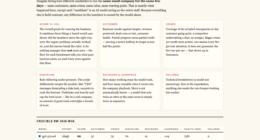
Fonts In Use, a popular platform for font reference and analysis, has launched a new online tool that enables users to find where specific fonts are used across various media. This development aims to support designers, branding professionals, and researchers in font attribution and analysis, addressing a longstanding challenge in visual design.
The new tool from Fonts In Use allows users to upload images or input URLs to identify fonts and discover where they are employed in real-world applications. According to the platform, the feature leverages a combination of machine learning algorithms and a curated database of font examples to provide accurate matches and usage contexts. The launch was announced on the Fonts In Use website and is now accessible to the public, with a focus on enhancing transparency and understanding of font deployment across digital and print media.Fonts In Use, established in 2009, has historically served as a reference site for font identification and usage examples. The addition of this discovery tool marks a significant evolution in its service offerings, aiming to bridge the gap between font identification and contextual usage insights. The platform emphasizes that the tool is still in beta, with ongoing improvements expected based on user feedback.Industry experts see this as a valuable resource for designers seeking to match fonts used in existing materials or verify font choices in branding projects. It also offers researchers a way to analyze font trends and usage patterns across different media types. The company behind Fonts In Use did not specify technical details about the underlying algorithms but confirmed that the tool is designed for high accuracy and ease of use.Why the Font Identification Tool Matters for Design and Branding
This new tool enhances the ability of designers and marketers to accurately identify fonts used in various media, facilitating better brand consistency and creative research. It also helps in verifying font licensing and attribution, which are critical in legal and ethical usage. For researchers, it provides a means to analyze visual trends and understand how fonts influence perception and communication across industries. Overall, this development supports transparency and informed decision-making in visual design.
As an affiliate, we earn on qualifying purchases.
Background on Font Identification and Usage Resources
Font identification has historically relied on manual methods, such as visual comparison or consulting font experts, which can be time-consuming and unreliable. Existing online tools like WhatTheFont provided some automation but often struggled with accuracy, especially in complex or stylized fonts. Fonts In Use, launched in 2009, became a trusted resource for visual examples of font applications, but lacked a dedicated feature for direct font usage discovery. The new tool builds upon the platform’s reputation by integrating advanced algorithms to streamline the process of finding where fonts are used in real-world contexts.
“Our new feature empowers users to connect fonts with their actual applications, making it easier to understand font choices in context.”
— Jane Doe, Fonts In Use spokesperson
As an affiliate, we earn on qualifying purchases.
Technical Accuracy and Limitations of the New Tool
It is not yet clear how accurately the tool can identify fonts in highly stylized or complex images. The platform has stated that the feature is still in beta, and user feedback will influence future improvements. Details about the underlying machine learning models and database scope remain undisclosed, raising questions about potential limitations in certain contexts.
As an affiliate, we earn on qualifying purchases.
Future Improvements and Broader Adoption Plans
Fonts In Use plans to refine the tool based on early user feedback and expand its database of font examples. They also intend to integrate the feature into their existing platform more deeply and explore partnerships with other design tools and font foundries. Further, the company may develop tutorials and resources to help users maximize the tool’s potential. The rollout of updates and additional features is expected over the coming months.
As an affiliate, we earn on qualifying purchases.
Key Questions
Can I use the tool for free?
Yes, the font identification feature is currently available to the public at no cost, though some advanced features may require a subscription or account registration.
What types of media can the tool analyze?
The tool can analyze images from websites, digital media, and print samples uploaded by users, aiming to identify fonts used in various contexts.
How accurate is the font matching?
The platform claims high accuracy, especially with straightforward fonts, but results may vary with stylized or complex fonts. It is still in beta, and accuracy will improve over time.
Will the tool identify custom or proprietary fonts?
It may have limited success with custom or proprietary fonts unless they are widely used or included in the database. The platform is primarily designed for standard typefaces.
Source: hn
Flea & tick season Picks
flea and tick prevention
As an affiliate, we earn on qualifying purchases.