
TL;DR
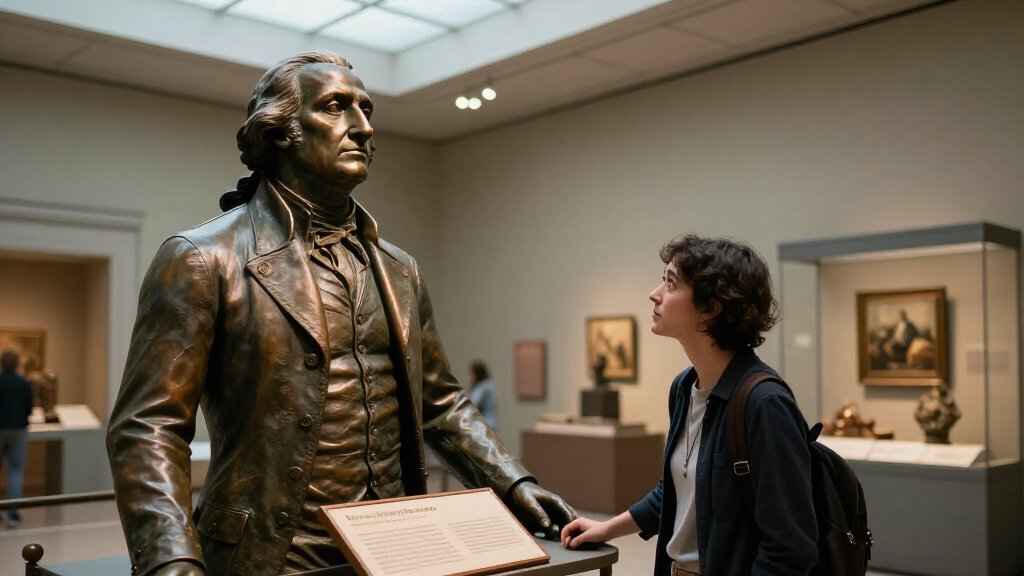
Former President Donald Trump has officially requested that the Smithsonian Institution install statues and a dedicated exhibit honoring George Washington. The move has garnered significant media coverage and public interest, raising questions about motives and implications.
Former President Donald Trump has formally asked the Smithsonian Institution to install statues and create a dedicated exhibit honoring George Washington. This request, confirmed by sources familiar with the matter, signals a direct engagement with national historical symbols and has attracted widespread media attention. The move is significant given the ongoing debates over historical memory and the role of such figures in American history.

Get art and craft supplies delivered free with Prime
- Fast, free delivery on millions of items
- Prime Video, Amazon Music and more included
- Member-only deals all year
According to reports from PBS and other outlets, Trump sent a formal letter to the Smithsonian requesting the installation of statues depicting George Washington across its campuses, along with a comprehensive exhibit highlighting his life and contributions. The request was made publicly in early March 2024 and has since sparked discussions among historians, politicians, and the public about the appropriateness and motivations behind such a move.
Officials at the Smithsonian have not yet publicly responded to the request, and it remains unclear whether the institution will agree to the proposal or what specific form the statues and exhibit might take. The request appears to be a personal initiative by Trump, who has previously emphasized the importance of celebrating founding figures in American history.
Legal and logistical considerations are also factors, as the Smithsonian’s policies on installing statues and exhibits involve approval processes and funding considerations. It is not yet confirmed whether this request will lead to actual installations or remain a symbolic gesture.
Implications for Public Memory and Cultural Debates
This development is significant because it touches on the broader debate over how American history, especially founding figures like George Washington, should be commemorated. Trump’s request could influence public perceptions of Washington’s legacy and spark renewed discussions about the representation of historical figures in national institutions. It also highlights ongoing tensions over the interpretation of American history and the role of political figures in shaping cultural memory.
Furthermore, the move may impact Smithsonian policies and funding, as well as ignite political debates about the role of government-sponsored museums in endorsing specific historical narratives. It also raises questions about the use of presidential influence to sway cultural and historical commemorations in the United States.
Popular right now

Dyson Airwrap Co-anda2x Multi-Styler and Dryer (2026 Model)

Roborock Q7 M5+ Robot Vacuum and Mop with Self-Emptying Dock

Shark AI Ultra Robot Vacuum with Matrix Clean and Self-Empty Base
As an affiliate, we earn on qualifying purchases.
Background on Smithsonian and Presidential Engagement with History
The Smithsonian Institution, established in 1846, is a network of museums and research centers dedicated to preserving and showcasing American history, culture, and science. It has historically maintained a neutral stance on political figures, focusing instead on educational and cultural representation.
Throughout recent years, there has been increased public and political debate over how historical figures are memorialized, especially concerning controversial aspects of their legacies. Presidents and politicians have occasionally advocated for statues or exhibits that reflect their perspectives, but direct requests to the Smithsonian are uncommon.
Donald Trump has previously emphasized the importance of celebrating American founding fathers, often framing them as central to national identity. This request aligns with his broader efforts to influence public memory and historical narratives during and after his presidency.
It remains to be seen how the Smithsonian will respond and whether this request will lead to tangible changes or remain a symbolic gesture.
Details of Smithsonian’s Response and Future Steps
It is not yet clear whether the Smithsonian will approve or reject the request, or what specific forms the statues and exhibit might take if approved. The institution has not publicly responded, and the process for installation and funding remains uncertain. Additionally, the motivations behind Trump’s request and potential political implications are still being analyzed.
Next Steps in the Smithsonian’s Decision-Making Process
The Smithsonian is expected to review the request internally, considering policy, funding, and public opinion. A formal response may be issued in the coming weeks, and if approved, planning for the statues and exhibit could begin. Public and political reactions are also anticipated to influence the decision-making process.
Observers will be watching for official statements and any subsequent actions, including potential legislative or political responses, that could shape the future of this proposal.
Key Questions
Why did Trump request the Smithsonian to install George Washington statues?
According to reports, Trump sees this as a way to emphasize and honor the legacy of George Washington, aligning with his broader focus on American founding figures and national identity.
Has the Smithsonian agreed to this request?
No, the Smithsonian has not publicly responded or made any decisions yet. The request remains under review or consideration.
Could this lead to actual statues being installed?
It is uncertain. Approval depends on Smithsonian policies, funding, and public opinion. The process could take months or longer, and there is no guarantee of approval.
What are the broader implications of this request?
This could influence how American history is publicly commemorated and spark debates over the portrayal of founding figures. It also raises questions about political influence on cultural institutions.
Will this affect other Smithsonian exhibits or statues?
Potentially, if the request is approved, it might set a precedent for similar proposals, but no immediate changes are expected until a decision is made.
Source: local