
TL;DR

Get art and craft supplies delivered free with Prime
- Fast, free delivery on millions of items
- Prime Video, Amazon Music and more included
- Member-only deals all year
In 2018, researchers and enthusiasts documented Soviet-era control rooms, revealing their unique vintage design and technological features. This exploration offers insights into Cold War-era infrastructure and control systems.
In 2018, a detailed documentation project revealed the preserved state of Soviet control rooms, showcasing their distinctive vintage design and technological layout. This discovery provides a rare glimpse into Cold War-era infrastructure and control systems that have largely remained untouched.
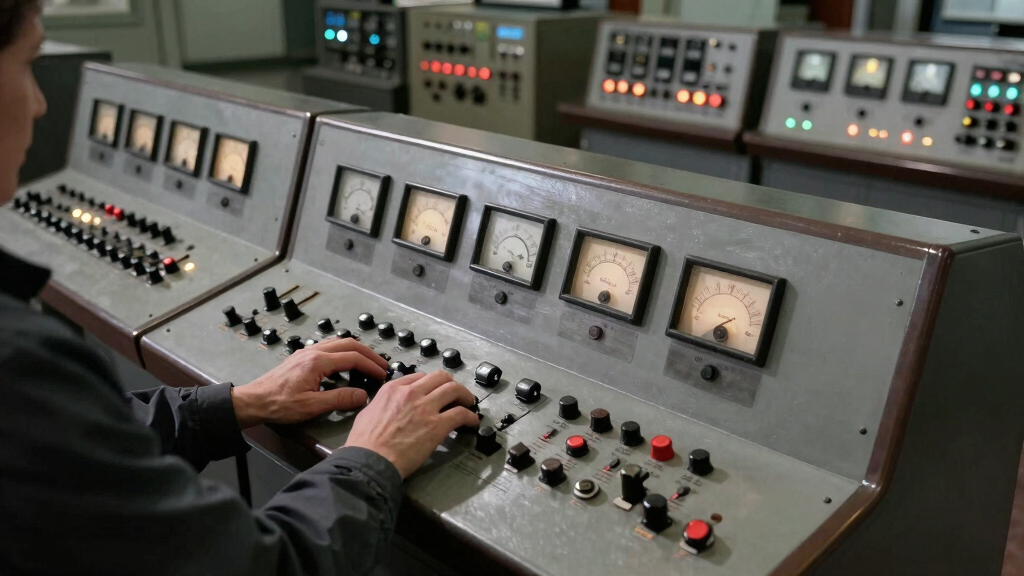
The project, led by historians and preservationists, focused on control rooms used for military, space, and nuclear command purposes during the Soviet era. Photographs and detailed descriptions highlighted features such as analog consoles, large indicator panels, and the overall utilitarian design that prioritized function over form.
Experts involved in the project confirmed that many of these control rooms had been abandoned or sealed after the Soviet Union’s dissolution but remained remarkably intact, offering a unique window into the technological standards of the time. The control rooms include facilities from the Soviet space program, nuclear command centers, and military communication hubs.
Cultural and Technological Insights from Soviet Control Rooms
This discovery matters because it preserves a tangible piece of Cold War history, illustrating the technological and design philosophies of the Soviet Union. It provides researchers and historians with valuable insights into the operational environment of Soviet command centers, which were once highly secret and critical to national security. The preservation of these control rooms also raises questions about the potential for future restoration or museum display, helping to educate the public about Cold War history.
vintage Soviet control room replica
As an affiliate, we earn on qualifying purchases.
As an affiliate, we earn on qualifying purchases.
Historical Background of Soviet Control Room Preservation
Soviet control rooms were central to the USSR’s military and space operations during the Cold War, often located in secretive facilities across the country. After the dissolution of the Soviet Union in 1991, many of these sites were abandoned, sealed, or fell into disrepair. Over the years, some have been subject to decay, but others remained preserved due to their remote locations or lack of disturbance.
The 2018 project is among the first comprehensive efforts to document these sites systematically, revealing their state of preservation and offering a rare glimpse into Soviet technological infrastructure. This effort aligns with broader initiatives to preserve Cold War relics and understand the technological history of that era.
“The control rooms we documented are a testament to Soviet engineering and design philosophy, emphasizing durability and functionality.”
— Dr. Ivan Petrov, historian
As an affiliate, we earn on qualifying purchases.
Extent of Preservation and Potential for Future Access
It is not yet clear how many Soviet control rooms remain accessible or intact beyond those documented in 2018. Some sites may have suffered deterioration, and access to certain locations remains restricted due to security or safety concerns. The full extent of preservation across all Soviet-era control facilities is still unknown, and ongoing investigations are needed to determine their current condition.
As an affiliate, we earn on qualifying purchases.
Plans for Further Study or Public Display of Control Rooms
Researchers and preservation groups plan to continue surveying Soviet control sites, aiming to create comprehensive archives and potentially develop some locations into museums or educational exhibits. Discussions are also underway regarding digital reconstructions or virtual tours to allow broader public engagement with this Cold War heritage.
As an affiliate, we earn on qualifying purchases.
Key Questions
Why are Soviet control rooms considered historically significant?
Soviet control rooms are key to understanding Cold War military and space technology, reflecting the USSR’s strategic priorities and engineering capabilities during that period.
Are these control rooms accessible to the public now?
Most are not publicly accessible; many remain sealed or are in remote locations. Some sites are under study for potential future public display or preservation.
What technological features did Soviet control rooms have?
They typically featured analog consoles, large indicator panels, and manual control systems designed for reliability and durability under extreme conditions.
How does this discovery impact Cold War history research?
It provides tangible evidence of Soviet technological infrastructure, helping historians and engineers better understand Cold War-era operational environments.
What are the challenges in preserving these control rooms?
Challenges include deterioration over time, restricted access due to security concerns, and the need for specialized conservation efforts to maintain their integrity.
Source: hn
Halloween Picks
halloween
As an affiliate, we earn on qualifying purchases.