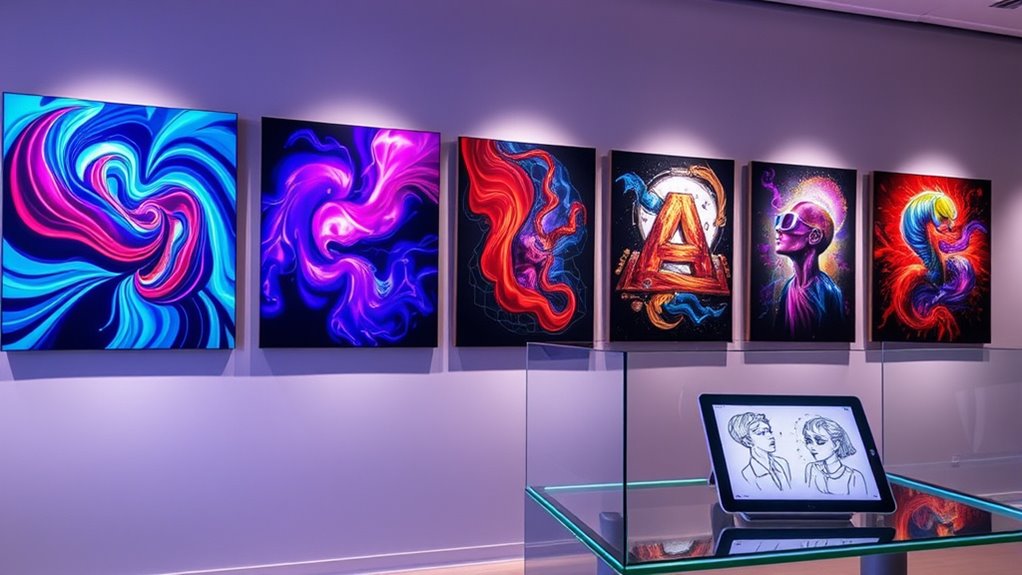
The rise of digital art in the 21st century revolutionizes how you create, share, and experience art thanks to advanced technology like AI and virtual galleries. You can explore surreal images, experiment with innovative concepts, and connect with audiences globally through immersive digital exhibitions. This shift challenges traditional notions of originality and offers new ways for artists to collaborate and push creative boundaries. Keep exploring to discover how these changes shape the future of art.
Key Takeaways
- AI-generated art expands creative possibilities through complex patterns and surreal images, challenging traditional notions of authorship.
- Virtual galleries democratize access, allowing global audiences to experience immersive digital exhibitions.
- Digital art fosters experimentation and collaboration, pushing the boundaries of technological and artistic innovation.
- Interactive multimedia elements enhance audience engagement and storytelling in virtual art spaces.
- Advancements in digital tools and AI are shaping the evolving landscape of 21st-century art and cultural expression.
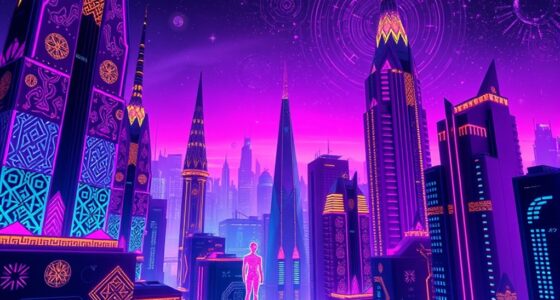
Digital art has transformed the creative landscape in the 21st century, offering artists new tools and avenues to express their ideas. One of the most exciting developments is AI-generated creativity, where artificial intelligence algorithms assist or even independently produce stunning visuals, music, and multimedia pieces. This technology pushes the boundaries of traditional art, enabling you to experiment with complex patterns, surreal images, and innovative concepts that might have been impossible without machine learning. As you explore AI-driven tools, you’ll find that they not only inspire fresh ideas but also challenge your understanding of authorship and originality. These advancements foster a collaborative process between human and machine, resulting in artworks that are both innovative and deeply personal.
Digital art evolves through AI collaboration, inspiring innovative, surreal creations that challenge traditional notions of authorship and originality.
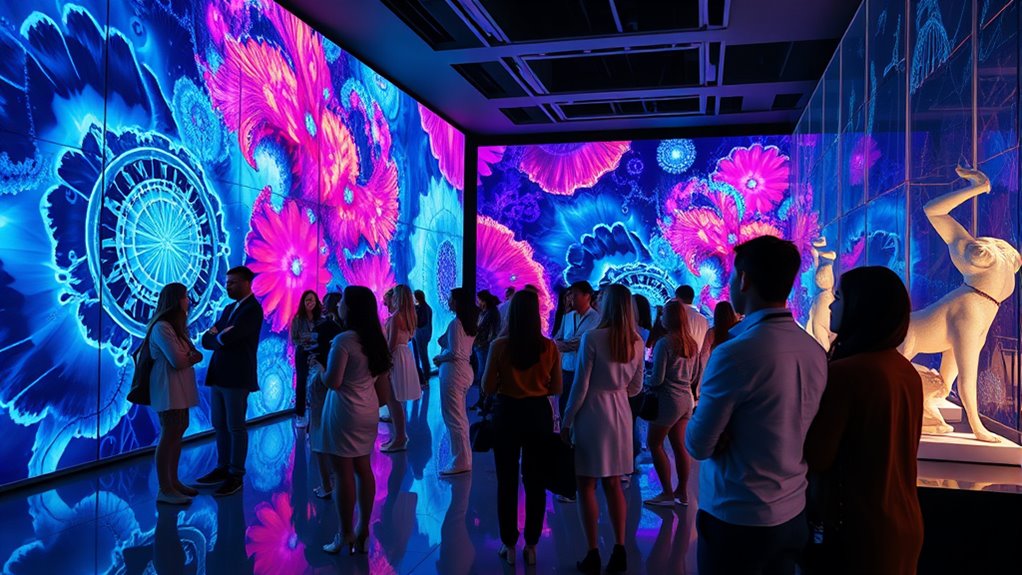
Alongside AI-generated creativity, virtual gallery exhibitions have become a crucial part of the digital art ecosystem. These virtual spaces allow you to showcase your work to a global audience without the constraints of physical galleries. You can design immersive environments, where viewers navigate through digital halls or interact with your pieces in real time, creating a dynamic experience that bridges the gap between artist and audience. Virtual galleries also democratize access to art, removing geographical barriers and making exhibitions accessible to anyone with an internet connection. This shift encourages more inclusive participation, giving emerging artists the chance to reach viewers worldwide and gain recognition.
You’ll also notice that virtual gallery exhibitions often incorporate multimedia elements, integrating videos, 3D models, and augmented reality features, which enhance engagement and storytelling. These digital showcases can be easily updated or reconfigured, allowing you to respond to feedback or adapt your exhibition to different themes. Furthermore, the online nature of these exhibitions offers data insights—such as visitor engagement metrics—that can inform future projects or marketing strategies. This real-time feedback loop helps you refine your craft and better understand your audience’s preferences.
Additionally, understanding cultural heritage can inspire artists to create more meaningful and diverse digital works, broadening the scope of digital art’s impact. The rise of digital art, fueled by AI-generated creativity and virtual gallery exhibitions, has fundamentally changed how you create, share, and experience art. You no longer depend solely on physical spaces or traditional mediums; instead, you can push creative boundaries in digital realms accessible worldwide. This era invites you to experiment freely, collaborate across borders, and connect with audiences in innovative ways. As technology continues to evolve, your ability to adapt and harness these tools will define your place in the vibrant, ever-expanding world of 21st-century digital art.
AI digital art creation software
As an affiliate, we earn on qualifying purchases.
As an affiliate, we earn on qualifying purchases.
Frequently Asked Questions
How Has Digital Art Influenced Traditional Art Markets?
Digital art has sparked a digital renaissance, transforming traditional art markets by broadening access and creating new opportunities. You now see more artists embracing technological tools, which fuels artistic evolution and challenges conventional galleries. This shift allows you to discover diverse styles online, buy digital pieces, and participate in global auctions. As a result, the traditional art scene becomes more dynamic, inclusive, and innovative, driven by the ongoing fusion of technology and creativity.
What Are the Most Popular Digital Art Tools Today?
You’ll find digital brushes and graphic tablets are among the most popular digital art tools today. These tools let you create detailed, vibrant artwork with ease, offering a wide variety of brushes for different styles. Graphic tablets give you precise control, making your digital art feel natural and intuitive. Many artists prefer these tools for their versatility and efficiency, helping you bring your creative ideas to life effortlessly.
How Do Digital Artists Monetize Their Work?
You can monetize your digital art by selling NFT art pieces and taking online commissions. Coincidentally, many artists find success through platforms that facilitate NFT sales, making their work more valuable and discoverable. Additionally, offering personalized commissions online allows you to connect directly with clients, turning your creativity into income. Use social media and digital marketplaces to showcase your art, attracting buyers and building your reputation in the digital art community.
What Are Key Challenges Facing Digital Art Authenticity?
You face challenges in ensuring digital art authenticity, especially with NFT validation and copyright dilemmas. NFTs help verify ownership, but they can be faked or manipulated, making authenticity uncertain. Copyright issues also arise when artists’ work is used without permission or proper attribution. To combat this, you need reliable validation methods and clear legal protections, ensuring your digital creations remain genuine and your rights are upheld.
How Is Digital Art Impacting Cultural Heritage Preservation?
Think of digital art as a guardian watching over your cultural heritage. You influence its impact by embracing virtual restoration and digital archiving, ensuring priceless artifacts are preserved and accessible forever. These tools act as digital safes, protecting history from decay and loss. By supporting these innovations, you help keep cultural stories alive, bridging the past and future, so generations can cherish their heritage without fear of fading away.
virtual gallery exhibition platform
As an affiliate, we earn on qualifying purchases.
As an affiliate, we earn on qualifying purchases.
Conclusion
You might think digital art lacks the depth of traditional works, but it offers endless possibilities for innovation and self-expression. As technology advances, so does your ability to create and experience art in new ways. Embracing digital art doesn’t mean replacing the old; it means expanding your horizons and exploring fresh perspectives. So, don’t dismiss it—dive in and discover how the digital domain can elevate your artistic journey.
interactive multimedia art display
As an affiliate, we earn on qualifying purchases.
As an affiliate, we earn on qualifying purchases.
3D modeling and AR tools for artists
As an affiliate, we earn on qualifying purchases.
As an affiliate, we earn on qualifying purchases.