
Portraiture has shifted from formal images of royalty and aristocrats created with techniques like frescoes and sculpture, emphasizing status and idealized features, to modern selfies capturing personal identity with digital tools and instant spontaneity. Technological advances like photography and smartphones make expression more accessible and authentic. This evolution reflects cultural changes toward self-expression and social connection. Keep exploring how artistic techniques and societal values continue shaping the way we portray ourselves over time.
Key Takeaways
- Portraiture historically served to display social status, power, and religious ideals in royal and aristocratic contexts.
- Artistic techniques evolved from idealized frescoes and sculptures to realistic Renaissance portraits emphasizing personality.
- The invention of photography in the 19th century democratized portraiture, making it accessible beyond elites.
- Digital tools and machine learning now enable personalized, expressive portraits reflecting individual identity.
- Modern selfies and social media selfies emphasize authenticity, spontaneity, and self-expression, transforming portraiture’s purpose and style.
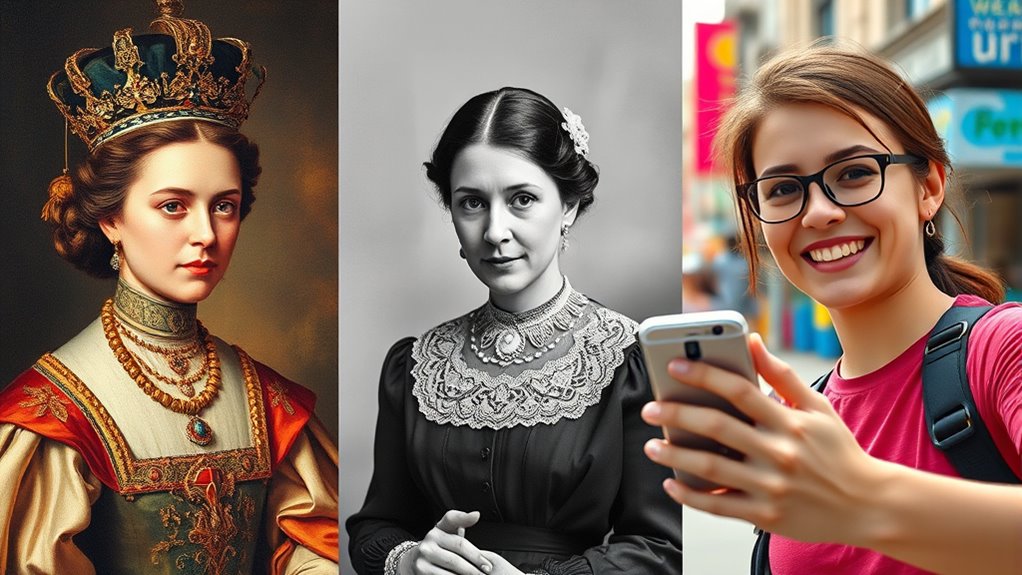
Portraiture has undergone a remarkable transformation, reflecting changes in technology, culture, and artistic intent. When you think about the history of portraiture, you’ll notice how artistic techniques have evolved to capture not just a person’s appearance but also their essence and social significance. In ancient times, artists relied on traditional methods like frescoes and carvings, emphasizing idealized features and symbolic elements to convey status and power. As cultures influenced art across different eras, styles shifted—Greek and Roman sculptures focused on realism and ideal proportions, while during the Renaissance, artists like Leonardo da Vinci employed sfumato and chiaroscuro to create depth and lifelike textures. These cultural influences shaped how portraits were conceived, often serving political, religious, or aristocratic purposes.
Fast forward to the modern age, technological innovations transformed artistic techniques dramatically. The invention of the camera in the 19th century allowed for more accurate representations, pushing artists to explore new styles and methods. With the advent of photography, portraiture became more accessible, moving beyond the exclusive domain of the wealthy and aristocrats. Artists began experimenting with different media—oil paints, pastels, digital tools—to evoke emotion, personality, and social commentary. Today, digital photography and editing software give you even more control over the artistic process, enabling you to craft images that reflect personal identity or cultural commentary with unprecedented precision. Machine learning algorithms are increasingly being integrated into image editing and creation, further expanding the possibilities of portraiture.
Cultural influences continue to shape portraiture, even as the medium becomes more democratized. You see this in the rise of selfies and social media portraits, which reflect contemporary values of individualism and self-expression. These images often emphasize authenticity, immediacy, and personal storytelling—elements that traditional portraiture aimed to encapsulate but now do so instantaneously and on a global scale. The cultural shift from formal, commissioned portraits to spontaneous, everyday snapshots illustrates a broader change: portraits are no longer solely about status or legacy but also about personal identity and connection. Whether through classical oil paintings or smartphone selfies, the essence remains the same—capturing moments that reveal something about who you are, shaped by the artistic techniques you choose and the cultural influences that inform your image.
Frequently Asked Questions
How Did Portraiture Influence Societal Perceptions of Beauty?
Portraiture shapes your view of beauty by reflecting and reinforcing societal standards and artistic ideals. When you see portraits emphasizing symmetry, smooth skin, or particular expressions, it influences what you consider attractive. Artists often idealize features that align with prevailing societal norms, which in turn mold perceptions of beauty over time. This continuous cycle of portrayal and perception helps maintain certain standards, subtly guiding your ideas of attractiveness and aesthetic value.
What Materials Were Historically Used in Creating Early Portraits?
Imagine a palette as vibrant as a garden in full bloom; early portraits used natural materials like mineral-based painting pigments, such as ultramarine and ochre, to create vivid colors. Artists also incorporated organic materials like egg tempera or wax for paint. For framing, ornate carved wood or metal was common, enhancing the portrait’s importance and preserving it for generations. These materials made portraits both durable and visually striking.
How Did Technological Advances Impact Portrait Art Development?
Technological advances transformed portrait art by introducing tools like the camera obscura, which helped artists achieve more accurate perspectives and details. Later, digital tools and software enabled artists to create realistic digital brushstrokes, blending traditional techniques with modern innovation. These advancements allowed for faster production, greater experimentation, and new styles, making portraiture more accessible and diverse, ultimately shaping how we capture and share personal identity today.
Were There Any Notable Cultural Differences in Portrait Styles Globally?
You notice how portrait styles vary across cultures, revealing cultural symbolism and regional aesthetics. While European portraits emphasize realism and status, Asian art often highlights harmony and spiritual themes, and African portraits focus on vibrant symbolism and community. These differences reflect each culture’s values, beliefs, and social structures, creating a rich tapestry of artistic expression. Recognizing these nuances helps you appreciate the diverse ways societies honor individuals and depict identity through portraiture.
How Has Digital Technology Changed Portraiture Techniques Today?
Digital technology has revolutionized portraiture by making it more accessible and creative. You now use digital filters to enhance images instantly, adding effects or smoothing skin, which wasn’t possible before. Selfie culture encourages capturing spontaneous moments, often with smartphones, allowing you to experiment with angles and lighting. This shift democratizes portraiture, empowering you to express yourself freely and share your images globally, transforming traditional art into an everyday activity.
Conclusion
As you’ve seen, portraiture has come a long way, evolving from regal paintings to instant selfies. It’s clear that capturing identity is a timeless desire, constantly adapting to new technologies and cultural shifts. Remember, while the tools change, the goal remains the same: to put your true self on display. So, don’t forget, in the world of portraits, sometimes you have to seize the moment before it slips away like sand through your fingers.