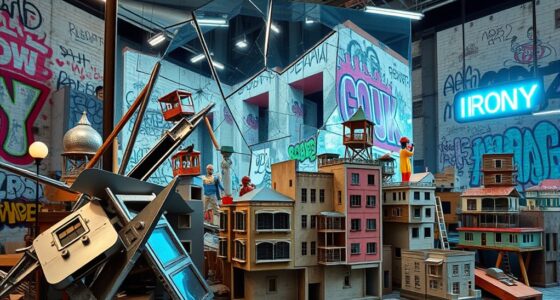
Futurism is all about embracing speed, technology, and modernity to shape a smarter world. You see cities transforming with digital innovations like smart traffic, sensors, and interconnected systems that make urban life more efficient and sustainable. Rapid advancements in AI, big data, and autonomous transport are changing how we move and live. By keeping up with these trends, you can better understand how the future is being built today—there’s much more just ahead.
Key Takeaways
- Futurism emphasizes rapid technological innovation transforming urban environments and daily life.
- Speed in modernity reflects swift adaptation to digital advances and shifting societal needs.
- Artificial intelligence and big data drive smarter city planning and resilient infrastructure.
- Autonomous vehicles, drones, and smart systems revolutionize transportation and logistics.
- The digital revolution democratizes access, empowering communities to shape and participate in urban evolution.

Have you ever wondered what the future holds? It’s a question that sparks curiosity and fuels imagination, especially as we witness rapid changes around us. Today, futurism isn’t just about distant science fiction—it’s about understanding how speed, technology, and modernity shape our daily lives. One of the most exciting aspects is urban innovation, where cities transform into hubs of efficiency and sustainability. With the digital revolution in full swing, urban spaces are evolving into smarter environments. Think about how smart traffic systems reduce congestion or how sensor networks monitor air quality in real time. These innovations aren’t just improvements; they redefine how we live and interact within our cities. You can expect more interconnected infrastructure, where everything from public transportation to waste management works seamlessly through digital platforms. This shift is driven by the digital revolution, which accelerates the pace of change and creates new opportunities for urban development. It’s as if cities are becoming living organisms, constantly adapting and optimizing to meet the needs of their inhabitants.
As technology advances at breakneck speed, the concept of modernity takes on new meaning. You aren’t just observing change—you’re experiencing it firsthand. Autonomous vehicles, for example, promise to revolutionize transportation, making commutes safer and more efficient. Drones and delivery robots are already changing how goods move through cityscapes, reducing reliance on traditional logistics. Meanwhile, the rise of artificial intelligence and big data allows city planners to anticipate issues before they arise, improving urban resilience. This rapid evolution means you’re part of a world where innovation is continuous, and adaptation is essential. Staying ahead requires embracing these changes and understanding their implications for your everyday life.
Futurism also involves a mindset shift—recognizing that speed isn’t just about quick results but about the ability to adapt swiftly to new realities. The digital revolution has democratized access to information, empowering individuals and communities to participate in shaping their environments. You’re no longer a passive observer but an active participant in this unfolding future. Whether it’s through smart home technology, sustainable energy solutions, or immersive virtual experiences, modernity is transforming how you live, work, and connect. The pace of change might be formidable, but it also offers unprecedented opportunities to innovate and improve. As these trends continue, understanding and embracing futurism becomes essential, helping you navigate a world where speed, technology, and modernity are more intertwined than ever before.
Frequently Asked Questions
How Did Futurism Influence Contemporary Digital Art?
Futurism influences your digital art by inspiring bold, dynamic aesthetics that emphasize speed and movement. You incorporate futuristic themes into digital aesthetics, making your work feel energetic and innovative. Interactive design draws from Futurist ideas, encouraging active viewer engagement and seamless integration of technology. This approach pushes boundaries, creating immersive experiences that reflect the revolutionary spirit of Futurism, shaping how contemporary digital artists explore new forms and expressions.
What Are Futurism’s Main Philosophical Principles?
You might think futurism’s core beliefs are just about speed and tech, but it’s more about embracing progress and rejecting tradition. Its main principles celebrate innovation, dynamism, and the beauty of machines, often ignoring ethical concerns. While it champions the future, it raises questions about responsibility and human values. So, futurism’s core beliefs push us to innovate, but not without considering the ethical implications of rapid change.
How Does Futurism Compare With Other Modernist Movements?
You’ll find futurism stands out through its emphasis on artistic innovation and celebrating speed, technology, and modernity. Unlike other modernist movements, it aggressively pushes forward, often challenging traditional aesthetics and cultural norms. While movements like Cubism or Surrealism explore inner realities, futurism critiques cultural stagnation, advocating for dynamic change. This energetic approach makes futurism uniquely focused on shaping a future driven by technological progress and a break from the past.
Which Futurist Artists Had the Most Lasting Impact?
You should recognize that Umberto Boccioni and Giacomo Balla had the most lasting impact among futurist artists. They pioneered futurist aesthetics through innovative techniques like dynamic brushwork and fragmented forms, capturing motion and modernity. Their works pushed boundaries, influencing later abstract and modern art movements. Their focus on speed, technology, and progress remains influential, making their contributions essential to understanding the evolution of 20th-century art.
Is Futurism Still Relevant in Today’s Technological Society?
You’re right on the pulse of today’s world, and futurism remains highly relevant. Its spirit of artistic innovation pushes boundaries, inspiring new ways to interpret technology’s role in society. As society evolves at a breakneck pace, futurism’s emphasis on progress and modernity continues to influence contemporary art and culture. It’s a reminder to stay adaptable and forward-thinking, proving that even old ideas can find new life in today’s technological society.
Conclusion
So, here you are, chasing speed and technology, thinking you’ll outpace the future. Ironically, in your rush to embrace modernity, you might just forget that progress isn’t a race—you can’t win by sprinting ahead. Instead, take a breath and enjoy the ride. After all, in the end, it’s not the fastest or the newest that wins; it’s those who pause, reflect, and perhaps, slow down just enough to see where they’re really headed.