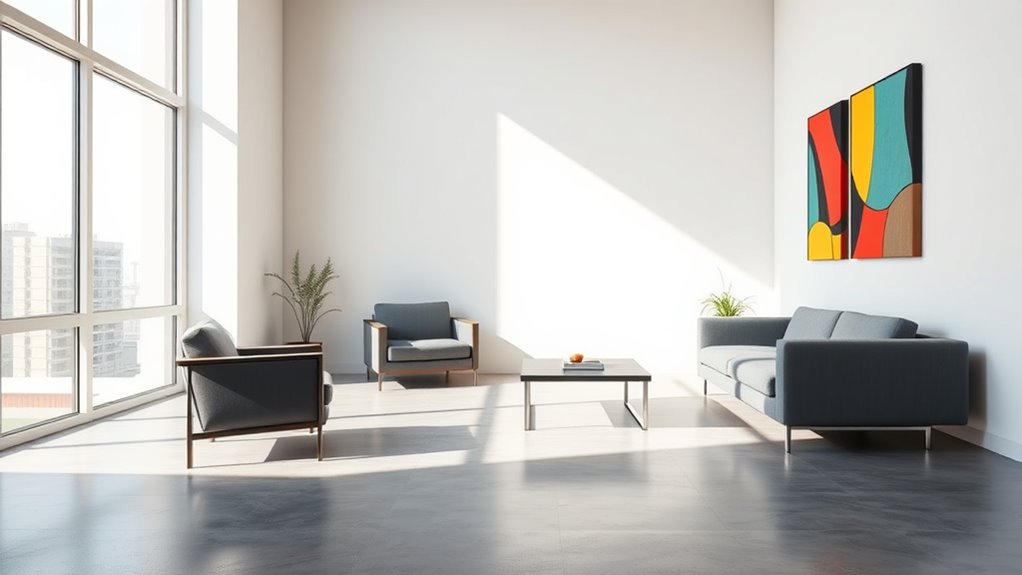

The Bauhaus movement leaves a lasting impact on modern design and architecture by blending beauty and utility seamlessly. It encourages you to contemplate functional aesthetics, where form and purpose work together. Its emphasis on interdisciplinary collaboration sparks innovative ideas that shape everything from furniture to buildings. By prioritizing experimentation and craftsmanship, Bauhaus has inspired sustainable, practical designs widely used today. If you explore further, you’ll discover how this influential movement continues to shape our everyday environment.
Key Takeaways
- Bauhaus principles have profoundly influenced modern design, emphasizing the seamless integration of form, function, and aesthetics.
- Its interdisciplinary approach fostered collaboration across arts, crafts, and industrial sectors, inspiring innovative practices.
- The movement’s focus on experimentation and new materials set standards for sustainable and cutting-edge design.
- Bauhaus education promoted hands-on learning, shaping future generations of designers and architects worldwide.
- Its legacy continues in contemporary architecture, furniture, and visual arts, emphasizing simplicity, utility, and aesthetic harmony.
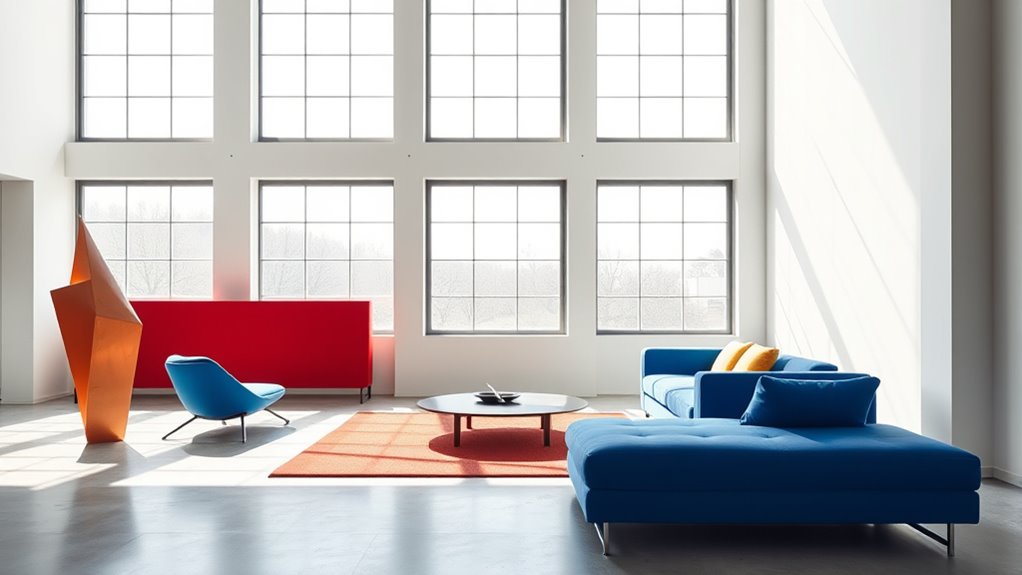
The Bauhaus movement has left an indelible mark on modern design and architecture, shaping the way we think about form, function, and aesthetics. Its influence is evident in countless aspects of contemporary life, from minimalist furniture to streamlined buildings. At its core, Bauhaus championed the idea that beauty and utility are not mutually exclusive. You might notice that many modern objects and structures prioritize functional aesthetics—where every element serves a purpose while maintaining visual appeal. This approach encourages you to view design as an integrated process, not just about decoration but about solving real-world problems with clarity and efficiency.
Bauhaus integrates beauty and utility, inspiring functional, visually appealing design that addresses real-world needs with clarity and purpose.
Bauhaus’s emphasis on interdisciplinary innovation is a key reason its legacy endures. It brought together artists, architects, engineers, and craftspersons, fostering a collaborative environment where ideas flowed freely across disciplines. This cross-pollination of skills and perspectives led to groundbreaking ideas that challenged traditional boundaries. As a result, you see a seamless blend of art and industry in products and architecture that feel both beautiful and practical. For example, modern furniture often combines sleek lines with durable materials, echoing Bauhaus principles of simplicity and functionality. This fusion makes everyday objects more accessible and user-friendly, transforming ordinary items into design statements.
Interdisciplinary innovation also means that Bauhaus thinkers prioritized experimentation. They believed that innovation happens when different fields intersect, and that experimentation should be a fundamental part of the creative process. When you look at a Bauhaus-inspired building or piece of furniture, you can recognize this spirit of exploration—new materials, new construction techniques, and new design philosophies all come together to create something uniquely functional yet aesthetically compelling. The movement’s focus on integrating craftsmanship with industrial techniques paved the way for mass production without sacrificing quality or style, making good design more accessible to the general public. Additionally, the movement’s use of new materials and techniques set a precedent for sustainable and innovative design practices today.
Furthermore, the Bauhaus’s influence extends into educational philosophies. Its emphasis on hands-on learning, collaboration, and breaking down barriers between disciplines encourages you to think beyond traditional silos. This approach has inspired countless design programs and initiatives that aim to foster innovative thinking. When you engage with design today, whether in architecture, product development, or digital media, you’re working within a framework that values interdisciplinary innovation and functional aesthetics—core principles that the Bauhaus pioneered nearly a century ago. Its legacy reminds you that good design balances purpose and beauty, driven by collaboration and a relentless pursuit of practical, innovative solutions.
Frequently Asked Questions
How Did Bauhaus Influence Modern Digital Design?
You see how Bauhaus influences modern digital design through digital minimalism and user interface. Its focus on simplicity and functionality shapes how you create clean, user-friendly interfaces. The emphasis on basic shapes, clear lines, and efficient layouts helps you design intuitive digital experiences. Bauhaus principles encourage you to prioritize usability and aesthetics, making your designs more accessible and visually appealing in today’s digital world.
What Are the Key Principles of Bauhaus Architecture?
Think of architecture as a symphony where every note counts. Bauhaus principles focus on functional simplicity, emphasizing clean lines and practical design. You’ll notice geometric forms at the core, creating harmony between form and function. The key principles include straightforward construction, minimal ornamentation, and an integration of art and technology. These elements come together to produce buildings that are not only aesthetically pleasing but also highly efficient and user-oriented.
Which Bauhaus Artists Had the Greatest Impact Post-1933?
You should know that famous Bauhaus artists like Wassily Kandinsky and László Moholy-Nagy had a significant post-1933 impact. After leaving Germany due to the rise of the Nazi regime, they spread Bauhaus ideas worldwide, influencing modern art and design. Their work inspired future generations, shaping areas like graphic design, architecture, and education. Their contributions helped guarantee Bauhaus principles continued to influence creative fields long after 1933.
How Is Bauhaus Taught in Contemporary Art Schools?
You learn that Bauhaus is taught in contemporary art schools through a focus on materials innovation and interdisciplinary collaboration. Students explore diverse mediums, combining art, design, and technology, just like the original movement emphasized. Courses encourage experimentation, blending craft with modern techniques. This approach helps you understand how Bauhaus principles foster creativity and problem-solving, preparing you for innovative practices across various artistic and design disciplines today.
What Are the Main Criticisms of the Bauhaus Movement?
You might see criticisms of the Bauhaus movement centered on elitist elitism, where some argue it favored a particular social class or aesthetic, limiting inclusivity. Others point to political controversy, as its ideals sometimes conflicted with political regimes or ideologies of the era. These issues fuel debates about whether Bauhaus’s focus on form and function overshadowed broader social concerns, casting a shadow over its innovative legacy.
Conclusion
You can’t deny the dynamic design and daring details the Bauhaus bred. Its bold blend of beauty and utility continues to shape modern spaces, inspiring innovation and imagination. By embracing its ethos, you open a universe of unique, unified aesthetics that stand the test of time. The Bauhaus’s legacy lives on, lighting the way for future creators. So, let its lasting influence linger, fueling your fascination with functional, fabulous design forever.