
TL;DR

Get art and craft supplies delivered free with Prime
- Fast, free delivery on millions of items
- Prime Video, Amazon Music and more included
- Member-only deals all year
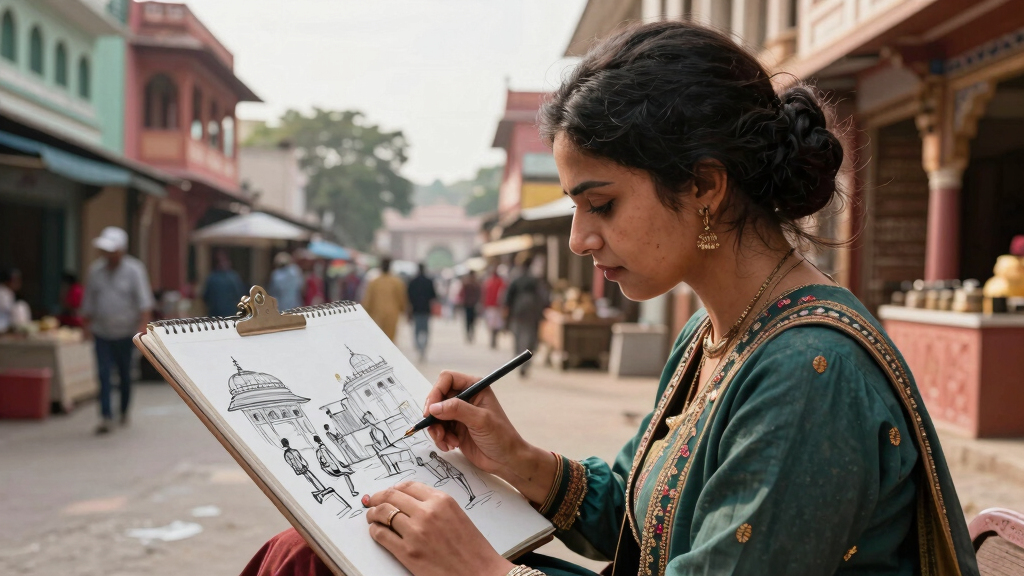
A collection of sketches by an Englishwoman from the early 19th century has been uncovered, depicting India before photography was common. The discovery provides rare visual insights into colonial-era India and the artist’s perspective.
Researchers have confirmed the existence of a collection of detailed sketches created by an Englishwoman in the early 19th century, depicting various scenes and landscapes in India before photography became widespread. This discovery offers rare visual documentation of colonial India from a female artist’s perspective, providing new insights into historical perceptions and representations of the region.
The sketches were uncovered in an archive in the United Kingdom and are believed to have been created between 1815 and 1830. The artist, whose identity is currently under investigation, traveled extensively across India, capturing cityscapes, rural scenes, and daily life in a style that predates the widespread use of photography in the region.
Experts say the sketches are notable for their detailed rendering and unique perspective, especially considering the limited tools available to artists at the time. The collection includes over 50 works, some of which depict significant sites such as the Taj Mahal, the streets of Delhi, and rural villages in Bengal. The sketches are believed to have been made during the artist’s personal travels, possibly as a form of record-keeping or artistic exploration.
Historians and art scholars are now examining the sketches to better understand how colonial-era Europeans perceived India and how women artists contributed to visual documentation during this period. The collection is considered an important addition to the relatively sparse visual records from this era, which are often dominated by male artists and photographers.
Implications for Understanding Colonial Visual Records
This discovery is significant because it offers a rare female perspective on India during the early 19th century, a time when most visual records were created by male artists or photographers. The sketches provide insights into how a female artist viewed and interpreted Indian landscapes and society, challenging existing narratives dominated by male colonial perspectives. Additionally, the collection enriches our understanding of pre-photography visual documentation, filling a gap in colonial history and art history.
For historians, the sketches could shed light on the everyday life, architecture, and landscapes of India before the advent of photography, which became a dominant medium for documenting the region later in the 19th century. This can influence how we interpret colonial perceptions and the role of women in artistic and exploratory endeavors during that period.
art supplies for sketching landscapes
As an affiliate, we earn on qualifying purchases.
As an affiliate, we earn on qualifying purchases.
Early 19th-Century European Artistic Engagement with India
During the early 1800s, India was a focal point of British colonial expansion, and many European artists traveled to the region to document its landscapes and cultures. While photography began to emerge in the 1830s and 1840s, most visual records from this period are paintings and sketches by male artists, with few known works by women. The role of women artists in colonial documentation has historically been underrepresented, making this new collection particularly noteworthy.
Previous known sketches and paintings from this era often reflected colonial and orientalist perspectives, primarily created by male artists like William Hodges or Thomas Daniell. Female artists’ contributions have been less documented, partly due to societal constraints of the time. This collection challenges some assumptions by providing a female perspective, potentially offering a different view of Indian life and scenery.
The sketches also align with a broader scholarly interest in uncovering overlooked or marginalized voices in colonial history and art, emphasizing the importance of diverse perspectives in understanding historical narratives.
“These sketches are a remarkable find, offering a rare glimpse into how a female artist perceived and recorded India before photography took hold. They challenge existing narratives dominated by male perspectives.”
— Dr. Emily Carter, Art Historian
As an affiliate, we earn on qualifying purchases.
Identity and Purpose of the Artist Remain Unclear
Details about the artist’s identity are still under investigation, and it is not yet confirmed why she created these sketches or whether she intended them for personal use or publication. The exact location and circumstances of her travels are also not fully established, and further research is ongoing to verify these details.
As an affiliate, we earn on qualifying purchases.
Further Analysis and Authentication of the Sketches
Researchers plan to conduct a detailed art historical analysis to verify the sketches’ origins and contextualize them within early 19th-century colonial India. Efforts are also underway to trace the artist’s identity through archival records, which could reveal more about her background and motivations. The collection will be exhibited in a forthcoming museum display and published in a scholarly journal.
As an affiliate, we earn on qualifying purchases.
Key Questions
How were these sketches discovered?
The sketches were found in an archive in the UK, among a collection of colonial-era documents and artworks, during a routine cataloging process by researchers specializing in colonial history.
What makes these sketches different from other colonial artworks?
Unlike many colonial artworks created by male artists, these sketches are believed to be by a woman, offering a potentially different perspective on Indian life and landscapes during that period.
Are there plans to identify the artist?
Yes, researchers are actively investigating archival records, personal letters, and other documents that might reveal her identity. This process is ongoing.
Will the sketches be publicly displayed?
Yes, a planned exhibition at a major museum is expected to showcase the sketches, along with scholarly commentary on their significance.
Source: hn
Fall Picks
fall essentials
As an affiliate, we earn on qualifying purchases.