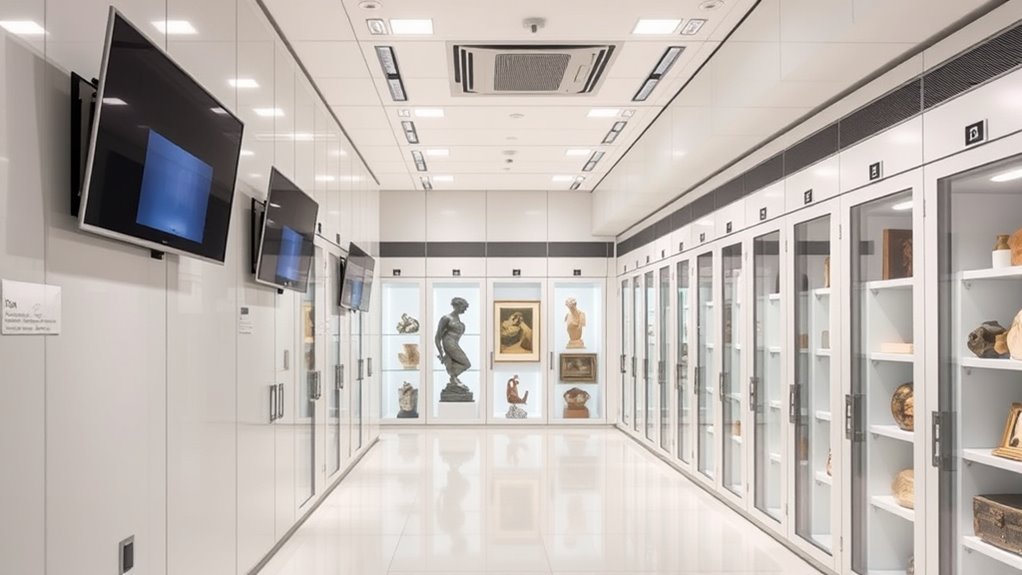

To guarantee your artworks are well preserved, focus on maintaining a stable climate with controlled temperature and humidity, using climate-controlled storage units. Secure your collection with surveillance, restricted access, and reliable security measures. Make certain storage spaces are organized and accessible, but still protect items from damage with proper handling and acid-free materials. Balancing climate, security, and accessibility safeguards your collection’s longevity—stay with us to learn how to optimize these vital elements further.
Key Takeaways
- Maintain stable temperature and humidity levels with climate-controlled units to prevent artwork deterioration.
- Implement security measures such as surveillance, restricted access, and secure entry points to protect artworks from theft and vandalism.
- Design storage layouts with organized shelving, clear labeling, and accessible pathways for efficient retrieval and handling.
- Use acid-free materials and specialized supports to safeguard delicate artifacts during storage and handling.
- Ensure proper lighting with UV filters and low-intensity illumination to prevent pigment fading and surface damage.
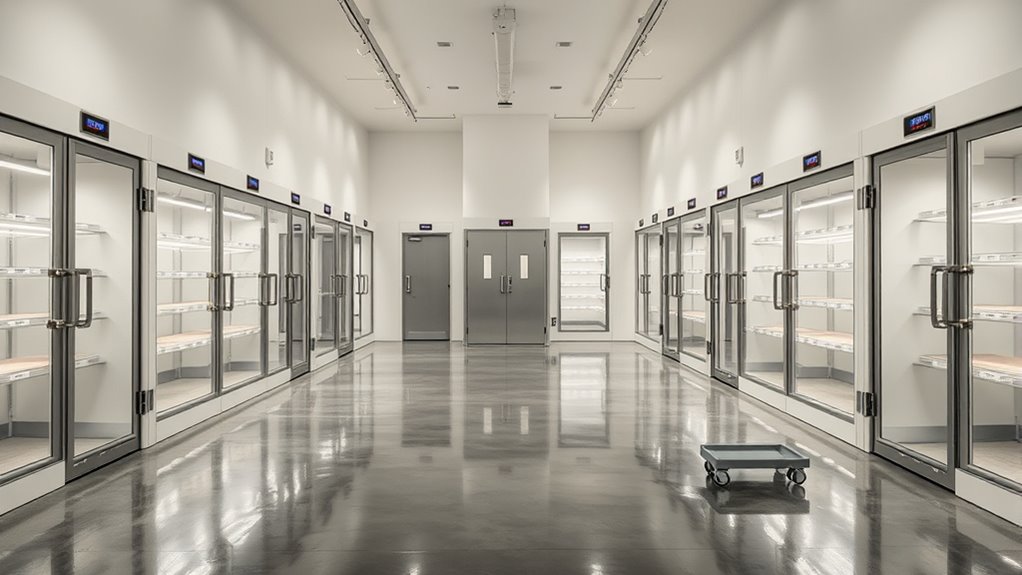
Art storage is a essential aspect of protecting your valuable pieces from damage, theft, and deterioration. When it comes to artifact preservation, the way you store your collection plays a critical role in maintaining its integrity over time. Proper storage isn’t just about placing artworks in a safe space; it involves careful planning of storage facility design to guarantee ideal conditions. A well-designed storage environment minimizes exposure to harmful elements like light, humidity, and temperature fluctuations, which can accelerate deterioration. You want your storage space to promote artifact preservation by creating an environment that closely mimics the conditions in which the pieces were originally created or are best preserved.
Proper art storage minimizes damage by replicating original conditions and controlling environmental factors.
The design of your storage facility directly impacts the security and longevity of your collection. You should consider using climate-controlled units that regulate temperature and humidity consistently. Fluctuations in these factors can cause warping, cracking, or mold growth, so investing in systems that maintain stable conditions is essential. Proper artifact preservation also depends on avoiding exposure to direct sunlight or harsh lighting, which can fade pigments and weaken materials. Installing UV filters on lighting fixtures and using low-intensity, indirect lighting options can help protect delicate surfaces.
Accessibility is another key element in effective art storage. You need a layout that allows easy access to your pieces while maintaining security protocols. Organized shelving, labeled storage bins, and a logical arrangement ensure you can locate and retrieve artworks efficiently without risking accidental damage. Security measures such as surveillance cameras, restricted access, and secure entry points are critical to prevent theft or vandalism, especially if your collection includes high-value items. Balancing accessibility with security involves thoughtful storage facility design—making sure you can reach your collection when needed without compromising its safety.
In addition to climate control and security, you should also prioritize proper handling and storage techniques. Using acid-free materials for wrapping and padding helps prevent chemical reactions that could harm your artwork. When designing your storage space, incorporate specialized supports and mounts tailored to different types of artifacts, whether paintings, sculptures, or textiles. This tailored approach ensures each piece is supported appropriately, reducing stress on fragile parts and preventing accidental damage.
Ultimately, investing in thoughtful storage facility design, focusing on artifact preservation, climate control, security, and accessibility, safeguards your collection’s value and longevity. It allows you to manage your artwork efficiently and confidently, knowing you’ve created an environment optimized for long-term preservation. Proper art storage isn’t just a practical necessity—it’s a commitment to protecting your collection for future generations to appreciate.
Frequently Asked Questions
How Do I Insure My Art Collection During Storage?
You should insure your art collection by obtaining specialized insurance policies designed for artwork, ensuring full coverage during storage. Start with professional appraisal procedures to determine accurate values, which helps set appropriate coverage limits. Then, review policies thoroughly to confirm they cover theft, damage, and loss. Regularly update appraisals and inform your insurer of any changes to keep your coverage current, giving you peace of mind knowing your collection is protected.
What Are the Best Practices for Handling Delicate Artworks?
When handling fragile materials, always wear gloves to prevent oils and dirt from damaging the artwork. Use gentle, supported handling techniques, avoiding unnecessary movement. Employ proper display techniques, such as using padded mounts or cradles, to minimize stress on delicate pieces. Keep your movements slow and deliberate, and make sure you have a clean, stable workspace. These practices protect your art and keep it in pristine condition during handling.
How Often Should Stored Art Be Inspected for Damage?
You should inspect stored art at least twice a year to guarantee early damage detection. Regular inspection frequency helps with damage prevention by catching issues like mold, pests, or deterioration before they worsen. When you check, look for changes in color, texture, or stability. Consistent inspections allow you to address problems promptly, preserving the artwork’s condition and preventing costly repairs or irreversible damage over time.
Can I Access My Artwork Outside of Regular Hours?
Think of your storage like a secret lair—access restrictions are in place for your protection. You can usually request after-hours access, but it depends on the facility’s policies. Contact them in advance to arrange this, as they often require approval. Keep in mind, unauthorized after-hours access could jeopardize your artwork’s security and condition, so always follow the proper procedures to enjoy flexible access while safeguarding your treasures.
What Are the Environmental Risks to Stored Art?
Environmental risks to stored art include fluctuations in humidity and temperature, which can cause warping or cracking. You need to maintain consistent humidity control to prevent damage. Pest prevention is also vital, as insects can harm your artwork. Regular monitoring and proper storage conditions help protect your pieces from these risks. By staying vigilant about environmental factors, you guarantee your art stays safe and preserved over time.
Conclusion
When you prioritize climate control and security, your art gains protection and peace of mind. Yet, accessibility guarantees you can enjoy or share your pieces whenever you wish. Balancing these elements might seem challenging, but it creates harmony—safeguarding your treasures while keeping them within reach. In art storage, security and accessibility aren’t opposing forces; they’re partners working together to preserve beauty and inspire connection. Ultimately, smart storage lets your art breathe, endure, and be enjoyed.