

To sell art online effectively, set fair yet competitive prices by researching similar artists and considering your experience. Build trust with transparent pricing and engaging content on social media platforms like Instagram or TikTok. Use compelling visuals, storytelling, and testimonials to connect with your audience. Use targeted ads and promotions to boost visibility. Consistently engaging with your followers and refining your approach will help you grow. Keep exploring these strategies to open your full online selling potential.
Key Takeaways
- Price your artwork competitively by researching similar artists and considering complexity, experience, and time invested.
- Build trust through transparent, consistent pricing and strategic discounts to encourage purchases without devaluing your work.
- Leverage social media platforms like Instagram, Facebook, and TikTok to showcase high-quality images and engage your audience.
- Develop a regular content schedule with storytelling, behind-the-scenes insights, and customer testimonials to foster connection and credibility.
- Use targeted advertising and promotional offers such as free shipping or bundle discounts to attract and convert potential buyers.
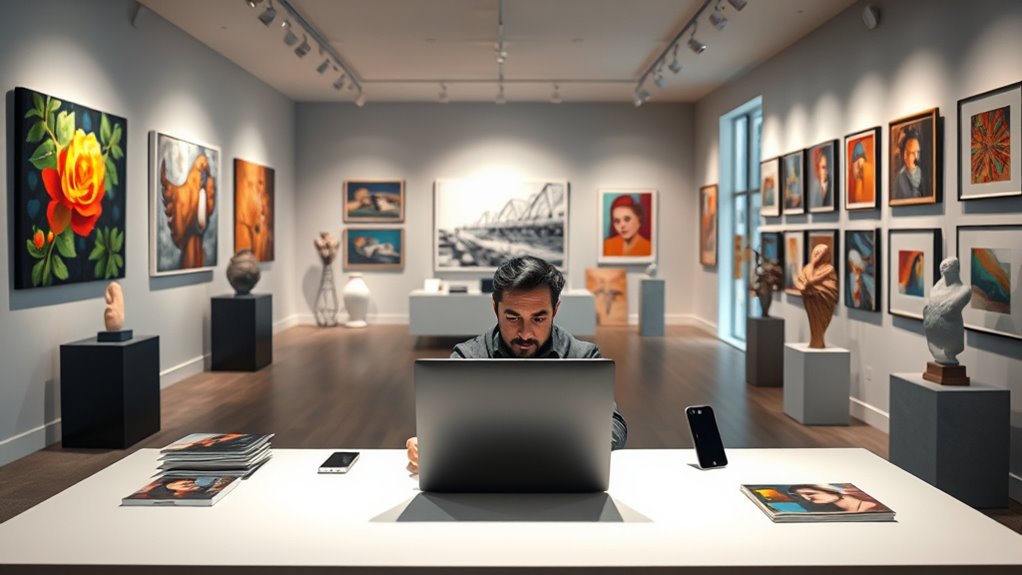
Are you wondering how to effectively sell your art online? The key to success starts with understanding your pricing strategies and leveraging social media marketing. Setting the right price can be tricky, but it’s essential to balance between valuing your work and attracting buyers. Research similar artists and their pricing to get a sense of what’s competitive yet fair. Consider your experience, the complexity of your pieces, and the time invested. Don’t undervalue your art, but also avoid overpricing, which can scare potential buyers away. Offering limited editions or special discounts can help create urgency and boost sales without devaluing your work. Keep in mind that transparent and consistent pricing builds trust with your audience. Additionally, understanding how arcade machines work can inspire innovative ways to showcase interactive or engaging digital art online.
Effective online art sales rely on fair pricing, strategic social media, and building trust with your audience.
Social media marketing plays a indispensable role in reaching a broader audience and showcasing your art effectively. Platforms like Instagram, Facebook, and TikTok are powerful tools for visual artists. Regularly post high-quality images of your work, behind-the-scenes glimpses, and stories that tell the story behind each piece. Use relevant hashtags to increase visibility and engage with your followers by responding to comments and messages. Building a community around your art encourages loyalty, which can translate into sales. Collaborate with influencers or other artists in your niche to expand your reach. Remember to include links to your online shop or portfolio in your profiles, making it easy for interested viewers to purchase your art.
Essential in social media marketing. Develop a posting schedule and stick to it, so your audience knows when to expect new content. Use engaging captions that tell a story or evoke emotion, making viewers more likely to connect with your work. Share testimonials and customer stories to boost credibility. Additionally, leverage social media advertising to target specific audiences interested in your style or genre. Paid ads can increase exposure rapidly, especially when combined with compelling visuals and clear calls to action.
Combining smart pricing strategies with strategic social media marketing creates a powerful foundation for your online art business. Be adaptable—monitor what works and refine your approach over time. Offer incentives like free shipping or bundle discounts to encourage purchases. Remember, your online presence is often the first impression potential buyers have of your art, so invest effort into making it polished, authentic, and engaging. By balancing thoughtful pricing with consistent, targeted marketing efforts, you’ll increase your chances of turning online browsers into loyal customers.
Frequently Asked Questions
How Do I Protect My Digital Art From Unauthorized Use?
To protect your digital art from unauthorized use, start by adding digital watermarking to your images, making it clear who owns the work. Also, consider registering your copyright to establish legal ownership and strengthen your case if infringement occurs. These steps deter theft, help you enforce your rights, and provide proof of authorship. Regularly monitor online platforms to spot unauthorized use and take prompt action if needed.
What Are the Best Platforms for Selling Art Globally?
You should explore popular online marketplaces like Etsy, Saatchi Art, and Artfinder for selling your art globally. These platforms reach a wide audience and handle transactions securely. Combine this with social media promotion on Instagram, Facebook, and Pinterest to boost visibility. Engaging potential buyers directly helps build your brand and drive sales. Always optimize your profiles and showcase your best work to attract more international customers effectively.
How Can I Effectively Price My Artwork Online?
To effectively price your artwork online, use solid pricing strategies that reflect its true value. Start by evaluating your artwork’s quality, uniqueness, and your skill level to determine a fair value. Research similar pieces and consider factors like size, materials, and your reputation. Avoid undervaluing your work, but stay competitive. Regularly review and adjust prices based on demand, feedback, and your growth, ensuring your pricing accurately represents your art’s worth.
What Legal Considerations Should I Be Aware Of?
Think of your art as a treasure chest; safeguarding it means understanding copyright laws and licensing agreements. You should register your work to protect your rights and clarify usage terms. Always read licensing agreements carefully before granting permissions, ensuring your rights aren’t unknowingly surrendered. By staying informed on legal considerations, you keep your creative treasures secure, allowing your passion to flourish without fear of infringement or loss.
How Do I Handle Customer Disputes and Refunds?
When handling customer disputes and refunds, prioritize clear customer communication to understand their concerns fully. Respond promptly and professionally, showing empathy and willingness to resolve issues. Use dispute resolution techniques like offering refunds or exchanges when appropriate, and document all interactions. This approach helps build trust, minimizes negative reviews, and guarantees a positive experience, encouraging repeat business and safeguarding your reputation in the online art marketplace.
Conclusion
Ultimately, selling art online isn’t just about showcasing your work; it’s about connecting with your audience. While your website offers a professional space to display your art, social media allows you to build genuine relationships. Like a gallery and a street corner, they serve different purposes—one polished, one personal. Embrace both, and watch how your art reaches not just eyes, but hearts. Success comes from balancing presentation with connection.