
NFTs play a vital role in today’s art business by giving you a way to prove ownership, authenticity, and provenance of digital pieces. They enable you to showcase and sell your art directly to a global audience, bypassing traditional gatekeepers. You gain control over pricing, promotion, and your career. Plus, NFTs foster digital scarcity and legacy, making your work more valuable. If you keep exploring, you’ll discover even more ways NFTs are shaping the future of art.
Key Takeaways
- NFTs establish secure proof of ownership and provenance, enhancing authenticity and preventing forgery in digital art transactions.
- They enable artists to promote their work directly to a global audience, bypassing traditional gatekeepers.
- NFTs give artists control over pricing, release schedules, and marketing strategies, increasing monetization opportunities.
- Blockchain transparency ensures scarcity and authenticity, boosting the value and digital legacy of artworks.
- They facilitate new digital formats and interactive experiences, shaping the future of art ownership and promotion in the digital age.

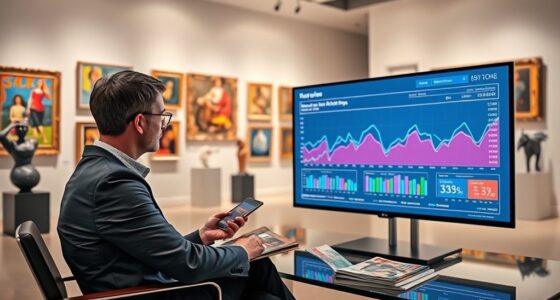
NFTs are transforming the art business by providing artists and collectors with new ways to buy, sell, and own digital artwork. This shift opens up a world where digital ownership becomes more tangible and verifiable, giving artists a tool to establish authenticity and provenance for their work. When you create or purchase an NFT, you’re not just trading a digital file; you’re securing proof that you own a unique, traceable piece of art. This clarity around ownership helps prevent forgery and unauthorized copying, making digital art more valuable and trustworthy. As an artist, you can harness this technology to showcase your work directly to a global audience, bypassing traditional gatekeepers like galleries and auction houses. You can promote your art more effectively by leveraging NFTs to build a dedicated following, offering exclusive content or limited editions that deepen your connection with collectors. This form of artist promotion allows you to stand out in a crowded marketplace, connecting with fans and buyers in ways that weren’t possible before. You’re empowered to set your own terms, pricing, and release schedules, giving you greater control over your career. Additionally, NFTs can serve as a marketing tool, creating buzz around your work and encouraging social sharing, which amplifies your visibility. The digital nature of NFTs means that your art can reach a worldwide audience instantly, increasing your exposure and potential sales. The transparency embedded in blockchain technology also assures collectors of the authenticity and scarcity of your artwork, boosting its desirability. For you, this means more opportunities to monetize your creativity and build a sustainable career. Furthermore, the concept of digital ownership is evolving, making it easier for you to establish a lasting digital legacy. You can embed your personal branding into the NFT, ensuring your art remains associated with your identity long-term. This new landscape encourages innovation, pushing you to experiment with digital formats and interactive experiences that can’t be replicated in traditional art spaces. Overall, NFTs give you the power to connect more directly with your audience, promote your work more effectively, and secure your rights as an artist in the digital age. By embracing this technology, you’re not just adapting to a changing market—you’re actively shaping the future of art ownership and promotion. The potential to reach a global market, showcase your unique voice, and maintain control over your creations makes NFTs a transformative force in the art business today. Understanding the ownership verification process through blockchain enhances your confidence in the authenticity and value of your digital art.

The NFT Art Marketplace: Trends and Considerations
As an affiliate, we earn on qualifying purchases.
As an affiliate, we earn on qualifying purchases.
Frequently Asked Questions
How Do NFTS Impact Traditional Art Valuation Methods?
NFTs impact traditional art valuation methods by introducing digital valuation, which considers the market influence of digital assets. You might notice that NFT sales often set new benchmarks, shifting how buyers and collectors perceive worth. This digital valuation can sometimes inflate or deflate art prices, making market influence more dynamic and less predictable. As a result, traditional valuation methods must adapt to incorporate these digital and market-driven factors.
What Legal Issues Surround NFT Ownership and Copyright?
When you own an NFT, legal issues around digital rights and intellectual property come into play. You might not automatically hold copyright or get full control over the artwork, since ownership of the NFT doesn’t necessarily transfer those rights. Be cautious, as unauthorized use or reproduction could lead to legal disputes. Always review the smart contract and licensing terms to understand what rights you’re actually acquiring with your digital asset.
Can NFTS Help Emerging Artists Gain Recognition Globally?
Yes, NFTs can help you gain global recognition by boosting your digital exposure and empowering you as an artist. Imagine your work showcased on international platforms, reaching collectors and fans worldwide in seconds. This technology democratizes access, breaking down traditional gatekeepers. With NFTs, you become part of a thriving digital art community, increasing your visibility and opening doors to new opportunities you might not have accessed otherwise.
How Do Environmental Concerns Affect NFT Art Markets?
Environmental concerns considerably impact the NFT art market by raising awareness of its environmental footprint. You might find that sustainability concerns prompt artists and collectors to seek eco-friendly options, such as blockchain platforms with lower environmental impact. As a result, the market shifts toward more sustainable practices, encouraging innovation in reducing environmental impact and influencing how NFTs are created, sold, and valued within the art community.
What Are the Future Trends for NFTS in the Art Industry?
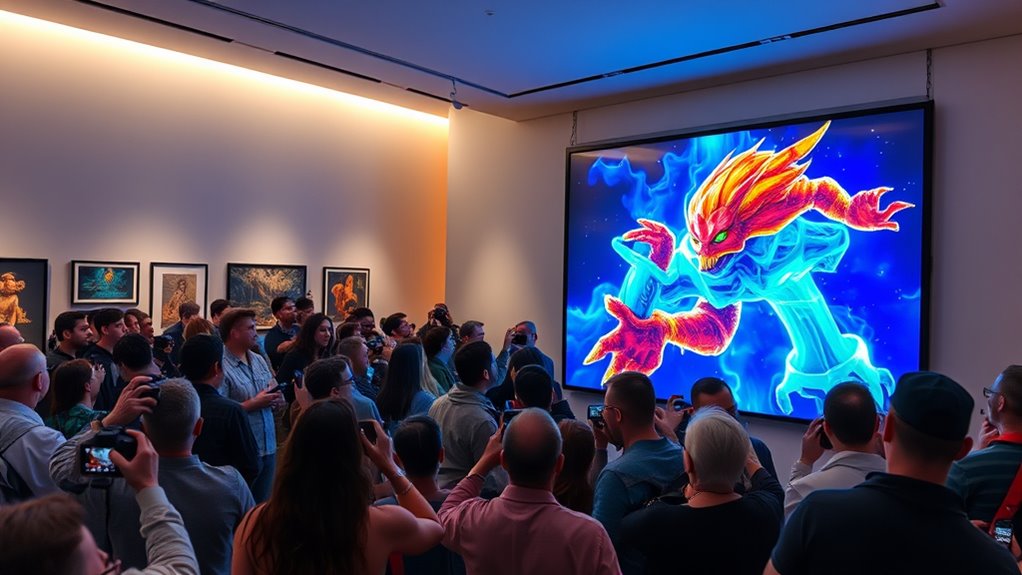
Like Da Vinci’s sketches, NFTs will evolve into more sophisticated forms of digital authentication, making art ownership clearer and more secure. You’ll see virtual galleries becoming immersive, interactive spaces where collectors can explore and buy art seamlessly. As technology advances, expect NFTs to integrate with augmented reality and blockchain innovations, transforming how you experience and invest in art, making the future of the industry more dynamic and accessible.
NFT art authentication tools
As an affiliate, we earn on qualifying purchases.
As an affiliate, we earn on qualifying purchases.
Conclusion
You now see how NFTs can revolutionize your art business, turning your creations into unstoppable digital giants that reach global audiences instantly. Embracing NFTs isn’t just a step forward—it’s like releasing a tidal wave of opportunity that can propel your art career to heights you once only dreamed of. Don’t hold back—dive into this digital revolution and watch your art soar beyond the clouds, making history with every sale you make.

Canvia Smart Digital Canvas Display and Frame – for Fine Painting, Wall Art, NFTs, Personal Photos & Videos – Advanced HD Display, NFT Compatibility, Video Playback, Google Photos, 16GB Storage
Realistic Art For Your Wall – Utilizing our patented ArtSense technology, the Canvia smart digital art frame displays…
As an affiliate, we earn on qualifying purchases.
As an affiliate, we earn on qualifying purchases.

TANGEM Wallet Pack of 2 – Secure Crypto Wallet – Trusted Cold Storage for Bitcoin, Ethereum, NFT's & More Coins – 100% Offline Hardware Wallet
THE HIGHEST LEVEL OF SECURITY: Tangem Wallet generates the private key that never leaves the card. Your crypto…
As an affiliate, we earn on qualifying purchases.
As an affiliate, we earn on qualifying purchases.