
To prevent chaos like ‘Final_FINAL_2,’ establish a clear, standardized file naming system that uses descriptive terms, dates in YYYY-MM-DD format, and consistent version indicators like v1, v2, or final. Keep filenames concise yet informative, and avoid multiple final labels. Automate naming with templates and tools to guarantee compliance. Regularly review and update your standards, and stay organized with logical folder structures. Continue exploring this approach to master effective file management strategies.

Get art and craft supplies delivered free — and shop member deals
- Fast, free delivery on millions of items
- Access to Prime Big Deal Days deals on October 6–7
- Prime Video, Amazon Music and more included
Key Takeaways
- Implement clear, standardized naming conventions that minimize excessive version indicators and avoid multiple “final” labels.
- Use descriptive, concise filenames with integrated date formats and versioning for quick identification and sorting.
- Automate naming and renaming processes to enforce consistency and prevent duplicate or ambiguous filenames.
- Regularly review and update naming protocols to maintain clarity and adapt to project changes.
- Utilize metadata tagging and folder hierarchy to provide context without relying solely on filename versions.
file naming convention templates
As an affiliate, we earn on qualifying purchases.
As an affiliate, we earn on qualifying purchases.
Understanding How Inconsistent File Naming Causes Digital Chaos
Have you ever struggled to find a specific file because of inconsistent naming? This is a common challenge that disrupts digital organization and wastes your time. When file names vary wildly—using different formats, abbreviations, or unclear labels—it becomes difficult to locate what you need quickly. Inconsistent naming breaks the flow of your digital system, leading to chaos and frustration. Without a strategy for naming consistency, files pile up with confusing titles like “Report_Final” or “Final_Draft_v2,” making it harder to identify versions or contents. This chaos hampers productivity, slows down workflows, and increases the risk of errors. To keep your digital environment streamlined, understanding how inconsistent file naming causes disorder is essential. It’s the first step toward establishing a more efficient, organized system. Additionally, utilizing color accuracy in your file organization can help ensure that your digital assets are easily identifiable and visually appealing. Implementing a system inspired by backyard transformation essentials can also create a more structured approach to managing your files effectively. Furthermore, practicing digital literacy can empower you to develop strategies that improve your file management skills. Regularly reviewing your ultimate hamster care guide can also serve as a reminder to maintain clarity in your naming conventions, just as it does for caring for your pet.
As an affiliate, we earn on qualifying purchases.
Decide on a Clear and Simple File Naming Structure
Creating a clear and simple file naming structure is the foundation of an organized digital system. You need consistent naming patterns that everyone follows, making files easy to locate and identify. Establish a logical folder hierarchy to keep related files grouped and accessible. This helps prevent confusion and duplicate files. Consider these key points:
- Use descriptive and concise naming patterns that reflect the file’s content.
- Keep folder hierarchy straightforward, with main categories and subfolders.
- Avoid unnecessary abbreviations or codes that can cause confusion.
- Standardize naming conventions across your team for consistency.
As an affiliate, we earn on qualifying purchases.
Incorporate Dates, Versions, and Descriptions Effectively
Using consistent date formats helps you sort files chronologically without confusion. Clear version indicators prevent mix-ups between drafts and final copies, saving time. Descriptive naming conventions make it easy to identify a file’s content at a glance, streamlining your workflow. Incorporating techniques from 16PF personality traits can enhance team collaboration by ensuring everyone understands individual strengths and weaknesses.
Consistent Date Formats
Adopting a consistent date format in your file naming system helps you quickly identify and organize files without confusion. It enhances your digital taxonomy by creating a clear naming hierarchy, which makes locating and sorting documents effortless. Choose a format like YYYY-MM-DD for clarity and logical order, avoiding ambiguous formats like MM-DD-YY. This uniformity guarantees files are sorted chronologically, reducing errors and saving time.
- Use a standardized date format across all files
- Incorporate dates early in the filename for quick scanning
- Avoid mixing formats; stick to ISO standards for universality
- Combine dates with descriptive keywords for better context
Clear Version Indicators
Incorporating clear version indicators into your file names guarantees you can quickly identify the most recent or relevant document at a glance. Effective digital organization relies on naming best practices that include consistent version tags, such as “v1,” “v2,” or “final,” to track updates easily. Adding dates, like “2023-10-01,” alongside version numbers helps you sort files chronologically and avoid confusion. Including brief descriptions, such as “budget_review,” provides quick context without opening the file. Keep your naming consistent—place version details and dates at the end or beginning of filenames—and avoid abbreviations that aren’t obvious. Clear version indicators streamline your workflow, reduce errors, and guarantee everyone accesses the latest document, maintaining an efficient digital filing system.
Descriptive Naming Conventions
Clear version indicators help you quickly identify the most recent updates, but to maximize efficiency, your file names should also include descriptive elements like dates, versions, and brief summaries. This practice enhances metadata tagging and improves folder hierarchy organization. By adding specific details, you can easily locate files and understand their content at a glance.
Consider these tips:
- Include the date in YYYY-MM-DD format for chronological sorting
- Use version numbers to track revisions clearly
- Add a brief description to clarify the file’s purpose
- Maintain consistent naming patterns to streamline folder hierarchy and metadata tagging
These conventions guarantee your files are easy to find, understand, and manage, reducing confusion and preventing chaos in your naming system.
folder hierarchy organization system
As an affiliate, we earn on qualifying purchases.
As an affiliate, we earn on qualifying purchases.
Automate File Naming With Tools and Templates
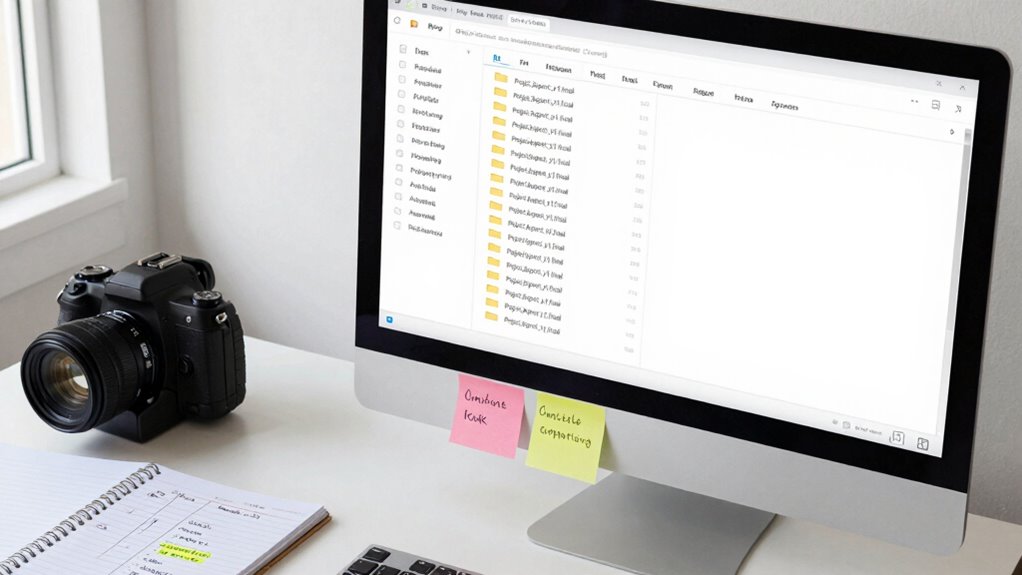
Automating file naming processes can save you time and reduce errors, especially when dealing with large volumes of files. Using tools that support automated naming allows you to set consistent naming patterns without manual effort. Many software programs offer template customization, enabling you to create predefined naming structures tailored to your needs. With automated naming, you can incorporate variables like dates, version numbers, or project codes automatically, ensuring consistency across all files. These tools often let you save templates for future use, streamlining your workflow. By setting up effective templates, you minimize the risk of naming errors and confusion, keeping your file system organized and predictable. Automation makes maintaining a clear, logical naming system easier and more efficient. Additionally, many of these tools can integrate with smart kitchen tools, enhancing your overall productivity. Moreover, understanding the impact of AI on automation can further enhance your file management strategies. As you refine your processes, consider the importance of 2025 tax law changes that may influence how you categorize financial documents. Transparency about affiliate relationships is also crucial when utilizing software that provides automated solutions.
Avoid Common Mistakes That Lead to ‘Final_FINAL_2’ Confusion
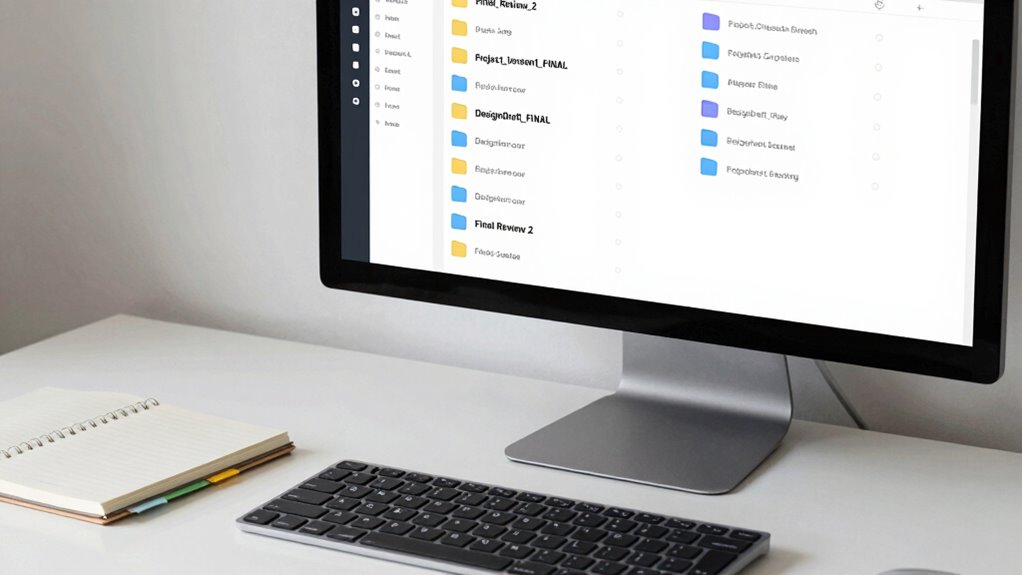
If you don’t use consistent naming conventions, files quickly become confusing, especially when versions pile up. Overusing version numbers or adding multiple “final” labels only worsens the mess. Without a standardized protocol, it’s easy to lose track of the most recent or correct file.
Inconsistent Naming Conventions
Have you ever looked at a folder filled with files named “Final_FINAL_2” or “Draft_v3” and felt confused about which version is the most recent? Inconsistent naming conventions create digital clutter and make it harder to find the latest files. When naming files differently, you risk losing track of versions or overwriting important work. To prevent this, standardize your naming approach.
- Use clear, descriptive terms consistently
- Avoid mixing date formats (e.g., MM-DD-YYYY vs. DD-MM-YYYY)
- Stick to a set pattern for versions (e.g., v1, v2)
- Keep file names concise and relevant
Overusing Version Numbers
Ever find yourself puzzled by multiple versions labeled “Final_FINAL_2” or “v3” on the same project? Overusing version numbers can clutter your folder hierarchy and make it hard to track progress. Instead, stick to clear naming patterns that indicate progress without excessive numbering. For example, use “Draft,” “Review,” and “Approved” stages. Avoid adding unnecessary version numbers once a file reaches its final stage, as it creates confusion. To visualize, consider this table:
| Stage | Naming Pattern | Folder Hierarchy |
|---|---|---|
| Draft | filename_draft | /Project/Designs/Draft/ |
| Under Review | filename_review | /Project/Designs/Review/ |
| Final | filename_final | /Project/Designs/Final/ |
| Approved | filename_approved | /Project/Designs/Approved/ |
| Archived | filename_archived | /Project/Archives/ |
Additionally, creating a clear naming pattern can help streamline your workflow and enhance overall efficiency. Keep it simple, and avoid overusing version numbers. Moreover, using risk management strategies can also help you maintain organization and clarity in your files, ensuring that important documents are easily accessible and identifiable.
Lack of Standardized Protocols
Do you often find yourself confused by inconsistent file naming conventions across different projects? Without standardized protocols, chaos can quickly ensue, making it tough to locate files or track versions. Lack of clear guidelines on metadata management leads to missing or inconsistent information, complicating searches. Poor access control allows unauthorized changes, increasing errors like multiple “Final” versions. To avoid this, establish clear rules for naming, metadata, and permissions.
- Define consistent naming conventions across teams
- Implement metadata standards for easy sorting and filtering
- Enforce access control to prevent unauthorized edits
- Regularly review protocols to adapt to project needs
- Consistent naming conventions can significantly reduce confusion and improve collaboration.
How to Maintain and Enforce Consistent File Naming

Maintaining and enforcing a consistent file naming system requires clear guidelines and ongoing oversight. Start by establishing metadata standards that specify naming conventions, such as date formats, project codes, or version numbers. These standards guarantee consistency and make files easier to find. Implement access control to restrict editing permissions, so only authorized team members can modify naming conventions or update files. Regularly review and audit file names to identify inconsistencies or deviations from standards. Communicate updates clearly to everyone involved and provide training if needed. Use automated tools or scripts to enforce naming rules and flag irregularities. Consistent enforcement helps prevent chaos, reduces confusion, and maintains an organized, reliable file system over time.
Troubleshoot and Fix Common File Naming Problems
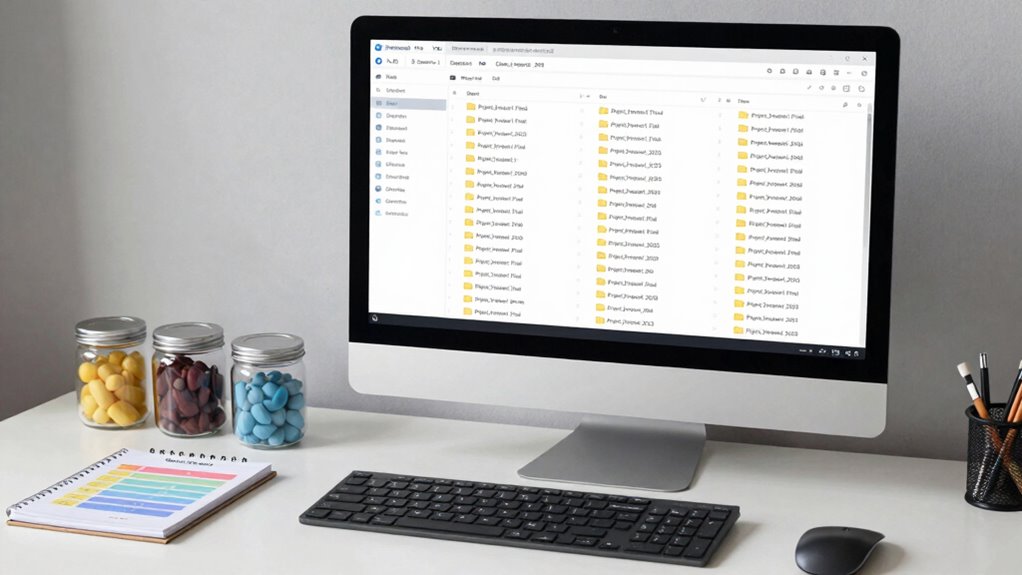
Have you noticed files with inconsistent or confusing names causing delays or errors? Troubleshooting these issues involves examining your naming hierarchy and how metadata tagging is used. Common problems include duplicate names, inconsistent formats, or missing version info. To fix these, start by standardizing naming conventions across projects. Use metadata tagging effectively to add context without cluttering filenames. Additionally, consider how flywheel upgrades can enhance overall efficiency in managing your files. Check for duplicate filenames and resolve conflicts. Review your naming hierarchy to ensure it reflects the file’s purpose and version. Also, automate renaming with tools that enforce your conventions. Keeping your files organized and consistent minimizes confusion and streamlines workflows. Regularly audit your naming system to catch problems early and ensure everyone follows the same rules. Understanding fandom’s past can also help in creating a relatable naming system that resonates with your team.
Frequently Asked Questions
How Do I Handle Multiple Team Members Editing the Same File?
When multiple team members edit the same file, use version control to track changes and avoid confusion. Encourage collaborative editing through real-time platforms like Google Docs or shared repositories with clear naming conventions. Regularly communicate updates, and designate a single person to oversee final versions. This approach keeps everyone on the same page, prevents duplicate efforts, and maintains organized, easily retrievable files throughout your project.
Can Cloud Storage Services Improve File Naming Consistency?
Yes, cloud storage services can improve file naming consistency by implementing version control and adhering to metadata standards. They automatically track changes, reducing duplicate or confusing filenames. You can set clear naming conventions and use built-in tools to manage versions, ensuring everyone follows the same standards. This minimizes chaos and keeps your files organized, making collaboration smoother and more efficient without the risk of overwriting or losing important data.
What Are the Best Practices for Naming Large Project Files?
To manage large project files effectively, prioritize version control and naming consistency. Use clear, descriptive names with dates or version numbers, like “ProjectX_v1.2_2023-10-01,” to track progress easily. Stick to a standardized naming convention across your team, updating filenames systematically with each change. This approach minimizes confusion, guarantees quick access, and streamlines collaboration, ultimately preventing chaos caused by inconsistent or unclear file naming.
How Often Should I Review and Update My File Naming System?
Think of your file naming system as a garden needing regular tending. You should review and update it quarterly to keep your version control sharp and your naming hierarchy clear. This routine helps prevent chaos, like endless ‘Final_FINAL_2’ versions, by adapting to project changes and new workflows. Regular updates guarantee your system remains intuitive, making file retrieval faster and collaboration smoother, especially as your projects grow more complex.
Are There Industry-Specific Standards for File Naming Conventions?
Yes, many industries have specific standards for file naming conventions. You should follow these to guarantee clear version control and consistent metadata standards. For example, in engineering or design, you’ll often see standardized formats to track revisions and project details. Adhering to these industry standards helps prevent confusion, streamlines collaboration, and maintains organized records. Always check your industry’s best practices to create an effective, standardized file naming system.
Conclusion
By adopting a clear and consistent file naming system, you’ll find your digital workspace more organized — like a well-tended garden flourishing in harmony. When your files follow logical patterns, avoiding the chaos of “final_final_2” becomes second nature. Soon, you’ll notice how effortlessly everything falls into place, much like a gentle breeze guiding leaves to their rightful place. With these habits, your digital landscape remains tidy, inviting, and ready for whatever comes next.
Fall Picks
fall essentials
As an affiliate, we earn on qualifying purchases.