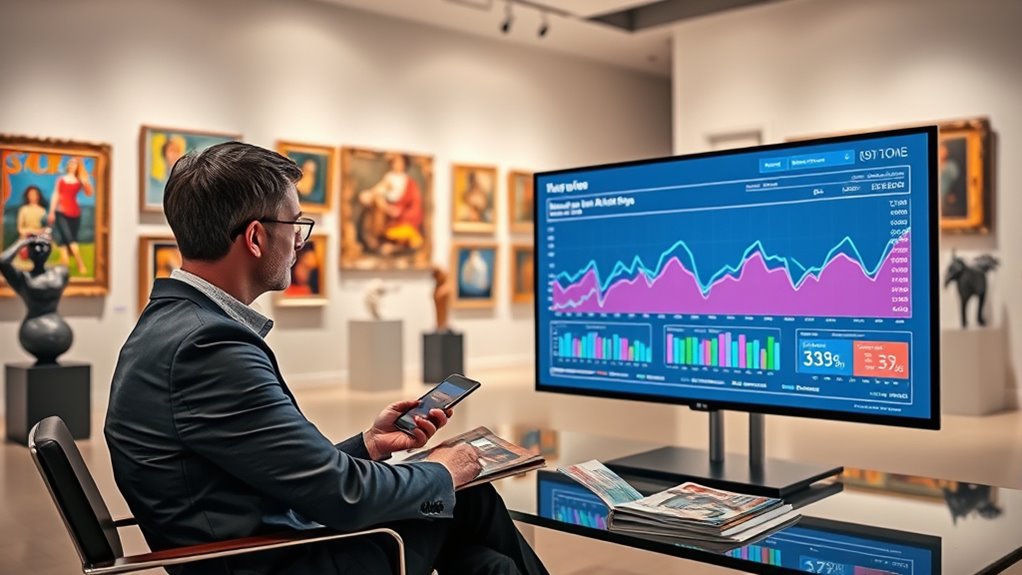

To understand art market trends and indicators, focus on emerging artists gaining attention through exhibitions or social media, as their rising careers signal upcoming market shifts. Check auction results regularly to see what collectors are willing to pay, especially for record-breaking sales. Monitoring regional demands and gallery trends offers insight into evolving preferences. By tracking these signs, you’ll spot opportunities early. Keep exploring to uncover more essential factors shaping the art market landscape.
Key Takeaways
- Emerging artist recognition signals shifts in collector interests and market value, indicating upcoming trends.
- Auction results reveal demand, price trends, and regional market activity, helping identify market hotspots.
- Rising prices of artists at auction confirm their increasing influence and help forecast future market directions.
- Monitoring major auction houses and comparing results with emerging artist stories refine understanding of market shifts.
- Analyzing interconnected indicators like demographics and regional preferences provides comprehensive insights into art market dynamics.
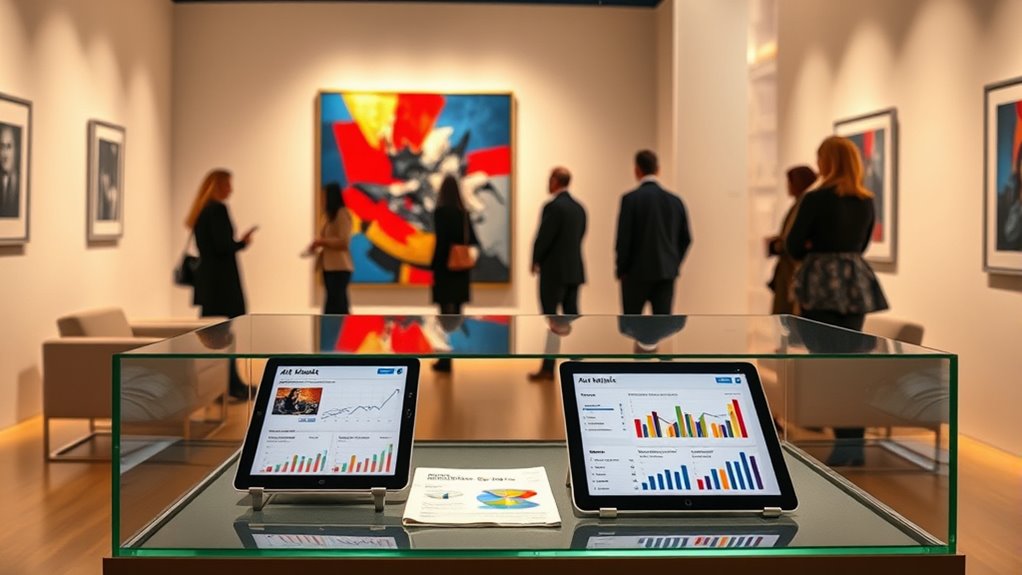
The art market is constantly evolving, shaped by shifting consumer preferences, technological advancements, and global economic conditions. As you navigate this dynamic landscape, paying attention to emerging artist highlights can give you early insight into future trends. When an up-and-coming artist gains recognition through exhibitions, social media, or critical acclaim, it often signals a shift in collector interests and market value. These emerging talents tend to influence what’s hot in galleries and auction houses, making their rising careers a key indicator of upcoming market movements. By tracking these highlights, you can anticipate which styles, mediums, or themes might surge in popularity before they become mainstream.
Another essential indicator to consider is the latest global auction results. These results provide concrete data on what collectors are willing to pay for specific artists, genres, or periods. For instance, if a contemporary artist’s work fetches record-breaking prices at major international auctions, it signals strong demand and possibly a shift in collector preferences towards that style or artist. Conversely, declining prices or lackluster results can indicate waning interest or a saturated market. By analyzing these results across different regions and auction houses, you gain a clearer picture of which markets are heating up and where opportunities might lie. The trends in global auction results can also reveal emerging markets, such as regions where contemporary art is gaining traction, influencing global investment flows.
It’s essential to view emerging artist highlights and global auction results as interconnected indicators. When a rising artist’s work starts fetching higher prices at auctions worldwide, it confirms their growing influence and can set off a ripple effect across the art scene. Collectors and investors who recognize these signals early often capitalize on the trend, acquiring works before prices escalate further. Additionally, art market indicators such as collector demographics and shifting regional preferences can further refine your understanding of upcoming movements. Keeping an eye on auction results from major houses like Sotheby’s, Christie’s, or Phillips, and comparing them with emerging artist stories, helps you understand not just what’s valuable now but where the market might move next.

TRAMIN 50 Pcs Eclectic Wall Decor, Maximalist Decor, Colorful Wall Art, Eclectic Gallery Wall Prints Collage Kit, Famous Artist Paintings for Home (4×6 Inch)
- Vibrant Eclectic Decor Style: Enhance your space with colorful, varied posters
- Complete 50-Piece Collage Set: Includes diverse artwork for a gallery wall
- Perfect Gift for Art Enthusiasts: Ideal for lovers of vibrant, maximalist decor
As an affiliate, we earn on qualifying purchases.
As an affiliate, we earn on qualifying purchases.
Frequently Asked Questions
How Do Geopolitical Events Influence Art Market Fluctuations?
Geopolitical events considerably influence art market fluctuations, especially during times of economic sanctions or geopolitical instability. You’ll notice that when stability decreases, collectors and investors become more cautious, leading to lower sales and prices. Conversely, periods of geopolitical stability boost confidence, encouraging purchases and driving prices up. These events can also create opportunities for acquiring art at lower prices, as market uncertainty often causes temporary dips.
What Role Do Emerging Artists Play in Market Trends?
Emerging artists are the fresh breath of wind shaping market trends, much like a new tide changing the shoreline. You’ll notice their influence grows as galleries diversify, showcasing diverse voices that attract collector preferences enthusiastic for innovation. These artists often set the tone for future trends, drawing attention from collectors seeking unique, avant-garde works. Their rising prominence signals shifts in the art world, making them key players in evolving market dynamics.
How Does Digital Art Impact Traditional Market Indicators?
Digital art substantially impacts traditional market indicators by shifting how value is measured and tracked. You’ll notice increased sales volume through online platforms, which can boost overall market activity. Digital art also introduces new indicators like platform engagement and digital provenance, making the market more dynamic. As you follow these trends, you’ll see how digital art influences pricing, collector interest, and the perception of artistic value within the traditional art market.
What Are the Risks of Investing in Contemporary Art?
Investing in contemporary art carries risks like unpredictable art valuation and market volatility. You might face challenges determining a piece’s true worth, as the value can fluctuate based on trends, artist reputation, or economic conditions. Market volatility means prices can rise or fall sharply, making timing essential. Be prepared for illiquid assets, and always research thoroughly, understanding that art investments can be speculative and require patience for potential returns.
How Do Seasonal Changes Affect Art Sales and Valuations?
You’ll find that seasonal fluctuations can really shake up art sales and valuations. During holiday shopping season, buyers are more active, often boosting prices and sales. Conversely, quieter months may see a dip in demand, lowering valuations. Keep in mind, timing is everything—if you’re aware of these seasonal patterns, you can better plan when to buy or sell, turning the tide in your favor rather than being caught off guard.

Art: The Definitive Visual Guide (DK Definitive Cultural Histories)
As an affiliate, we earn on qualifying purchases.
As an affiliate, we earn on qualifying purchases.
Conclusion
By analyzing market trends and indicators, you can better understand the art world’s shifting landscape. Investigate theories like the impact of economic cycles on art prices, and visualize these ideas through charts or graphs. Seeing data laid out clearly helps you grasp how external factors influence art values. Remember, staying informed and questioning assumptions allows you to predict future movements more confidently, giving you a strategic edge in steering the ever-changing art market.
Market Trend Analysis A Complete Guide – 2023 Edition
As an affiliate, we earn on qualifying purchases.
As an affiliate, we earn on qualifying purchases.
Art: The Definitive Visual Guide (DK Definitive Cultural Histories)
As an affiliate, we earn on qualifying purchases.
As an affiliate, we earn on qualifying purchases.