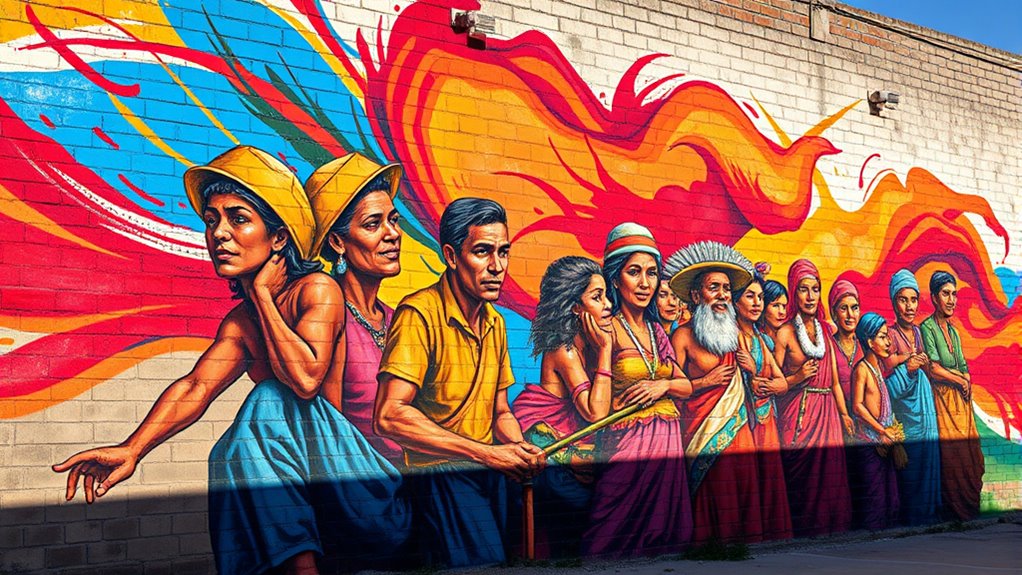

The Mexican Muralism Movement brings art directly to the public, using large-scale murals to share powerful social and political messages. As you explore, you’ll see how icons like Rivera, Orozco, and Siqueiros use indigenous symbols and themes of justice, equality, and cultural pride to inspire change. These murals aren’t just art—they’re tools for activism and community identity. Keep exploring to uncover how this movement shaped both Mexican culture and the world of public art.
Key Takeaways
- The movement used large-scale murals to communicate social and political messages accessible to the public.
- Artists like Rivera, Orozco, and Siqueiros promoted art as a tool for social activism and change.
- Murals incorporate indigenous symbols, celebrating Mexico’s cultural roots and challenging colonial narratives.
- Public murals depict workers and social struggles, emphasizing equality, justice, and collective effort.
- The movement fostered cultural pride and continues to influence Mexican art and social consciousness today.
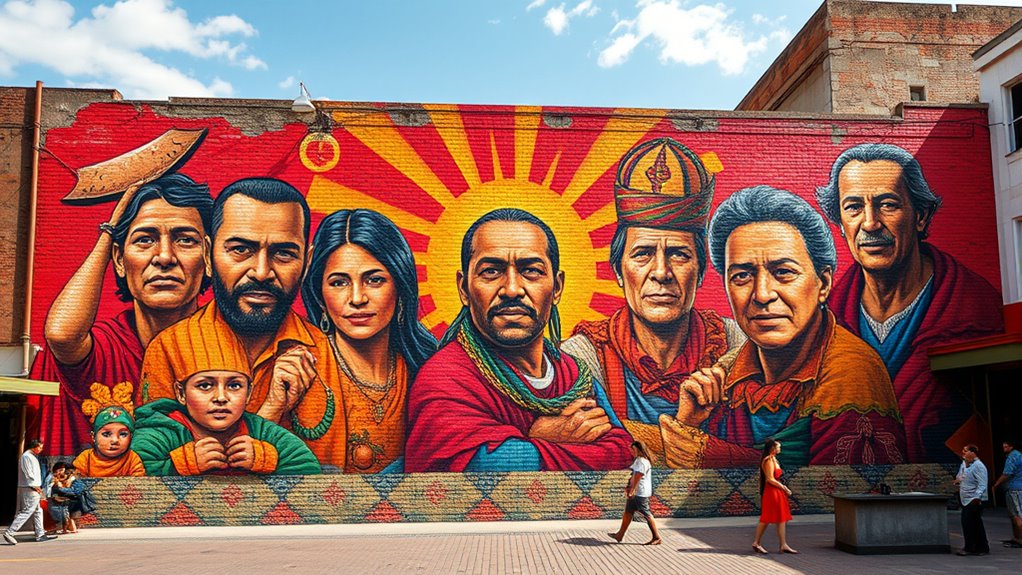
The Mexican Muralism Movement emerged in the early 20th century as a powerful way for artists to communicate social and political messages to a broad public. You’ll see how these murals serve as a visual narrative that reflects the country’s complex history, struggles, and hopes. Artists like Diego Rivera, José Clemente Orozco, and David Alfaro Siqueiros believed art should be accessible and serve the people, not just the elite. They used large-scale murals to tell stories of Mexico’s indigenous roots, revolutionary ideals, and social progress. These murals weren’t just decorative; they were revolutionary tools meant to inspire change and reflect the collective identity of the Mexican people.
The Mexican Muralism Movement used large-scale murals to reflect social history, promote justice, and celebrate indigenous roots.
Central to this movement are the socialist ideals that drove many artists. You’ll notice that the murals often depict laborers, farmers, and workers, emphasizing themes of equality, justice, and solidarity. These images challenge social inequalities and highlight the importance of collective effort. The artists aimed to elevate the working class and promote a sense of unity among Mexicans. Their work isn’t just about aesthetics—it’s about activism, about showing that art can be a catalyst for social transformation. Through bold imagery and powerful symbolism, they urge viewers to recognize the importance of social justice and to participate actively in shaping their society.
Indigenous influences play an essential role in the movement’s visual language and thematic content. You’ll find motifs inspired by pre-Hispanic art, such as Aztec and Maya symbols, woven into the murals to honor Mexico’s indigenous heritage. These influences serve as a reminder of the rich cultural roots that predate colonialism and continue to shape Mexican identity. The murals often depict indigenous people, their history, and their contributions, challenging colonial narratives that marginalized their importance. By integrating indigenous influences, the artists reclaim and celebrate their ancestral cultures, asserting that these roots are fundamental to the nation’s identity and future.
In essence, the Mexican Muralism Movement isn’t just about creating beautiful art; it’s about making a statement. You see these murals in public spaces, where they confront viewers with stories of social struggle, resilience, and cultural pride. Through their work, artists reinforce the idea that art belongs to everyone and that it can be a powerful tool for education, resistance, and unity. This movement transformed public art into a vehicle for social consciousness, making it a lasting legacy of Mexico’s ongoing quest for justice and cultural affirmation.
Top picks for "mexican muralism movement"
As an affiliate, we earn on qualifying purchases.
Frequently Asked Questions
How Did the Mexican Muralism Movement Influence Modern Street Art?
The Mexican muralism movement greatly influenced modern street art by inspiring you to embrace urban expression and social messages. It shifted street art from simple graffiti to powerful murals that tell stories and challenge norms. You see its impact in how artists today continue the graffiti evolution, using large-scale murals to engage communities and highlight cultural identity, just like the Mexican muralists did to communicate with the people.
What Materials Were Traditionally Used by Muralists During the Movement?
Imagine a vast wall as a blank canvas, waiting for your brush. You’d traditionally use primer and vibrant pigments to prepare and color the surface, ensuring the mural’s longevity. Plaster techniques, like fresco, allowed you to embed pigments into wet plaster, creating durable, expressive artwork. These materials and methods helped muralists bring bold stories to life, making art accessible and lasting for generations to come.
Who Were the Most Prominent Female Artists in the Mexican Muralism Movement?
You should know that female pioneers like María Izquierdo and Fermín Revueltas made significant contributions to Mexican muralism. They broke barriers by incorporating feminist themes into their work, challenging gender norms of the time. These artists used vibrant colors and bold imagery to highlight social issues, inspiring future generations. Their pioneering efforts helped guarantee women’s voices were included in the movement, enriching Mexican art history with diverse perspectives.
How Did Political Events Shape the Themes of Murals?
Like a storm shaping a landscape, political events drastically influenced mural themes. You see, murals often became a canvas for revolutionary symbolism, directly challenging government propaganda. When political upheaval occurred, artists responded by depicting social struggles, heroes, and ideals of justice. These murals served as visual protests, rallying communities around change and inspiring collective action during tumultuous times.
Are There Surviving Murals That Tourists Can Visit Today?
Yes, you can visit preserved murals at popular tourist sites in Mexico. Many of these murals, created by renowned artists like Diego Rivera and David Siqueiros, remain intact and open to the public. You’ll find them in government buildings, museums, and cultural centers, offering a glimpse into Mexico’s rich history and political struggles. These preserved murals allow tourists to appreciate the powerful art that once sparked social change.
Conclusion
You see, the Mexican Muralism Movement bridges the past and the present, transforming walls into voices of the people. It’s a powerful reminder that art isn’t just for galleries but for everyone—yet, its grandeur often conceals the humble origins of those who created it. In this way, the murals stand as both history’s voice and the people’s canvas, capturing the struggle and hope intertwined within Mexico’s soul.