To achieve minimalism in modern interiors, focus on simplicity, functionality, and purpose. Use space-saving furniture with clean lines, incorporate neutral color palettes that reflect light and create an airy feel, and regularly declutter to keep only what’s essential and meaningful. Enhance the space with natural light and simple lighting fixtures. Every piece should serve a purpose and contribute to calmness and order. Exploring these principles further will help you create a serene, stylish home effortlessly.
Key Takeaways
- Prioritize space-saving furniture with clean lines and multifunctionality to maximize room efficiency.
- Use neutral color palettes like whites, grays, and earth tones to create an airy, cohesive environment.
- Regularly declutter and choose few meaningful decorative items to maintain a calm, organized space.
- Maximize natural light with unobstructed windows and simple fixtures to enhance openness and brightness.
- Apply the principles of intentionality by ensuring every piece serves a purpose and aligns with the minimalist aesthetic.
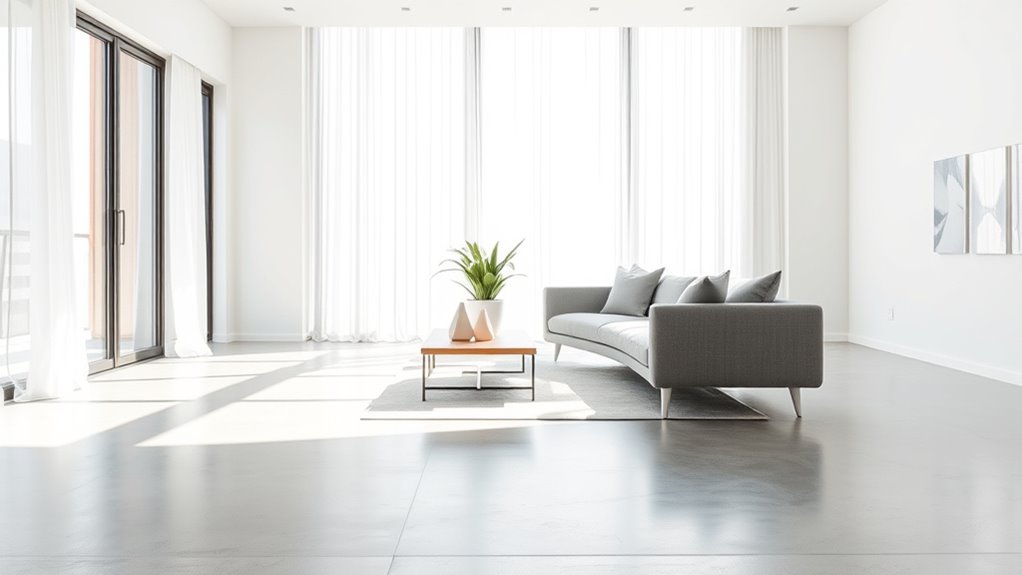
Minimalism in modern interiors emphasizes simplicity and functionality, transforming your living space into a calm and uncluttered environment. To achieve this, focus on selecting space saving furniture that maximizes your room’s potential without sacrificing comfort or style. Opt for pieces with clean lines, multi-purpose functions, and smart storage options that help reduce clutter. For instance, choose beds with built-in drawers, fold-away desks, or modular sofas that can adapt to your needs. These pieces not only save space but also contribute to a sleek, organized look.
Choose space-saving furniture with clean lines and multi-purpose functions for a sleek, organized home.
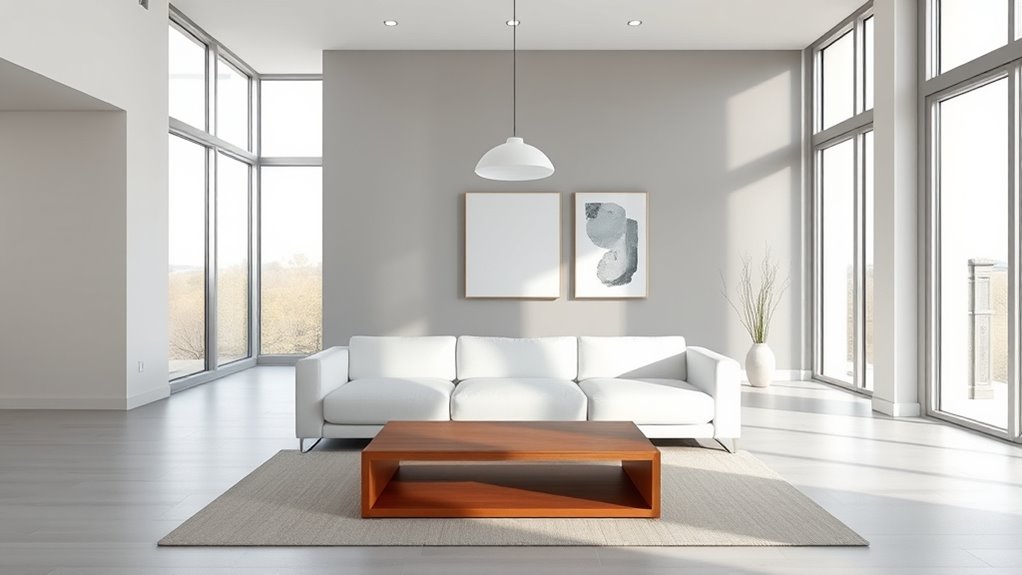
In addition to choosing the right furniture, embracing neutral color palettes plays a *crucial* role in creating a minimalist aesthetic. Neutral tones such as whites, beiges, grays, and soft earth tones provide a versatile backdrop that makes your interior feel airy and open. They also promote a sense of tranquility, which is *essential* in minimalist design. When you use neutral colors, it becomes easier to incorporate natural light, reflect it across your space, and make even small rooms feel larger. Keep the color scheme consistent across walls, furniture, and accessories to maintain harmony and simplicity.
To truly embody minimalism, declutter your space regularly. Keep only what you need and love, and store away or donate the rest. This practice helps you maintain a sense of order and prevents your environment from becoming overwhelming. When decorating, choose a few carefully selected accessories rather than filling your space with multiple decorative items. This approach allows each piece to stand out and contributes to a cohesive look, avoiding visual noise.
Lighting also plays a *vital* role in minimalist interiors. Maximize natural light by using sheer curtains or leaving windows unobstructed. Incorporate simple, unobtrusive light fixtures that blend seamlessly with your decor. Good lighting enhances the feeling of openness and highlights the clean lines of your furniture and design choices.
Ultimately, minimalist interiors are about intentionality. Every piece you choose should serve a purpose and contribute to the overall aesthetic. By combining space saving furniture, neutral color palettes, and a disciplined approach to decluttering, you create a space that’s not only beautiful but also functional and peaceful. Research shows that resources and tools can assist in maintaining a clutter-free environment, ensuring your space remains serene and organized. The result is a home that feels spacious, calming, and effortlessly stylish, making your everyday environment a true sanctuary.
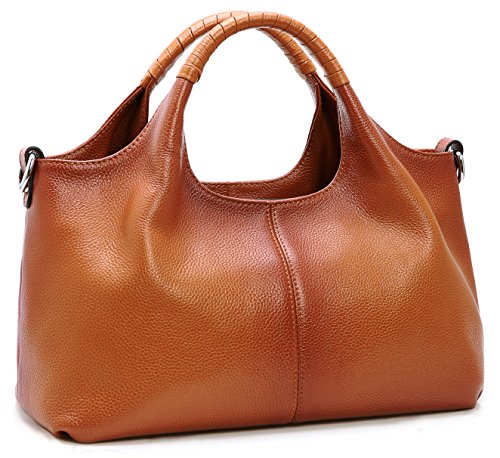
Iswee Leather Purses for Women Satchel Bag Crossbody Handbag Hobo Tote Bags
- Material: High-quality genuine cowhide leather
- Interior Layout: Multiple compartments for organization
- Exterior Pocket: Zipped pocket on the back
As an affiliate, we earn on qualifying purchases.
Frequently Asked Questions
How Can I Incorporate Color Into Minimalist Designs?
You can incorporate color into minimalist designs by adding subtle color accents through accessories, artwork, or textiles. Use bold hues sparingly to create focal points without overwhelming the space. Keep the overall palette simple, allowing the vibrant accents to stand out. Opt for neutral backgrounds to make the colors pop naturally, and choose high-quality pieces that blend functionality with aesthetic appeal, maintaining the clean, uncluttered look you desire.
What Materials Best Suit Minimalist Modern Interiors?
Think of your space as a sleek, well-crafted sculpture. You’ll want to choose materials like sustainable woods, polished concrete, and smooth metals that reflect simplicity and durability. Textured finishes, such as matte plaster or woven textiles, add subtle depth without clutter. These materials blend form and function, creating a minimalist aesthetic that’s both modern and eco-friendly. Your space becomes a harmonious balance of clean lines and tactile interest.
How Do I Balance Functionality and Aesthetics?
You balance functionality and aesthetics by focusing on space optimization and smart furniture selection. Choose pieces that serve multiple purposes, like storage ottomans or fold-out tables, to keep your space uncluttered. Opt for sleek, simple designs that enhance your room’s visual appeal without sacrificing usability. Regularly assess your space to remove unnecessary items, ensuring your interior remains both beautiful and highly functional.
Can Minimalist Design Work in Small Spaces?
Yes, minimalist design works beautifully in small spaces. It emphasizes space optimization, making your area feel larger and more open. You can achieve this by choosing multifunctional furniture that serves multiple purposes and reduces clutter. With clean lines and simple decor, you create a calm, organized environment. Minimalism transforms small spaces into functional, stylish retreats, proving that less truly is more, even in compact living areas.
What Are Common Mistakes to Avoid in Minimalism?
You should avoid clutter accumulation and overdecorating, as these undermine minimalism’s clean look. Don’t fill every space with accessories or unnecessary furniture—each piece should serve a purpose. Resist the urge to add decorative items just for style; instead, focus on quality and simplicity. By keeping surfaces clear and choosing only essential items, you’ll maintain a sleek, calm environment that embodies minimalism’s core principles.
Conclusion
Embracing minimalism is like tending a peaceful garden—you trim away the excess to let the beauty and calm shine through. When you clear clutter and focus on essential pieces, your space becomes a sanctuary of simplicity and clarity. Remember, just as a garden flourishes with careful pruning, your home thrives when you let go of the unnecessary. Start small, stay consistent, and watch your space transform into a serene haven you’ll love coming home to.

Michael Kors Maeve Large Pocket Crossbody Bag, Gold-Tone Hardware/Black, One Size
- Chic casual canvas design: Signature style with sporty strap
- Multiple exterior slip pockets: Easy organization on the go
- Made from durable cotton-blend canvas: Gold-tone hardware accents
As an affiliate, we earn on qualifying purchases.

Tory Burch Women's Miller Soft Mini Crossbody Bag, Tortora, One Size
- Embossed Logo Emblem: Front embossed logo detail
- Dimensions: 7.75in L x 4.75in H x 2in D
- Adjustable Strap: Includes optional, adjustable strap
As an affiliate, we earn on qualifying purchases.