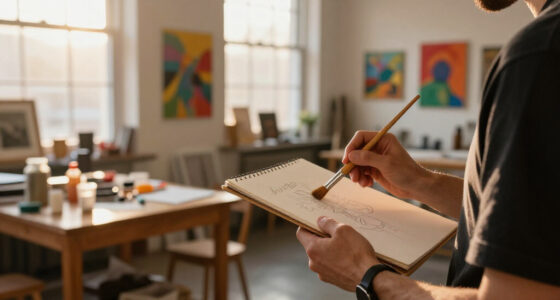
Glass painting combines traditional stained glass techniques with modern approaches like fused layers and mixed media, expanding your creative options. Mastering color theory helps you select vibrant hues and manage their interactions for emotional impact. Framing choices, from classic lead cames to sleek contemporary frames, influence how your art is viewed and appreciated. By exploring these innovative methods alongside foundational skills, you’ll discover new possibilities to create compelling, dynamic glass artworks—more insights await to deepen your understanding.

Get art and craft supplies delivered free with Prime
- Fast, free delivery on millions of items
- Prime Video, Amazon Music and more included
- Member-only deals all year
Key Takeaways
- Contemporary glass painting incorporates fused glass layers and mixed media to add depth and texture.
- Mastery of color theory enhances emotional impact and visual harmony in stained glass and modern pieces.
- Framing techniques, including traditional lead cames and sleek modern frames, influence artwork presentation.
- Combining traditional techniques with new materials expands artistic possibilities and innovation.
- Understanding color interactions and framing is essential for creating compelling, gallery-worthy glass artworks.

Have you ever wondered how artists transform plain glass into stunning works of art? The magic lies in their mastery of techniques like color theory and framing. When working with glass, understanding color theory is essential. You need to grasp how colors interact and influence each other to create vibrant, harmonious compositions. For example, complementary colors placed side by side can make each hue pop, while analogous colors produce a calming effect. By applying these principles, you can choose the right shades to evoke emotion or focus attention on specific areas of your piece. This knowledge allows you to craft glass paintings that are not only visually striking but also emotionally resonant. Developing a keen eye for color interaction further enhances your ability to create balanced and impactful designs.
Framing techniques also play a fundamental role in enhancing your work. Proper framing isn’t just about protecting the glass; it’s about setting the stage for your art to shine. You might opt for traditional lead cames, which are the metal strips used in stained glass, to add authenticity and structure. Alternatively, modern framing methods, like sleek metal or wooden borders, can lend a contemporary feel. The choice of frame impacts how viewers perceive your piece, guiding their eye and emphasizing particular elements. It also helps manage light—whether you want the glass to glow in sunlight or be viewed under controlled lighting conditions. By carefully selecting framing techniques, you can elevate your glass painting from a simple decorative object to a professional, gallery-worthy artwork.
In contemporary approaches, artists experiment with combining traditional techniques with new materials and methods. Some incorporate fused glass, where layers are melted together, or include mixed media elements like metal or fabric to add texture and depth. Regardless of the style, the core principles of color theory and framing remain central. They serve as the foundation for creating balanced compositions and ensuring your artwork is visually compelling. Whether you’re designing a stained glass window or a modern glass panel, these techniques help you communicate your artistic vision clearly. As you develop your skills, you’ll find that mastering color interaction and framing choices gives you greater control over the final effect.
Ultimately, transforming glass into art involves understanding how colors work together and how to frame your work to highlight your intentions. By honing these skills, you can craft glass paintings that captivate and inspire. It’s not just about applying color or placing the piece in a frame; it’s about orchestrating these elements to tell a story or evoke an emotion. With practice, you’ll discover how each decision influences the viewer’s experience, making your glass art truly exceptional.
As an affiliate, we earn on qualifying purchases.
Frequently Asked Questions
What Are the Latest Innovations in Glass Painting Techniques?
You explore the latest innovations in glass painting techniques through innovative glazing methods and modern pigments. These advancements allow you to achieve richer colors, enhanced transparency, and more detailed designs. Using cutting-edge glazing techniques, you can create durable, vibrant artworks that withstand the test of time. Modern pigments offer a broader color palette and improved adhesion, enabling you to push creative boundaries and produce stunning, contemporary glass artworks with unprecedented clarity and depth.
How Do Contemporary Artists Incorporate Digital Tools Into Glass Art?
You might think digital tools are just for tech geeks, but contemporary artists cleverly use digital design and virtual prototyping to elevate glass art. They sketch ideas digitally, experiment with compositions, and simulate lighting effects before committing to real glass. This approach saves time, reduces waste, and allows for precise adjustments, making traditional craftsmanship more innovative and accessible. So, yes, your favorite glass art probably started as a pixel-perfect idea!
What Are Common Challenges in Restoring Antique Stained Glass?
You face several challenges in restoring antique stained glass, mainly because of delicate materials and weathering. You need to carefully use restoration techniques that prevent further damage while preserving the original artwork. Ensuring proper antique preservation involves matching glass, lead came, and paint to the original. You must also address issues like corrosion, cracks, and missing pieces, balancing restoration with maintaining the authenticity of the piece.
How Sustainable Are Modern Glass Painting Materials?
Modern glass painting materials are quite sustainable because they often use eco-friendly pigments and recycled glass materials. You can choose paints that reduce environmental impact, supporting eco-conscious art practices. Recycled glass helps minimize waste and resource consumption. By opting for these sustainable options, you actively contribute to environmental preservation while creating beautiful artwork. Sustainability in glass painting isn’t just a trend; it’s a responsible choice for artists dedicated to green practices.
Can Glass Painting Be Adapted for Outdoor Installations?
Yes, you can adapt glass painting for outdoor installations. Focus on weather durability by choosing high-quality, weather-resistant paints and sealants. Use proper installation techniques, such as securing the glass with sturdy frames and ensuring proper sealing against moisture. This approach helps your artwork withstand the elements, maintaining its beauty over time. With careful planning and suitable materials, your glass painting can thrive beautifully in outdoor environments.
As an affiliate, we earn on qualifying purchases.
Conclusion
You’ve seen how glass painting combines tradition with modern innovation, transforming ordinary windows into stunning works of art. Did you know that the global stained glass market is expected to grow at a CAGR of 4.2% through 2028? This shows a rising appreciation for both historic techniques and contemporary approaches. So, whether you’re an artist or enthusiast, embracing these styles keeps the craft alive and evolving. Keep exploring—you might just create the next masterpiece.
metal lead came for stained glass
As an affiliate, we earn on qualifying purchases.
As an affiliate, we earn on qualifying purchases.
As an affiliate, we earn on qualifying purchases.
Columbus Day / Indigenous Peoples' Day Picks
long weekend sales
As an affiliate, we earn on qualifying purchases.