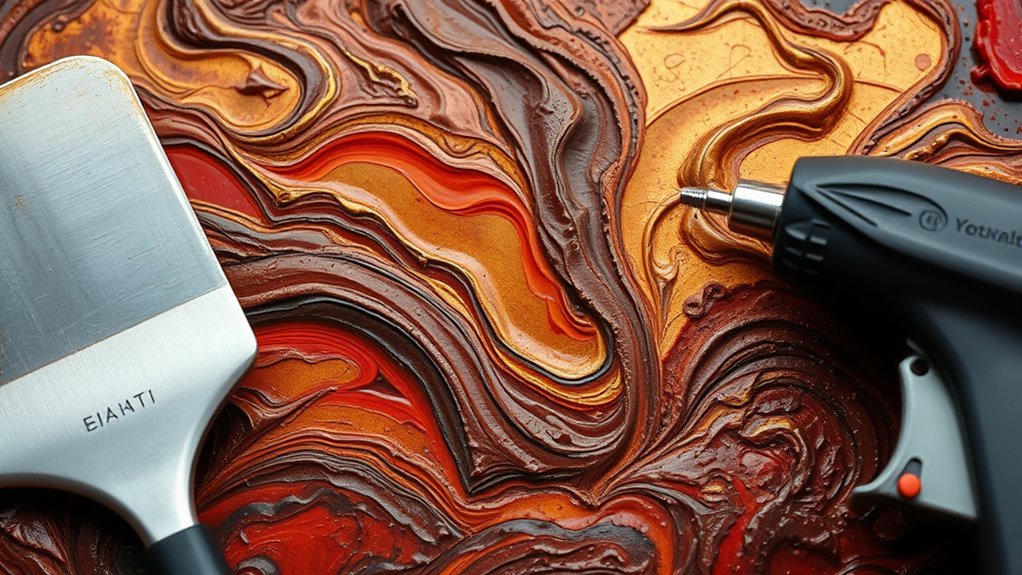

Encaustic painting combines ancient techniques of melting pigmented beeswax with modern tools, giving you vibrant, layered artwork. You can melt beeswax carefully, control the temperature, and apply it smoothly with brushes or spatulas. Mixing pigments into wax allows for rich colors and subtle blending. You can build depth by layering, scraping, and carving layers. Using contemporary tools alongside traditional methods lets you explore creative effects and enhance your skills—if you keep exploring, you’ll discover even more exciting possibilities.
Key Takeaways
- Encaustic painting involves heating beeswax with pigments and applying it onto surfaces for vibrant, durable artwork.
- Modern tools like electric heated palettes and precision brushes facilitate precise wax melting and application.
- Techniques such as layering, blending, and carving combine ancient methods with contemporary equipment for complex effects.
- Temperature control and heat management are essential for consistent wax adhesion and manipulation using modern devices.
- Digital platforms and online communities support learning, sharing, and innovating with encaustic techniques today.
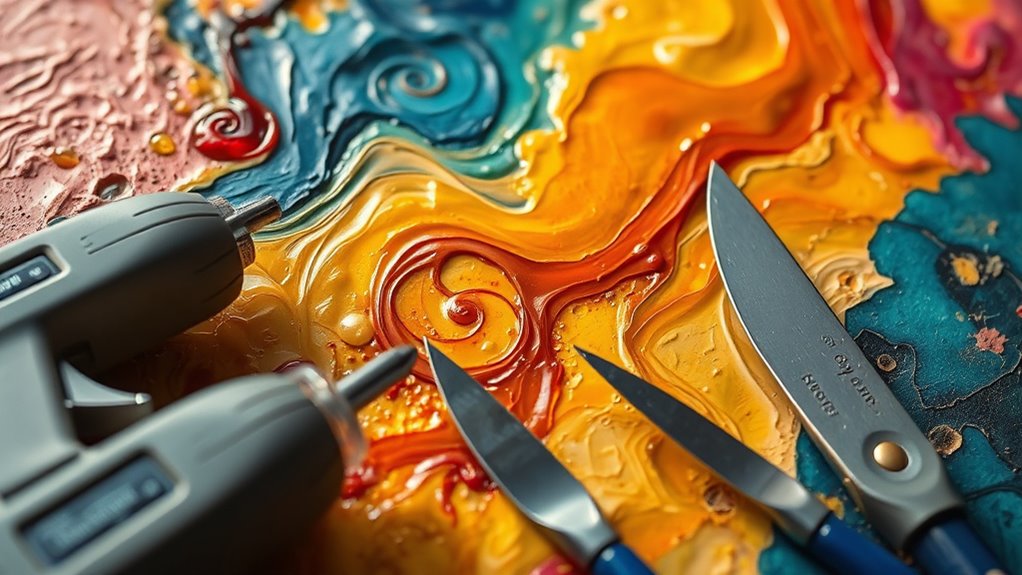
Encaustic painting is an ancient art form that uses heated beeswax mixed with pigments to create vibrant, durable images. When you begin working with this technique, you’ll notice that the process involves carefully melting the beeswax to a workable temperature, allowing you to apply it onto your surface smoothly. As you work, your focus shifts to wax application—layering the hot wax onto your substrate with brushes, spatulas, or other tools. This step requires precision because the wax needs to stay hot enough to adhere well and blend seamlessly, but not so hot that it becomes difficult to control. You’ll find that the temperature of the wax affects how easily you can manipulate it, so maintaining consistent heat becomes essential. Utilizing digital platforms for learning and inspiration can enhance your understanding of encaustic techniques and keep you connected with a community of artists exploring this medium.
Once the wax is applied, you’ll want to think about pigment blending. This is where you add your pigments into the molten wax or apply them directly onto the surface to achieve the desired color effects. Mixing pigments into the wax allows you to create rich, nuanced hues that can be layered or blended to produce complex visual textures. You might experiment with blending different pigments directly in the wax to generate subtle gradations or bold contrasts, depending on your artistic goal. The key is to work swiftly, as the wax cools and hardens quickly, making it *pivotal* to blend while the wax remains pliable. This process offers a lot of creative freedom, letting you build up layers of color and texture that interact in dynamic ways.
As you continue, you’ll discover that the art of encaustic painting hinges on your ability to manipulate the wax and pigments in tandem. Applying new layers of wax over dried sections can add depth, while scraping or carving into the surface reveals underlying colors and textures, enriching the visual complexity. The blending of pigments becomes more intuitive as you gain experience, allowing you to create subtle shifts or dramatic contrasts that bring your piece to life. The warmth of the wax helps fuse these layers together, resulting in a cohesive, luminous artwork with a unique tactile quality. With practice, you’ll develop your own techniques for wax application and pigment blending, harnessing both ancient methods and modern tools to produce stunning, enduring images.
Top picks for "encaustic paint ancient"
Open Amazon search results for this keyword.
As an affiliate, we earn on qualifying purchases.
Frequently Asked Questions
What Safety Precautions Are Necessary When Working With Hot Wax?
When working with hot wax, you should wear personal protective equipment like gloves and safety goggles to prevent burns and splashes. Make sure you work in a well-ventilated area to avoid inhaling fumes, which can be harmful. Keep a fire extinguisher nearby, and never leave the hot wax unattended. Always handle the wax carefully, and allow it to cool before cleaning your tools or storage.
How Long Does Encaustic Paint Typically Last Without Deterioration?
Your encaustic paintings can last for decades if you focus on wax preservation and color stability. Proper sealing and avoiding direct sunlight help prevent deterioration. When maintained well, your artwork resists cracking, fading, or discoloration over time. Regularly inspecting and cleaning the surface also preserves the wax’s integrity, ensuring your piece remains vibrant and stable for many years. Proper care is key to enjoying your encaustic art long-term.
Can Encaustic Techniques Be Combined With Digital Art Methods?
Yes, you can definitely combine encaustic techniques with digital art methods. You might use digital layering to plan or enhance your artwork, then incorporate encaustic paint for texture and depth. Mixed media integration allows you to blend traditional encaustic with digital elements seamlessly. This approach opens up creative possibilities, letting you experiment with various textures and effects while maintaining the tactile quality that encaustic offers.
What Are the Best Surfaces or Supports for Encaustic Painting?
You should choose rigid supports like wood panels or canvas boards for encaustic painting, as they provide stability and prevent warping. Support materials need proper surface preparation—sanding and sealing—to guarantee the wax adheres well. While traditional surfaces work best, you can also experiment with metal or certain papers if you prepare them thoroughly. The key is selecting a durable support that can withstand heat and wax application.
How Do You Fix Mistakes or Remove Encaustic Paint Once Applied?
To fix mistakes or remove encaustic paint once applied, you can carefully scrape away the dried wax with a metal spatula or blade. If you need to correct mistakes, gently reheat the area with a heat gun or torch to soften the wax, then wipe or scrape off the excess. Using heat helps you remove or adjust dried wax, allowing you to correct mistakes without damaging your artwork.
Conclusion
Now that you’ve explored encaustic painting’s ancient roots and modern tools, you’re equipped to create stunning, layered masterpieces that seem to glow with an otherworldly radiance. With each brushstroke, you reveal a timeless magic that could outshine the stars themselves. Embrace these techniques, and watch your art become a mesmerizing window into history and innovation—transforming simple wax into a breathtaking portal of creativity that’s as enduring as the ages.